What Are Lap Sponges and Why Are They Used in Surgery?
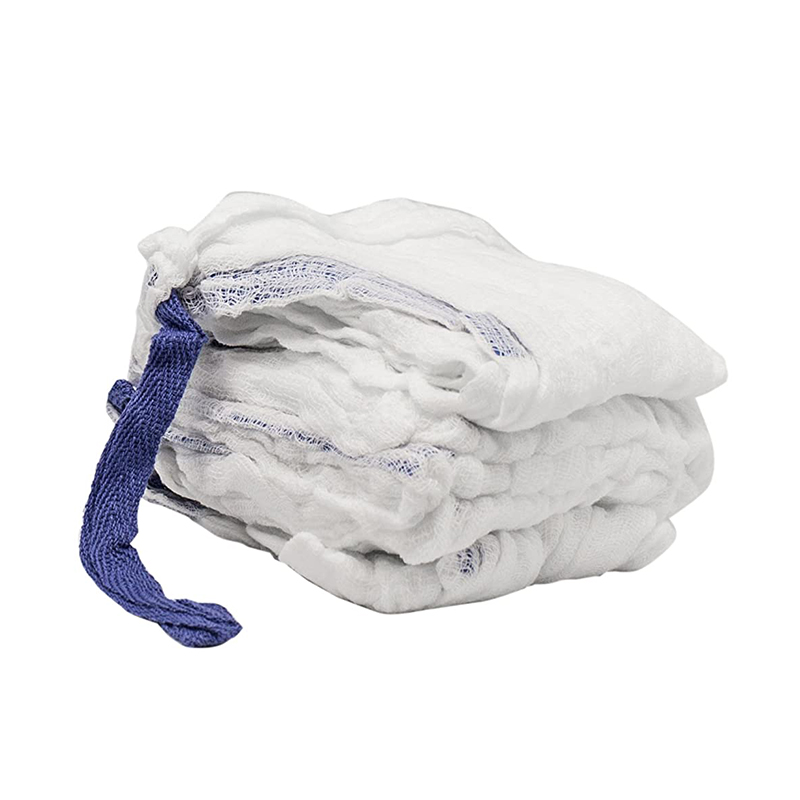
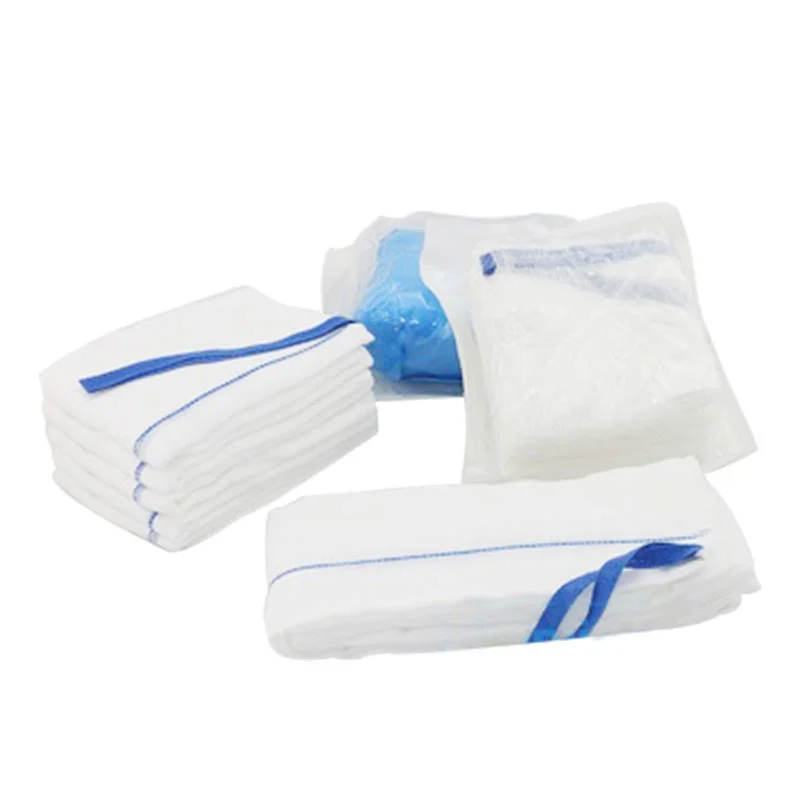
A lap sponge is a large, highly absorbent surgical sponge — typically measuring 45×45 cm when unfolded — used inside body cavities during open surgical procedures. Their primary function is to control bleeding by absorbing blood and surgical fluids from the operative field, allowing the surgeon to maintain clear visibility and work efficiently without obstruction. In this role, lap sponges complement suction devices and electrocautery tools as a frontline haemostasis management resource.
Beyond fluid absorption, lap sponges serve a protective function. Surgeons routinely pack lap sponges around organs — particularly in abdominal surgeries — to hold bowel loops and other soft tissue structures out of the operative field. This organ retraction function reduces the risk of inadvertent instrument contact with surrounding structures and helps isolate the working area. Lap sponges also act as a contamination barrier, limiting the spread of bowel content, bile, or other potentially contaminating fluids if accidental spillage occurs during the procedure.
In the postoperative period, lap sponges may also be used as wound dressings for large incisions, particularly following laparotomy or trauma surgery where substantial wound exudate is expected in the first 24 to 48 hours. Their large surface area and high absorbency capacity make them practical for managing high-output wounds that would quickly saturate smaller standard dressings.
Material Composition and Structural Requirements
The performance of a lap sponge in the surgical field depends fundamentally on the materials used in its construction. Medical-grade lap sponges are manufactured from absorbent cotton — processed to remove natural oils and waxes that would otherwise impede fluid uptake — or from blended fabrics incorporating synthetic fibres such as polyester for added strength and dimensional stability.
Key Material Properties Required for Surgical Use
- High absorbency: The sponge must rapidly absorb significant volumes of blood and surgical fluid. A standard 45×45 cm lap sponge should be capable of holding multiple times its dry weight in fluid, functioning effectively even when already partially saturated.
- Low fibre shedding: Cotton fibres that shed into a body cavity can act as foreign bodies, triggering inflammatory responses and increasing infection risk. Production quality must ensure that the sponge retains its structural integrity throughout use.
- Wet tensile strength: Lap sponges are manipulated extensively — wrung, compressed, retracted, and repositioned — while wet. The fabric must maintain structural cohesion under these conditions without tearing or disintegrating.
- Softness and conformability: Sponges used to pack around organs must be pliable and non-traumatic to tissue. Stiff or rough-edged materials can cause serosal abrasion or pressure injury to delicate organ surfaces.
- Chemical purity: The cotton used must be free from residual bleaching agents, sizing chemicals, and other processing residues that could cause tissue irritation or cytotoxic effects when in direct contact with internal organs.
Suzhou Sunmed sources absorbent cotton meeting pharmacopoeial standards and subjects incoming raw materials to quality verification before production begins. The finished sponges are constructed with folded, hemmed edges to prevent raw fibre exposure — a structural requirement that eliminates the risk of loose threads contaminating the surgical field.
X-Ray Detectability: A Non-Negotiable Surgical Safety Feature
Retained surgical items (RSIs) represent one of the most serious and entirely preventable categories of surgical error. Lap sponges, due to their large size and the fact that multiple sponges are often used simultaneously in deep body cavities, are among the most frequently retained items in abdominal surgery. A retained lap sponge can cause peritonitis, abscess formation, bowel obstruction, fistula, and sepsis — complications that require urgent revision surgery and carry significant morbidity and mortality risk.
X-ray detectable lap sponges incorporate a radiopaque element — typically a barium sulphate-impregnated thread or woven-in filament — that is clearly visible on standard intraoperative fluoroscopy or postoperative plain X-ray imaging. This allows the surgical team to confirm that all sponges have been retrieved from the body cavity before wound closure, and provides a diagnostic tool if a retained sponge is suspected postoperatively.
For surgical procurement, X-ray detectability in lap sponges is not an optional upgrade — it is a patient safety standard required by hospital infection control and surgical governance frameworks in most regulated healthcare systems. The radiopaque thread must be consistently positioned, continuous throughout the sponge, and remain intact when the sponge is wet and deformed during use. Suzhou Sunmed's X-ray detectable lap sponges are manufactured to meet these requirements, with the radiopaque element validated to maintain visibility under operative conditions.
Product Specifications and Configuration Options
Lap sponges are available in several configurations to accommodate different surgical environments and institutional preferences. The table below outlines the primary specification options available from Suzhou Sunmed:
| Parameter |
Standard Option |
Alternative / Custom |
| Unfolded Size |
45×45 cm |
30×30 cm, 40×40 cm, custom |
| Ply |
4-ply / 8-ply |
12-ply on request |
| Material |
100% Absorbent Cotton |
Cotton/Polyester blend |
| X-Ray Detectable Thread |
Yes (standard for surgical) |
Without thread on request |
| Loop / Tape |
With cotton loop or tape tag |
Without loop (plain) |
| Sterility |
Sterile (EO sterilized) |
Non-sterile bulk |
| Pack Quantity |
5 per sterile pack |
1, 2, or 10 per pack |
The inclusion of a loop or tape tag is a practical feature worth noting. The loop — typically made from cotton twill tape — is sewn onto the sponge and serves as a handling aid, allowing the scrub nurse to hold, retrieve, or count the sponge efficiently. It also facilitates attachment to a clamp when the sponge is used as a swab-on-a-stick for deep cavity packing. For theatre procurement specifically, sponges with loops are generally preferred over plain variants.
Sterilization, Packaging, and Shelf Life
All lap sponges intended for direct intraoperative use must be supplied sterile. Suzhou Sunmed uses ethylene oxide (EO) sterilization — the industry-standard method for heat-sensitive cotton products — validated to achieve a sterility assurance level (SAL) of 10⁻⁶. This means the probability of a viable microorganism remaining on any sterilized unit is less than one in one million, meeting the standard required by international medical device regulations for products used in sterile surgical fields.
Sterile lap sponges are packaged in peel-open pouches or laminated blister packs that maintain the sterile barrier from the point of manufacture through the entire distribution and storage chain to the point of use in theatre. Packaging integrity testing — including seal strength and dye penetration tests — is conducted as part of production quality assurance to confirm that no breach occurs under standard handling and transport conditions.
Shelf life for EO-sterilized lap sponges is typically 3 to 5 years from the sterilization date, provided recommended storage conditions are observed: cool, dry, away from direct light and humidity. Each pack carries a lot number, sterilization date, and expiry date, enabling full batch traceability in the event of a product recall or quality investigation.
Regulatory Compliance for Surgical Theatre Procurement
Lap sponges used in surgical settings are classified as medical devices in all major regulated markets and must be supported by appropriate regulatory documentation before a hospital or distributor can legally procure and use them. Suzhou Sunmed's lap sponge range is supported by the following certifications:
- CE Marking: Confirms compliance with EU Medical Device Regulation (MDR), enabling distribution and use across EU and EEA member states. CE-marked surgical sponges have undergone conformity assessment addressing biocompatibility, sterility, and performance.
- ISO 13485 Certification: The quality management system governing all aspects of design, production, sterilization, and post-market activities is certified to ISO 13485 — the international standard specific to medical device manufacturers.
- FDA Facility Registration: Required for export of medical devices to the United States. Sunmed holds current FDA facility registration, which is a prerequisite for US market access.
- NMPA Registration: Products are registered with China's National Medical Products Administration, ensuring regulatory compliance for domestic distribution and providing a foundation for export documentation.
Procurement officers should request copies of all current certificates and verify their validity and scope — specifically confirming that the product category (surgical lap sponges, sterile) is explicitly covered by the CE certificate and ISO 13485 scope of certification. Expired or out-of-scope certifications are a disqualifying factor in hospital tender evaluations.
Counting Protocols and Theatre Integration
In the operating theatre, lap sponge management follows strict counting protocols designed to prevent retained items. Standard practice requires that all sponges are counted by the scrub nurse and circulating nurse together before the procedure begins, at the time of wound closure, and again at final skin closure. Any discrepancy triggers an immediate intraoperative X-ray to rule out retention before the patient leaves the theatre.
To support these counting protocols effectively, lap sponges should be supplied in standardised pack quantities — typically 5 per sterile pack — so that counts are easily verified against pack numbers used. Individual pack labeling should clearly state the quantity per pack, and packs should be designed so that the scrub nurse can open and present sponges to the sterile field without compromising sterility of adjacent materials.
Sunmed's packing configurations are designed with theatre workflow in mind, with standard 5-per-pack sterile presentation and clear outer labeling supporting efficient count management. For institutions implementing electronic sponge tracking systems — where barcoded or RFID-tagged sponges are scanned in and out of the field — custom labeling and tagging options can be discussed with the manufacturer at the specification stage.
What to Evaluate Before Committing to a Lap Sponge Supplier
For hospital theatre managers, surgical procurement teams, and medical distributors, supplier qualification for lap sponges should be conducted with the same rigour applied to any implantable or critical surgical device. The following evaluation checklist covers the essential steps:
- Request physical samples and assess folding quality, hemmed edge construction, loop attachment security, and overall dimensional accuracy against stated specifications.
- Conduct a wet absorbency test: weigh the dry sponge, fully immerse in water, drain for 30 seconds, and re-weigh. Confirm absorbency meets or exceeds the required multiple of dry weight.
- Verify X-ray detectability by imaging a saturated sample sponge — confirm the radiopaque thread is clearly visible and continuous throughout the full sponge area.
- Inspect sterile packaging for seal integrity, clear lot number and expiry date labeling, and confirmation of sterilization method on the outer pack.
- Review current regulatory certificates (CE, ISO 13485, FDA) and confirm validity, scope coverage, and issuing body contact details for independent verification.
- Request sterilization validation documentation confirming EO sterilization achieves SAL 10⁻⁶ for the specific product configuration being ordered.
A qualified manufacturer will support this process with technical documentation, sample provision, and responsive engagement from their quality assurance team. Any reluctance to provide sterilization validation data or certification copies should be treated as a disqualifying indicator in the supplier selection process.
Conclusion: Lap Sponges Demand Precision Manufacturing and Verified Safety Standards
Lap sponges occupy a deceptively important position in surgical care. Their function — absorbing blood, protecting organs, maintaining operative field clarity, and preventing contamination — places them at the centre of intraoperative safety. Their potential for retention makes X-ray detectability and rigorous counting protocols non-negotiable. And their direct contact with internal organs demands material purity, structural integrity, and validated sterility.
Suzhou Sunmed's lap sponge manufacturing capability addresses each of these requirements: absorbent cotton construction with hemmed edges, consistent X-ray detectable thread integration, EO sterilization to validated SAL, and regulatory certification supporting access to EU, US, and other major healthcare markets. For procurement teams building or reviewing their surgical consumables supply chain, Sunmed represents a credible, export-ready manufacturing partner — one whose product range and quality infrastructure are aligned with the demands of professional theatre procurement.

 English
 Español
 русский
 Français
 Deutsch
 italiano
 By Admin