Non woven cohesive bandages are an essential part of modern first aid, sports support, veterinary care, clinical dressing fixation, and general healthcare supply. Designed to adhere to themselves rather than to skin, hair, fur, or clothing, these bandages provide a practical alternative to traditional adhesive tapes and wraps. They offer dependable compression, easy application, comfortable wear, and convenient removal, making them suitable for hospitals, clinics, first aid kits, athletic settings, retail healthcare shelves, and home care use.
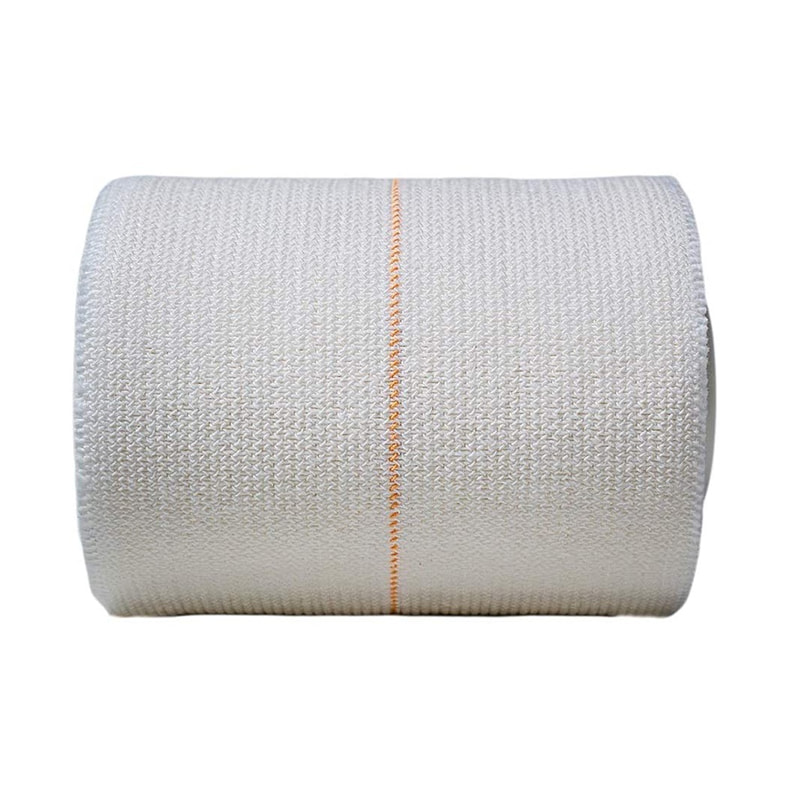
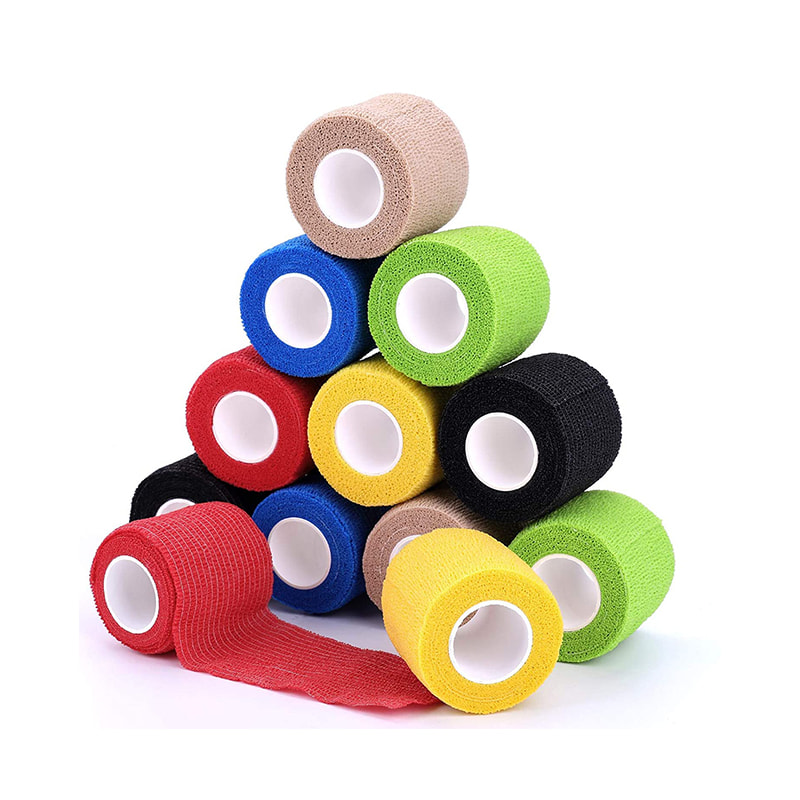
The product discussed in this article is a self adhesive bandage wrap made from cotton or non woven material with spandex, available in common widths such as 1 inch, 2 inches, 3 inches, 4 inches, and 6 inches, with a standard length of 4.5 meters. Colors may include white, beige, and other customized options. Bulk, box, and OPP bag packaging are available, and customized sizes and packaging can be supplied according to buyer requirements. These features make the product suitable for both medical distributors and private label customers seeking flexible supply solutions.
Unlike ordinary gauze rolls, elastic bandages, or adhesive medical tapes, a cohesive bandage combines stretch, self-adherence, breathability, and easy hand tearability in one product. It can be used on different body areas and adjusted to provide light support, moderate compression, dressing retention, or protective wrapping. It is particularly valuable where comfort, controlled tension, and quick application are important.
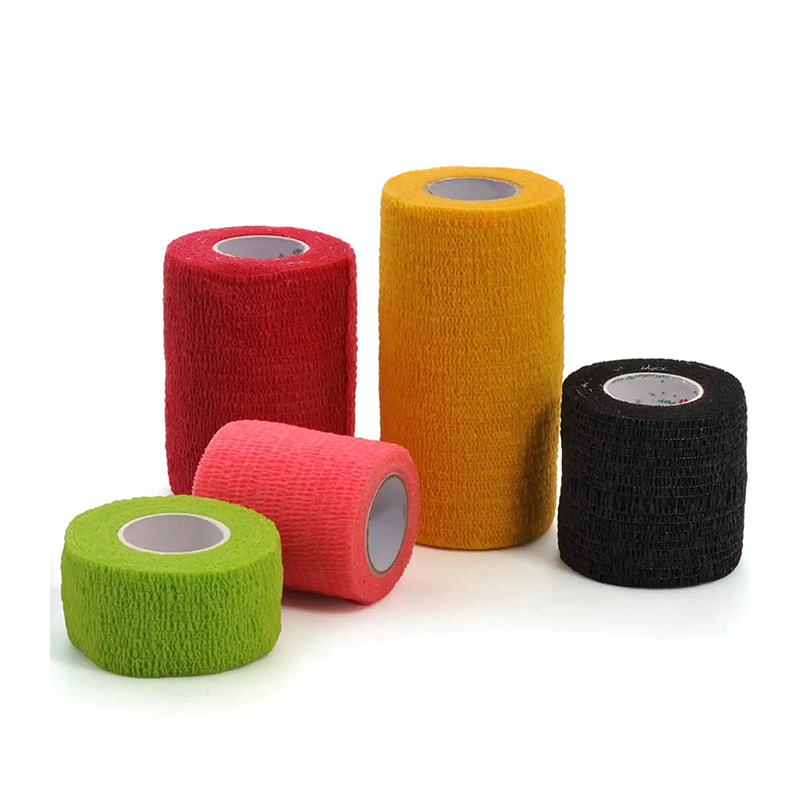
Non Woven Cohesive Bandages
Product Overview
A non woven cohesive bandage is a flexible wrap that adheres to itself through a cohesive coating or surface interaction. This means it does not need clips, pins, or conventional adhesive glue to stay in place. When wrapped around a limb, joint, finger, wrist, ankle, or dressing, the layers bond to each other and maintain position without sticking aggressively to the user’s skin.
The material construction typically combines cotton or non woven fabric with spandex. The cotton or non woven layer contributes softness, breathability, and comfort, while spandex provides stretch and recovery. This composite structure creates a bandage that conforms closely to body contours without becoming overly rigid. It can be used on different thicknesses and body areas, from small fingers to larger joints and limbs.
The product is especially useful in first aid and sports support because it can be applied quickly, removed comfortably, and torn by hand. In urgent situations, users may not have scissors available. A hand-tearable cohesive wrap helps simplify the process, reducing the time needed to secure a dressing or support a strain. The wrap’s self-adhering nature also helps prevent shifting during movement, which is important for athletes, patients, and active users.
Because it is breathable and water resistant, the bandage is designed to remain functional under common conditions involving sweat or light moisture. It does not loosen easily from sweat and water exposure, which gives it an advantage in sports, outdoor first aid, and high-activity environments. At the same time, its non-sticky contact with skin and hair improves comfort, especially during removal.
Key Specifications
The product is available in multiple width options to match different usage scenarios. Narrow widths are suitable for fingers, toes, small joints, and veterinary uses on smaller animals. Medium widths are suitable for wrists, elbows, ankles, and dressing fixation. Wider options are appropriate for knees, thighs, shoulders, larger limbs, or broader support applications.
| Item |
Specification |
Practical Value |
| Product Type |
Non woven cohesive bandage / self adhesive bandage wrap |
Provides flexible support and dressing fixation without clips or pins |
| Material |
Cotton or non woven fabric with spandex |
Offers softness, stretch, breathability, and conformability |
| Width Options |
1 inch, 2 inches, 3 inches, 4 inches, 6 inches |
Suitable for small, medium, and large body areas |
| Length |
4.5 meters |
Common practical length for medical, sports, and first aid wrapping |
| Color |
White, beige, and other colors |
Supports clinical, retail, sports, and customized branding needs |
| Packing |
Bulk, box, OPP bag, customized packaging |
Fits wholesale, retail, first aid kits, and OEM requirements |
| Main Features |
Self-adhering, hand tearable, breathable, water resistant |
Improves convenience, comfort, and stability during use |
| Application Areas |
First aid, sports support, dressing fixation, medical supply, home care |
Broad usability across professional and consumer markets |
Material Advantages: Cotton, Non Woven Fabric, and Spandex
The performance of a cohesive bandage depends heavily on its material structure. Cotton and non woven fabrics are widely used in medical consumables because they can deliver softness, comfort, and air permeability. When combined with spandex, the wrap gains elastic recovery, allowing it to stretch during application and hold securely after wrapping.
Cotton-based versions may provide a familiar textile feel, making them comfortable for users who prefer a softer, more natural touch. Non woven versions are valued for uniform texture, lightweight handling, and cost-effective production. In both versions, the addition of spandex improves stretch performance and helps the bandage conform to curved or moving body areas.
The composite construction of two layers, including fabric and elastic components, helps the bandage maintain balanced tensile strength. Strong tensile strength is important because the wrap must resist breakage during application and wear. A weak wrap may tear unexpectedly, loosen quickly, or fail to provide consistent compression. A high-quality cohesive bandage is engineered to remain reliable while still being easy to tear by hand when desired.
The bandage’s cohesive behavior is another important material advantage. Rather than depending on a sticky adhesive that bonds to skin, the wrap adheres to its own surface. This reduces discomfort and residue. It also makes the product more suitable for repeated repositioning during application, because the user can adjust the wrap without pulling painfully on hair or skin.
How the Self-Adhesive Function Improves Practical Use
The defining feature of a cohesive bandage is that it adheres to itself only. This feature brings several advantages compared with traditional adhesive medical tape. Conventional tapes may leave residue, irritate sensitive skin, or pull hair during removal. Cohesive wraps avoid many of these common problems because their holding power comes from layer-to-layer bonding rather than skin adhesion.
For wound dressing fixation, this means the bandage can secure gauze pads or wound dressings without applying strong adhesive directly around the wound area. For sports support, it means athletes can wrap joints quickly without worrying about tape removal after activity. For home care, it means users can apply and remove the product more comfortably, even without professional help.
Self-adherence also improves stability. When the outer layers of the bandage grip the previous layers, the wrap is less likely to slide out of position during movement. This is important for ankles, wrists, elbows, and knees, where bending and rotation can cause ordinary wraps to shift. The cohesive function helps maintain compression and coverage while allowing the bandage to flex with the body.
In veterinary or animal care settings, the non-sticky-to-fur advantage is especially valuable. Although the product is mainly presented as a medical and first aid consumable, the same principle of self-adherence makes it useful where fur or hair would make standard adhesives difficult to remove. A wrap that does not cling aggressively to fur can reduce stress during removal and simplify dressing changes.
Comfort and Breathability for Extended Wear
Comfort is a major factor in bandage performance. A support wrap that is too hot, too rigid, too sticky, or too restrictive may discourage users from wearing it properly. The non woven cohesive bandage is designed to be breathable, allowing air to pass through the material and reducing the feeling of trapped heat.
Breathability is especially important when the wrap is used during sports or in warm environments. Sweat accumulation can cause discomfort and skin maceration, and it can also weaken some types of traditional adhesive products. A breathable and water-resistant cohesive bandage helps improve wear experience by maintaining a more comfortable contact environment.
The bandage is also designed not to loosen easily from sweat or water exposure. In sports, training, first aid during outdoor activities, and emergency situations, users cannot always keep a wrap completely dry. Water resistance helps the bandage remain in place under realistic conditions. It does not mean the product should be used as a waterproof wound barrier, but it does provide better practical durability than wraps that quickly lose grip when damp.
The soft fabric feel also reduces the risk of pressure discomfort when properly applied. Because the bandage stretches, users can adjust compression. It is important not to wrap too tightly, particularly around fingers, toes, or limbs where circulation must be maintained. When applied correctly, the wrap delivers stable support without excessive constriction.
Hand Tearability and Efficient Application
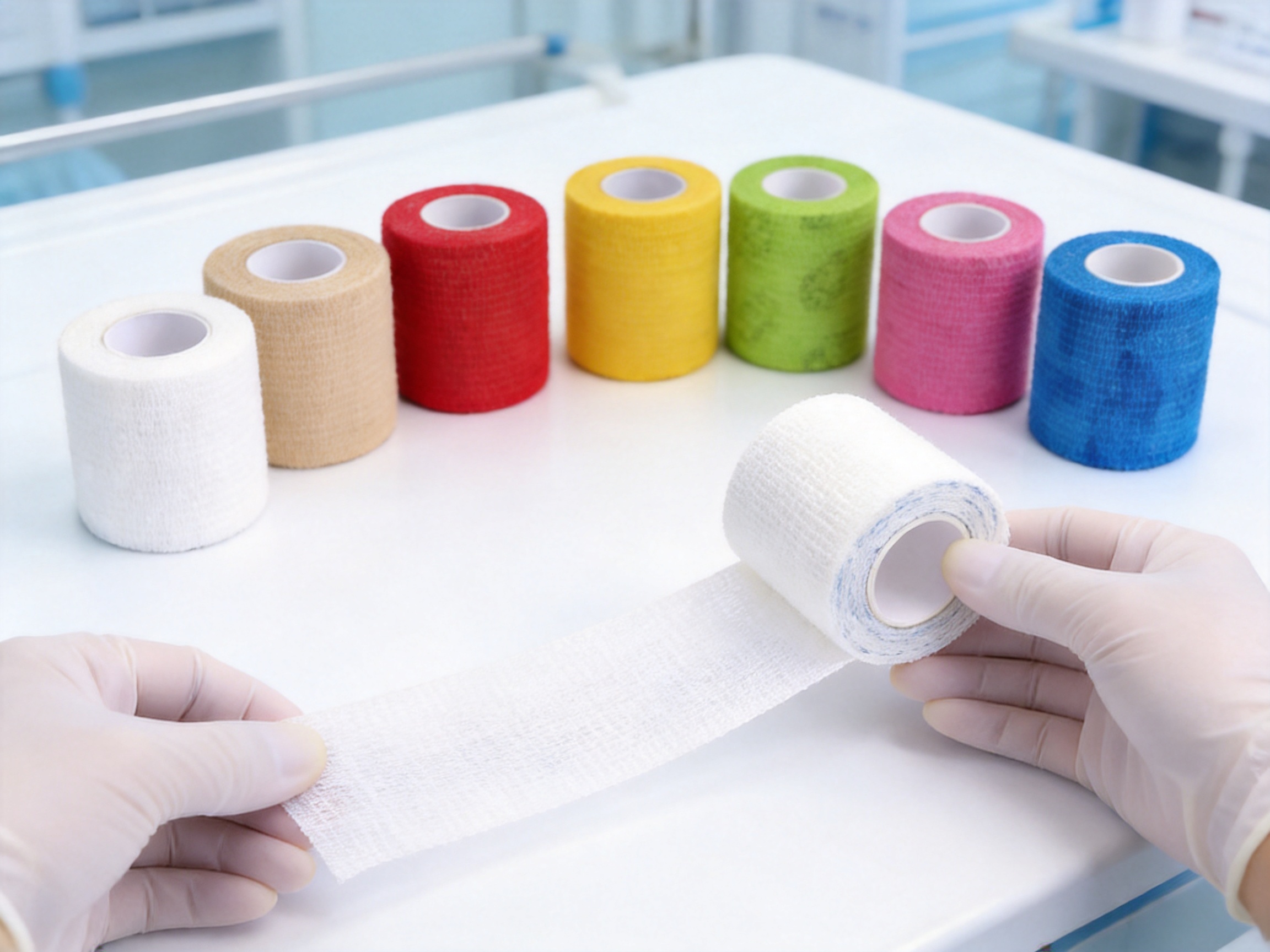
One of the strongest practical advantages of this cohesive bandage is easy hand tearability. Medical staff, athletic trainers, first aid responders, and home users often need to apply a wrap quickly. Scissors may not always be available, clean, or convenient. A bandage that tears cleanly by hand saves time and simplifies use.
Hand tearability also improves safety and efficiency in fast-paced environments. In sports settings, a trainer may need to wrap an ankle or wrist between plays or during a short break. In first aid, a responder may need to secure gauze quickly while managing other concerns. In home care, elderly users or caregivers may appreciate the ability to tear the wrap without searching for tools.
However, easy hand tearability must be balanced with tensile strength. A poor-quality product may tear too easily during wrapping, causing frustration and waste. A well-designed cohesive bandage maintains strong tensile strength while still allowing controlled tearing at the desired point. This balance reflects material quality, production consistency, and manufacturing know-how.
Compression and Support Performance
Non woven cohesive bandages are commonly used for compression and support. They can help hold dressings in place, protect mild strains, stabilize joints, and provide gentle compression for swelling management under appropriate guidance. Their elasticity allows the user to adjust the level of tension during application.
Compared with rigid tape, cohesive wraps provide more flexible support. They do not completely immobilize the area but instead allow functional movement. This makes them suitable for many sports and daily support applications where the goal is comfort, protection, and moderate stabilization rather than full immobilization.
Compared with ordinary elastic bandages that require clips or fasteners, cohesive bandages are more convenient. There is no need for metal clips that may loosen, fall off, or create pressure points. The wrap closes by adhering to itself, which helps create a clean and low-profile finish.
Compared with gauze rolls, cohesive bandages provide better stretch and staying power. Gauze is excellent for wound absorption and dressing use, but it does not usually provide the same level of elastic compression or self-securement. A cohesive wrap can be used over gauze to hold it in place, combining the absorbent benefit of gauze with the securing function of the wrap.
Applications in First Aid
In first aid, versatility is critical. A first aid kit needs products that can serve multiple functions without requiring complicated instructions. Non woven cohesive bandages can be used to secure dressings, wrap minor sprains, protect joints, and help keep pads or gauze in place.
The wrap’s self-adhering property is useful when dealing with awkward body areas. For example, securing a dressing on a finger, wrist, elbow, or ankle can be difficult with ordinary tape because body movement may cause edges to lift. Cohesive wrap conforms around these areas and bonds to itself, maintaining coverage and reducing the need for repeated adjustment.
Because it is easy to tear by hand, the wrap can be applied in outdoor, travel, school, workplace, and emergency settings. It is a practical addition to first aid suppliers, hospitals, sports clubs, retail first aid sections, and family healthcare kits.
Applications in Sports Support
Athletic activity places constant stress on joints and muscles. Wrists, ankles, knees, elbows, fingers, and thumbs are common areas where support wraps are needed. Non woven cohesive bandages are suitable for sports support because they offer adjustable compression, flexible movement, and secure self-adherence.
For athletes, comfort and speed matter. A wrap that is breathable, sweat resistant, and easy to remove is more likely to be used correctly. The bandage can be applied before exercise for light support or after minor strain as part of initial care. It can also be used to secure padding or protective materials during training or competition.
The availability of different colors can be important in sports retail. White and beige are common for medical and clinical use, while other colors may appeal to teams, gyms, retail brands, or promotional product lines. Customized colors and packaging support market differentiation and private label programs.
Applications in Wound Dressing Fixation
Wound care often requires a combination of absorbent dressing and fixation material. Gauze pads, non woven pads, or wound dressings need to remain stable to protect the wound area. A cohesive bandage can be wrapped over the dressing to secure it without using strong skin adhesive.
This is particularly useful for users with sensitive skin or areas with hair. Since the wrap does not stick to skin or hair, removal is generally more comfortable than traditional adhesive tape. It also reduces the chance of adhesive residue around the wound dressing area.
The bandage should not replace sterile wound dressings when direct wound contact protection is needed. Instead, it is often used as a secondary securing layer. Proper wound care procedures should always be followed, including cleaning, choosing suitable sterile dressings, and monitoring for signs of infection.
Applications in Clinical and Healthcare Supply Channels
Hospitals, clinics, nursing facilities, rehabilitation centers, and emergency care providers need medical consumables that are consistent, reliable, and easy to use. Non woven cohesive bandages meet these needs because they combine support, fixation, and comfort in a single roll.
In clinical environments, product consistency is extremely important. Each roll should have predictable stretch, cohesive strength, width, length, and tear performance. Variation can lead to application problems, waste, or user dissatisfaction. This is where manufacturing control and quality inspection become essential.
For distributors and healthcare procurement teams, a cohesive bandage is also attractive because it serves multiple departments and use cases. It may be used in first aid, outpatient dressing changes, sports medicine, rehabilitation, emergency care, and general nursing support. Broad applicability can simplify inventory planning and improve stock efficiency.
Applications in Home Care and Daily Healthcare
Home users increasingly seek medical consumables that are easy to apply without professional training. Non woven cohesive bandages are well suited to this trend because they are intuitive: wrap the area, overlap the layers, press lightly, and tear when finished. There is no need for clips, pins, or complex fastening methods.
Families may keep cohesive bandages for minor sports injuries, dressing fixation, travel first aid, pet care, or everyday support needs. The product’s comfortable removal makes it especially useful for children, older adults, and users with hair on the application area.
Retail-ready packaging options can make the product suitable for pharmacies, supermarkets, sports shops, and online healthcare stores. OPP bags, boxes, and custom packaging allow suppliers to match different market channels, from economical bulk medical supply to branded retail presentation.
Advantages Over Competing Bandage and Tape Products
Non woven cohesive bandages compete with several product types, including adhesive medical tape, elastic crepe bandages, gauze rolls, kinesiology tape, and athletic rigid tape. Each product has its own purpose, but the cohesive bandage offers a distinctive balance of convenience, comfort, and versatility.
Compared with adhesive medical tape, the cohesive bandage is more comfortable to remove because it does not stick to skin, hair, fur, or clothing. It also covers larger areas more quickly and can provide compression as well as fixation. Adhesive tape may still be useful for small dressing edges or precise attachment, but cohesive wrap is often easier for broad securing tasks.
Compared with elastic crepe bandages, cohesive wraps do not require clips or pins. Clips can be lost, bent, or uncomfortable. Cohesive bandages finish neatly by pressing the final layer onto itself. This makes application faster and reduces accessory requirements.
Compared with gauze rolls, cohesive bandages provide better elasticity and self-holding performance. Gauze is primarily absorbent, while cohesive wrap is primarily supportive and securing. Using them together can create an effective wound care combination.
Compared with rigid athletic tape, cohesive bandages are easier to remove and more flexible. Rigid tape may provide stronger immobilization for sports taping techniques, but it can be less comfortable, less breathable, and more difficult to remove. Cohesive wrap is suitable where moderate support and comfort are priorities.
Compared with low-quality cohesive wraps, a well-manufactured bandage offers stronger tensile strength, better unwind tension, longer shelf life, more consistent cohesion, and cleaner hand tearability. These performance factors directly influence user satisfaction and professional acceptance.
Unwind Tension and User Experience
Unwind tension refers to the force required to pull the bandage from the roll. If unwind tension is too high, the product becomes difficult to use and may stretch excessively before application. If it is too low, the roll may feel loose or unstable, and wrapping tension may be harder to control.
Good unwind tension improves the entire user experience. The bandage should come off the roll smoothly, allowing the user to apply controlled pressure. Smooth unwinding helps prevent uneven compression and makes the wrap easier to handle in clinical and sports environments.
Consistent unwind tension is also a sign of manufacturing quality. It depends on material selection, coating consistency, winding control, and packaging conditions. A product with stable unwind tension from roll to roll gives distributors and end users confidence.
Water Resistance and Sweat Resistance
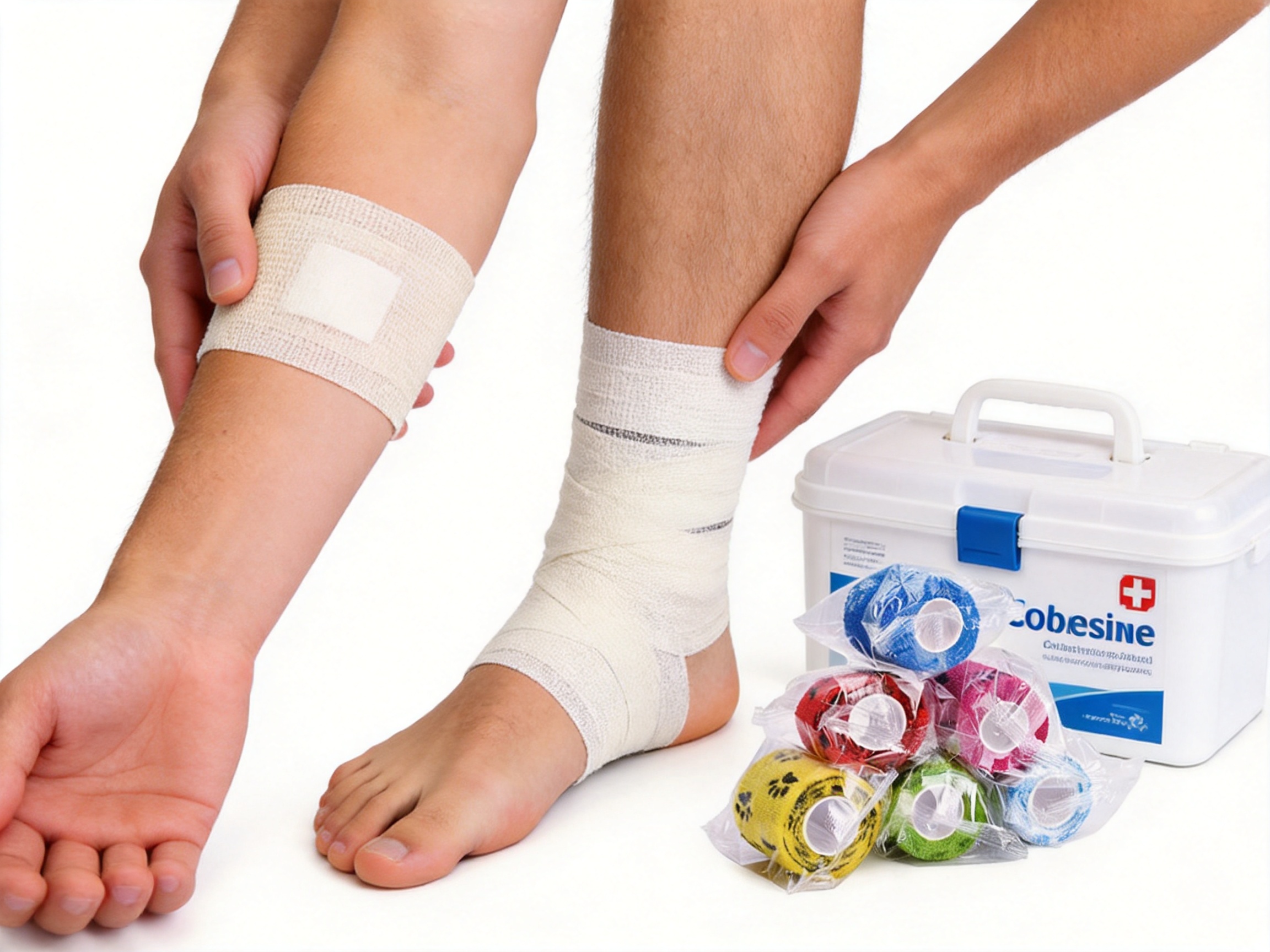
Many bandage applications involve moisture. Athletes sweat, outdoor first aid may occur in humid conditions, and daily movement can expose a wrap to light moisture. A cohesive bandage that remains stable despite sweat and water exposure offers a clear practical advantage.
The product is described as breathable and water resistant, and not loose by sweat and water. This combination is valuable because some products solve moisture resistance by becoming less breathable, while others are breathable but lose adhesion when damp. A balanced design supports comfort while maintaining functional performance.
For users, this means fewer reapplications, less waste, and greater confidence during movement. For suppliers, it means the product can serve sports, first aid, and general healthcare markets more effectively.
Color and Packaging Customization for Market Flexibility
Customization is an important advantage for global medical consumable buyers. Different markets have different preferences for color, size, labeling, packaging, and sales format. The product can be supplied in white, beige, and other colors, with bulk, box, OPP bag, and customized packaging options.
Clinical buyers may prefer neutral colors such as white or beige because they align with traditional medical appearance. Sports retailers may prefer brighter colors that match team identity or consumer style. First aid kit manufacturers may need compact packaging that fits standardized kit layouts. Distributors may require multilingual labeling or private label presentation.
Customized sizes can also support specialized applications. A narrow roll may be ideal for finger and toe wrapping, while wider rolls may be better for larger joints and limbs. By offering multiple widths and packaging formats, the product can fit diverse procurement requirements and regional market expectations.
Manufacturing Strengths Behind a Reliable Cohesive Bandage
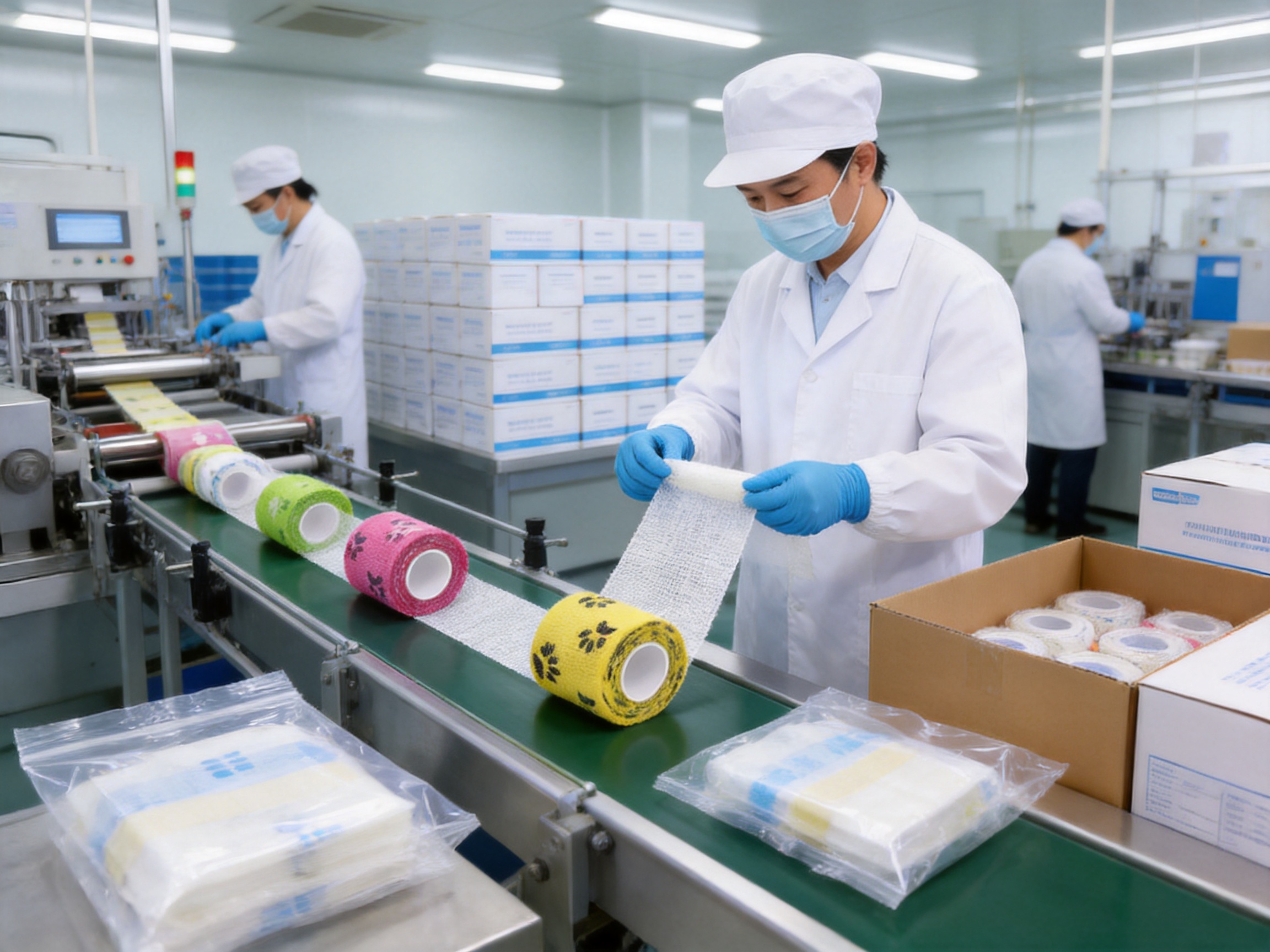
Reliable cohesive bandages are not created by material selection alone. Manufacturing processes determine whether each roll performs consistently. From raw material inspection to fabric processing, elastic integration, cohesive treatment, winding, cutting, packaging, and final inspection, each stage affects quality.
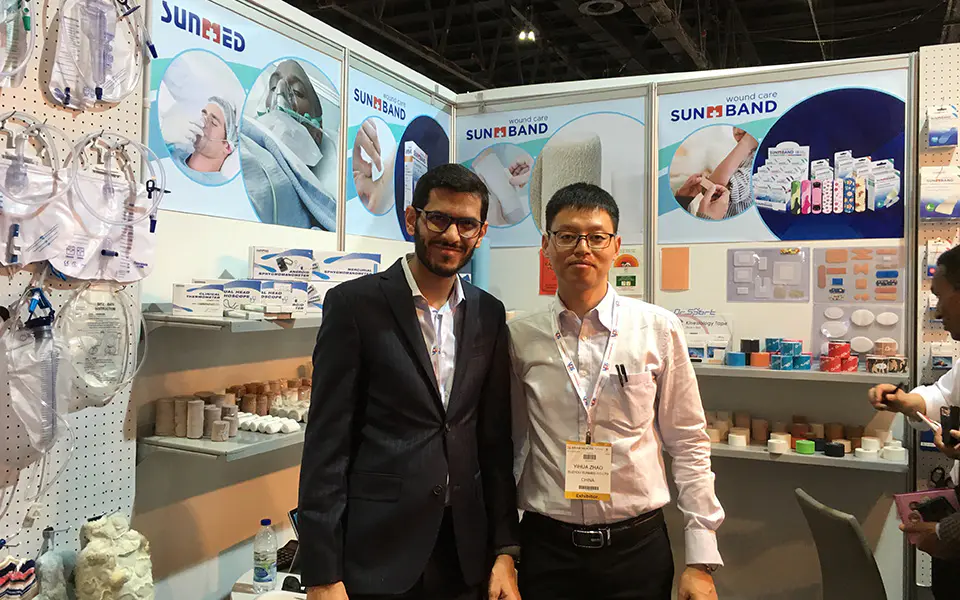
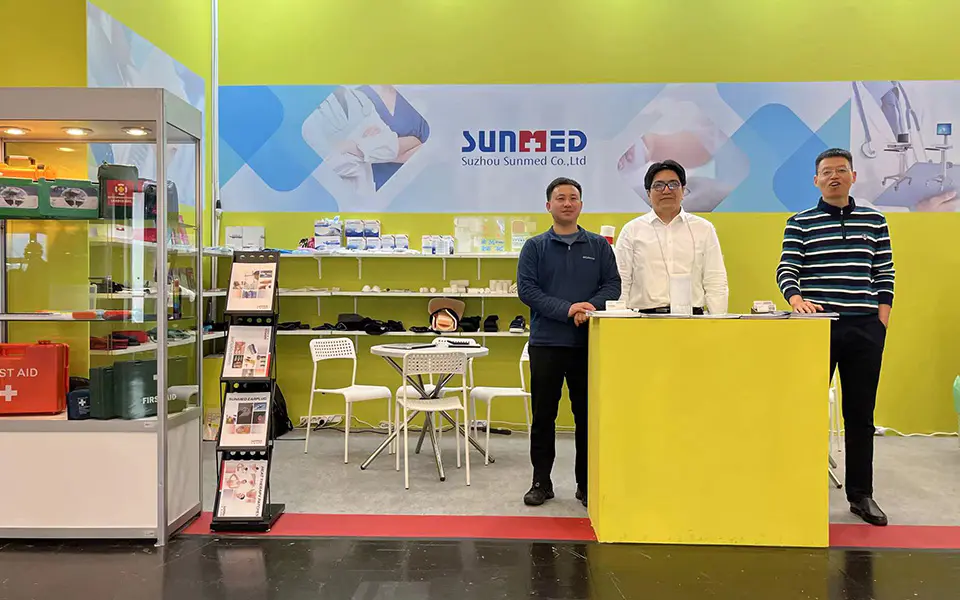
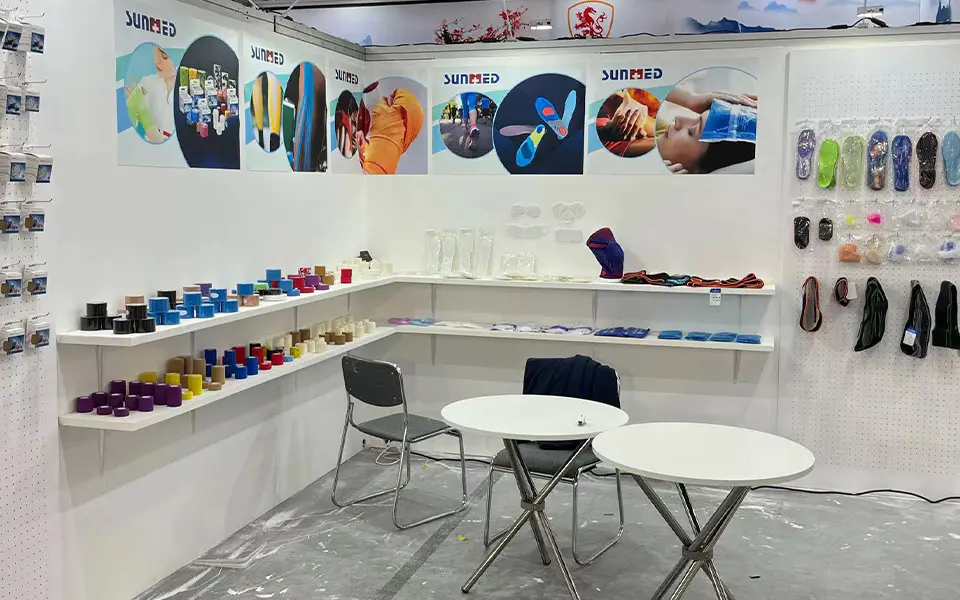
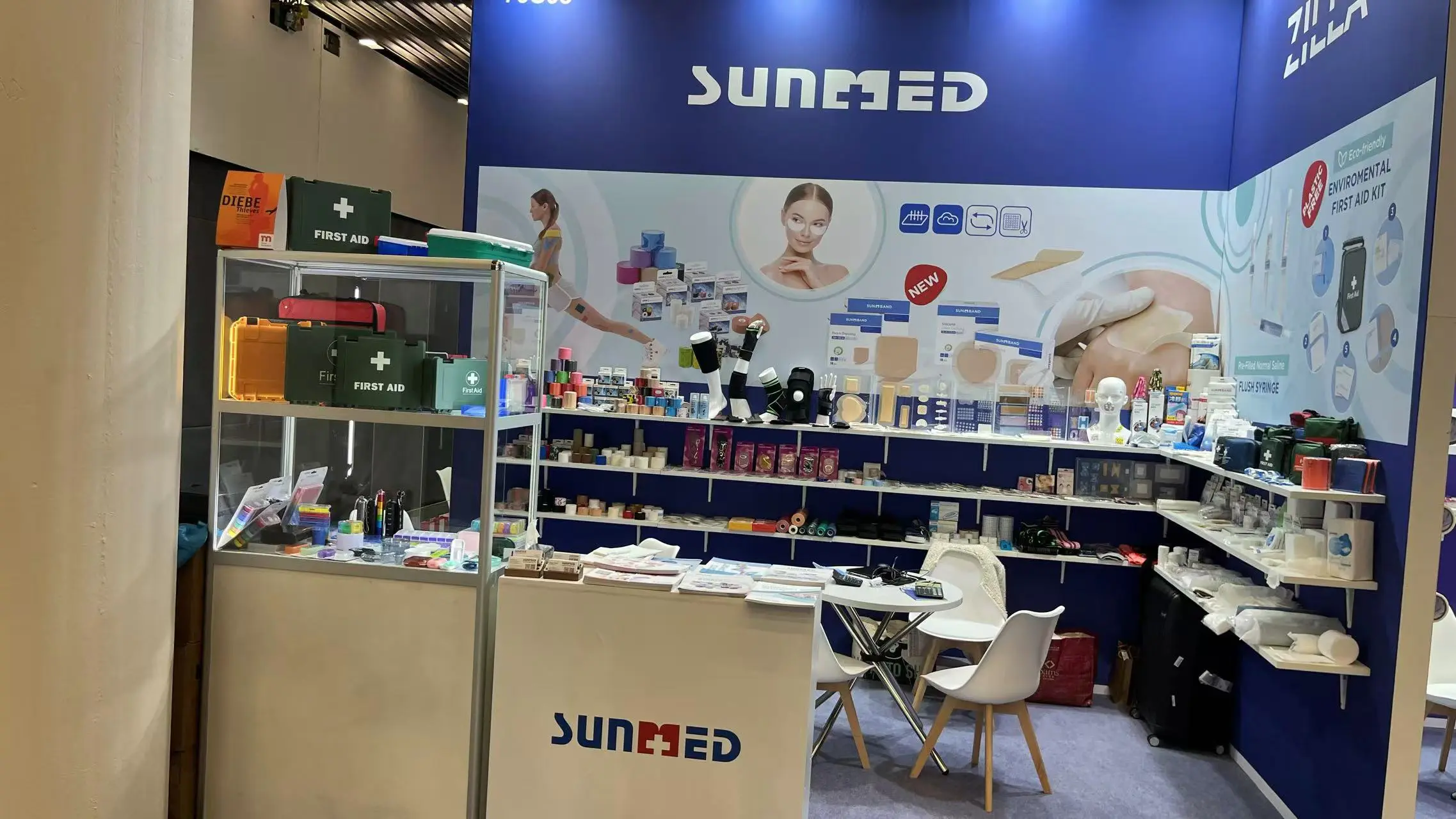
Suzhou Sunmed Co., Ltd. operates with decades of experience in medical devices and medical consumables. The company’s background in first aid, wound dressing, medical gauze, bandages, medical tape, cotton products, non woven products, sports bandages, kinesiology tape, cohesive bandages, and elastic adhesive bandages provides broad technical knowledge. This experience supports a deeper understanding of how a cohesive bandage should perform in real medical, sports, and consumer environments.
The company operates multiple production bases in Jiangsu, Zhejiang, and Anhui Province, allowing it to support varied product lines and supply demands. In 2008, it established a first aid factory to serve first aid customers. In 2021, it established its own factory for kinesiology tape, cohesive bandages, and elastic adhesive bandages to meet growing customer needs. This vertical capability supports product specialization, process control, and faster response to market requirements.
Advanced manufacturing strength includes more than equipment. It includes trained staff, documented procedures, controlled production environments, material traceability, process monitoring, and quality inspection. For medical consumables, consistent production is essential because small variations can affect usability and safety. A cohesive bandage must stretch properly, adhere to itself reliably, remain easy to tear, and maintain appropriate roll tension.
Quality Control and Compliance
Quality control is a core factor for medical consumable buyers. The company has a professional quality control team comprising hundreds of personnel who follow inspection procedures to ensure products meet ISO 13485:2016 standards. ISO 13485 is widely recognized as a quality management system standard for medical devices, emphasizing documentation, risk management, process control, and continual improvement.
Most products are CE certified, and the Suzhou factories comply with FDA requirements. These strengths are important for international buyers because regulatory expectations vary across regions. A supplier with experience in CE, FDA-related compliance, and ISO 13485-based systems is better prepared to support documentation, audits, technical files, labeling requirements, and quality assurance expectations.
For cohesive bandages specifically, quality control may include checks for width, length, appearance, elasticity, tensile strength, cohesion, unwind tension, hand tearability, packaging integrity, and labeling accuracy. Stable quality reduces complaints, returns, and market risk. It also helps distributors maintain reputation with hospitals, pharmacies, sports retailers, and first aid suppliers.
Experience in Global Medical Supply Markets
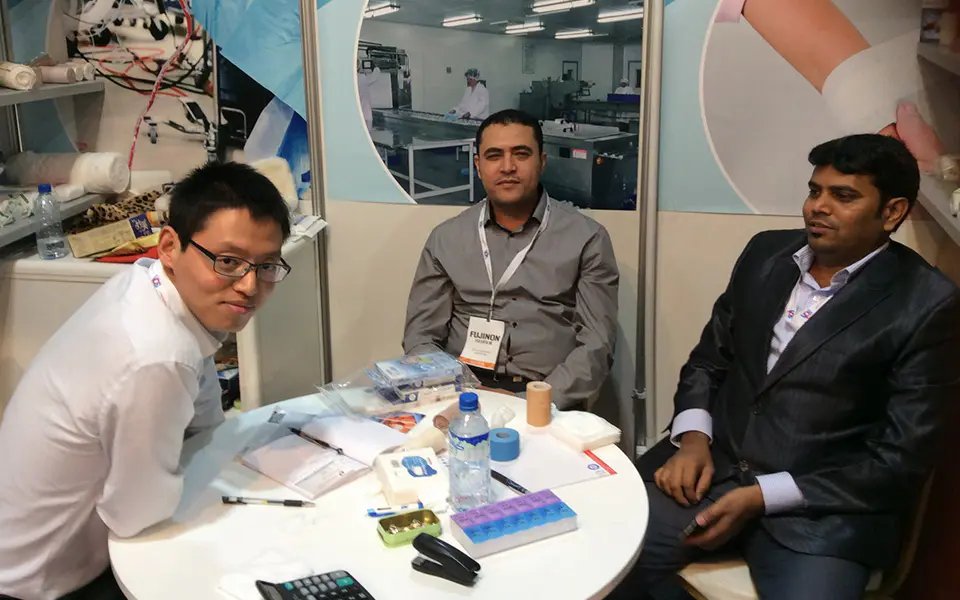
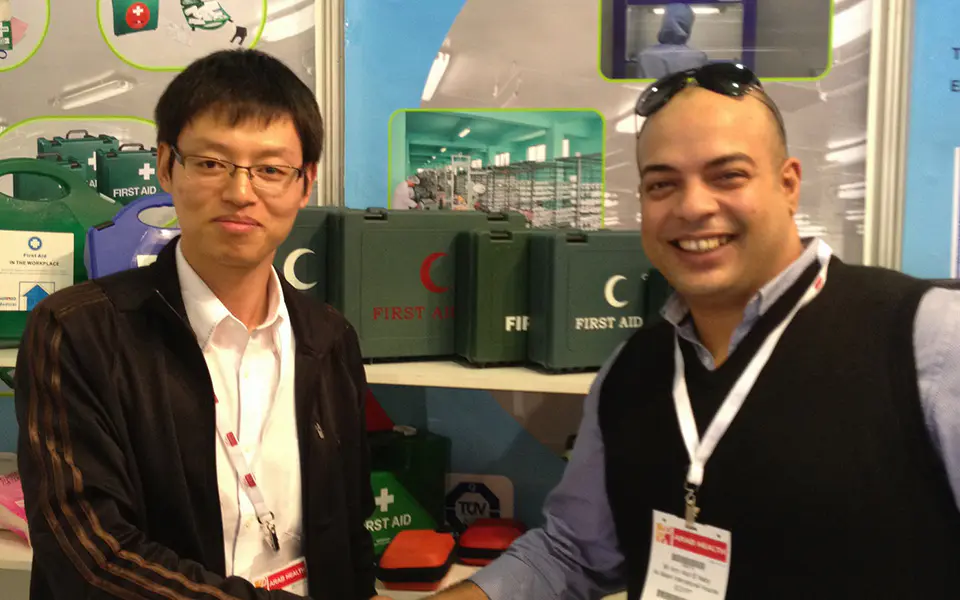
The company has exported products to more than 60 countries, including markets in Europe, Southeast Asia, Africa, and Oceania. Experience with diverse markets is valuable because each region may have different customer preferences, documentation needs, packaging expectations, and logistics requirements.
In Europe, buyers may emphasize CE documentation, product consistency, and professional packaging. In Southeast Asia, competitive pricing, fast supply, and flexible ordering may be important. In Africa, robust packaging and reliable logistics may matter greatly. In Oceania, retail presentation and compliance support may be key concerns. A manufacturer familiar with multiple regions can better support distributors with practical export experience.
The product’s market channels include hospitals, first aid suppliers, supermarkets, and retail sports shops. This wide channel coverage reflects the versatility of cohesive bandages. A product that can serve both professional and retail markets must combine dependable medical function with consumer-friendly handling and packaging.
OEM and Wholesale Advantages
For wholesale buyers and OEM customers, choosing the right manufacturer is as important as choosing the right product. Cohesive bandages may appear simple, but buyers need consistent quality, stable lead times, customization ability, responsive communication, and long-term cooperation.
The company’s experience as a professional manufacturer and exporter supports OEM medical consumable supply. Custom sizes, colors, and packaging allow buyers to create differentiated product lines. Private label packaging can support pharmacy brands, sports medicine brands, first aid kit brands, and healthcare distributors.
Wholesale buyers also benefit from a broad product category range. The company supplies first aid products, bandages, wound care items, gauze, medical tape, cotton products, personal protective products, sports support products, hot and cold therapy products, urology products, enteral feeding products, surgical suction management products, anesthesia and respiratory products, surgery and nursing products, medical diagnostic devices, foot care products, rehabilitation shoes, surgical instruments, syringe products, infusion products, blood collection and transfusion products, and patient transfer products. This broad portfolio may help procurement teams consolidate supply sources.
Why Tensile Strength and Shelf Life Matter
The product is described as having the strongest tensile strength and longer shelf life. Tensile strength matters because the bandage must withstand stretching and handling during application. If it breaks too easily, it can delay care and cause waste. If it lacks recovery, it may not maintain support. A strong yet flexible wrap improves reliability.
Shelf life matters for distributors, hospitals, first aid suppliers, and retailers. Medical consumables may be stored for months or longer before use. A cohesive bandage should maintain its functional properties during storage when kept under recommended conditions. Longer shelf life supports inventory planning, reduces waste, and improves buyer confidence.
Material stability, packaging protection, and controlled production all contribute to shelf life. Proper packaging helps protect rolls from dust, moisture, contamination, and deformation. Consistent manufacturing helps ensure the cohesive function remains stable over time.
How to Select the Right Width
Choosing the correct width improves performance and comfort. A 1 inch cohesive bandage is suitable for small areas such as fingers, toes, and small veterinary applications. It is easy to control and allows precise wrapping.
A 2 inch bandage is useful for hands, wrists, smaller ankles, and pediatric or compact first aid applications. It offers more coverage than a 1 inch roll while remaining easy to handle.
A 3 inch bandage is a versatile middle option for ankles, wrists, elbows, and general dressing fixation. Many first aid kits and sports support users find this width practical for common needs.
A 4 inch bandage provides broader coverage for larger joints, knees, lower legs, and more substantial dressing fixation. It can reduce wrapping time because each turn covers more area.
A 6 inch bandage is appropriate for large limbs, thighs, shoulders, torso-related dressing fixation, or applications needing wide compression coverage. It is often preferred in clinical or larger-area support situations.
Application Guidance
To apply a non woven cohesive bandage, begin by positioning the dressing or selecting the area that needs support. Hold the beginning of the wrap against the area and make the first turn with light tension. Continue wrapping with partial overlap, maintaining even pressure. Avoid pulling excessively, especially around limbs, fingers, or toes.
Once the desired coverage is achieved, tear the bandage by hand and press the end gently onto the previous layer. The bandage should adhere to itself and remain in place. Check circulation after application. If there is numbness, tingling, discoloration, increased pain, or swelling beyond the wrap, remove and reapply with less tension.
The bandage should be used as directed by healthcare professionals when applied for medical treatment, injury management, or post-procedure support. It is not a substitute for professional diagnosis or treatment of serious injuries, deep wounds, fractures, infections, or circulatory problems.
Storage and Handling Recommendations
Proper storage helps maintain product performance. Cohesive bandages should generally be stored in a clean, dry environment away from excessive heat, direct sunlight, and moisture. Packaging should remain intact until use to protect the roll from dust and contamination.
Distributors should rotate inventory using standard first-in, first-out procedures. Warehouses should avoid crushing cartons or exposing products to harsh conditions during transportation and storage. Retail packaging should remain clean and presentable to maintain customer confidence.
For first aid kits, users should check bandages periodically to ensure packaging is intact and products remain ready for use. A cohesive bandage is most effective when stored properly and replaced if damaged, contaminated, or beyond its recommended shelf life.
Buyer Considerations for Hospitals, Distributors, and Retailers
Hospitals and clinics should evaluate cohesive bandages based on quality consistency, compliance documentation, packaging hygiene, performance, and supplier reliability. Products should be easy for staff to use and dependable across repeated applications.
Distributors should consider whether the manufacturer can provide stable production capacity, export documentation, customization, and responsive communication. Since cohesive bandages may be sold across multiple channels, the ability to supply different packaging formats is valuable.
Retailers should look for consumer-friendly packaging, clear specifications, attractive colors, and reliable performance. A product that tears easily by hand, feels comfortable, and removes without pulling skin or hair can earn repeat purchases and positive customer feedback.
First aid kit assemblers should evaluate roll size, packaging compactness, shelf life, and compatibility with kit layouts. Cohesive bandages are useful because they provide multiple functions in a small package, helping kits deliver better value.
Sustainability and Responsible Use
Medical consumables must balance hygiene, safety, cost, and environmental considerations. Cohesive bandages are typically single-user items for hygienic reasons, especially when used in wound care or clinical environments. Responsible use means selecting the correct size, applying only the needed amount, and storing products properly to reduce waste.
Manufacturing consistency also contributes to sustainability by reducing defective products, rejected batches, and unnecessary disposal. A reliable supplier with quality systems can support better resource efficiency through stable production and lower complaint rates.
Customized packaging can also help reduce excessive materials. Buyers may choose bulk packaging for institutional use or compact retail packaging for consumer channels. Matching packaging to the actual use environment helps improve logistics and reduce unnecessary packaging volume.
Q&A Section
What is a non woven cohesive bandage?
A non woven cohesive bandage is an elastic self-adhering wrap made from cotton or non woven fabric with spandex. It adheres to itself rather than to skin, hair, fur, or clothing. It is commonly used for dressing fixation, first aid, sports support, and light compression applications.
How is it different from ordinary adhesive medical tape?
Ordinary adhesive medical tape sticks to skin or dressing surfaces using adhesive glue. A cohesive bandage sticks mainly to itself. This makes it more comfortable to remove, reduces residue, and allows the user to wrap larger areas quickly while providing flexible compression.
Does the bandage stick to hair or skin?
No. One of its main advantages is that it adheres to itself only and is non-sticky to hair, fur, skin, and clothing. This improves comfort during removal and makes it suitable for areas where traditional tape may be uncomfortable.
Can it be torn by hand?
Yes. The bandage is designed to be easy to tear by hand. This makes it convenient for first aid, sports support, emergency use, and home care situations where scissors may not be available.
What sizes are available?
Common widths include 1 inch, 2 inches, 3 inches, 4 inches, and 6 inches. The standard length is 4.5 meters. Customized sizes are available depending on order requirements.
What colors can be supplied?
Standard colors include white and beige, and other colors can also be customized. Neutral colors are common for medical use, while colorful options may be suitable for sports, retail, and private label products.
Is the bandage breathable?
Yes. The bandage is designed to be breathable, helping improve comfort during wear. Breathability is important for sports, daily support, and applications where the wrap may remain on for an extended period.
Is it water resistant?
Yes. The product is water resistant and designed not to loosen easily from sweat or water exposure. This makes it practical for sports activities and normal daily use. However, it should not be considered a waterproof wound barrier.
Can it be used directly on wounds?
It is generally used as a securing or support wrap rather than as a primary sterile wound dressing. For wounds, a suitable sterile dressing or gauze pad should be placed over the wound first, and the cohesive bandage can then be used to hold the dressing in place.
Who can use this product?
The product can be used by healthcare professionals, first aid responders, athletic trainers, caregivers, and home users. It is suitable for hospitals, clinics, first aid kits, sports shops, supermarkets, and healthcare distributors.
Why is tensile strength important?
Tensile strength helps the bandage resist breakage during wrapping and wear. A strong cohesive bandage provides more dependable support, reduces waste, and improves user confidence.
What packaging options are available?
Packaging options include bulk packing, box packing, OPP bag packing, and customized packaging. This allows the product to serve wholesale, clinical, retail, OEM, and first aid kit markets.
Why choose a manufacturer with ISO 13485 experience?
ISO 13485-based quality management supports controlled production, documentation, inspection, and continuous improvement for medical devices and consumables. For buyers, this means better consistency, stronger quality assurance, and improved confidence in long-term supply.
Conclusion
Non woven cohesive bandages provide a practical combination of self-adherence, breathability, water resistance, tensile strength, easy hand tearability, and comfortable removal. They are useful across first aid, sports support, wound dressing fixation, clinical supply, home care, and retail healthcare markets. Their ability to adhere to themselves without sticking to skin, hair, fur, or clothing gives them a clear advantage over many traditional adhesive tapes and fastening bandages.
The availability of multiple widths, a standard 4.5 meter length, color options, and customized packaging makes the product highly adaptable for distributors, hospitals, first aid suppliers, sports retailers, and OEM customers. Whether used to secure gauze, support a joint, protect a dressing, or complete a first aid kit, the cohesive bandage offers convenient performance in a compact roll.
Behind the product, strong manufacturing capability and quality control are essential. Suzhou Sunmed Co., Ltd. brings long-term experience in medical consumables, first aid products, wound care, sports support, and healthcare supplies. With multiple production bases, specialized factories, ISO 13485:2016 quality management practices, CE-certified product experience, FDA-compliant Suzhou factories, and a professional quality control team, the company is positioned to support global buyers seeking dependable cohesive bandage supply.
For buyers comparing suppliers, the key considerations should include material quality, consistent self-adherence, tensile strength, unwind tension, breathability, water resistance, packaging flexibility, compliance support, and export experience. A high-quality non woven cohesive bandage is more than a simple wrap; it is a versatile medical consumable that improves convenience, comfort, and reliability in many care environments.
References
International Organization for Standardization. ISO 13485:2016 Medical devices — Quality management systems — Requirements for regulatory purposes.
European Commission. Guidance documents related to CE marking and medical device conformity assessment.
U.S. Food and Drug Administration. Quality system considerations for medical device manufacturing.
World Health Organization. Medical device technical series: procurement and quality assurance principles.
British Standards Institution. Guidance on medical device quality management and risk-based manufacturing controls.
National Athletic Trainers’ Association. General principles of protective taping, wrapping, and sports support materials.
Wound, Ostomy and Continence Nurses Society. General wound dressing fixation and skin protection considerations.

 English
 Español
 русский
 Français
 Deutsch
 italiano
 By Admin