Burn care requires speed, comfort, cleanliness, and reliable wound protection. A hydrogel impregnated burn dressing is designed to meet these needs by providing immediate cooling contact, maintaining a moist wound environment, and helping reduce further trauma during early burn management. For first aid teams, hospitals, emergency kits, industrial safety programs, sports facilities, schools, pharmacies, and home healthcare use, this type of dressing offers a practical and user-friendly solution for a wide range of burn incidents.
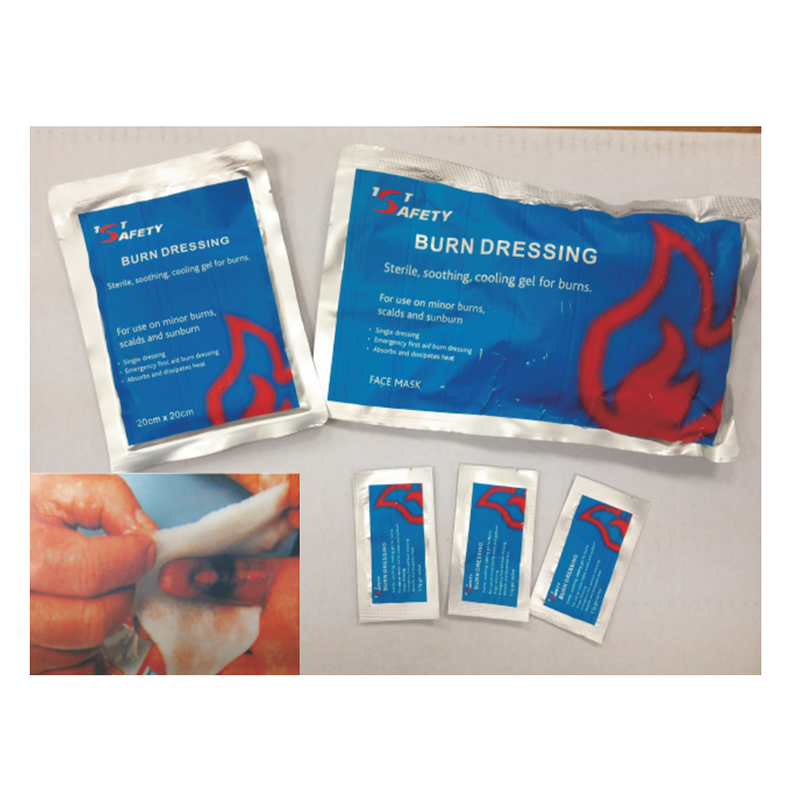
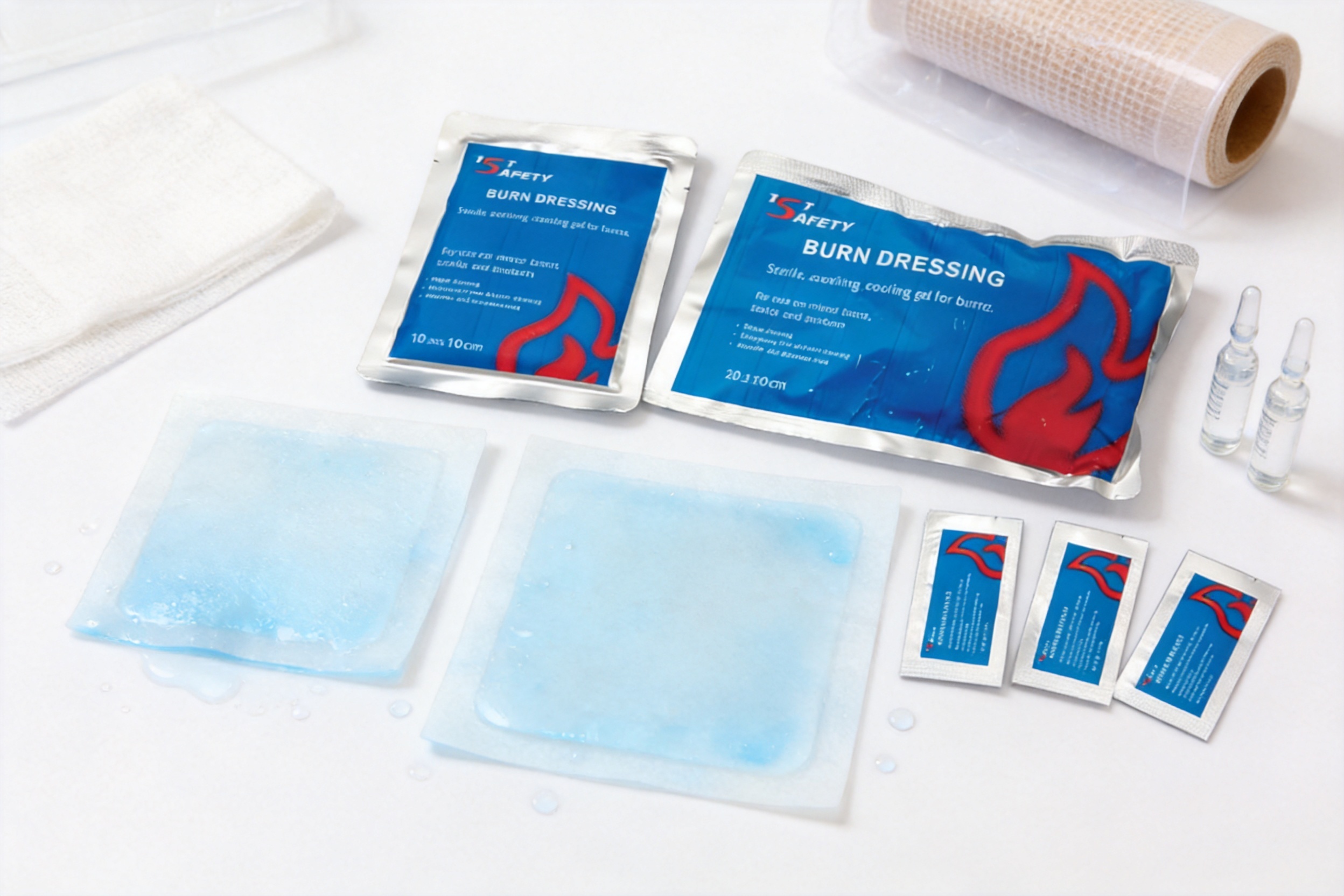
The Hydrogel Impregnated Burn Dressing described here is supplied in convenient aluminum foil pouch packaging and is available in two practical sizes: 10 x 10 cm with 40 g content and 20 x 20 cm with 120 g content. It can be applied directly to the burn area and covered with a protective bandage. The dressing is non-adhesive, helping minimize discomfort during removal, and it may be removed with cool water or saline solution. It is designed for use on burns including scalds and facial burns, and it is suitable for thermal, radiation, chemical, and electrical burn support within appropriate first aid protocols.
Hydrogel Impregnated Burn Dressing
Understanding the Role of Hydrogel in Burn Dressings
Hydrogel burn dressings are widely used in first aid and wound care because they combine hydration, cooling, cushioning, and easy application. Unlike dry gauze alone, a hydrogel impregnated dressing contains a high-water-content gel that helps cool the affected area and supports moisture balance at the wound surface. This cooling effect is especially valuable in the early stage after a burn, when heat retention in damaged tissue can continue to cause discomfort and may contribute to further injury.
The main function of a hydrogel impregnated dressing is not simply to cover a wound. It is engineered to create a protective and moist interface between the burn and the outer environment. A moist wound environment is commonly associated with improved comfort, easier dressing changes, and reduced risk of secondary trauma caused by dry materials sticking to damaged tissue. In burn care, patient comfort is extremely important because pain, heat, and skin sensitivity can be intense.
The dressing also helps simplify emergency response. When a burn occurs, responders need a product that can be opened quickly, applied directly, and secured without complicated preparation. The aluminum foil pouch helps keep the dressing ready for use, while the impregnated hydrogel format reduces the need for multiple separate materials during initial care. This makes the product suitable for first aid cabinets, ambulance supplies, workplace safety stations, and outdoor emergency packs.
Product Overview
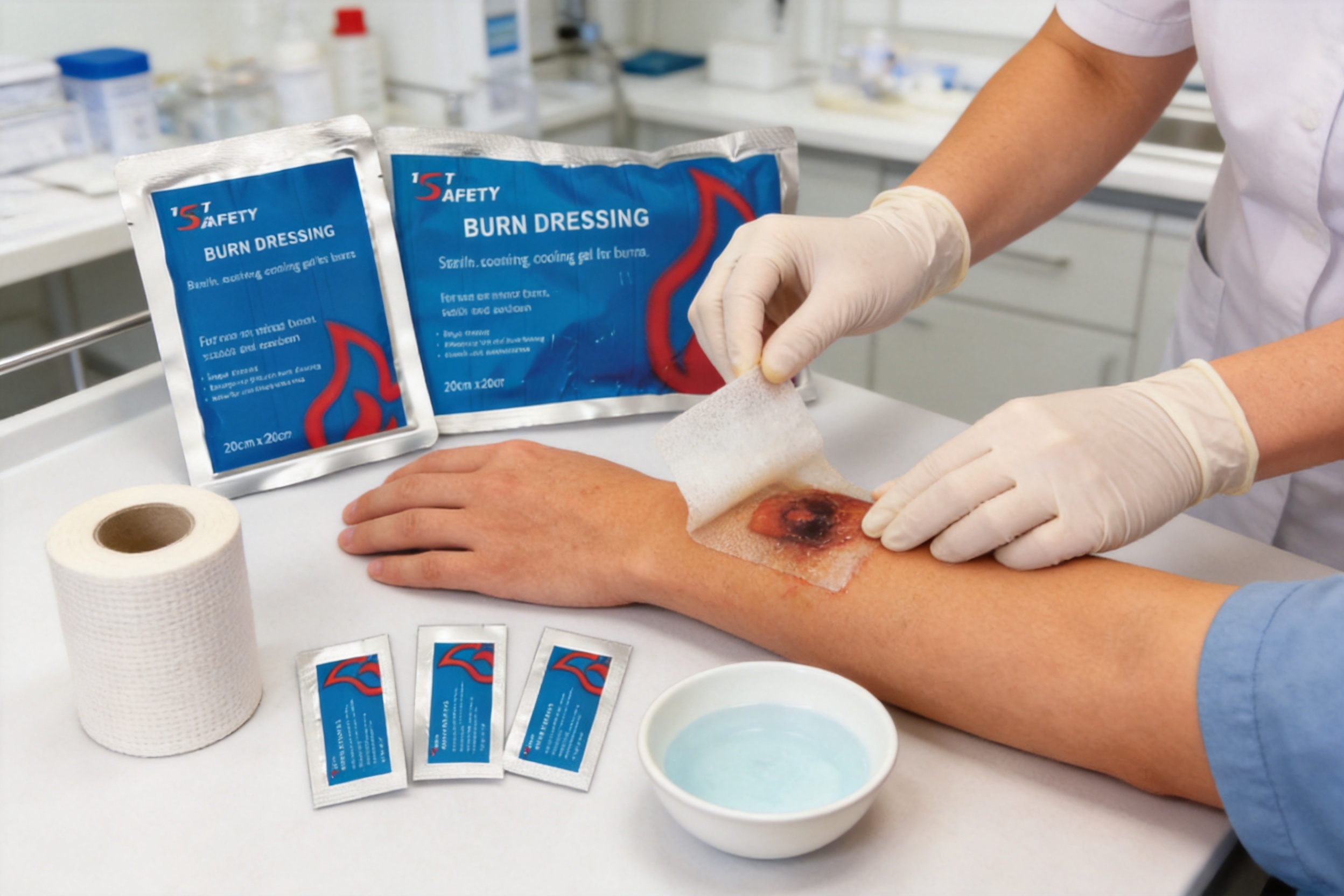
The Hydrogel Impregnated Burn Dressing is a dedicated burn care dressing intended to moisturize the burn area, cool the skin, and help minimize trauma or tissue damage associated with heat and irritation. Its non-adhesive design allows it to be removed more comfortably than adhesive dressings that can pull on fragile skin. When removal is required, cool water or saline solution may be used to help lift the dressing without causing unnecessary discomfort.
The product can be used for burns including facial burns and scalds. It is applied directly to the wound and then covered with a protective bandage to keep it in place and help protect the area. The dressing is safe for use on different categories of burns, including thermal burns, radiation burns, chemical burns, and electrical burns, when used according to appropriate first aid guidance and clinical judgment. Severe burns, deep burns, chemical exposure, electrical injuries, and burns affecting large body areas should always receive urgent professional medical assessment.
Two product codes are available. SMD-131601 refers to the Hydrogel Impregnated Burn Dressing in 10 x 10 cm size with 40 g content. SMD-131602 refers to the Hydrogel Impregnated Burn Dressing in 20 x 20 cm size with 120 g content. These two sizes give buyers flexibility for different applications, from smaller burns on hands, arms, or limited skin areas to larger burn coverage requirements.
| Product Code |
Description |
Typical Application Advantage |
| SMD-131601 |
Hydrogel Impregnated Burn Dressing, 10 x 10 cm, 40 g |
Compact size for small to medium burn areas and first aid kits |
| SMD-131602 |
Hydrogel Impregnated Burn Dressing, 20 x 20 cm, 120 g |
Larger coverage for broader burn areas and emergency response supplies |
Key Product Benefits
Immediate Cooling Support
One of the most important advantages of a hydrogel burn dressing is cooling. Burns continue to feel hot and painful after the initial incident, and trapped heat may worsen discomfort. The hydrogel impregnated structure helps cool the skin surface by transferring moisture to the affected area. This cooling action can be especially valuable before professional medical treatment is available or during the initial management of minor burns.
Compared with ordinary dry dressings, hydrogel dressings provide more direct comfort because they are not simply a barrier. They interact with the surface by providing moisture and cooling contact. This makes the product more suitable for burn care than standard cotton gauze alone, which may dry out and adhere to the wound.
Moist Wound Environment
Maintaining moisture at the wound interface is an important principle in modern wound care. A moist environment can help protect exposed nerve endings, reduce friction, and make dressing removal easier. For burns, where skin is often damaged, sensitive, and painful, moisture management is a major advantage.
The hydrogel impregnated burn dressing is designed to moisturize the burn area. This helps reduce the drying effect that can occur with traditional gauze and supports a more comfortable wound covering. Moisture also helps prevent the dressing from sticking tightly to the wound surface, reducing the risk of disruption during dressing changes.
Non-Adhesive and Easy to Remove
Adhesive dressings may be useful for many ordinary cuts, but burns require a gentler approach. Burned skin can be fragile, blistered, and painful. A dressing that sticks aggressively can cause additional trauma when removed. The Hydrogel Impregnated Burn Dressing is non-adhesive, which means it can be placed over the burn without bonding directly to damaged tissue.
Removal can be supported with cool water or saline solution. This feature is important in emergency care because it allows caregivers to remove or adjust the dressing more comfortably. It also reduces anxiety for the patient, especially for children, elderly patients, or individuals with facial burns and other sensitive injuries.
Suitable for Multiple Burn Types
Burns may be caused by different sources. Thermal burns are caused by heat, flames, hot liquids, steam, or heated surfaces. Radiation burns may occur from exposure to radiation sources. Chemical burns are caused by corrosive substances, acids, alkalis, or irritant chemicals. Electrical burns may occur when electric current passes through tissue. The product is designed for use on thermal burns, radiation burns, chemical burns, and electrical burns as part of appropriate first aid response.
This broad usability makes the dressing valuable for diverse environments. Industrial facilities may face chemical and electrical risks. Kitchens, food production sites, schools, and homes commonly face scald and thermal burn risks. Clinics and emergency responders require products that can be used across a range of incidents. Having one burn dressing format suitable for multiple burn types helps simplify purchasing, storage, and training.
Convenient Aluminum Foil Pouch Packaging
The product is packed in an aluminum foil pouch. This packaging format helps protect the hydrogel dressing before use and supports clean, convenient storage. In emergency products, packaging matters. The dressing must remain ready, easy to identify, easy to transport, and simple to open when needed.
Aluminum foil pouch packing is also practical for first aid kits because it helps protect the product from external contamination and moisture loss. It allows the dressing to be stored in vehicles, emergency cabinets, sports medical bags, workplace safety kits, and home care supplies. For distributors and OEM customers, compact pouch packaging also supports efficient carton packing and inventory management.
Advantages Over Conventional Burn Care Options
Hydrogel Dressing Compared with Dry Gauze
Dry gauze is one of the most common wound care materials, but it is not always ideal as a first-contact material for burns. Dry gauze may absorb wound fluid and become attached to the burn area. When it is removed, it may disturb fragile tissue and cause pain. It also does not provide active cooling or moisture to the burn surface.
The hydrogel impregnated burn dressing offers a more burn-specific solution. It cools and moisturizes while providing a soft barrier. It is non-adhesive and can be removed with water or saline. This makes it more comfortable and better suited for initial burn management than ordinary dry gauze used alone.
Hydrogel Dressing Compared with Ointment and Loose Gauze
Some first aid situations use ointment combined with gauze. While this approach may provide moisture, it requires multiple items, correct dosing, and clean handling. In fast-moving emergency situations, applying ointment evenly and then securing gauze can be inconvenient. There may also be concerns about contamination if the ointment tube is reused.
A hydrogel impregnated dressing provides a ready-to-use alternative. The hydrogel is already integrated into the dressing, reducing preparation steps. The user can open the pouch, apply the dressing, and secure it with a protective bandage. This is particularly useful for workplaces, schools, sports venues, and emergency response teams where fast and standardized care is required.
Hydrogel Dressing Compared with Adhesive Bandages
Adhesive bandages are common in daily first aid, but they are often too small, too dry, and too adhesive for burns. Burned skin needs gentle coverage and should not be pulled by adhesive edges. Adhesive bandages may be acceptable for very minor superficial injuries, but they are not an ideal burn dressing for many situations.
The hydrogel impregnated burn dressing is designed specifically for burns. It offers larger coverage options, cooling hydrogel contact, and non-adhesive removal. The dressing can be secured with a separate protective bandage, allowing the caregiver to control pressure and placement without sticking adhesive directly to the burn area.
Hydrogel Dressing Compared with Water-Only Cooling
Cool running water is commonly recommended as an immediate response for many thermal burns. However, after initial cooling, the burn still needs protection during transport, assessment, or continued care. Water alone cannot remain in place as a protective covering. A hydrogel impregnated dressing extends cooling support while also covering the wound.
The dressing is particularly useful when continuous access to clean water is not available, such as in transport, field work, outdoor activities, or industrial areas. It should not replace proper emergency response protocols, but it provides a practical bridge between initial first aid and professional care.
Application Guidance
The dressing is designed for direct application to the burn. Before use, responders should follow local first aid procedures. For many burns, immediate cooling with clean cool running water is recommended when available, especially for thermal burns. Contaminated clothing or jewelry near the affected area may need to be removed if safe to do so, but material stuck to the wound should not be forcibly removed.
After the area is prepared according to first aid guidance, the aluminum foil pouch can be opened and the hydrogel impregnated dressing can be placed directly over the burn. The dressing should cover the affected area comfortably. It may then be covered with a protective bandage to hold it in place. The bandage should not be applied too tightly, especially if swelling is possible.
For removal, cool water or saline solution may be used. This helps release the dressing gently and reduces discomfort. If the burn is severe, deep, extensive, located on the face, hands, feet, genitals, or major joints, or caused by chemicals or electricity, professional medical care should be sought promptly. The dressing is a first aid and wound care support product, not a substitute for emergency medical treatment.
Use Scenarios
Home First Aid
At home, burns often occur in kitchens, bathrooms, workshops, and outdoor cooking areas. Hot water, steam, oil, heated cookware, irons, and small appliances can cause painful injuries. A hydrogel burn dressing provides families with a ready-to-use product that is more appropriate for burns than ordinary adhesive strips. The 10 x 10 cm size is especially suitable for home first aid kits because it is compact and easy to store.
Workplace and Industrial Safety
Factories, laboratories, construction sites, kitchens, catering facilities, and maintenance departments all face burn risks. Industrial settings may involve hot surfaces, steam lines, electrical systems, chemicals, welding, and heated tools. Stocking hydrogel burn dressings in workplace first aid stations can help safety teams respond quickly and consistently.
The larger 20 x 20 cm size is valuable for workplaces because burn areas may be larger or located on limbs where broader coverage is helpful. Aluminum foil pouch packaging supports long-term storage in safety cabinets and mobile emergency kits.
Hospitals and Clinics
Clinical environments require dependable consumables with consistent quality. Hydrogel burn dressings can be used as part of burn care protocols, emergency departments, outpatient treatment rooms, and procedure areas. The dressing’s cooling, moist, non-adhesive properties support patient comfort and efficient care.
For hospitals and clinics, product consistency matters. A dressing must perform reliably from one batch to another. Manufacturing under quality management systems and strict inspection procedures helps ensure the product can be trusted in professional environments.
Emergency Medical Services
Ambulances, rescue teams, fire departments, and disaster response units require compact, easy-to-use, fast-response supplies. A hydrogel impregnated burn dressing is well suited for mobile emergency care because it is individually packed, ready to apply, and useful for many burn types. It can help stabilize the burn area during transport and reduce patient discomfort.
Sports, Outdoor, and Travel Kits
Although sports injuries are often associated with sprains, strains, and abrasions, burns can also occur during outdoor events, camping, athletic training, and travel. Hot equipment, sun exposure, cooking stoves, and vehicle parts can cause burns. A hydrogel burn dressing is lightweight and compact enough for outdoor medical kits, sports support bags, and travel first aid supplies.
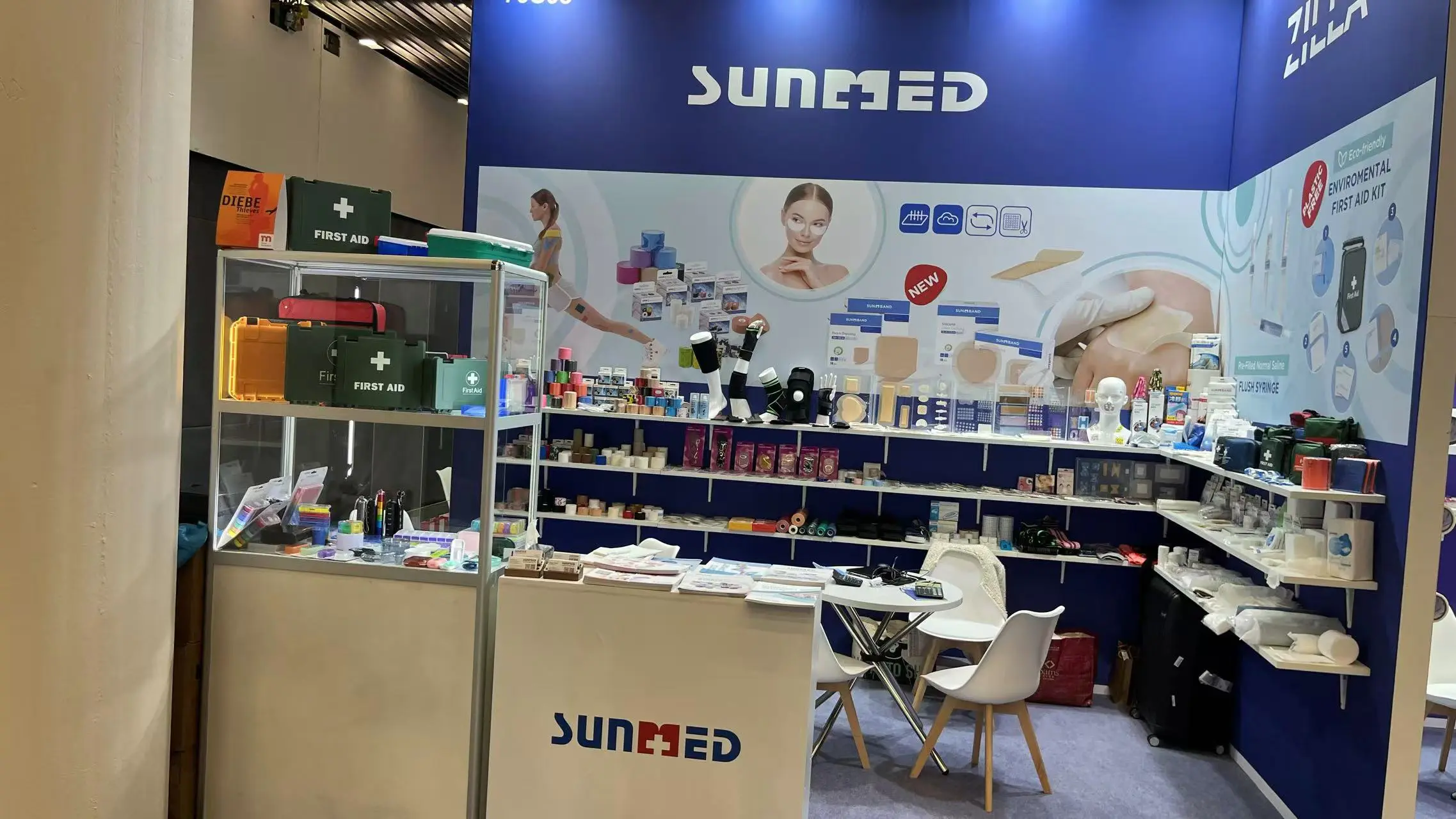
Manufacturing Strength Behind the Product
Reliable medical consumables depend on more than product design. They require disciplined manufacturing, controlled materials, experienced workers, inspection systems, and export knowledge. Suzhou Sunmed Co., Ltd. is a professional manufacturer and exporter of first aid, medical, and healthcare products in China, with 30 years of experience in the medical device and medical consumables industry. The company operates multiple production bases in Jiangsu, Zhejiang, and Anhui Province, giving it strong production capacity and a broad product supply foundation.
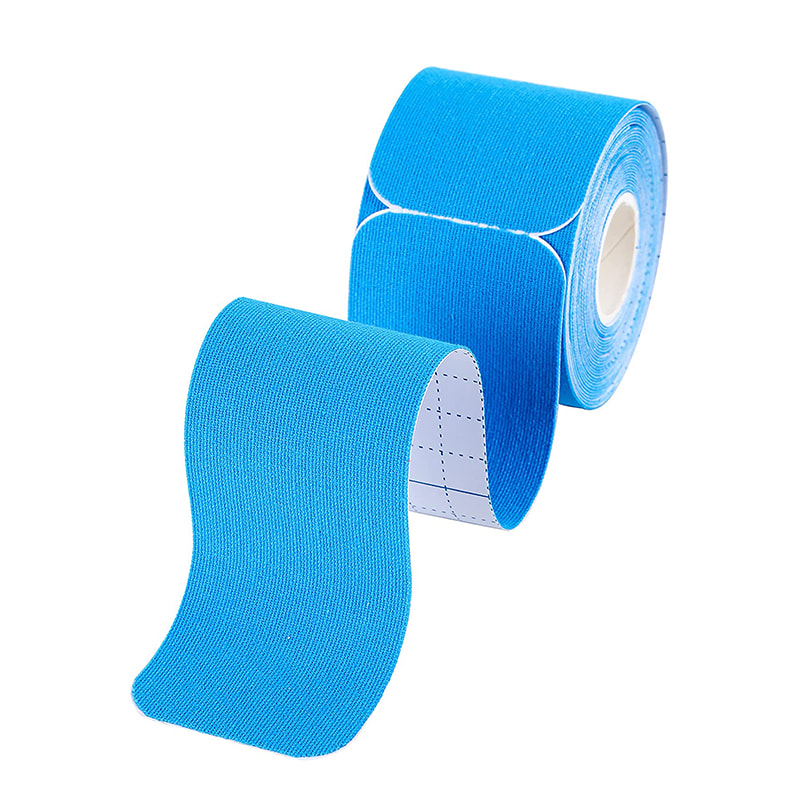
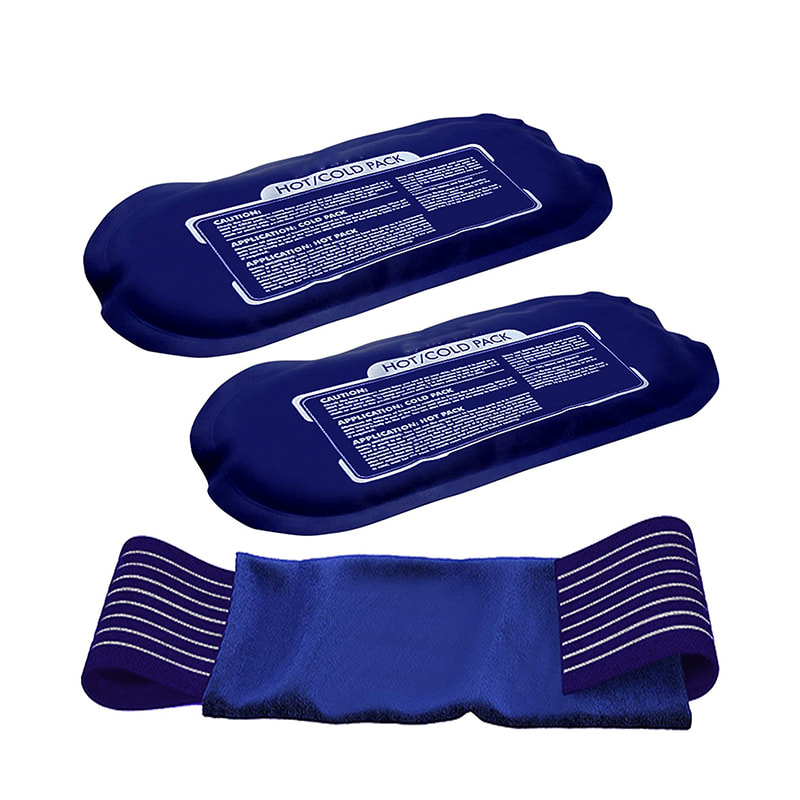
The company specializes in first aid products, wound dressings, medical gauze, bandages, medical tape, medical cotton, non-woven medical products, sports bandages, family healthcare products, kinesiology tape, pill boxes, hot and cold packs, disposable syringes, catheters, surgical consumables, and other medical consumables. This broad manufacturing background allows the Hydrogel Impregnated Burn Dressing to be developed and supplied within a complete wound care and first aid ecosystem.
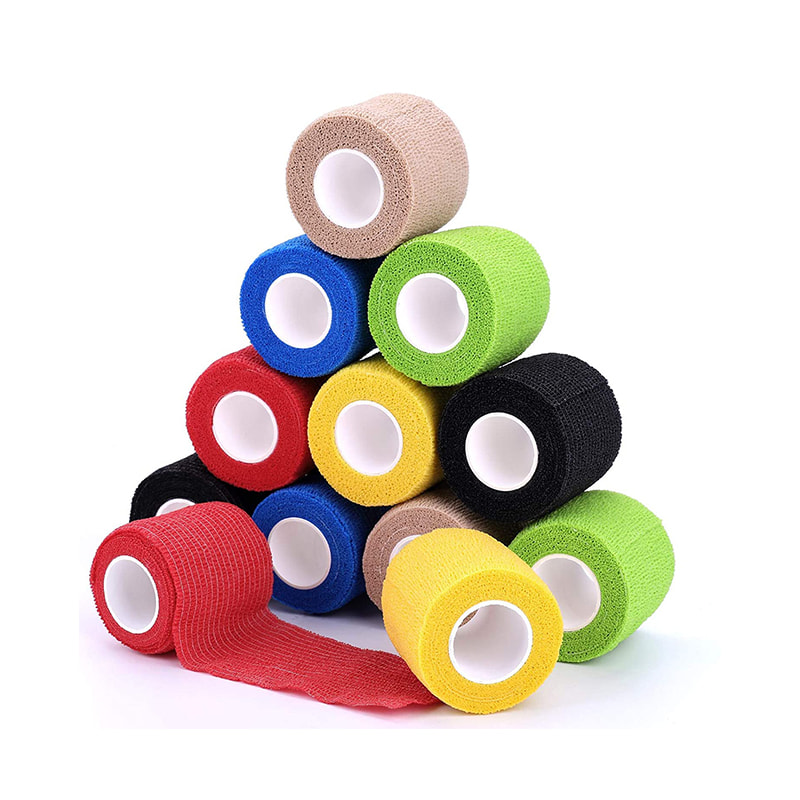
For buyers, this matters because burn dressings are often purchased together with gauze, bandages, medical tapes, cohesive wraps, protective gloves, first aid kits, and emergency supplies. Working with a manufacturer that offers a wide product range can reduce sourcing complexity, improve supply coordination, and support customized first aid kit development.
Quality Management and Compliance Strength
Medical consumables must be manufactured with attention to safety, consistency, and documentation. Sunmed has a professional quality control team comprising hundreds of personnel who follow inspection procedures designed to ensure products meet ISO 13485:2016 standards. ISO 13485 is an internationally recognized quality management standard for medical devices, and it emphasizes risk management, process control, traceability, corrective action, and continual improvement.
Most of the company’s products are CE certified, and its Suzhou factories comply with FDA requirements. These strengths are important for global buyers because regulatory expectations vary by market. Hospitals, distributors, pharmacies, and government purchasers often require documentation, certificates, and evidence of controlled production. A manufacturer familiar with international quality expectations can support smoother import, registration, and distribution processes.
Quality control for a hydrogel burn dressing may include checks on material appearance, dressing size, gel content, packaging integrity, labeling accuracy, batch identification, cleanliness, and product consistency. The aluminum foil pouch must protect the product properly, and the dressing must remain suitable for use throughout its stated shelf life when stored as recommended. Inspection at multiple stages helps prevent defects before products leave the factory.
Advanced Manufacturing Processes
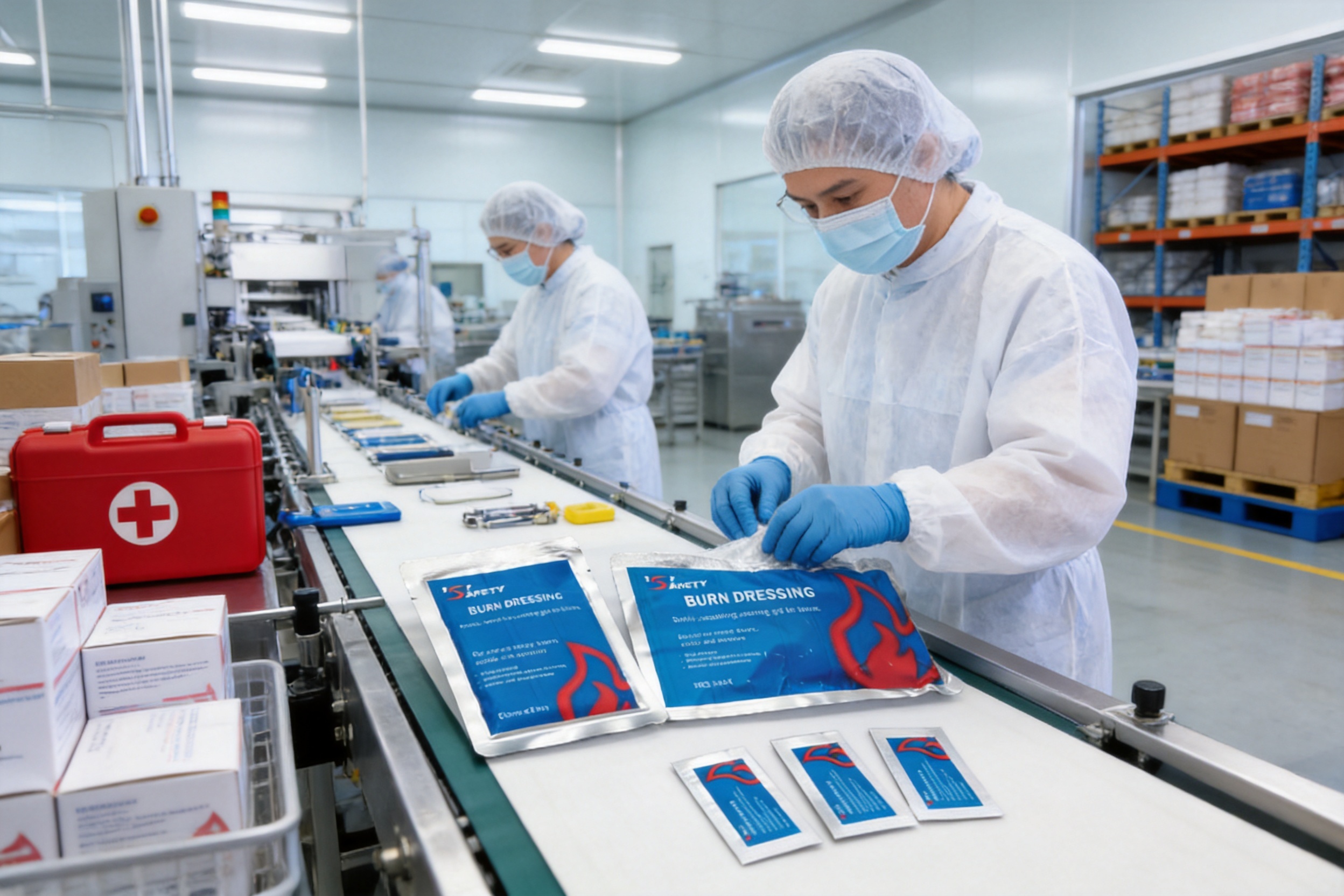
The production of hydrogel impregnated burn dressings requires coordinated processes. Material selection is the foundation. The substrate must be compatible with hydrogel impregnation, comfortable for skin contact, and suitable for controlled packaging. The hydrogel formulation must provide cooling and moisturizing performance while remaining stable inside the pouch. The impregnation process must distribute the gel evenly so that the dressing performs consistently across its surface.
After impregnation, the dressing is sized according to product specifications, such as 10 x 10 cm or 20 x 20 cm. Accurate sizing is important because customers depend on predictable coverage. The product is then sealed in aluminum foil pouch packaging. Packaging integrity is essential because the hydrogel must remain protected until use. Any leakage, poor sealing, or damaged pouch may affect product performance and customer confidence.
Manufacturing also requires environmental control and trained workers. Medical consumables benefit from clean, organized production areas, controlled handling procedures, and standardized work instructions. Experienced production teams help reduce variation, while quality inspectors verify that each batch meets defined requirements. Batch records, sampling plans, and final inspections all contribute to reliable supply.
The company’s experience across wound care, gauze, bandages, medical tape, cotton products, PPE products, sports support, hot and cold therapy, urology products, enteral feeding, surgical suction management, anesthesia and respiratory products, medical diagnostic devices, foot care products, surgical instruments, syringes, infusion products, blood collection and transfusion, and patient transfer products also supports manufacturing maturity. This broad product expertise strengthens material sourcing, packaging design, quality assurance, and international logistics.
OEM and Wholesale Advantages
Many global buyers require more than a standard product. They may need private labeling, customized packaging, language-specific labels, market-specific documentation, carton design, kit assembly, or mixed-container supply. Sunmed’s long experience as an OEM medical consumables manufacturer and exporter supports these needs. The company offers wholesale medical consumables and medical supplies for customers in hospitals, first aid supply chains, supermarkets, retail sports shops, and healthcare distribution networks.
For the Hydrogel Impregnated Burn Dressing, OEM options may include customized outer packaging design, brand labeling, first aid kit integration, carton quantity planning, and documentation support. Because the product is supplied in two useful sizes, distributors can create tiered product lines for home care, workplace first aid, and professional emergency response.
The company has exported products to more than 60 countries worldwide, including important markets in Europe, Southeast Asia, Africa, and Oceania. Export experience is a competitive advantage because international customers need reliable communication, shipping coordination, compliant documentation, and consistent product availability. Familiarity with different market expectations helps reduce procurement risk.
Why This Dressing Stands Out in a Competitive Market
The burn dressing market includes many product types, from ordinary gauze to advanced wound dressings. The Hydrogel Impregnated Burn Dressing stands out because it combines several essential features in one ready-to-use product. It cools the skin, moisturizes the burn area, is non-adhesive, can be removed with water or saline, applies directly to the wound, and is packed in aluminum foil pouch packaging.
Competitor products may offer only one or two of these advantages. Dry dressings provide coverage but not cooling moisture. Some gels require separate gauze and additional handling. Adhesive products may be inconvenient or painful on burns. Some burn products may be available in only one size, limiting flexibility. This product’s two-size range supports both compact first aid and larger wound coverage needs.
The manufacturing background also differentiates it. Buyers are not only purchasing a dressing; they are choosing a supplier with decades of medical consumables experience, multiple production bases, ISO 13485:2016 quality system focus, CE certification experience, FDA requirement awareness, and a large quality control team. In medical supply procurement, supplier reliability is often as important as product design.
Patient Comfort and Caregiver Efficiency
Burn injuries are painful, and dressing choice can influence the patient’s experience. A cool, moist, non-adhesive dressing is easier for patients to tolerate than dry or sticky materials. This is particularly important for children, elderly patients, and people with burns on sensitive areas such as the face or hands. The ability to remove the dressing using cool water or saline helps reduce fear and discomfort during follow-up care.
Caregiver efficiency is another major advantage. In a stressful first aid situation, responders need supplies that are simple and intuitive. The dressing can be applied directly and then secured with a protective bandage. This reduces the number of steps compared with separate gel and gauze systems. Fewer steps can mean faster response, more consistent application, and less risk of handling errors.
The product also helps standardize burn care in organizations. A workplace can place the same dressing type in multiple first aid stations and train staff on a simple protocol. Distributors can recommend the product across different customer groups. Hospitals can include it in burn care storage areas. This standardization supports better preparedness.
Packaging, Storage, and Distribution Value
Packaging plays a major role in medical consumables. The aluminum foil pouch protects the hydrogel impregnated dressing and makes the product easy to store and distribute. Individual pouch packaging is convenient for inventory control because each dressing is a self-contained unit. Users can carry one dressing in a compact kit or stock multiple units in a professional supply cabinet.
For distributors, packaging consistency affects shelf presentation, warehouse handling, and shipping efficiency. Flat pouch-packed dressings are easier to pack into cartons and first aid kits than bulky containers. They also reduce the chance of contamination before use because the dressing remains enclosed until opened. This is important for both retail and professional markets.
Clear product coding also supports logistics. SMD-131601 and SMD-131602 identify the two available sizes. Product codes help buyers place repeat orders accurately, reduce warehouse confusion, and manage stock by application need. The smaller unit can be sold for personal and compact kits, while the larger unit can be allocated to industrial, emergency, or clinical use.
Integration with Complete First Aid and Wound Care Solutions
A burn dressing is most effective when included in a complete first aid system. Related products may include sterile gauze, conforming bandages, cohesive bandages, medical tape, disposable gloves, scissors, saline, cold packs, wound cleansing supplies, and first aid instructions. Because the manufacturer offers a broad range of first aid, bandage, gauze, medical tape, cotton, PPE, sports support, hot and cold therapy, surgical, diagnostic, and patient care products, customers can source integrated solutions from one supplier.
This integrated sourcing approach is useful for supermarkets, pharmacies, medical distributors, and first aid kit assemblers. Instead of purchasing each item from a separate factory, buyers can coordinate product specifications, packaging style, labeling, and shipment schedules through one experienced partner. This can improve consistency across a product line and reduce administrative workload.
For example, a workplace burn first aid module may include hydrogel burn dressings in two sizes, protective bandages, medical tape, gloves, and saline. A home first aid kit may include the 10 x 10 cm hydrogel burn dressing along with adhesive bandages, gauze pads, tape, and cold packs. A professional emergency bag may include larger 20 x 20 cm dressings, trauma dressings, elastic bandages, and PPE.
Global Market Suitability
The Hydrogel Impregnated Burn Dressing is suitable for global medical consumables markets because burn risks are universal. Homes, workplaces, hospitals, restaurants, schools, laboratories, and outdoor activities all require burn preparedness. The product’s simple application method makes it easy to introduce in different countries and healthcare systems.
Sunmed’s export footprint includes Europe, Southeast Asia, Africa, and Oceania, with markets such as the United Kingdom, Germany, Spain, Denmark, the Netherlands, Japan, Malaysia, the Philippines, Thailand, Tanzania, Mauritius, South Africa, Australia, and New Zealand. Experience across these regions helps the company understand different packaging, documentation, and logistics requirements. This is important for customers who need stable international supply.
The product’s category also aligns with growing demand for practical first aid supplies. Many organizations now place greater emphasis on safety readiness and emergency response. Burn dressings are an important component of this trend because burns can happen suddenly and require immediate attention. A high-quality hydrogel dressing can strengthen first aid preparedness while improving user confidence.
Important Safety Considerations
Although hydrogel burn dressings are valuable first aid products, users should understand their limits. Serious burns require professional medical attention. This includes deep burns, large burns, burns involving the face, airway, hands, feet, genitals, or major joints, chemical burns, electrical burns, burns in infants or elderly individuals, and burns with signs of infection or severe pain. Chemical burns may require specific decontamination procedures, and electrical burns may involve internal injury even if the skin wound appears small.
The dressing should be used according to product instructions and local first aid guidance. It should be applied only when appropriate for the situation. If clothing is stuck to a burn, it should not be forcibly removed. If the wound is contaminated, bleeding heavily, or associated with other trauma, professional medical care is necessary. The dressing supports cooling, moisturizing, and protection, but it does not replace clinical evaluation.
Storage conditions should also be followed. The pouch should remain sealed until use. Damaged or opened packaging should not be used if product cleanliness or integrity is uncertain. Products should be stored away from extreme conditions that may affect hydrogel stability. Proper stock rotation helps ensure dressings remain within their usable shelf life.
Procurement Benefits for Distributors and Healthcare Buyers
For distributors, the Hydrogel Impregnated Burn Dressing offers several procurement advantages. It belongs to a high-demand first aid category, is easy to explain to customers, and can be sold across multiple channels. It is relevant to pharmacies, clinics, hospitals, industrial safety suppliers, first aid kit companies, sports and outdoor retailers, and emergency response organizations.
The two-size product range simplifies product selection while still covering common needs. The 10 x 10 cm dressing is compact and economical for general first aid. The 20 x 20 cm dressing offers broader coverage for professional or industrial scenarios. Aluminum foil pouch packaging supports clean storage and efficient distribution.
For healthcare buyers, supplier reliability is a major factor. Sunmed’s 30 years of experience, multiple production bases, quality control team, ISO 13485:2016 focus, CE certification experience, and export history provide confidence. Buyers can also benefit from the company’s broad catalog when building complete wound care or first aid programs.
Sustainability of Long-Term Cooperation
Medical supply relationships work best when they are stable, responsive, and transparent. Sunmed emphasizes easy and fruitful cooperation and communication, aiming to satisfy product needs and establish long-term cooperative relationships. This is particularly important in global trade, where buyers may need repeated orders, updated packaging, technical documents, shipment planning, and market-specific product support.
Long-term cooperation also supports quality improvement. When a manufacturer and buyer work together over time, packaging can be refined, carton configurations can be optimized, and product lines can be expanded based on market feedback. For hydrogel burn dressings, customer feedback may influence kit combinations, language labeling, retail presentation, or hospital supply formats.
The company’s broad medical consumables experience allows customers to expand beyond burn dressings into related product categories without changing suppliers. This can include gauze, bandages, medical tape, cotton products, PPE products, sports support, hot and cold therapy items, urology products, enteral feeding products, respiratory products, surgical and nursing supplies, diagnostic devices, foot care products, surgical instruments, syringe products, infusion products, blood collection products, and patient transfer supplies.
Q&A Section
What is a hydrogel impregnated burn dressing used for?
It is used to help cool, moisturize, and protect burn areas. It can be applied directly to the wound and covered with a protective bandage. It is suitable for first aid support in burns such as thermal burns, radiation burns, chemical burns, electrical burns, scalds, and facial burns when used appropriately.
How does the dressing help reduce discomfort?
The hydrogel provides a cooling and moist interface over the burn. The dressing is also non-adhesive, so it does not stick aggressively to damaged skin. When removal is needed, cool water or saline solution can be used to help remove it more comfortably.
What sizes are available?
Two sizes are available. Product code SMD-131601 is 10 x 10 cm with 40 g content. Product code SMD-131602 is 20 x 20 cm with 120 g content.
Can the dressing be used on facial burns?
Yes, the product is indicated for use on burns including facial burns and scalds. However, facial burns can be serious, especially if there is smoke inhalation, airway involvement, eye injury, or extensive tissue damage. Professional medical assessment is recommended for significant facial burns.
Is the dressing adhesive?
No. The dressing is non-adhesive. It should be held in place with a suitable protective bandage or secondary dressing rather than stuck directly to fragile burn tissue.
How is the dressing removed?
It can be removed with cool water or saline solution. This helps reduce discomfort and minimizes the risk of disturbing sensitive tissue during dressing changes.
Why is aluminum foil pouch packaging useful?
Aluminum foil pouch packaging helps protect the dressing before use, supports convenient storage, and makes the product suitable for first aid kits, emergency bags, workplace cabinets, and distribution cartons.
How does this product compare with ordinary gauze?
Ordinary dry gauze mainly covers the wound and absorbs fluid, but it may dry out and stick to burn tissue. The hydrogel impregnated dressing provides cooling, moisture, and a non-adhesive interface, making it more comfortable and more suitable for burn care.
Is this product suitable for workplace first aid stations?
Yes. It is highly suitable for workplace burn preparedness, especially in kitchens, factories, laboratories, maintenance areas, construction sites, and facilities with hot surfaces, steam, chemicals, or electrical equipment.
Does the manufacturer support wholesale and OEM supply?
Yes. The manufacturer has extensive experience in OEM medical consumables and wholesale medical supplies. Support may include product supply, packaging customization, private labeling, first aid kit integration, and export documentation assistance.
Conclusion
The Hydrogel Impregnated Burn Dressing is a practical, comfortable, and effective burn care product designed for fast cooling, moisture support, and gentle protection. Its non-adhesive structure, easy removal with cool water or saline, suitability for multiple burn types, and aluminum foil pouch packaging make it a strong choice for first aid kits, hospitals, clinics, emergency responders, workplaces, pharmacies, and home healthcare.
Compared with conventional dry gauze, adhesive bandages, or separate ointment-and-gauze methods, this dressing provides a more specialized solution for burns. It reduces preparation steps, improves patient comfort, and supports standardized emergency response. The availability of both 10 x 10 cm and 20 x 20 cm sizes gives buyers flexibility for different care scenarios.
Behind the product is a manufacturer with 30 years of medical consumables experience, multiple production bases, a professional quality control team, ISO 13485:2016 quality management focus, CE certification experience, FDA requirement compliance at its Suzhou factories, and export reach to more than 60 countries. These strengths make the product not only a useful burn dressing but also a reliable choice for global distributors, healthcare buyers, and OEM partners seeking long-term supply stability.
References
World Health Organization. Burns: Key Facts and Public Health Guidance.
International Organization for Standardization. ISO 13485:2016 Medical Devices Quality Management Systems Requirements for Regulatory Purposes.
European Resuscitation Council. First Aid Guidelines for Burns and Thermal Injuries.
American Burn Association. Burn First Aid and Burn Prevention Educational Materials.
British Red Cross. First Aid Advice for Burns and Scalds.
National Institute for Health and Care Excellence. Clinical Knowledge Summaries Related to Burns and Scalds.
Wound Healing Society. Principles of Moist Wound Healing and Dressing Selection.

 English
 Español
 русский
 Français
 Deutsch
 italiano
 By Admin