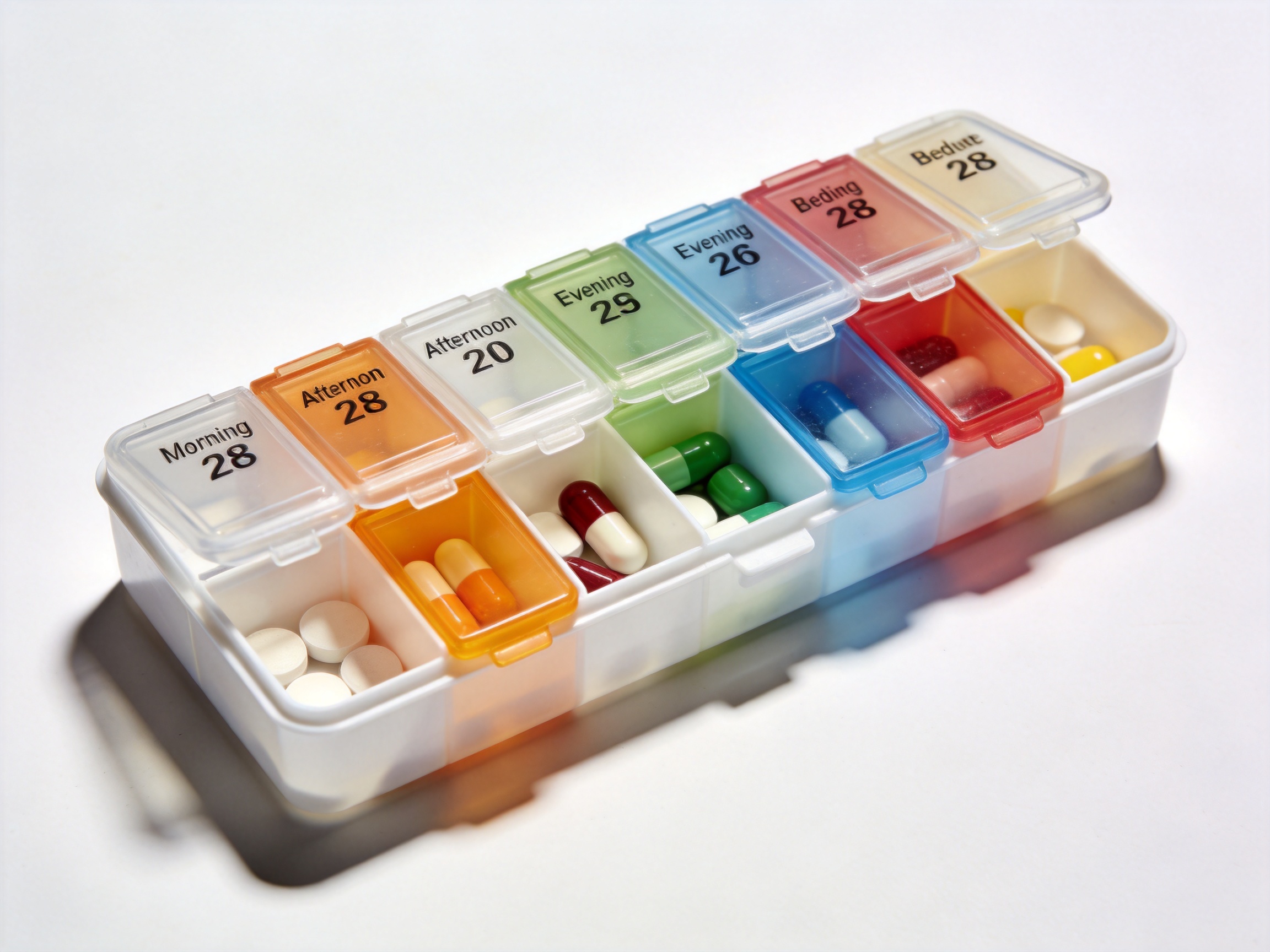
Medication adherence is one of the most important routines in home healthcare, senior care, post-operative recovery, chronic disease management, travel wellness, and daily vitamin planning. A simple missed dose, a repeated dose, or a confused schedule can create unnecessary risks for users and caregivers. The Easy 28-Day Weekly Monthly Pill Organizer with See-Through Lids is designed to make that routine clearer, safer, and more convenient. With 28 compartments arranged for four daily dosage times across seven days, this pill organizer supports morning, afternoon, evening, and bedtime medication planning in one compact, easy-to-use storage solution.
This product is built for people who need structure without complexity. Its see-through lids help users confirm whether tablets, capsules, supplements, or vitamins have been prepared and taken. Its color-coded design helps reduce confusion between dose times. Its easy-open lids make access more comfortable for seniors, people recovering from surgery, individuals with reduced hand strength, and anyone who wants a dependable home care accessory. Made from PP plastic and sized at 18.8 x 12.6 x 3 cm, the organizer offers a balance of capacity, portability, durability, and practical daily use.
As part of a broad healthcare product range that includes first aid, wound care, medical consumables, sports support, hot and cold therapy, diagnostic devices, surgical supplies, and patient care products, this pill organizer reflects an emphasis on practical design and consistent manufacturing quality. It is not just a container; it is a structured medication management tool intended to support safer habits, better visibility, and easier daily planning.
Product Overview
The Easy 28-Day Weekly Monthly Pill Organizer with See-Through Lids is a seven-day pill box divided into 28 compartments. Each day is separated into four medication times: morning, afternoon, evening, and bedtime. This arrangement is especially useful for users who take multiple medicines or supplements throughout the day and need a clear system to prevent mistakes.
The model number is DC661319. The organizer measures 18.8 x 12.6 x 3 cm, making it large enough to store a practical quantity of tablets while remaining compact enough for use at home, in a bedside drawer, on a kitchen counter, in a care facility, or during travel. Its PP plastic material is commonly used in healthcare and household storage products because it is lightweight, durable, and suitable for molded products requiring reliable structure.
The defining feature of this product is its 28-compartment layout. Many pill boxes offer only one compartment per day, and some offer two. This product goes further by giving users four clearly separated dose periods every day. For many medication routines, this is the difference between a simple pill holder and a true adherence support tool.
| Product Name |
Easy 28-Day Weekly Monthly Pill Organizer with See-Through Lids |
| Model |
DC661319 |
| Category |
Pill Organizer / Pill Box / Home Healthcare Accessory |
| Size |
18.8 x 12.6 x 3 cm |
| Material |
PP Plastic |
| Compartments |
28 compartments |
| Daily Schedule |
Morning, afternoon, evening, and bedtime |
| Main Lid Feature |
See-through, easy-open lids |
| Minimum Order Quantity |
3000 pcs |
| HS Code |
3923100090 |
Why a 28-Compartment Pill Organizer Matters
Medication routines are often more complicated than they appear. A person may take one tablet after breakfast, another before lunch, a supplement in the evening, and a prescription at bedtime. When several medications are involved, it becomes difficult to remember what has already been taken, especially when the schedule repeats every day. A 28-compartment pill organizer creates a visual map of the entire week.
The weekly structure helps users prepare their medicine in advance. Instead of opening multiple bottles every day, users can organize a full week of medication at one time. This saves time, reduces daily stress, and helps users notice when a prescription is running low. It also assists caregivers who prepare medicine for another person, because the caregiver can check the organizer quickly and confirm whether each dose has been taken.
Four compartments per day add another layer of safety. Some users rely on two-compartment boxes labeled AM and PM, but those are not always enough. When a medicine must be taken at noon or before bed, AM/PM divisions may force several pills into one space, increasing confusion. This organizer separates the full day into four common dosage periods, giving each time a dedicated compartment.
This design is beneficial for users managing chronic conditions, seniors following complex prescriptions, people recovering from surgery, individuals taking vitamins and supplements, and families organizing healthcare routines at home. It is also useful in assisted living environments, travel preparation, and wellness programs where consistency matters.
Advantages Over Ordinary Pill Boxes
Compared with many standard pill organizers, this 28-compartment model offers a more complete, user-friendly structure. Its advantages can be understood in several areas: capacity, visibility, access, organization, durability, and versatility.
Greater Scheduling Capacity
Many simple pill boxes contain only seven compartments, one for each day. While this may be adequate for people who take medicine once daily, it does not support more detailed schedules. Other models provide 14 compartments for morning and evening use. The DC661319 organizer provides 28 compartments, which supports four dosing times per day and greatly improves schedule precision.
This capacity makes the organizer suitable for more users and more healthcare routines. It can handle prescription medicine, vitamins, nutritional supplements, and daily wellness tablets. The four-time layout makes it more adaptable than single-dose or two-dose competitors.
Improved Visibility with See-Through Lids
Visibility is a critical feature in medication management. Opaque pill boxes require users to open compartments to verify contents. This creates inconvenience and may increase the chance of mixing up pills. See-through lids allow users to visually inspect the contents without opening the compartments.
With this organizer, users can quickly check whether a dose has been prepared or taken. The transparent design helps users, family members, and caregivers confirm adherence at a glance. This is especially valuable for seniors, people with memory challenges, or anyone following a complicated medication plan.
Color-Coded Organization
Color coding is another practical advantage. Different colors help users distinguish between dosage periods more easily. A clear visual difference between morning, afternoon, evening, and bedtime can reduce mistakes, especially when the organizer is used repeatedly over many weeks.
For users who struggle with small printed labels, colors provide an additional cue. For caregivers, color coding makes checking and refilling more efficient. In competitive comparison, a pill box with both transparent lids and color-coded sections offers stronger usability than a plain, single-color container.
Easy-Open Lids for Better Comfort
A pill organizer must be secure enough to hold tablets but easy enough to open without frustration. Seniors and people recovering from illness or surgery may have reduced grip strength or limited finger dexterity. Overly tight lids can make daily medication access difficult.
The easy-open lid design supports comfort and independence. Users can access pills more conveniently, while the individual lids help keep doses separated. This is an important advantage over rigid pill boxes that may be hard to open or boxes that require too much force.
Universal Use for Pills and Vitamins
This organizer is not limited to prescription medication. It is also suitable for vitamins, supplements, herbal tablets, capsules, and other small healthcare products. Many people now combine medical prescriptions with wellness routines, and a universal organizer helps keep everything in one structured system.
Instead of using separate containers for vitamins and medicine, users can arrange their daily wellness plan in a single organizer. This reduces clutter and improves routine consistency.
Compact Yet Practical Dimensions
The size of 18.8 x 12.6 x 3 cm offers a useful balance. It provides enough compartment space for a weekly four-dose schedule while remaining compact for storage and transport. Some larger organizers may be inconvenient for travel or small living spaces, while very small pill boxes may not hold enough tablets. This model sits in a practical middle range.
Material Benefits: Why PP Plastic Is Suitable
The organizer is made of PP plastic, also known as polypropylene. This material is widely used for consumer goods, medical packaging components, and daily storage items because it combines light weight, durability, and good moldability. For a pill organizer, these characteristics are important because the product must be opened and closed repeatedly, handled daily, and kept clean.
PP plastic offers good structural stability for molded compartments and lids. It helps the organizer maintain its shape during normal use. It is also relatively lightweight, which makes the pill box easy to carry and convenient for elderly users. The material supports smooth surfaces that can be cleaned more easily than rough or porous materials.
In pill storage products, material consistency is important. Compartments should be formed cleanly, lids should fit accurately, and surfaces should not have sharp burrs or uncomfortable edges. High-quality PP molding supports these goals when paired with controlled manufacturing processes.
Designed for Daily Home Care
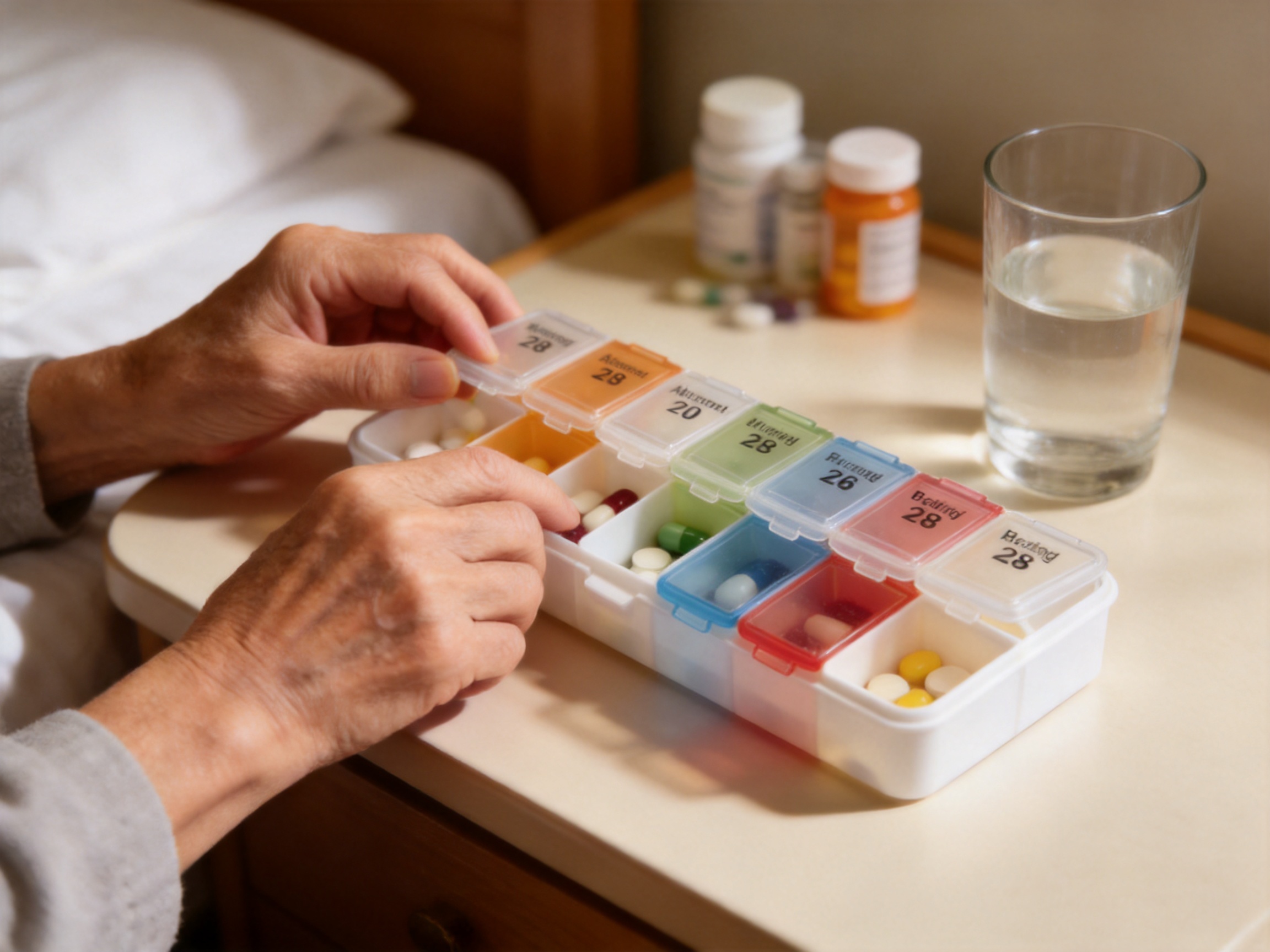
Home care products need to make life easier, not more complicated. This pill organizer is designed for practical daily use by a wide range of people. It can be placed on a nightstand for bedtime medicine, stored in a kitchen cabinet for after-meal doses, carried during short trips, or used by caregivers preparing medicine for family members.
The organizer supports independence. Users who might otherwise rely on repeated reminders can use the visual structure to manage their own medication more confidently. Family members can also check the organizer without opening every bottle or asking repeated questions.
For people recovering from surgery, a structured organizer helps simplify the recovery environment. Post-operative patients may have temporary medication schedules involving pain relief, antibiotics, anti-inflammatory medicine, or supplements. Keeping these medicines separated by time of day can reduce stress and help maintain proper routines.
For aging users, this product helps address common home safety concerns. Forgetting whether a medication has been taken can lead to missed doses or double doses. A transparent weekly organizer helps create a record of daily progress. If the evening compartment is empty and the bedtime compartment still contains pills, the user can immediately understand where they are in the day’s schedule.
Applications in Different User Scenarios
Senior Care
Seniors often take several medicines each day. Some medicines must be taken with food, others at a specific time, and some only once daily. A four-time-per-day organizer offers clarity and reduces mental load. The easy-open lids are also helpful for users with arthritis, reduced finger strength, or limited mobility.
Chronic Disease Management
People managing long-term health conditions often follow complex medication routines. Diabetes, hypertension, cardiovascular conditions, respiratory issues, and other chronic needs may involve several pills at different times. A 28-compartment organizer supports consistency and makes it easier to notice missed doses.
Post-Surgery Recovery
After surgery, patients may experience fatigue, pain, or temporary confusion from changes in routine. A pre-filled organizer can help patients or caregivers keep recovery medicine on schedule. The weekly format also reduces the need to handle multiple medication bottles during the recovery period.
Vitamin and Supplement Planning
Many users take daily vitamins and supplements in addition to medication. The organizer can separate multivitamins, calcium tablets, fish oil capsules, herbal supplements, and other wellness products by time of day. This makes health routines more consistent and organized.
Travel and Business Use
Travel can disrupt medication routines. A weekly organizer helps users pack only what they need and maintain their normal schedule away from home. Its compact size makes it suitable for luggage, backpacks, or travel healthcare kits, while the compartment layout keeps tablets separated.
Caregiver Support
Caregivers often prepare medicine for parents, patients, or family members. The 28-compartment layout allows caregivers to organize a week in advance. Transparent lids make it easy to check whether the user has taken the correct doses. This can improve communication between caregivers and users.
Manufacturing Strength Behind the Product
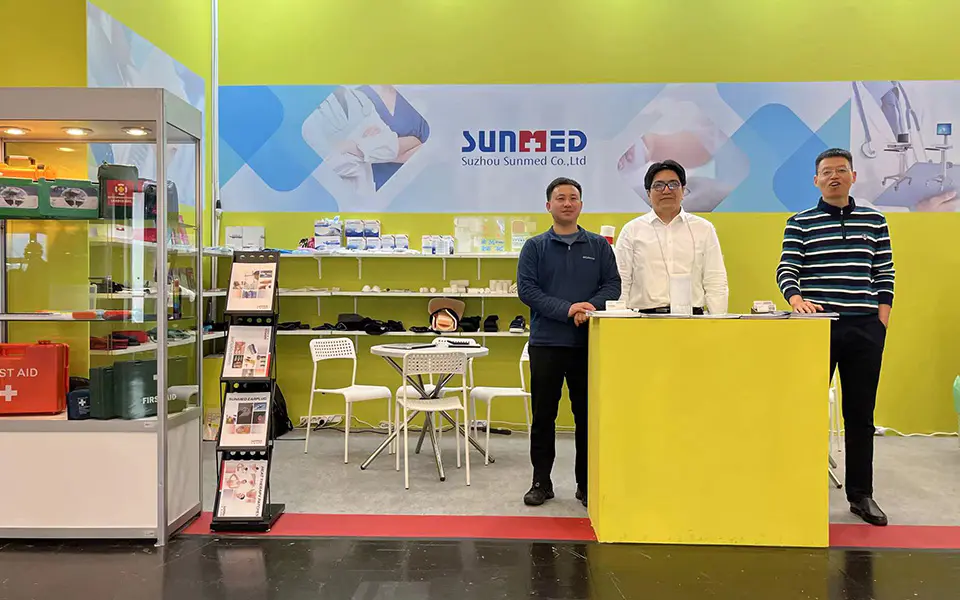
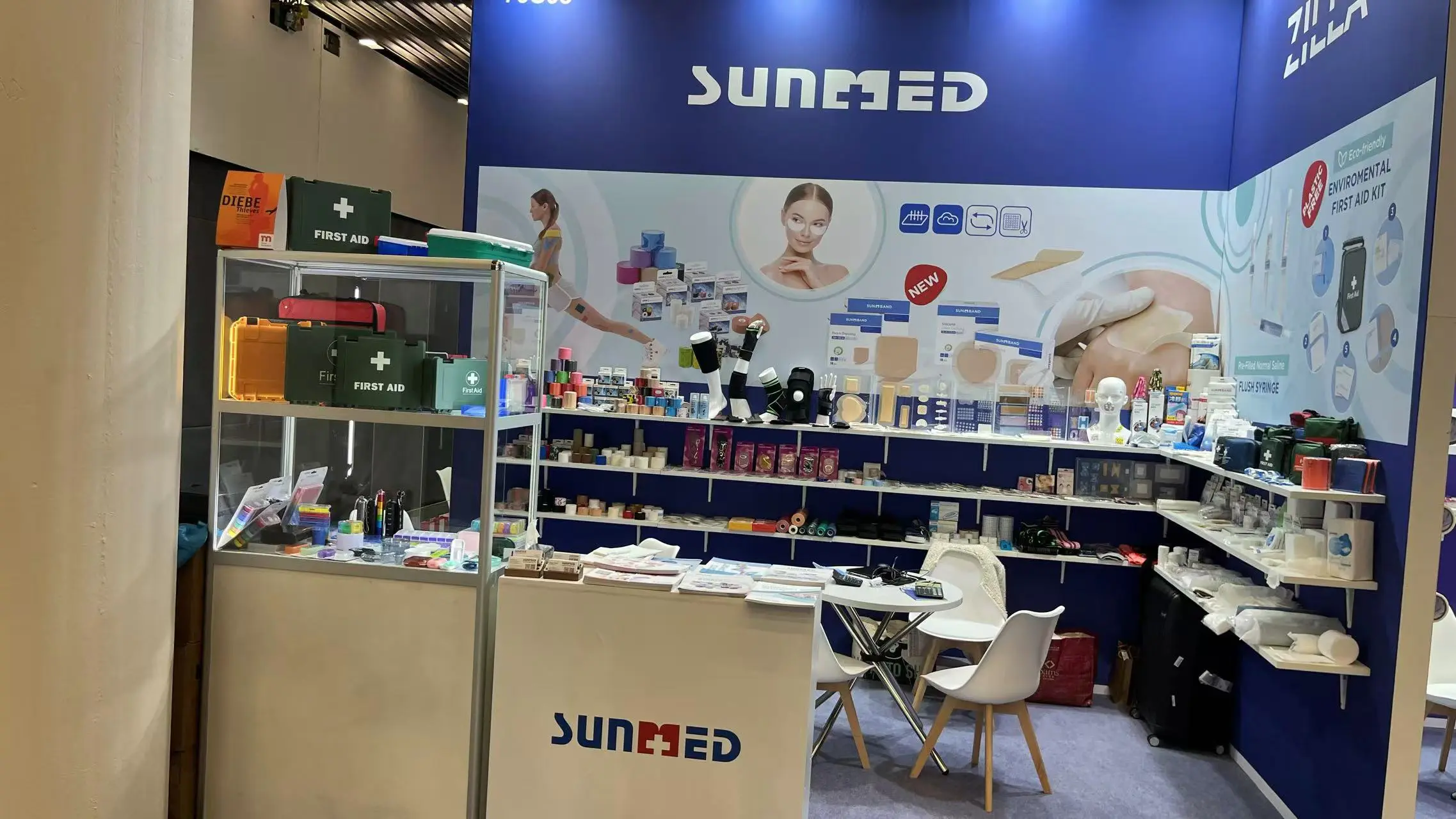
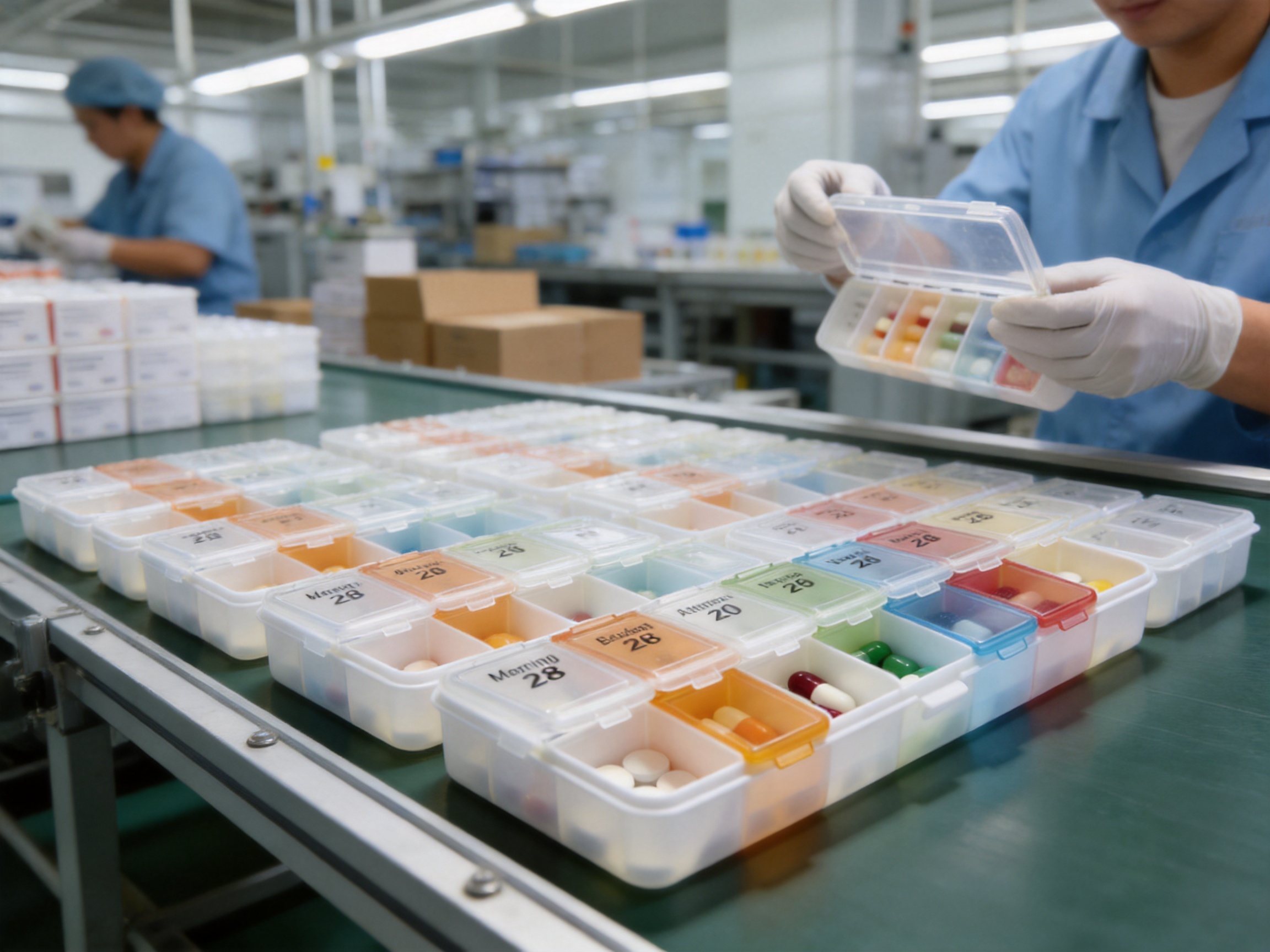
A reliable pill organizer depends not only on design, but also on manufacturing discipline. Suzhou Sunmed Co., Ltd. is a professional manufacturer and exporter of first aid, medical, and healthcare products in China. With approximately 30 years of experience in the medical device, medical consumables, and healthcare product industry, the company has developed strong expertise in product design, material selection, manufacturing coordination, quality control, and international export.
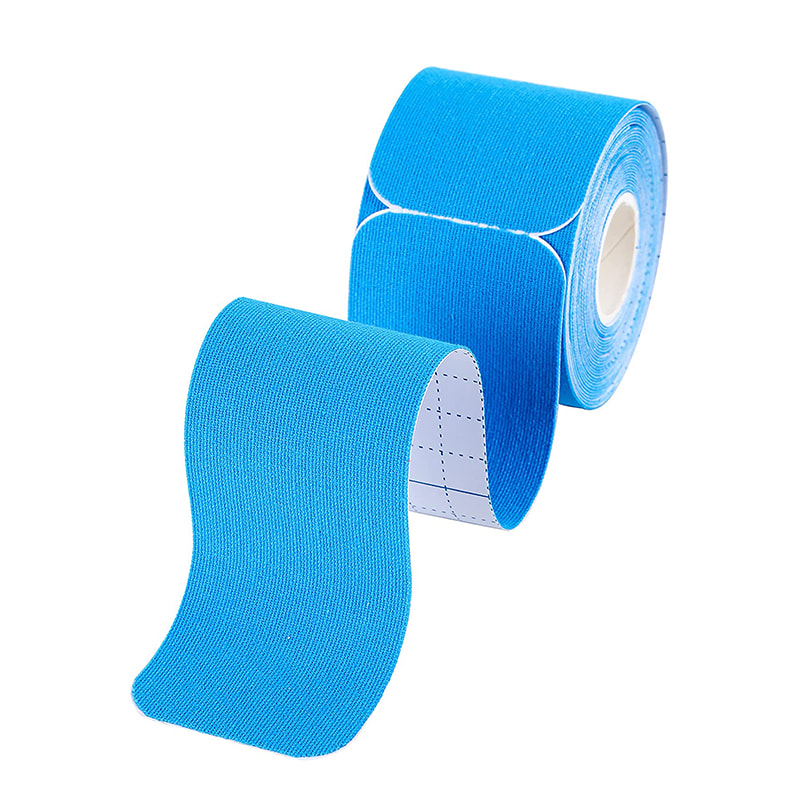
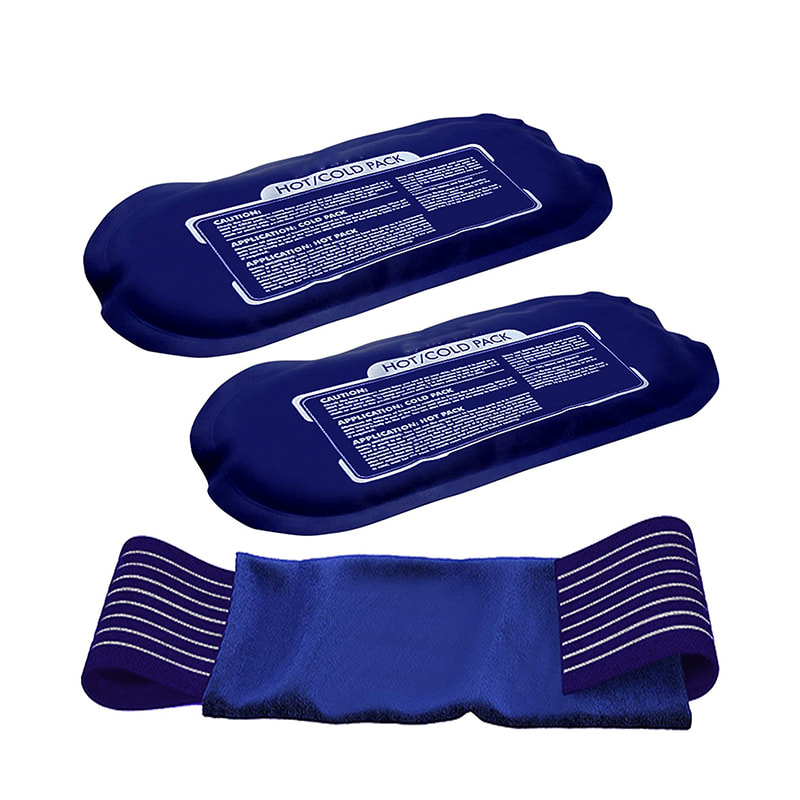
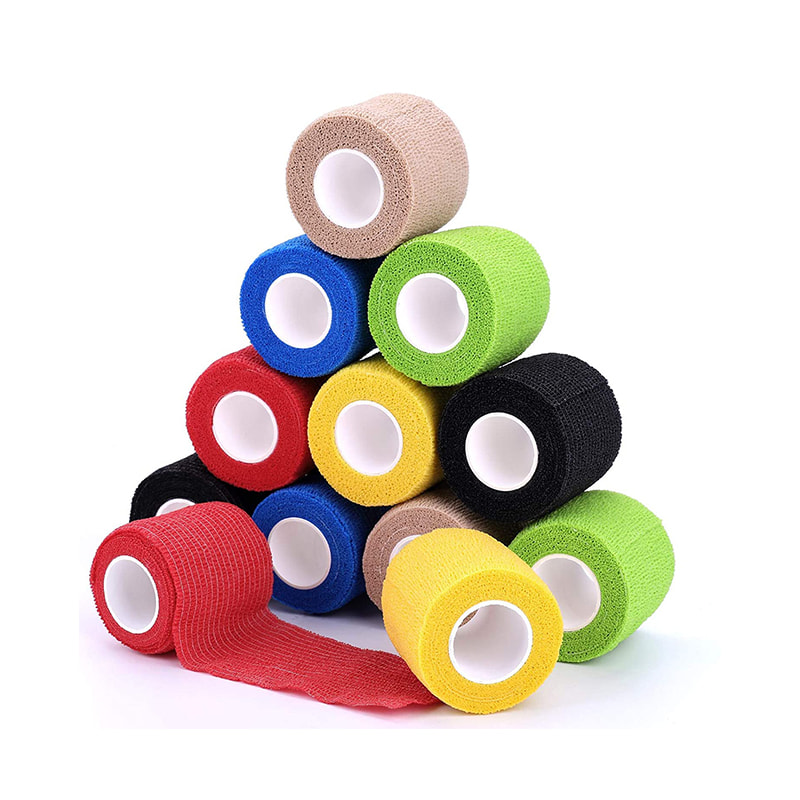
The company operates multiple production bases in Jiangsu, Zhejiang, and Anhui Province, supporting a broad product portfolio. Its product range includes first aid items, wound dressing materials, medical gauze, bandages, medical tape, medical cotton, non-woven products, sports bandages, family healthcare products, kinesiology tape, pill boxes, hot and cold packs, disposable syringes, catheters, surgical consumables, and other medical consumables.
This wide manufacturing background is important because it demonstrates the company’s familiarity with healthcare product requirements. Even though a pill organizer is a daily-use accessory, it belongs to a healthcare routine and must be made with consistent quality, safe material handling, accurate molding, and dependable packaging.
Experience in Medical and Healthcare Manufacturing
Thirty years of industry experience provides practical knowledge that newer suppliers may not possess. Healthcare products require attention to detail, stable production procedures, and sensitivity to user safety. A pill organizer must be simple, but it must not be carelessly made. Poorly fitted lids, unclear compartments, weak hinges, sharp edges, or inconsistent plastic molding can reduce usability and customer confidence.
The company’s long-term experience in first aid, wound care, sports support, and medical consumables strengthens its ability to manufacture products that meet practical user needs. It understands both professional medical channels and retail healthcare markets, which is valuable for a product that may be sold to hospitals, first aid suppliers, supermarkets, pharmacies, sports shops, and home care distributors.
Advanced Production Base Network
Multiple production bases create flexibility and capacity. For buyers, this can help support stable supply, order planning, and product customization. When a company has manufacturing resources across several regions, it can better manage production schedules and product categories.
The pill organizer is available with a minimum order quantity of 3000 pcs, making it suitable for wholesale, distribution, private label programs, healthcare retailers, promotional healthcare kits, and institutional purchasing. Consistent production capacity is especially important for distributors who need repeat orders and stable product appearance across batches.
Quality Control Team and Inspection Procedures
Suzhou Sunmed maintains a professional quality control team comprising hundreds of personnel who follow inspection procedures to ensure products meet ISO13485:2016 standards. This is a major advantage compared with small trading suppliers or manufacturers with limited quality systems.
Quality control for a pill organizer may include material inspection, color checking, molding inspection, lid function testing, dimensional verification, surface inspection, packaging review, and batch consistency checks. These controls help ensure that each organizer looks clean, opens smoothly, closes properly, and matches the required specifications.
ISO13485:2016 is associated with quality management systems for medical devices. While the specific regulatory classification of a pill organizer may vary by market, manufacturing under a healthcare-oriented quality management culture gives buyers greater confidence. It indicates that the company is familiar with documentation, inspection, traceability, and process control.
Compliance-Oriented Production
Most of the company’s products are CE certified, and its Suzhou factories comply with FDA requirements. This compliance background supports international customers who need responsible sourcing partners. Buyers in Europe, North America, Southeast Asia, Africa, and Oceania often require consistent quality documentation, packaging support, labeling accuracy, and export experience.
A pill organizer intended for global distribution benefits from being produced by a company familiar with these expectations. The product must be easy to label, easy to package, and suitable for wholesale shipping. The HS code 3923100090 also supports customs classification and export processing.
Manufacturing Process for a High-Quality Pill Organizer
The production of a practical pill organizer involves several key stages. Although the product appears simple, each step affects final usability.
Product Design and Engineering
The first stage is product structure planning. Engineers determine compartment arrangement, lid opening method, dimensions, wall thickness, color divisions, and user handling features. For this model, the structure must support 28 compartments while keeping the organizer compact and easy to open.
Designers consider how users interact with the product every day. Compartments must be large enough for typical pills and supplements. Lids must be visible and easy to distinguish. The overall shape must be stable on a flat surface and comfortable to handle.
Material Selection
PP plastic is selected for its durability, light weight, and suitability for molding. Reliable suppliers must ensure material consistency because inconsistent plastic can affect color, lid flexibility, strength, and surface finish. Material selection is a foundation for product reliability.
Mold Development
The mold determines the final shape of the product. High-precision molds are essential for accurate compartments and lids. If the mold is not precise, lids may not align properly, hinges may feel weak, or edges may become rough. Mold quality is one of the strongest differences between professional production and low-cost imitation.
Injection Molding
During injection molding, heated PP plastic is injected into the mold and cooled into the required shape. Process control is important. Temperature, pressure, cooling time, and material flow must be managed to avoid defects such as warping, sink marks, incomplete filling, or uneven surfaces.
For a pill organizer, injection molding must produce clean compartments and smooth lids. Consistent molding helps lids open and close correctly across thousands of units.
Trimming and Surface Inspection
After molding, parts are inspected and trimmed if necessary. Any plastic burrs or rough edges must be removed because users handle the organizer daily. Smooth surfaces improve comfort and product appearance.
Assembly
If the product includes separate lid components or color-coded sections, assembly must be performed carefully. Each lid should align with its compartment. The opening and closing action should feel consistent. Assembly workers or automated systems may check fit and function during this stage.
Functional Testing
Functional testing may include repeated opening and closing checks, lid fit inspection, transparency review, and compartment verification. The goal is to ensure that the organizer performs as expected in real use.
Packaging
Packaging protects the product during transport and makes it ready for retail or wholesale distribution. Packaging may include product labeling, model information, usage instructions, barcode placement, and customer-specific branding when required. For global buyers, packaging consistency is a major part of market readiness.
Final Quality Inspection
Before shipment, final inspection confirms product quantity, appearance, dimensions, packaging, and order requirements. This final checkpoint helps prevent defects from reaching customers and supports stable repeat purchasing.

How the Product Supports Medication Safety
Medication safety is not only the responsibility of healthcare professionals. It also depends on daily routines at home. A well-designed pill organizer supports safety in several practical ways.
First, it reduces the need to open multiple medication bottles each day. This decreases the chance of selecting the wrong bottle or forgetting a dose. Second, the weekly layout creates a visible record. If a compartment is empty, the user can see that the dose may already have been taken. Third, the four-time separation helps prevent pills from different dosage times being mixed together.
Fourth, the see-through lids allow quick checking without opening each compartment. This is especially useful when a caregiver wants to confirm that medication has been prepared correctly. Fifth, the organizer helps users plan refills. If several compartments are empty during weekly preparation, the user may notice that a medication supply is running low before it becomes urgent.
Although no pill organizer can replace medical advice or professional supervision, a good organizer can reduce common routine errors. It provides structure, visibility, and consistency, which are key elements in safer medicine use.
Buyer Advantages for Wholesale and Distribution
For distributors, retailers, medical supply companies, healthcare product wholesalers, and private label buyers, the DC661319 pill organizer offers strong commercial value. Its 28-compartment design is easy to explain to customers. It serves a broad audience, including seniors, families, travelers, caregivers, and wellness consumers.
The product is also compact, which helps with storage, shipping, and retail display. PP plastic construction keeps it lightweight. The see-through lids and color-coded arrangement create clear visual appeal. Customers can immediately understand the product’s purpose and benefits without complicated instructions.
The minimum order quantity of 3000 pcs supports bulk purchasing and wholesale planning. Buyers can use the product in pharmacy channels, supermarket healthcare sections, home care catalogs, online retail platforms, rehabilitation supply stores, senior care product lines, and health promotion programs.
Because the manufacturer has experience exporting to more than 60 countries, including markets in Europe, Southeast Asia, Africa, and Oceania, buyers benefit from an export-ready supplier. International experience helps reduce communication barriers, documentation problems, packaging inconsistencies, and shipment coordination challenges.
Comparison with Common Competitor Products
In the market, pill organizers vary widely in quality and design. Some are basic daily boxes with limited capacity. Some have hard-to-open lids. Some are made from thin plastic that cracks easily. Some have labels that wear off quickly or lids that do not close securely after repeated use. This product addresses many of those concerns through its layout, material, and manufacturing background.
Against seven-compartment organizers, it offers four times the dosage planning capacity. Against AM/PM organizers, it provides more accurate separation for midday and bedtime medicine. Against opaque boxes, it offers easier visual confirmation. Against non-color-coded boxes, it provides clearer time-based organization. Against low-cost thin plastic alternatives, the use of PP plastic and controlled manufacturing gives a stronger foundation for durability.
Another competitive advantage is manufacturing credibility. A pill organizer from a company with broad healthcare manufacturing experience, professional quality control, ISO13485:2016-oriented inspection procedures, CE product experience, and FDA-compliant factory background offers greater confidence than an unverified supplier. For buyers, product reliability and supplier reliability are both essential.
Ease, Safety, and Comfort in One Product
The product’s message can be summarized in three words: ease, safety, and comfort. Ease comes from the weekly layout, easy-open lids, and simple visual checking. Safety comes from clear separation of medication times and reduced confusion. Comfort comes from the practical size, lightweight structure, and user-friendly handling.
For an elderly user, comfort may mean being able to open a compartment without pain. For a caregiver, ease may mean preparing a full week of medication in one sitting. For a traveler, safety may mean knowing that each day’s pills are organized before leaving home. For a distributor, confidence may mean sourcing from a manufacturer with strong production and quality management experience.
Practical Use Guidelines
To get the best value from the organizer, users should fill it in a quiet, well-lit area. Medication bottles should be checked carefully before placing pills into compartments. Users may prepare one full week at a time and confirm the schedule with a doctor, pharmacist, or caregiver when necessary.
It is helpful to establish a routine for refilling the organizer, such as every Sunday evening. Users should keep the organizer in a dry, clean location away from excessive heat, moisture, and direct sunlight. If children are present, the organizer should be stored safely out of reach because pill organizers are not child-resistant safety containers unless specifically designed and certified for that purpose.
Users should clean the organizer periodically according to appropriate hygiene practices. It should be fully dry before refilling with pills. If tablets are sensitive to moisture or require original packaging, users should follow the instructions provided by healthcare professionals or the medication label.
Role in a Complete Home Healthcare Product Line
A pill organizer is often purchased together with other home healthcare products. It may be part of a family first aid kit, post-surgery recovery kit, senior care package, travel health kit, or wellness product display. The manufacturer’s broad product categories make it possible for buyers to source related products from one supplier.
Related categories include first aid, bandages, wound care, gauze, medical tape, cotton products, PPE products, sports support, hot and cold therapy, urology products, enteral feeding, surgical suction management, anesthesia and respiratory products, surgery and nursing products, diagnostic devices, foot care products, rehabilitation shoes, surgical instruments, syringes, infusion products, blood collection and transfusion products, and patient transfer products.
This broad catalog allows distributors to build complete healthcare programs. A buyer may source pill boxes alongside bandages, tapes, first aid supplies, hot and cold packs, or medical consumables. This can simplify procurement and improve supply chain efficiency.
Company Strength and Global Market Experience
Suzhou Sunmed Co., Ltd. has exported products to more than 60 countries worldwide. Key markets include the United Kingdom, Germany, Spain, Denmark, the Netherlands, Japan, Malaysia, the Philippines, Thailand, Tanzania, Mauritius, South Africa, Australia, and New Zealand. This international reach demonstrates experience with different customer requirements, packaging preferences, quality expectations, and regulatory environments.
The company serves hospitals, first aid suppliers, supermarkets, and retail sports shops. This diversity is important because different channels require different strengths. Hospitals and medical suppliers emphasize reliability and quality documentation. Supermarkets require retail appeal and stable packaging. Sports shops need practical consumer healthcare products. A manufacturer that can support all of these channels is well-positioned to supply a pill organizer for broad market use.
The company established its first aid factory in 2008 to meet the needs of first aid customers. In 2021, it established its own factory for kinesiology tape, cohesive bandages, and elastic adhesive bandages to meet growing customer demand. These investments show a long-term manufacturing strategy and commitment to expanding production capabilities.
OEM and Wholesale Potential
The pill organizer is suitable for OEM and wholesale projects. Buyers may require customized packaging, private label branding, different market language labels, carton specifications, or retail-ready presentation. A manufacturer with export experience and a broad product background can better support these requirements.
Wholesale buyers often need more than a low unit price. They need stable communication, product consistency, inspection support, repeat-order capability, and responsive service. With decades of experience and an established quality control team, the manufacturer can support long-term cooperation rather than one-time transactions.
For private label healthcare brands, the 28-compartment pill organizer can become a practical item in a broader wellness line. It is easy to position as a senior care product, family medicine organizer, travel pill case, vitamin organizer, or post-surgery recovery accessory. The design is universal enough for many markets while offering enough features to stand out.
Q&A Section
What is the main purpose of this pill organizer?
The main purpose is to help users organize pills, vitamins, or supplements for a full week, with four separate dosage times each day: morning, afternoon, evening, and bedtime. It supports safer and more consistent medication routines.
How many compartments does the organizer have?
It has 28 compartments. This includes four compartments per day for seven days.
What makes it different from a standard weekly pill box?
A standard weekly pill box often has only seven compartments, one for each day. This model has 28 compartments, offering more detailed organization for users who take medicine multiple times per day. It also includes see-through lids and color-coded organization for easier checking.
What is the material of the product?
The organizer is made from PP plastic, a lightweight and durable material commonly used in molded healthcare and household storage products.
What is the size of the product?
The size is 18.8 x 12.6 x 3 cm, making it compact enough for home use and travel while still offering practical compartment capacity.
Who can use this pill organizer?
It is suitable for seniors, adults managing chronic conditions, post-surgery patients, caregivers, travelers, vitamin users, and anyone who needs a clear weekly medication schedule.
Are the lids easy to open?
Yes. The product is designed with easy-open lids to support comfort and convenience, especially for users who may have reduced hand strength or mobility challenges.
Why are see-through lids useful?
See-through lids allow users and caregivers to check the contents without opening each compartment. This helps confirm whether pills have been prepared or taken.
Can it be used for vitamins and supplements?
Yes. The organizer is suitable for pills, capsules, vitamins, and supplements of many common shapes and sizes.
Is it suitable for wholesale orders?
Yes. The listed minimum order quantity is 3000 pcs, making it suitable for distributors, retailers, healthcare suppliers, private label projects, and institutional buyers.
What manufacturing strengths support this product?
The product is supported by a manufacturer with around 30 years of medical and healthcare product experience, multiple production bases, a professional quality control team, ISO13485:2016-oriented quality procedures, CE product experience, FDA-compliant factory background, and exports to more than 60 countries.
Does a pill organizer replace medical advice?
No. A pill organizer is a helpful storage and planning tool, but users should always follow instructions from doctors, pharmacists, and medication labels.
Conclusion
The Easy 28-Day Weekly Monthly Pill Organizer with See-Through Lids is a practical, user-friendly, and commercially valuable healthcare accessory. Its 28 compartments provide clear weekly planning for four daily dosage times. Its see-through lids improve visibility, while its color-coded and easy-open design supports safer and more comfortable use. Made from PP plastic and sized at 18.8 x 12.6 x 3 cm, it offers a dependable balance of capacity, durability, and portability.
For users, the product helps simplify medication routines, reduce confusion, and support independence. For caregivers, it provides a clear way to prepare and monitor weekly doses. For wholesalers and healthcare distributors, it offers broad market appeal and is backed by an experienced manufacturer with strong production and quality control capabilities.
In a competitive market filled with basic pill boxes, this organizer stands out through its four-times-a-day structure, transparent lids, practical design, and manufacturing reliability. It is a small product with a meaningful role in everyday healthcare management.
References
World Health Organization. Adherence to Long-Term Therapies: Evidence for Action.
International Organization for Standardization. ISO 13485:2016 Medical Devices Quality Management Systems Requirements for Regulatory Purposes.
U.S. Food and Drug Administration. Guidance and general principles related to medical device quality systems and consumer healthcare product safety.
European Commission. General guidance on CE marking and product conformity principles.
American Pharmacists Association. Medication therapy management and patient adherence practice resources.
Institute for Safe Medication Practices. Consumer medication safety and home medicine management recommendations.

 English
 Español
 русский
 Français
 Deutsch
 italiano
 By Admin