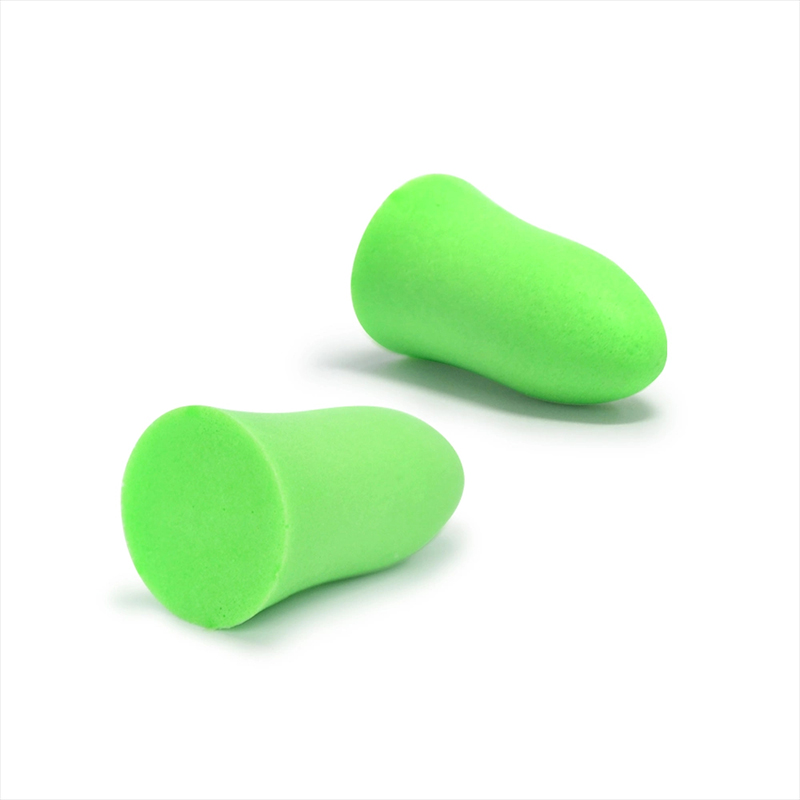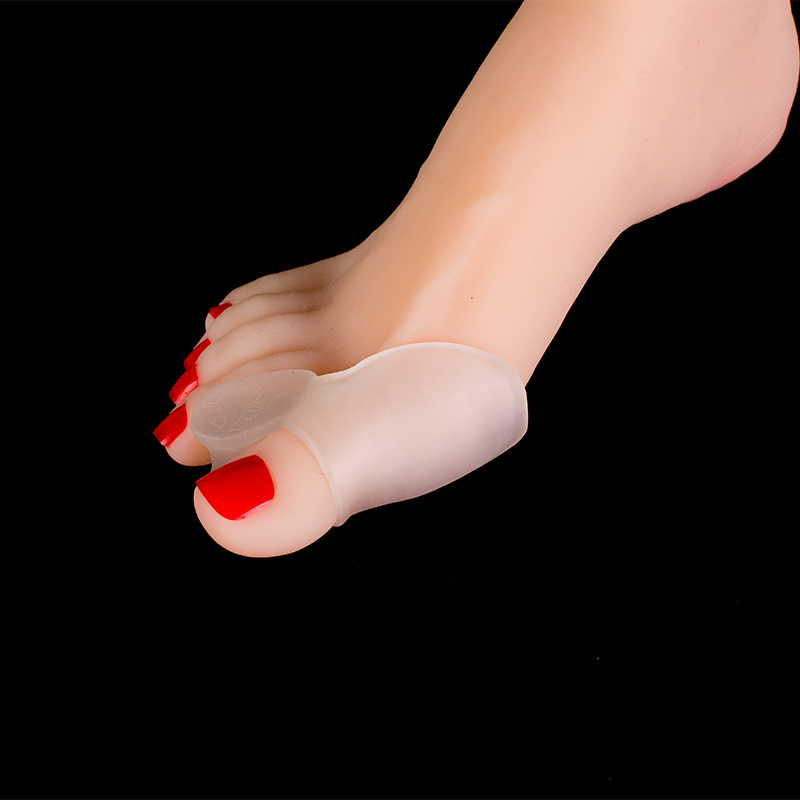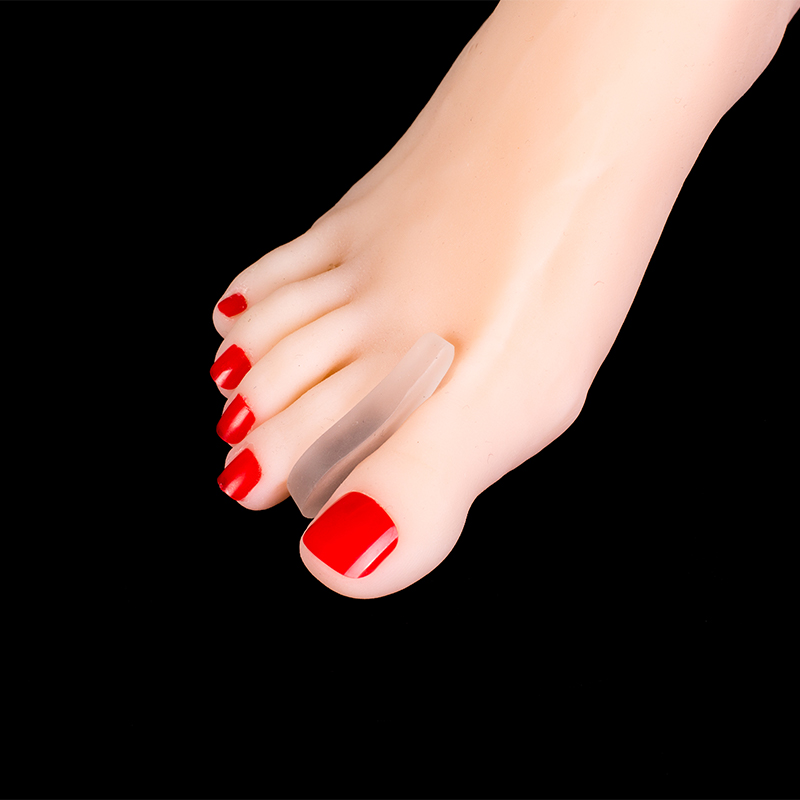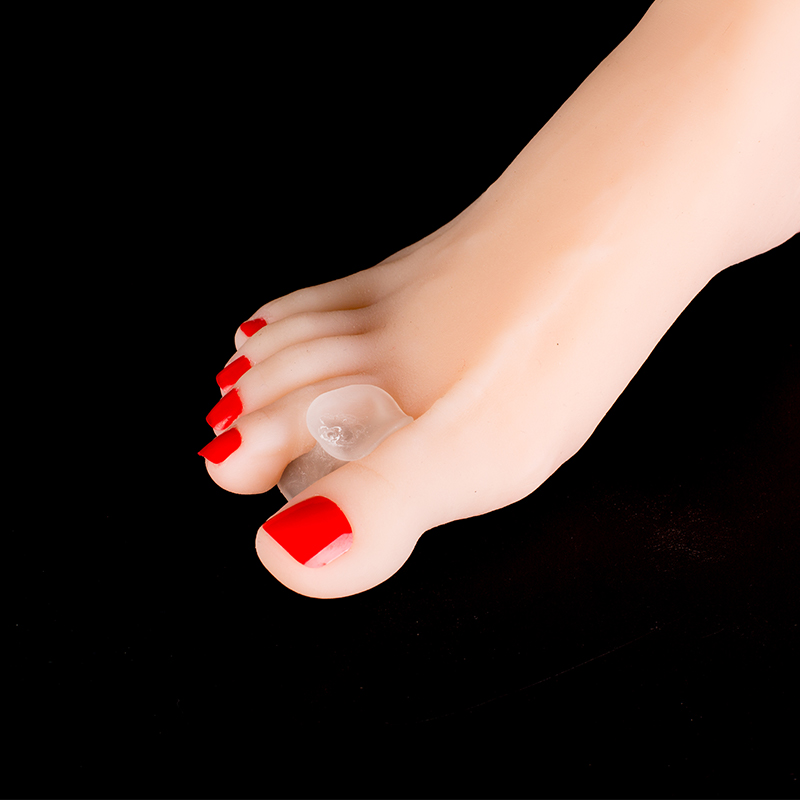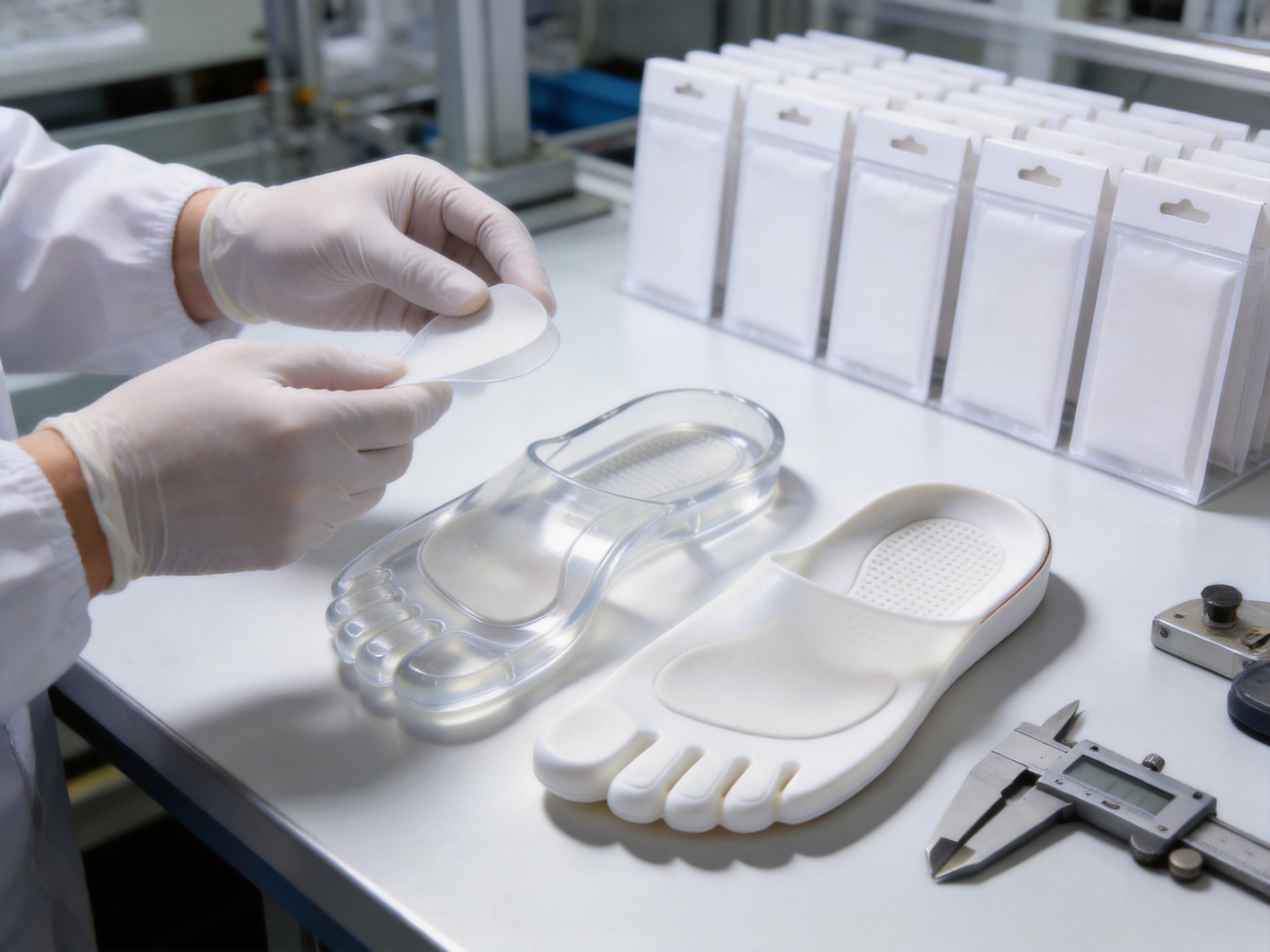
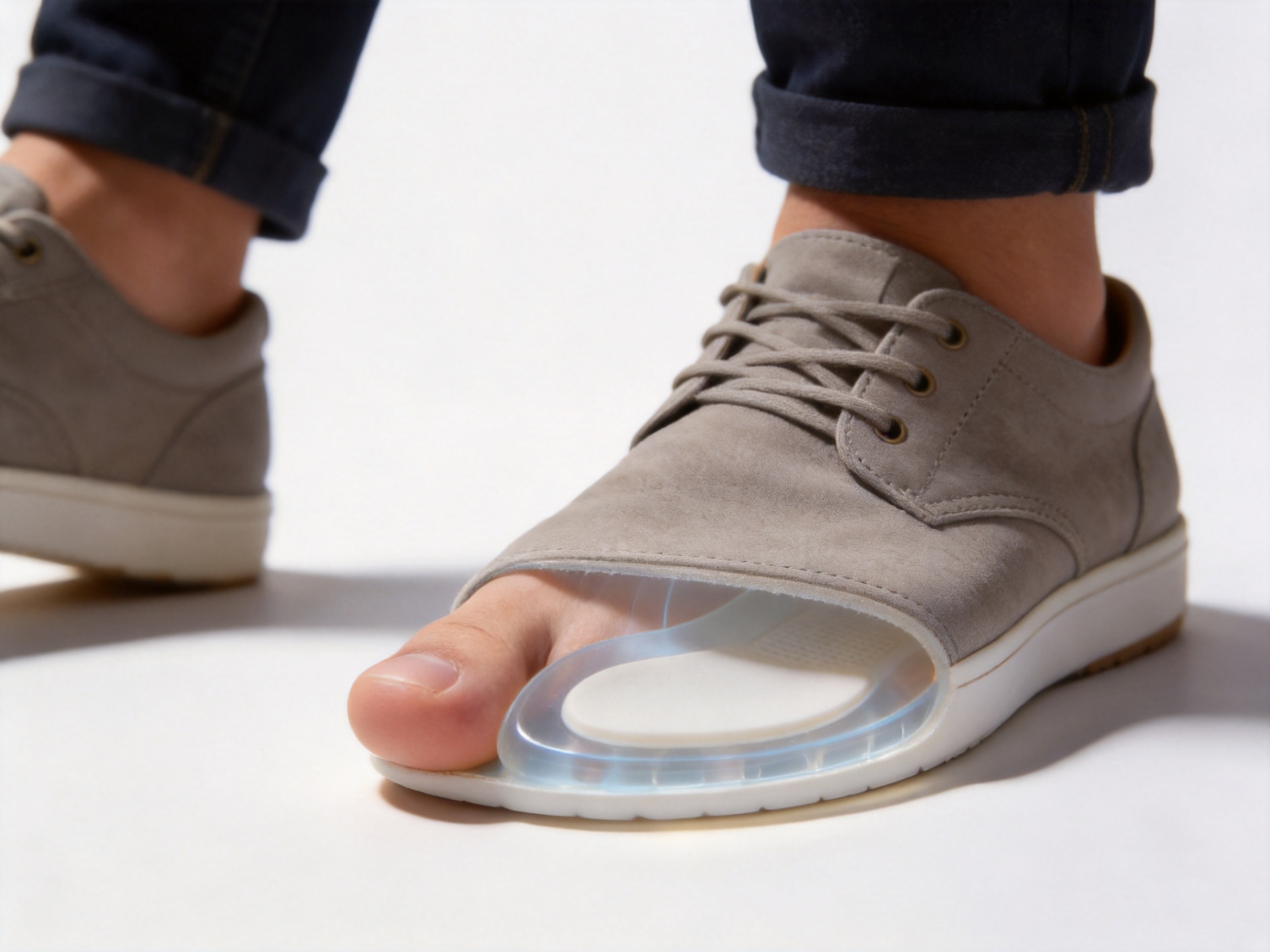
The modern foot cushion is a small product with a large impact on daily comfort. Designed for adults who wear casual shoes, stand for long periods, walk frequently, or experience localized pressure in the forefoot, this TPR foot cushion provides a practical balance of softness, resilience, shock absorption, and anti-slip performance. Its free-size design, white or transparent appearance, washable surface, and reusable structure make it suitable for everyday footwear support without requiring complicated fitting procedures.
As a foot care product, the foot cushion is intended to reduce concentrated pressure under the forefoot and improve comfort during routine activities. It can help distribute load more evenly across the front part of the foot, which may reduce friction, fatigue, and discomfort caused by thin shoe soles, hard walking surfaces, or prolonged standing. Compared with many ordinary pads that flatten quickly or shift inside shoes, a well-designed TPR cushion offers better elasticity, stable positioning, and a skin-friendly wearing experience.
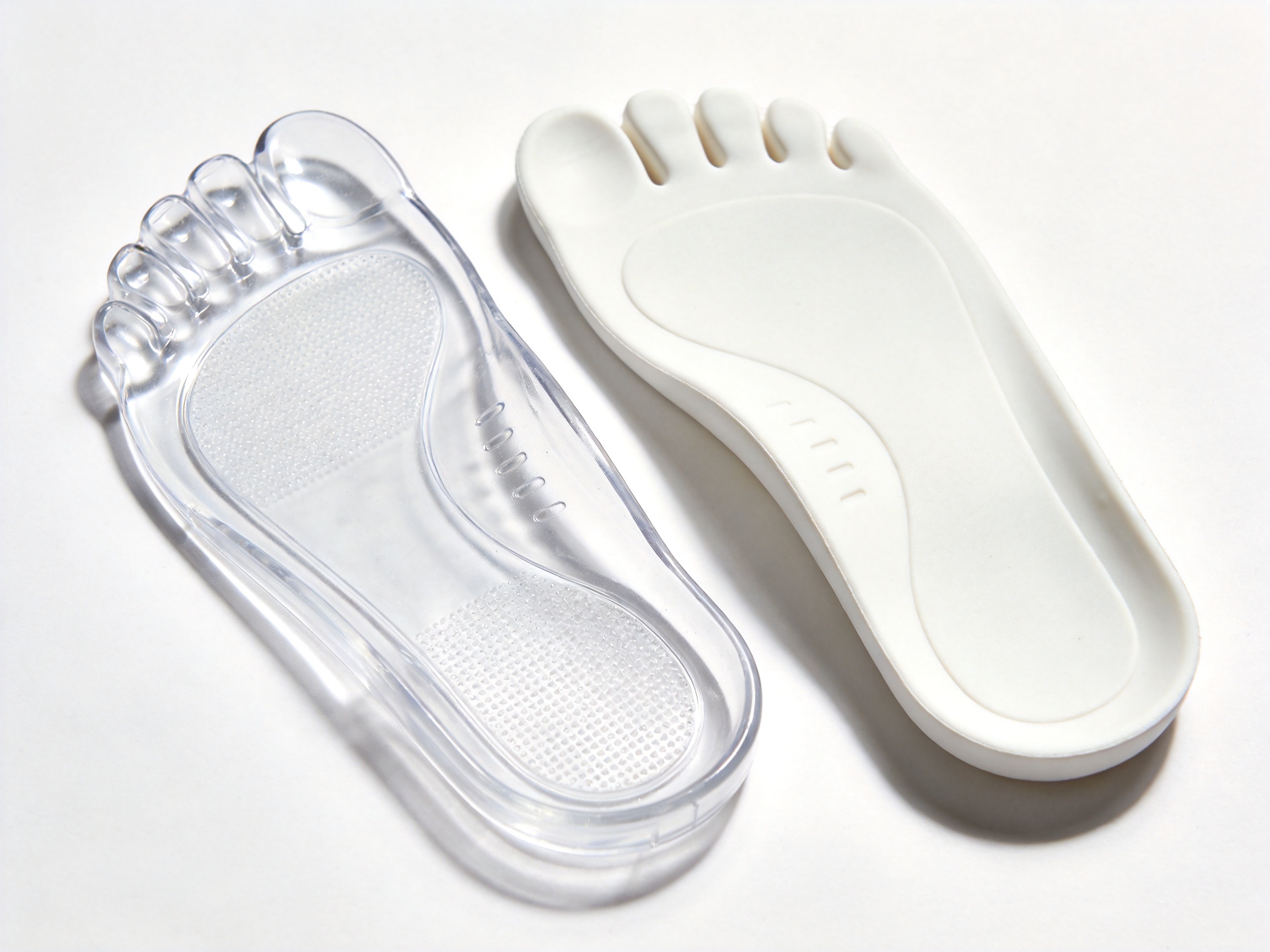
Product Overview
The foot cushion is made primarily from TPR, a thermoplastic rubber material valued for flexibility, resilience, and durable surface performance. Some product versions may also use PU foam, depending on customer requirements, application scenarios, and OEM specifications. TPR is especially suitable for foot care products because it combines a soft touch with reliable structural recovery. It can compress under body weight and then return to shape after use, helping the cushion maintain performance over repeated wearing cycles.
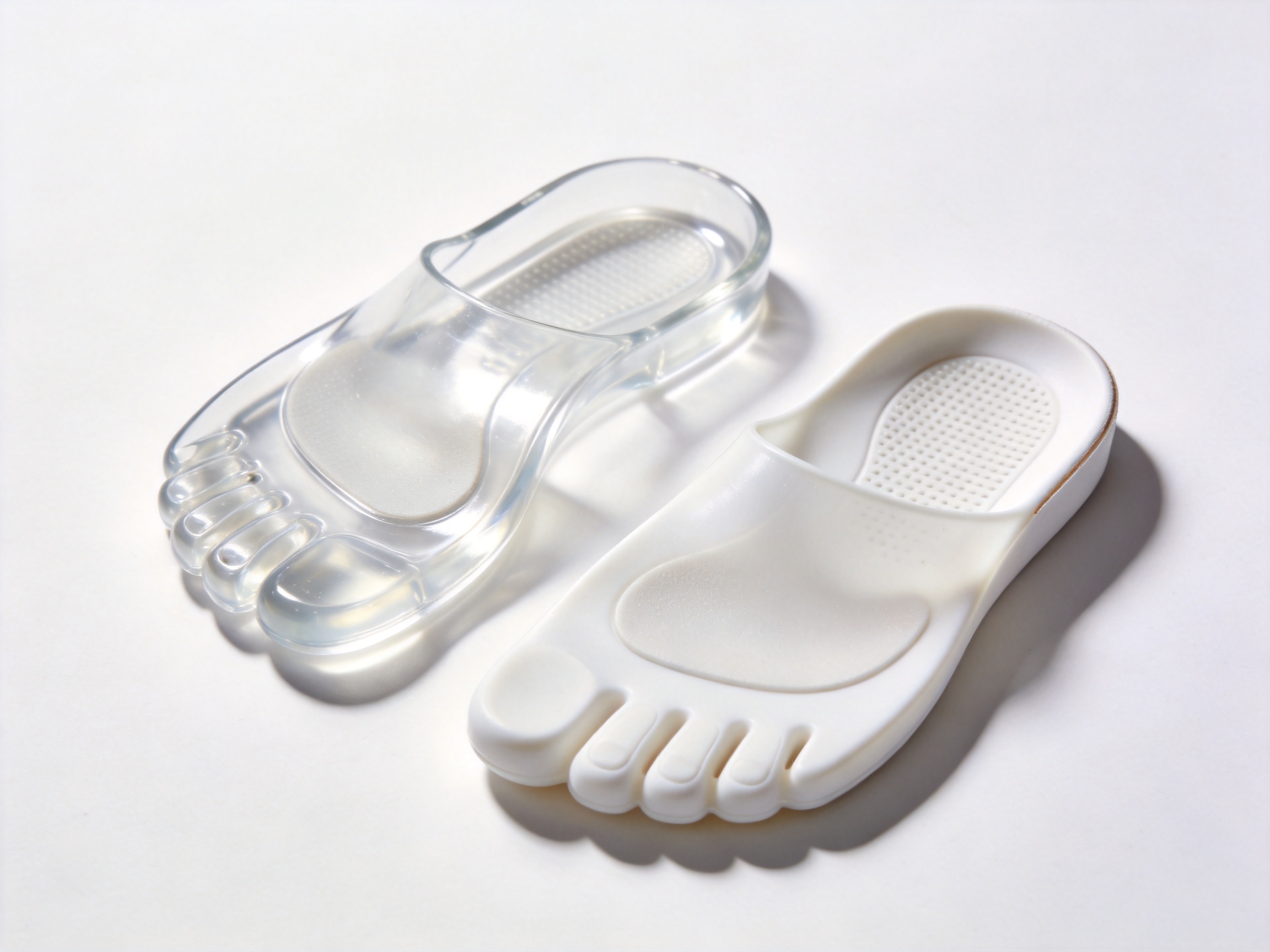
The product is available in a free size, which makes it convenient for general adult users. Free-size foot cushions are easier to stock, distribute, and use than highly specialized orthotic components. The available colors, including white and transparent, allow the cushion to remain discreet inside most casual shoes. This is particularly important for consumers who want comfort support without visible changes to their footwear appearance.
The cushion is designed for unisex adult use and is suitable for casual shoes. It belongs to the footcare category and focuses on everyday pressure relief rather than complex corrective treatment. Its main functions include reducing pressure and pain in the forefoot, absorbing shock during walking, improving anti-slip stability inside footwear, and supporting repeated use through a washable and reusable design.
For distributors, wholesalers, medical supply buyers, pharmacy channels, supermarkets, and retail foot care sections, this product offers a strong combination of low complexity and high practical value. It is easy to explain, easy to package, and easy for customers to understand. The product’s simple function also makes it suitable for private label programs, promotional healthcare kits, travel foot care sets, and daily comfort product lines.
Core Specifications
| Product Name |
Foot Cushion |
| Product Category |
Foot Care Products |
| Main Material |
TPR, with PU foam option depending on specification |
| Size |
Free size |
| Color Options |
White, transparent, or single-color customization |
| Applicable User |
Adults |
| Gender |
Unisex |
| Suitable Footwear |
Casual shoes |
| Main Functions |
Forefoot pressure reduction, shock absorption, anti-slip support |
| Use Cycle |
Washable and reusable |
The forefoot bears a significant portion of body weight during walking, standing, and push-off movement. When shoes have thin soles, high heels, narrow toe boxes, or limited internal cushioning, the metatarsal area can experience repeated compression and impact. Over time, users may feel soreness, burning discomfort, fatigue, or friction-related irritation. A foot cushion provides an additional comfort layer between the foot and shoe, helping soften contact and spread pressure more evenly.
Daily comfort products are increasingly important because people often spend long hours on their feet. Retail workers, healthcare staff, teachers, travelers, office workers commuting by public transport, and active seniors may all benefit from simple forefoot support. A cushion cannot replace medical diagnosis or professional treatment when serious foot conditions are present, but it can provide a practical comfort solution for common pressure and fatigue caused by routine footwear use.
In many casual shoes, the internal insole is designed mainly for shape and basic padding. It may not provide targeted forefoot cushioning. The foot cushion addresses this gap by placing resilient material exactly where pressure is concentrated. This targeted design can be more efficient than replacing a full insole, especially when the user wants to keep the original shoe fit, avoid reducing toe space, or add support only to the front part of the foot.
Another reason forefoot cushions are popular is their convenience. Users can place them inside shoes when needed, remove them for cleaning, and reuse them after drying. They are compact, lightweight, and easy to carry. This makes them suitable for travel, work bags, spare footwear, and seasonal shoe rotation. For retailers and distributors, these qualities translate into a product that is simple to demonstrate and easy to integrate into foot care assortments.
Material Advantage: The Value of TPR
TPR, or thermoplastic rubber, is one of the product’s most important advantages. It offers the flexible feel of rubber with the processing benefits of thermoplastic materials. In foot cushions, this means the material can be shaped with consistency, produced efficiently, and engineered to deliver a soft yet supportive surface. A good TPR cushion is not merely soft; it also has rebound performance, which helps it resist permanent compression.
Compared with low-grade foam pads, TPR can offer improved durability and easier cleaning. Some foam products absorb sweat and odor more readily, degrade after washing, or lose thickness after limited use. TPR surfaces are typically smoother and less absorbent, making them easier to rinse and maintain. This washable and reusable characteristic is valuable for both consumer satisfaction and product sustainability.
TPR also provides anti-slip performance. When formulated correctly, it can help the cushion stay in place inside the shoe and reduce unwanted movement during walking. A pad that slides forward, folds, or bunches under the foot can create discomfort instead of solving it. The material’s grip and flexibility help the cushion maintain stable contact with the shoe interior and the plantar surface of the foot.
Another benefit is user comfort across different conditions. TPR remains flexible during normal daily use and can adapt to foot movement. It can support the forefoot during heel-to-toe transition and absorb repeated micro-impacts from walking on hard surfaces. This makes it especially useful for urban environments, office buildings, shopping centers, airports, and other locations where hard flooring is common.
Design Features That Improve Daily Wear
The foot cushion is designed around four practical features: pressure relief, shock absorption, anti-slip stability, and reusability. Each feature addresses a common weakness found in ordinary shoe pads. When these functions are combined, the cushion provides a complete comfort experience rather than a single-purpose insert.
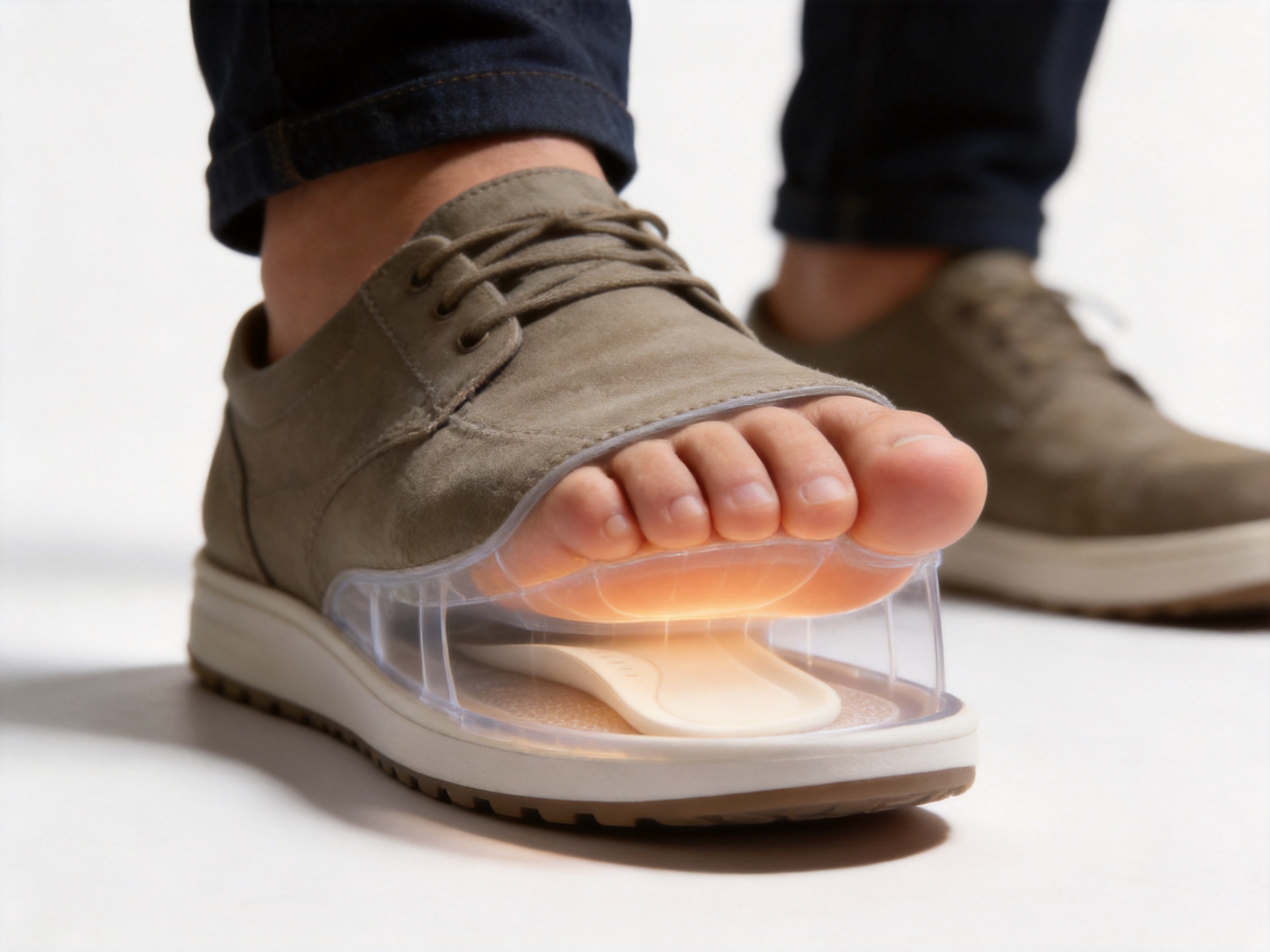
Pressure relief is achieved by creating a soft interface under the forefoot. Instead of allowing the metatarsal area to press directly against a hard shoe platform, the cushion absorbs part of the contact force. This helps reduce localized pressure points, especially during standing and push-off. The result is a smoother walking sensation and less direct stress on sensitive areas.
Shock absorption is important because walking produces repeated impact. Even moderate daily activity can involve thousands of steps. Each step sends force upward through the foot, ankle, knee, and leg. A cushioned forefoot layer helps soften this contact, improving perceived comfort and reducing harsh ground feel. This is particularly noticeable in shoes with limited internal padding.
Anti-slip performance improves confidence and fit. If a foot cushion moves during use, the user may feel instability, rubbing, or uneven support. The TPR material helps reduce sliding, while the flexible structure allows the cushion to conform to the shoe interior. This combination supports better placement and more predictable comfort throughout the day.
Washability and reusability complete the product’s value. Disposable pads may be convenient, but they can become costly and wasteful over time. A washable cushion allows users to maintain hygiene while extending product life. For distributors and healthcare product buyers, reusability also strengthens the product’s value proposition and makes it easier to position as a practical daily care item.
Advantages Over Common Competitor Products
Many foot cushions on the market appear similar at first glance, but performance differences become clear during repeated use. Low-cost foam pads may feel comfortable initially but often compress quickly. Thin gel pads may offer softness but can lack stable support or may shift inside shoes. Fabric-covered inserts may absorb moisture and require more careful cleaning. The TPR foot cushion provides a balanced solution by combining resilience, grip, simple cleaning, and discreet appearance.
One advantage is shape retention. TPR can maintain its cushioning function better than many basic sponge materials. When a foot cushion loses shape, pressure relief decreases and the product may feel uneven. By using a resilient material, the cushion can continue to deliver support over multiple uses. This improves the long-term user experience and reduces replacement frequency.
Another advantage is maintenance. Washable TPR products can be cleaned with simple water-based care, depending on the final product instructions. This makes them more suitable for daily use than absorbent materials that retain moisture or odor. A foot cushion that is easy to clean is more likely to be used consistently, which improves customer satisfaction.
The product also has a discreet visual profile. White and transparent options are compatible with many shoe styles and do not draw attention. This matters for users who wear light-colored shoes, open-style casual footwear, or shoes where internal accessories may be visible. A transparent cushion can be especially attractive in retail markets where aesthetics influence purchase decisions.
Compared with full-length insoles, the forefoot cushion is compact and targeted. It does not significantly change heel height or fill the entire shoe cavity. Users who only need front-foot comfort may prefer this focused approach. It also makes the product easier to fit into shoes where a full insole would be too thick or difficult to adjust.
In competitive purchasing, another important advantage is manufacturing consistency. A product supplied by an experienced medical and healthcare manufacturer benefits from established quality systems, material selection knowledge, and inspection discipline. Buyers are not only purchasing a cushion; they are purchasing supply reliability, documentation support, and repeatable product quality.
Manufacturing Strength Behind the Product
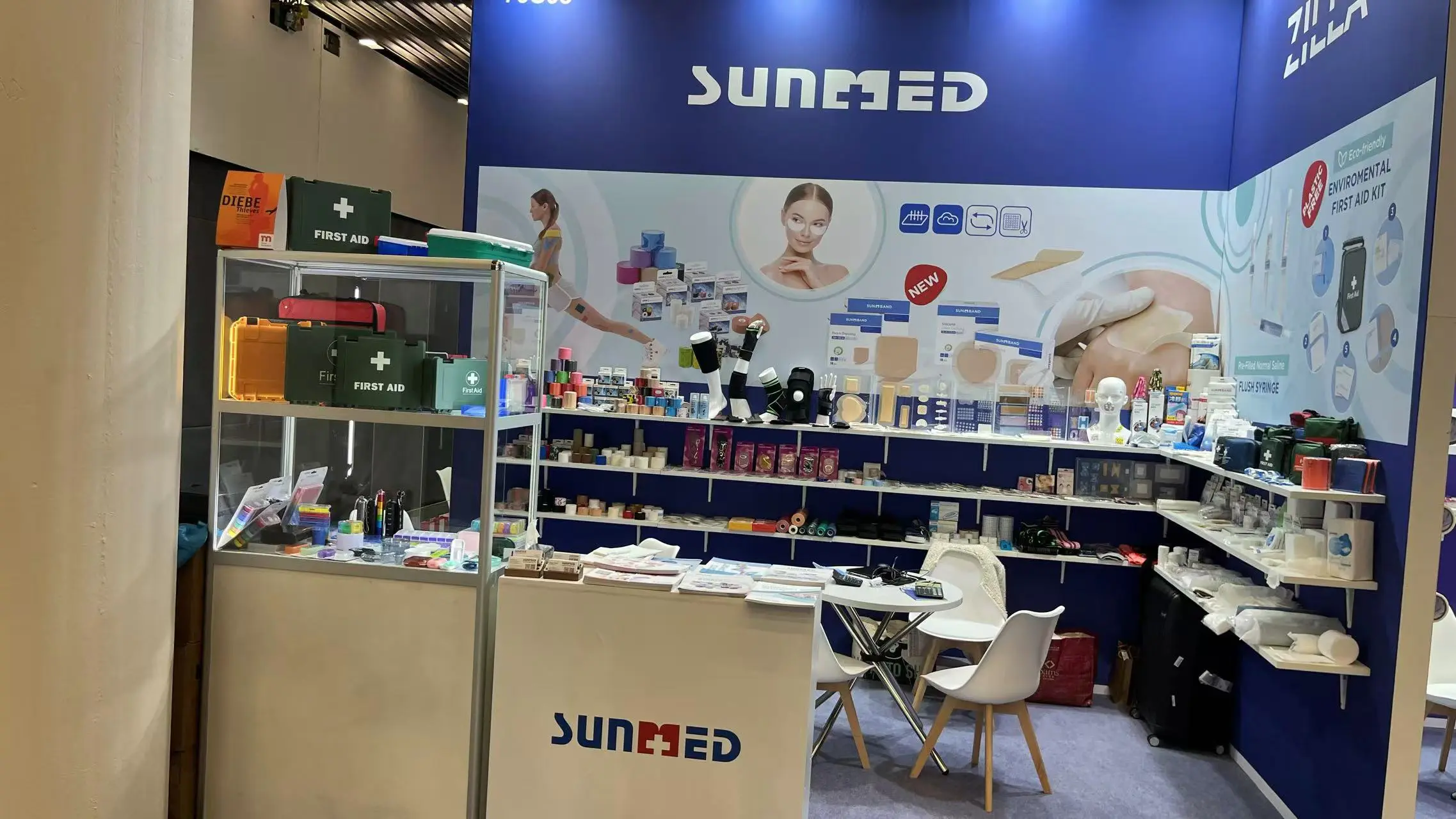
Suzhou Sunmed Co., Ltd. has decades of experience in medical consumables, first aid products, wound care, sports support, family healthcare, and related healthcare supplies. This broad manufacturing background creates a strong foundation for producing foot care products with consistent quality. The company’s experience across gauze, bandages, medical tape, sports wraps, hot and cold therapy products, pill boxes, medical instruments, and healthcare accessories demonstrates familiarity with both clinical supply expectations and consumer healthcare demands.
Foot care products require more than simple molding. They require material control, surface quality control, ergonomic understanding, hygiene awareness, and packaging reliability. A manufacturer already operating under medical device quality principles is well positioned to manage these requirements. The company’s quality culture supports inspection at multiple stages, from raw material review to finished product assessment.
The company operates production bases in several provinces and serves international customers across Europe, Southeast Asia, Africa, and Oceania. This export background means the production process must consider different market expectations, packaging languages, compliance requirements, shipment conditions, and buyer specifications. For the foot cushion, such experience helps ensure that OEM and wholesale orders can be managed efficiently, with attention to consistent appearance, size, material feel, and packaging presentation.
A key strength is the professional quality control team. Large-scale inspection capability helps identify defects such as uneven material thickness, surface contamination, poor elasticity, incorrect color, deformation, or packaging errors. For a product used directly against the foot, quality consistency is essential. Even small defects can affect comfort, so disciplined inspection improves both safety perception and customer trust.
The company’s adherence to ISO13485:2016 standards reflects a structured approach to quality management. While individual product regulatory classification may vary by market, manufacturing under a recognized quality system is valuable for buyers who require traceability, documentation, and stable production control. Many products are CE certified, and the company’s Suzhou factories comply with FDA requirements. These strengths support global distribution and provide confidence to importers, healthcare supply companies, and private label customers.
Advanced Process Control for Consistent Comfort
The production of a reliable foot cushion begins with material selection. TPR must be chosen for appropriate softness, elasticity, durability, and surface feel. If the material is too hard, pressure relief is limited. If it is too soft, the cushion may collapse under weight and lose support. Proper formulation helps achieve the right balance between cushioning and resilience.
During manufacturing, process parameters must be carefully controlled. Temperature, molding conditions, cooling time, material flow, and finishing steps all influence the final product. Inconsistent molding can lead to uneven thickness, bubbles, weak edges, or surface irregularities. Advanced production control reduces these risks and ensures that each cushion performs similarly from batch to batch.
Surface quality is another important consideration. The cushion should feel smooth and comfortable against socks or skin, depending on how the user wears it. Rough edges or sticky residue may cause irritation or collect dust. A controlled finishing process helps maintain a clean and comfortable surface. For transparent versions, clarity and visual cleanliness are also important, because imperfections are easier to see.
Dimensional consistency matters even in a free-size product. Users expect the cushion to fit predictably in casual shoes and provide balanced support on both sides. Production molds and trimming processes must maintain stable shape and thickness. This helps ensure that pairs are matched and that the user receives uniform comfort.
Packaging control also supports product quality. Foot cushions should be protected during storage and transport to prevent deformation, contamination, or surface damage. Well-designed packaging can also communicate product benefits clearly, including washable use, pressure relief, shock absorption, and suitable footwear. For private label customers, packaging customization can create a strong shelf presence while preserving product integrity.
Quality Assurance and Inspection Priorities
Quality assurance for a foot cushion should include material verification, visual inspection, dimensional checks, elasticity assessment, surface cleanliness review, packaging confirmation, and batch traceability. These steps are important because the user’s comfort depends on small details. A cushion that appears acceptable but has uneven thickness may not distribute pressure well. A pad with poor surface finish may feel uncomfortable. A product with weak rebound may flatten too soon.
Material verification helps confirm that the cushion meets the agreed specification. This can include checking the supplied TPR grade, appearance, odor level, hardness range, and basic performance characteristics. When customers request PU foam versions, density and compression behavior become especially important.
Visual inspection identifies surface defects, discoloration, foreign matter, bubbles, deformation, or trimming issues. Since the product may be white or transparent, visual standards should be clear. Transparent products require careful handling because marks, dust, and defects may be more visible.
Dimensional checks ensure the product remains within the agreed range. Free size does not mean uncontrolled size; it means the design is suitable for general adult use. Buyers still need predictable dimensions for packaging, retail display, and customer expectations.
Elasticity and compression checks help confirm that the cushion can absorb pressure and recover shape. While exact methods may vary according to customer requirements, the goal is consistent performance. A high-quality foot cushion should feel supportive after repeated steps, not only during the first trial.
Packaging inspection confirms that labels, quantities, sealing, printing, barcodes, and cartons match order requirements. This is particularly important for wholesale and export shipments. Incorrect packaging can delay customs clearance, create retail issues, or cause customer complaints even when the product itself is acceptable.
Comfort Benefits for Different Daily Scenarios
The foot cushion can support comfort in a variety of everyday situations. In casual office shoes, it can reduce the hard feeling under the forefoot during commuting and walking between work areas. In leisure shoes with limited padding, it can improve step comfort without replacing the entire insole. In travel footwear, it can help users manage long airport walks, sightseeing, or standing in lines.
For people who spend much of the day standing, a forefoot cushion may make shoes feel more forgiving. Retail staff, event workers, teachers, salon professionals, and service employees often experience fatigue from hard floors. A compact cushion provides an accessible comfort improvement that does not require purchasing new footwear.
For occasional dress shoe wearers, the cushion can be useful when shoes are attractive but not highly cushioned. Some formal or semi-casual shoes prioritize appearance over comfort. A discreet transparent or white cushion can improve the wearing experience while preserving the shoe’s style.
For active urban lifestyles, shock absorption is a major benefit. Pavement, tile, concrete, and other hard surfaces can make every step feel sharper. A TPR cushion softens contact at the front of the foot, where much of the push-off force occurs. The result is a smoother walking sensation that can make daily movement more comfortable.
For older adults, simple comfort products are often preferred because they are easy to use and maintain. A free-size washable cushion does not require complex adjustment. However, users with diabetes, circulation problems, neuropathy, wounds, severe pain, or diagnosed foot conditions should consult healthcare professionals before using any foot accessory. Comfort products should be used responsibly and should not replace medical care.
How the Product Supports Retail and Wholesale Success
From a business perspective, the foot cushion is attractive because it serves a broad consumer need. Foot discomfort from everyday shoes is common, and many customers look for affordable, non-complicated comfort solutions. The product is easy to position in pharmacies, supermarkets, sports shops, medical supply stores, shoe care sections, travel goods areas, and online marketplaces.
The product’s compact size makes it efficient for storage and shipping. Retail packaging can be designed for hanging displays, countertop placement, blister cards, pouches, or small boxes. The cushion can also be included in combination packs with other foot care products, such as heel cushions, toe separators, shoe inserts, or blister prevention items.
For OEM customers, the product provides flexibility. Color, packaging design, labeling, material hardness, and product presentation may be customized according to market requirements. Transparent versions can target fashion-conscious users, while white versions may appeal to pharmacy and healthcare channels. Private label customers can build a complete foot care range with consistent branding.
Wholesale buyers also benefit from the manufacturer’s broad product portfolio. A supplier that offers foot care products alongside first aid, wound care, bandages, tapes, sports support, hot and cold therapy, and medical consumables can help customers consolidate purchasing. This reduces supplier management complexity and supports more efficient procurement.
Export experience is especially valuable for international buyers. Documentation, carton labeling, packaging compliance, production scheduling, and quality control are all critical in cross-border trade. A manufacturer with established global market experience can better support stable supply and long-term cooperation.
Practical Use and Care Guidance
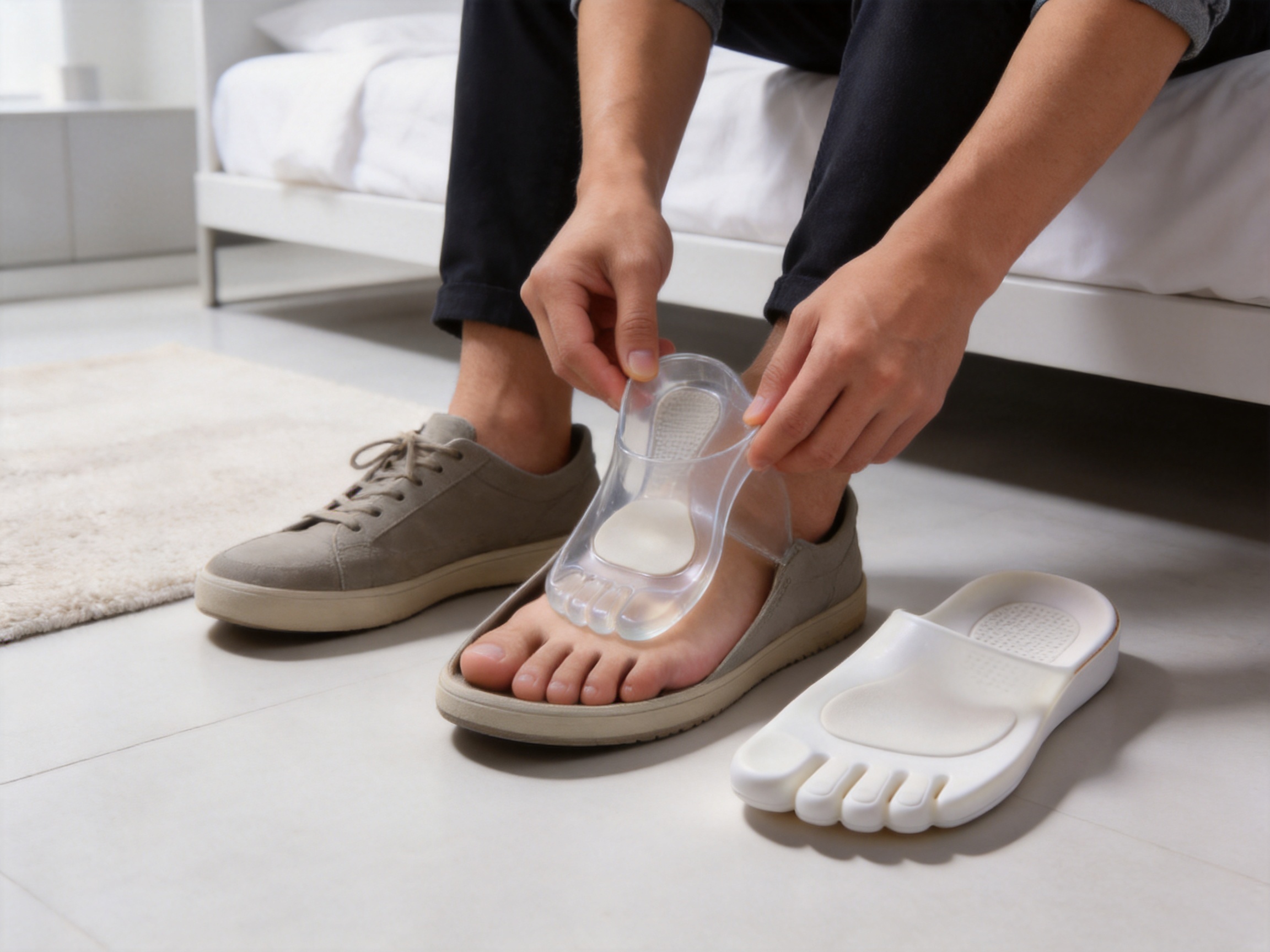
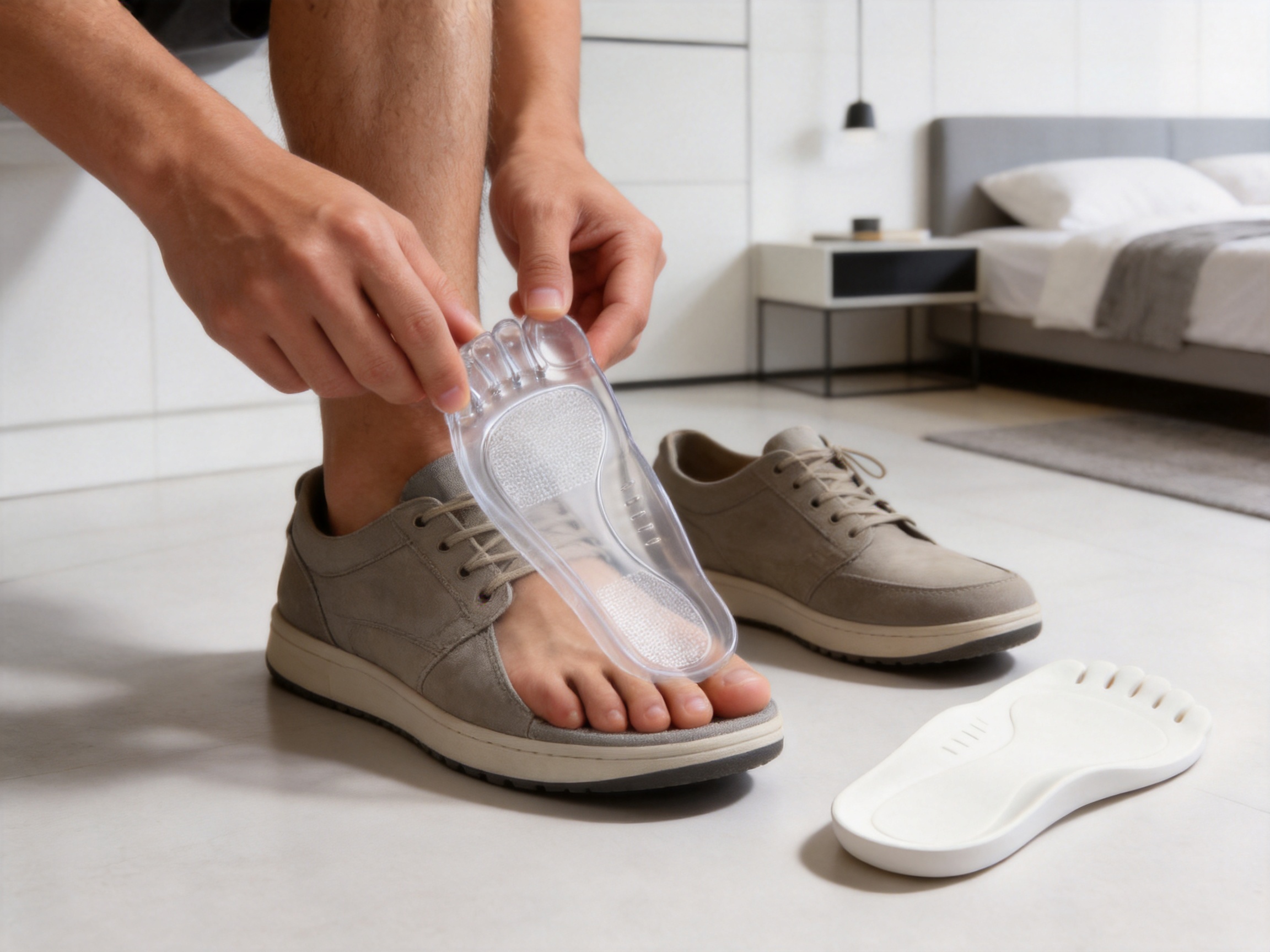
Using the foot cushion is simple. The user should first ensure that the inside of the shoe is clean and dry. The cushion should then be placed under the forefoot area where pressure is felt most strongly. The user should check that the cushion lies flat and does not create wrinkles, folds, or uneven areas. After placing the foot into the shoe, the user should walk slowly for a short time to confirm comfort and positioning.
If the cushion shifts, the shoe may be too loose, the inner surface may be dusty, or the cushion may need repositioning. Proper placement is important for comfort. The cushion should not crowd the toes or create pressure in a new area. If discomfort increases, the user should stop using it and assess the fit.
Cleaning should be done according to final product instructions. In general, washable TPR cushions can be rinsed gently and allowed to air dry before reuse. They should be completely dry before being placed back into shoes. Harsh chemicals, high heat, or aggressive scrubbing may affect material performance, so mild care is recommended.
The cushion should be inspected regularly. If it becomes torn, permanently deformed, excessively dirty, or loses its cushioning function, it should be replaced. Reusable does not mean permanent; it means the product is designed for repeated use when maintained properly.
Users should also pay attention to foot health. A cushion can improve comfort, but persistent pain, swelling, numbness, skin breakdown, or unusual symptoms require professional evaluation. Responsible product communication should make this distinction clear. The cushion is best understood as a comfort and pressure-relief accessory for everyday footwear.
Ergonomic Considerations
The forefoot is a dynamic structure made up of metatarsal bones, joints, soft tissue, and the ball of the foot. During walking, the forefoot receives body weight as the heel lifts and the body moves forward. A cushion placed in this region must allow movement while reducing harsh contact. If the material is too rigid, it may interfere with natural motion. If it is too unstable, it may reduce confidence during walking. The TPR cushion is designed to balance flexibility and support.
Free-size design is useful because it accommodates a wide range of adult foot shapes and casual shoe types. However, ergonomic success also depends on proper user placement. The cushion should support the metatarsal area without forcing the foot into an unnatural position. A low-profile structure can help maintain shoe fit while improving comfort.
Anti-slip performance contributes to ergonomic stability. When a pad remains in the correct position, the foot can move more naturally. When a pad slips, the user may unconsciously adjust gait or grip the toes to stabilize the foot, which can create fatigue. Good material grip reduces this problem and improves the overall walking experience.
Shock absorption is also an ergonomic benefit because it reduces the sharpness of impact. The user may not consciously notice every impact, but the cumulative effect of repeated steps affects perceived comfort. A soft, resilient layer under the forefoot helps make daily movement feel less demanding.
Why Manufacturing Experience Matters in a Simple Product
At first glance, a foot cushion may seem simple. However, simple products often reveal quality differences quickly. If the material smells unpleasant, customers notice. If the surface attracts dust excessively, customers notice. If the cushion flattens after a few uses, customers notice. If the packaging looks inconsistent, retail buyers notice. Manufacturing experience helps prevent these problems before they reach the market.
Suzhou Sunmed’s background in medical and healthcare products gives the company a disciplined approach to production. The company is accustomed to supplying products where cleanliness, consistency, packaging accuracy, and customer documentation matter. This experience supports better execution even for consumer foot care items.
The company’s long history in global trade also means it understands the importance of communication. Buyers need clear specifications, stable lead times, responsive service, and practical solutions when customization is required. Foot cushion programs may involve different packaging for different markets, different language requirements, and different retail formats. Experienced export teams can help manage these details efficiently.
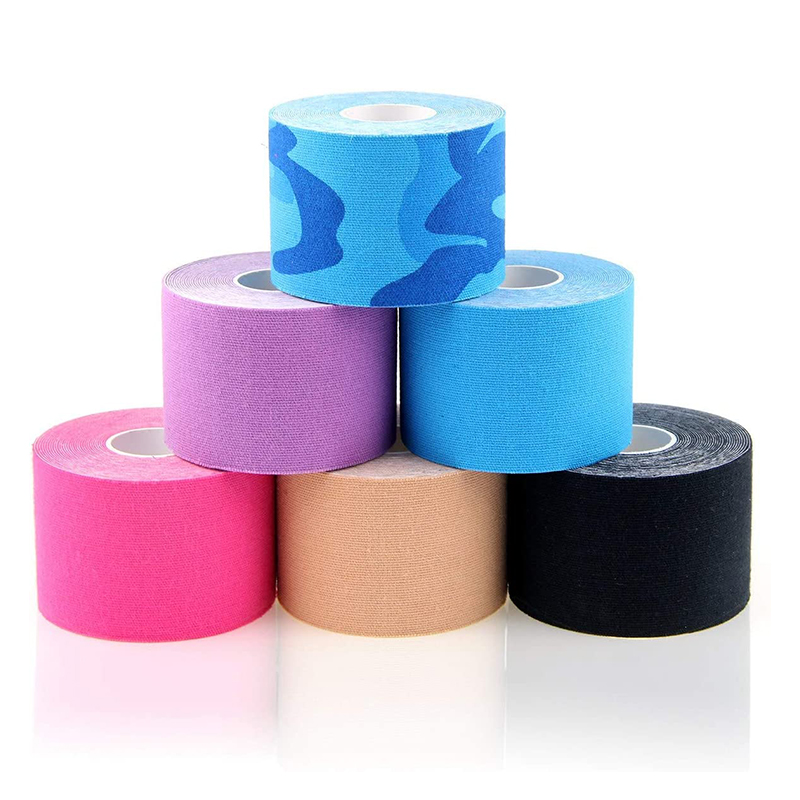
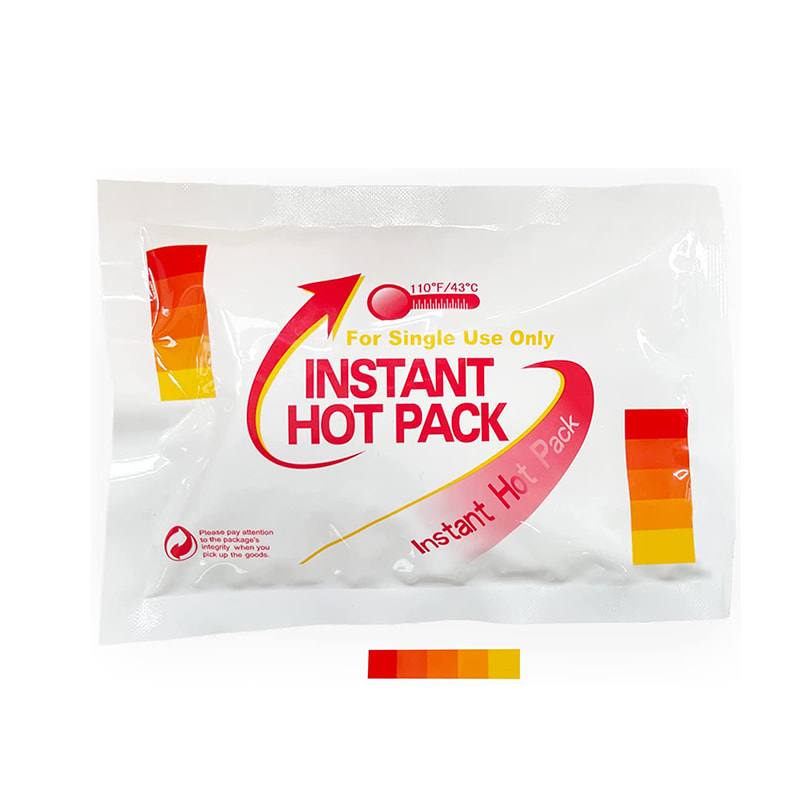
Another strength is the ability to support product line expansion. A buyer interested in foot cushions may also need cohesive bandages, elastic adhesive bandages, kinesiology tape, first aid kits, medical gauze, medical tape, hot and cold packs, or other healthcare products. Working with a supplier that has a broad catalog can simplify sourcing and allow buyers to develop complete healthcare ranges.
OEM and Private Label Opportunities
The foot cushion is suitable for OEM and private label development because the basic function is widely needed and easily communicated. A customer can adapt packaging design, language, color selection, retail quantity, and promotional positioning to match local market preferences. For example, pharmacy packaging may emphasize comfort and pressure relief, while lifestyle packaging may highlight discreet design and daily walking support.
Customization can also include material feel. Some markets prefer softer cushions, while others prefer firmer support. The manufacturer can work with customers to evaluate practical specifications. The goal is not simply to make the softest product, but to create the right comfort balance for the target consumer.
Private label buyers often need consistent repeat orders. This requires stable molds, controlled raw materials, reliable packaging suppliers, and quality inspection discipline. An experienced manufacturer can help maintain consistency across production batches, which is essential for brand reputation.
For e-commerce sellers, product appearance and user satisfaction are especially important. Clear product photos, accurate descriptions, and reliable quality reduce returns and negative reviews. A transparent or white TPR cushion can be presented cleanly online, and its washable reusable function is easy for consumers to understand.
The foot care market includes insoles, heel cups, toe protectors, bunion pads, arch supports, blister pads, callus cushions, diabetic foot products, and general comfort accessories. The foot cushion occupies a practical segment focused on forefoot comfort. It does not require diagnosis, complicated sizing, or professional fitting in most general comfort applications. This makes it a good entry-level foot care product for broad retail distribution.
Consumers often purchase foot cushions because they want immediate comfort improvement. They may have a pair of shoes that looks good but feels hard, or they may need extra support for a special event, workday, or trip. A compact cushion offers a quick solution at an accessible cost.
The product also supports repeat purchasing. Even though it is reusable, users may want multiple pairs for different shoes. They may keep one pair at work, one in travel shoes, and one in daily casual footwear. Retailers can encourage this by offering multi-pair packs or seasonal promotions.
In healthcare and pharmacy channels, the cushion can be positioned as a daily comfort aid. In sports and active lifestyle channels, it can be positioned as a shock-absorbing accessory for walking and casual activity. In shoe stores, it can be offered as an add-on product to improve fit and comfort at the point of sale.
Safety and Responsible Use
Although the foot cushion is designed for comfort, responsible use is important. Users should not use the product over open wounds, infected skin, severe swelling, or unexplained pain without medical advice. People with diabetes, reduced sensation, poor circulation, or serious foot conditions should consult a healthcare professional before using any foot insert or cushion.
The cushion should fit comfortably inside the shoe. If the shoe becomes too tight after insertion, pressure may increase in other areas. Users should choose footwear with enough internal space and should remove the cushion if numbness, rubbing, or discomfort occurs.
Regular cleaning supports hygiene. Since feet naturally produce sweat, any reusable foot product should be maintained carefully. Allowing the cushion to dry fully before reuse helps prevent moisture accumulation inside shoes.
Children should use only products designed for their age and size. This foot cushion is specified for adults, so it should not be marketed as a children’s product unless a specific child-size version is developed and tested.
Environmental and Economic Value of Reusability
Reusable foot cushions offer both economic and environmental advantages. A product that can be washed and worn multiple times reduces the need for frequent replacement compared with disposable pads. For consumers, this means better value over time. For retailers, it supports a quality-focused product image rather than a purely disposable accessory.
Durability also reduces packaging waste associated with repeated purchases. While all consumer products have environmental considerations, reusability is a positive feature when paired with responsible material selection and long service life. TPR’s durability helps support this value.
From a procurement perspective, reusable products may attract customers who are willing to pay for better performance. This can improve retail margins and brand perception. A cushion that maintains comfort through repeated use is more likely to generate positive feedback and repeat brand trust.
Full insoles provide whole-foot coverage and may include arch support, heel cushioning, or posture features. However, they can be bulky and may change shoe fit significantly. For users who only need forefoot support, a smaller cushion is simpler and less intrusive.
Disposable pads are convenient but may not deliver the same long-term value. They can lose adhesion, absorb moisture, or require frequent replacement. A washable TPR cushion provides a more durable option for daily users.
Gel pads may feel soft, but not all gel products offer stable anti-slip performance. Some can become sticky, shift inside shoes, or feel too thick. TPR offers a balanced combination of softness, resilience, and surface stability.
Foam pads can be lightweight and inexpensive, but low-density foam may compress quickly. PU foam versions can be useful when properly specified, yet TPR remains attractive for users seeking washability and durability. The best choice depends on market needs, but the TPR foot cushion offers a strong all-around solution.
Buyer Considerations for Importers and Distributors
When selecting a foot cushion supplier, buyers should evaluate more than unit price. Material quality, production consistency, packaging capability, communication, export experience, and quality system support all influence total value. A very low-priced product may create hidden costs through customer complaints, returns, inconsistent batches, or delayed shipments.
Buyers should confirm the target material, size, color, packaging format, order quantity, labeling requirements, and any required compliance documents before production. Clear specifications help prevent misunderstandings and improve delivery accuracy.
It is also useful to review samples under realistic conditions. Buyers can test softness, rebound, shoe fit, anti-slip feel, cleaning behavior, odor, and visual quality. Sample evaluation should include both initial impression and repeated-use assessment.
For private label projects, packaging should be designed to communicate product benefits clearly. Terms such as forefoot pressure relief, shock absorption, anti-slip, washable, reusable, adult use, and suitable for casual shoes can help consumers make quick purchase decisions. Instructions should be simple and responsible.
Long-term cooperation with a capable manufacturer supports product improvement over time. Market feedback can be used to refine packaging, adjust material hardness, develop new colors, or create complementary products. This partnership approach is one of the advantages of working with an experienced healthcare product exporter.
Q&A Section
What is the main purpose of the foot cushion?
The main purpose is to reduce pressure and improve comfort in the forefoot area. It provides an additional cushioning layer inside casual shoes, helping soften contact with the shoe sole and absorb shock during walking or standing.
What material is used in the cushion?
The main material is TPR, a flexible thermoplastic rubber known for resilience, comfort, and washability. Some versions may also be made with PU foam depending on customer requirements and product specifications.
Who can use this product?
The cushion is designed for adult users and is suitable for both men and women. It is intended for general comfort support in casual shoes.
Is the cushion washable?
Yes. The product is designed to be washable and reusable. Users should clean it gently according to product instructions and allow it to dry fully before placing it back into shoes.
Does the cushion replace medical treatment?
No. It is a comfort and pressure-relief accessory, not a substitute for diagnosis or professional care. Users with persistent pain, wounds, diabetes, poor circulation, numbness, or serious foot conditions should consult a healthcare professional before use.
Why choose TPR instead of ordinary foam?
TPR offers good elasticity, surface durability, and easy cleaning. Compared with many low-grade foams, it can provide better shape retention and a more reusable structure. It also supports anti-slip performance inside footwear.
Can the product be customized for private label orders?
Yes. OEM and private label options may include packaging design, color selection, labeling, product presentation, and specification adjustment. This makes the cushion suitable for pharmacies, supermarkets, medical supply channels, shoe care brands, and e-commerce sellers.
What makes the manufacturer reliable?
The manufacturer has extensive experience in medical consumables, first aid, healthcare products, sports support, and medical instruments. Its production background, export experience, professional quality control team, and ISO13485:2016 quality management approach support consistent supply and product reliability.
How should the cushion be placed in the shoe?
It should be positioned under the forefoot where pressure is most noticeable. The shoe interior should be clean and dry, and the cushion should lie flat. Users should walk briefly to confirm that the placement feels comfortable and stable.
When should the cushion be replaced?
It should be replaced if it becomes torn, permanently compressed, excessively dirty, or no longer provides comfortable cushioning. Regular inspection helps maintain hygiene and performance.
Conclusion
The TPR foot cushion is a practical, user-friendly foot care product designed to improve everyday comfort. With pressure relief, shock absorption, anti-slip support, and washable reusability, it addresses common problems experienced by adults wearing casual shoes. Its free-size design, discreet white or transparent appearance, and simple care requirements make it suitable for broad consumer use.
Compared with many ordinary competitor products, the cushion offers a strong balance of resilience, stability, hygiene, and value. TPR material helps maintain shape, supports easy cleaning, and provides reliable grip inside footwear. These advantages make the product attractive for retail, wholesale, private label, and healthcare accessory markets.
The manufacturing strength behind the product further enhances its value. With decades of experience in medical and healthcare supplies, broad export capabilities, professional quality control, and recognized quality management practices, Suzhou Sunmed Co., Ltd. can support buyers seeking stable production, customization, and long-term cooperation. For companies building a foot care range or expanding daily comfort products, this foot cushion is a compact but meaningful addition.
References
American Podiatric Medical Association. General Foot Health and Footwear Comfort Guidance.
International Organization for Standardization. ISO 13485:2016 Medical Devices Quality Management Systems Requirements for Regulatory Purposes.
Nigg, B. M. Biomechanics of Sport Shoes. University of Calgary Research Materials.
Rosenbaum, D., and Becker, H. P. Plantar Pressure Distribution Measurements: Technical Background and Clinical Applications.
Whittle, M. W. Gait Analysis: An Introduction. Butterworth-Heinemann.
U.S. Food and Drug Administration. Quality System Regulation Principles for Medical Device Manufacturing.

 English
 Español
 русский
 Français
 Deutsch
 italiano
 By Admin