Disposable medical face masks are essential consumable products for hospitals, clinics, laboratories, first-aid providers, pharmacies, workplaces, schools, transportation systems, and households. Their simple appearance conceals a carefully engineered combination of non-woven materials, filtration layers, ultrasonic bonding, nose adjustment, and elastic or tie-on fastening. When designed and manufactured correctly, a disposable three-layer mask can provide a comfortable physical barrier against droplets, splashes, dust, and airborne particles encountered during routine healthcare and daily-care activities.
The Disposable Non-Woven 3 Layer Medical Face Mask, model DC660501, is designed as a practical, scalable solution for organizations that need dependable single-use face protection. It is available in several colors, including blue, white, and green, with additional color options available according to customer requirements. The product can be supplied in earloop and tie-on configurations, allowing buyers to select a fastening method appropriate for different users and operating environments. Its standard packing configuration is 50 pieces per color box, while the stated minimum order quantity is 3,000 pieces.
This article examines the product’s structure, manufacturing considerations, quality advantages, customization potential, packaging, purchasing value, and the capabilities of Suzhou Sunmed Co., Ltd. as a medical consumables manufacturer and exporter. It also explains why a professionally produced non-woven mask can offer advantages over inconsistent low-cost alternatives, particularly when buyers require stable quality, repeatable specifications, responsible documentation, and reliable international supply.
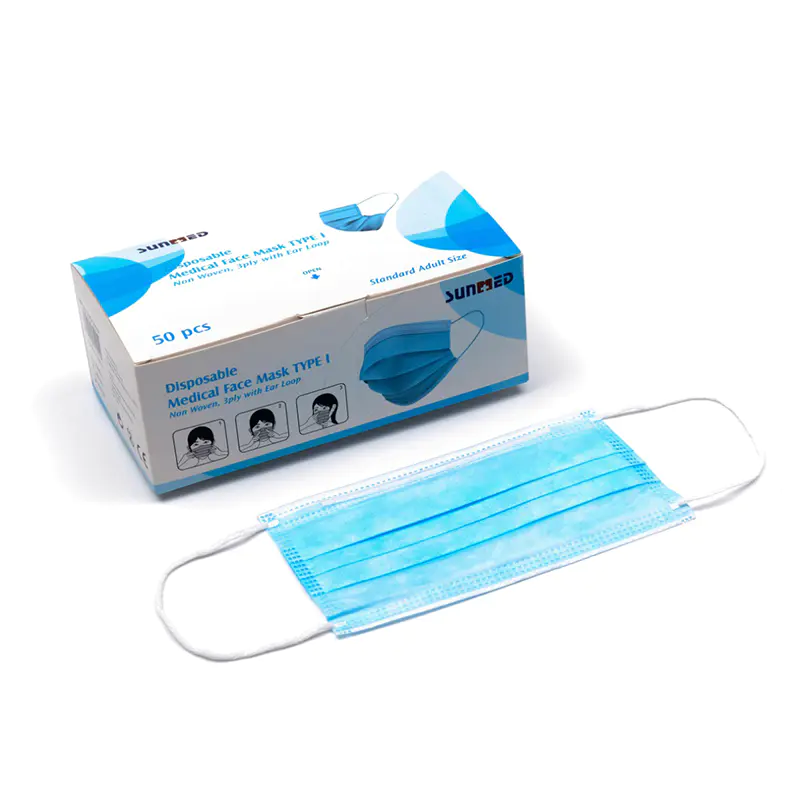
Disposable Non Woven 3 Layer Medical Face Mask
1. Understanding the Three-Layer Non-Woven Mask
A disposable medical face mask generally consists of several layers of non-woven fabric assembled into a lightweight, breathable covering. In a three-layer design, the outer layer, middle filtration layer, and inner layer each contribute to the product’s overall performance. Although the layers may look similar to the user, their functions can be different depending on the selected raw materials, fabric weight, production specifications, and intended market.
The outer layer forms the first visible surface of the mask. It can help reduce the penetration of larger droplets, moisture, and common external contaminants. The middle layer is commonly selected to support filtration performance and may be made from a specialized non-woven material such as melt-blown fabric. The inner layer is positioned next to the wearer’s face and is selected with comfort, softness, and moisture management in mind.
The product supplied under model DC660501 is described as a disposable non-woven medical face mask and is available in one-, two-, three-, or four-ply versions according to customer needs. The three-layer configuration is a balanced option for many general medical, first-aid, personal-care, and daily-use applications. It provides a practical combination of material economy, low weight, user comfort, and functional separation between the outside, filtration, and inside surfaces.
As with all medical consumables, the exact performance of a mask depends on its materials, dimensions, construction, testing, applicable regulatory requirements, and intended use. A mask should be selected according to the specifications required by the purchaser’s market and application. The product should not be presented as a substitute for respirators or other specialized protective equipment designed for high-risk airborne hazards.
2. Product Configuration and Available Options
The DC660501 model is designed to support different procurement programs rather than a single fixed purchasing pattern. Buyers may require a standard blue earloop mask for hospitals, a white mask for laboratories, a green mask for clinics, or a tie-on version for users who prefer adjustable fastening. By offering multiple configurations, the manufacturer can support a broader range of institutional, commercial, and private-label requirements.
| Item |
Available Information |
Purchasing Relevance |
| Product type |
Disposable non-woven medical face mask |
Suitable for single-use protection and routine hygiene applications |
| Model |
DC660501 |
Supports product identification and repeat ordering |
| Layer options |
One-ply, two-ply, three-ply, or four-ply |
Allows selection according to market and application needs |
| Fastening options |
Earloop or tie-on |
Provides flexibility for user preference and institutional policy |
| Color options |
Blue, white, green, and other colors |
Supports department identification, branding, and product differentiation |
| Standard packing |
50 pieces per color box |
Convenient for inventory, retail presentation, and distribution |
| Minimum order quantity |
3,000 pieces |
Appropriate for wholesalers, hospitals, retailers, and importers |
Color selection can be more than an aesthetic decision. In healthcare environments, different colors may be used to distinguish departments, shifts, task categories, or user groups. In retail channels, color variety can improve shelf presentation and allow customers to select products that fit their preferences. For distributors, multiple colors create opportunities to develop product lines with clear visual segmentation.
The earloop configuration is commonly selected for fast application and removal. It is practical for environments where staff or visitors need to change masks regularly. The tie-on configuration can provide an alternative fastening method for users who prefer ties around the head rather than loops around the ears. The appropriate option depends on institutional procedures, wearer comfort, and intended duration of use.
The reference to active carbon face masks and paper face masks also indicates the manufacturer’s broader ability to produce different mask formats. This is useful for buyers seeking a product portfolio from one experienced supplier rather than managing multiple vendors for every type of disposable face covering.
3. Functional Advantages of a Professional Three-Layer Design
3.1 Layered construction for practical protection
The main advantage of a three-layer mask is the division of material functions. A single sheet of fabric cannot provide the same level of design flexibility as a structured multilayer product. With separate outer, middle, and inner layers, the manufacturer can select materials that address external exposure, filtration, and wearer comfort in a coordinated way.
The outer surface can help shield the mask interior from larger droplets and everyday environmental contamination. The middle layer can be optimized for filtration-related characteristics. The inner surface can be selected to reduce direct irritation and improve the experience of wearing the mask during routine activities. This layered approach provides a more rational product structure than an unclassified single-layer covering.
3.2 Lightweight and breathable format
Disposable non-woven masks are valued for their low weight and practical breathability. A lightweight product is easier to distribute, store, transport, and wear. It also reduces the burden associated with frequent replacement in settings where masks are used for limited periods.
Breathability is particularly important in hospitals, reception areas, laboratories, retail spaces, and other environments where users may wear masks for extended periods. Excessive resistance to airflow can create discomfort and reduce user acceptance. A professionally balanced three-layer construction aims to provide an appropriate relationship between filtration-related performance and airflow comfort, subject to the applicable specification and test method.
3.3 Soft contact surface
The material placed against the face has a direct effect on comfort. A properly selected inner non-woven layer can feel softer than rough woven materials and can reduce the sensation of friction during normal use. Smooth edges, controlled welding, and appropriate elastic attachment further influence the wearer’s experience.
Comfort is not merely a cosmetic benefit. When a mask is comfortable, users are more likely to wear it correctly and replace it according to workplace or healthcare procedures. A product that causes unnecessary itching, pressure, or edge irritation may encourage users to adjust it repeatedly or wear it below the nose, reducing the intended benefit of the face covering.
3.4 Flexible nose adjustment
A nose wire or adjustable nose strip helps users shape the upper edge of the mask around the bridge of the nose. Better conformity can reduce gaps and improve overall fit for a wider range of face shapes. It can also reduce the upward movement of warm exhaled air toward eyeglasses, although the result varies according to face shape, mask dimensions, and adjustment technique.
For professional buyers, the quality of the nose strip is important. It should be positioned consistently, remain enclosed within the mask, and be sufficiently flexible for adjustment without creating sharp edges. Manufacturing control is needed to ensure that the nose strip is not exposed, displaced, or inadequately secured during production.
3.5 Convenient single-use application
Single-use masks simplify hygiene management. After use, the mask can be removed and discarded according to local waste-handling procedures. This reduces the need for laundering, drying, inspection, or reuse tracking. For hospitals and first-aid suppliers, disposable construction can make stock management easier, especially in high-turnover areas.
Disposable products are also convenient for emergency kits, travel packs, pharmacies, supermarkets, schools, and workplaces. The 50-piece color-box format offers a practical unit for inventory control and distribution. Larger cartons can then be organized according to the importer’s warehouse and delivery requirements.

4. Manufacturing Process and Quality Control
The quality of a disposable medical face mask is determined not only by the fabric selected but also by the consistency of the manufacturing process. A well-managed production line controls raw material reception, fabric storage, cutting, folding, welding, nose-strip insertion, earloop or tie attachment, visual inspection, packing, and finished-goods release.
4.1 Raw material management
Non-woven fabrics must be received and managed according to defined purchasing and inspection procedures. Important considerations can include material type, color consistency, width, fabric weight, surface condition, cleanliness, and supplier traceability. When materials are stored in an organized environment, the risk of damage, contamination, mix-ups, and moisture-related problems can be reduced.
Material identification is especially important when multiple ply configurations and colors are produced. A production facility handling white, blue, green, and other fabrics needs clear labeling and controlled material movement. This helps prevent incorrect layer combinations or color discrepancies within the same order.
4.2 Automated cutting and folding
Modern mask production equipment can automate the feeding, folding, and shaping of non-woven materials. Automated operations help improve dimensional consistency and reduce variation between units. A stable folding process is important because the pleats must open properly and provide adequate coverage over the nose, mouth, and chin.
Accurate cutting also supports consistent edge alignment. If the layers are misaligned, the finished mask may appear uneven, provide less comfortable coverage, or create difficulty during earloop attachment. Automation does not remove the need for inspection, but it can create a more repeatable baseline than purely manual production.
4.3 Ultrasonic bonding
Ultrasonic welding is commonly used to join mask layers and attach earloops without liquid adhesives. The process uses high-frequency vibration to generate localized heat and bond compatible materials. When properly adjusted, ultrasonic bonding can produce clean attachment points with a professional appearance.
Bond strength, welding position, machine settings, and material compatibility all require control. An attachment point that is too weak may separate during use, while excessive heat can damage the fabric or create a hard, uncomfortable area. Routine line checks and sampling help verify that the welding process remains stable throughout production.
4.4 Nose-strip insertion
The nose strip is inserted during the forming or assembly process and must remain enclosed between the fabric layers. Its location should be consistent from one mask to the next. Proper insertion helps ensure that users can adjust the mask effectively without contacting the metal or polymer component directly.
Production checks can include verification of nose-strip presence, position, enclosure, and flexibility. These checks are simple but important because a missing or displaced nose strip can affect fit and user satisfaction even when the remainder of the mask appears acceptable.
4.5 Earloop and tie-on assembly
Earloop masks require consistent loop length, attachment position, and weld strength. The loops should be long enough for practical use without being excessively loose. Tie-on masks require suitable tie length and secure attachment so that users can position the mask comfortably around the head.
Because fastening components are handled frequently by the wearer, they are among the most visible indicators of product quality. Reliable attachment reduces complaints and helps hospitals, distributors, and retailers maintain confidence in repeat orders. Sampling checks can assess whether loops or ties remain securely attached under reasonable manual tension.
4.6 Inspection and packing
Finished masks can be inspected for material defects, stains, holes, incomplete welding, incorrect folding, damaged edges, missing nose strips, and fastening problems. Visual inspection is an important part of controlling cosmetic and functional consistency. Depending on the order and applicable requirements, additional tests may be carried out for dimensions, filtration, breathability, microbial cleanliness, or other specified characteristics.
After inspection, masks are packed into color boxes, with the standard configuration stated as 50 pieces per box. Correct counting and labeling are essential. Packaging personnel must verify the model, color, quantity, lot information, and any customer-specific markings before cartons are closed. This reduces the possibility of mixed-color shipments or incorrect quantities.
5. Why Manufacturing Experience Matters to Buyers
When purchasing disposable masks in commercial quantities, buyers are not simply purchasing fabric products. They are purchasing a repeatable supply program. Manufacturing experience affects how effectively a supplier handles specifications, quality expectations, production schedules, packaging instructions, export documentation, and after-sales communication.
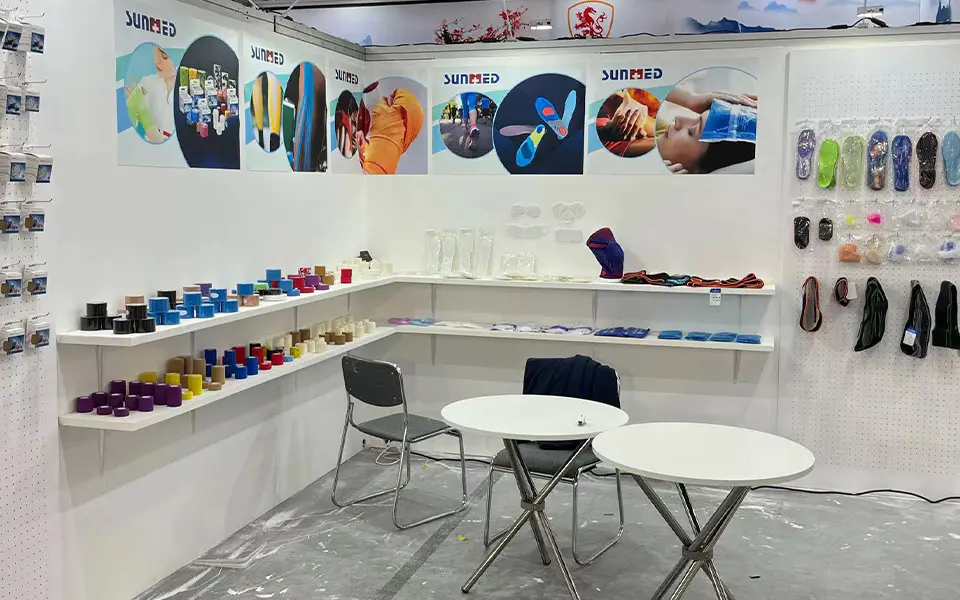
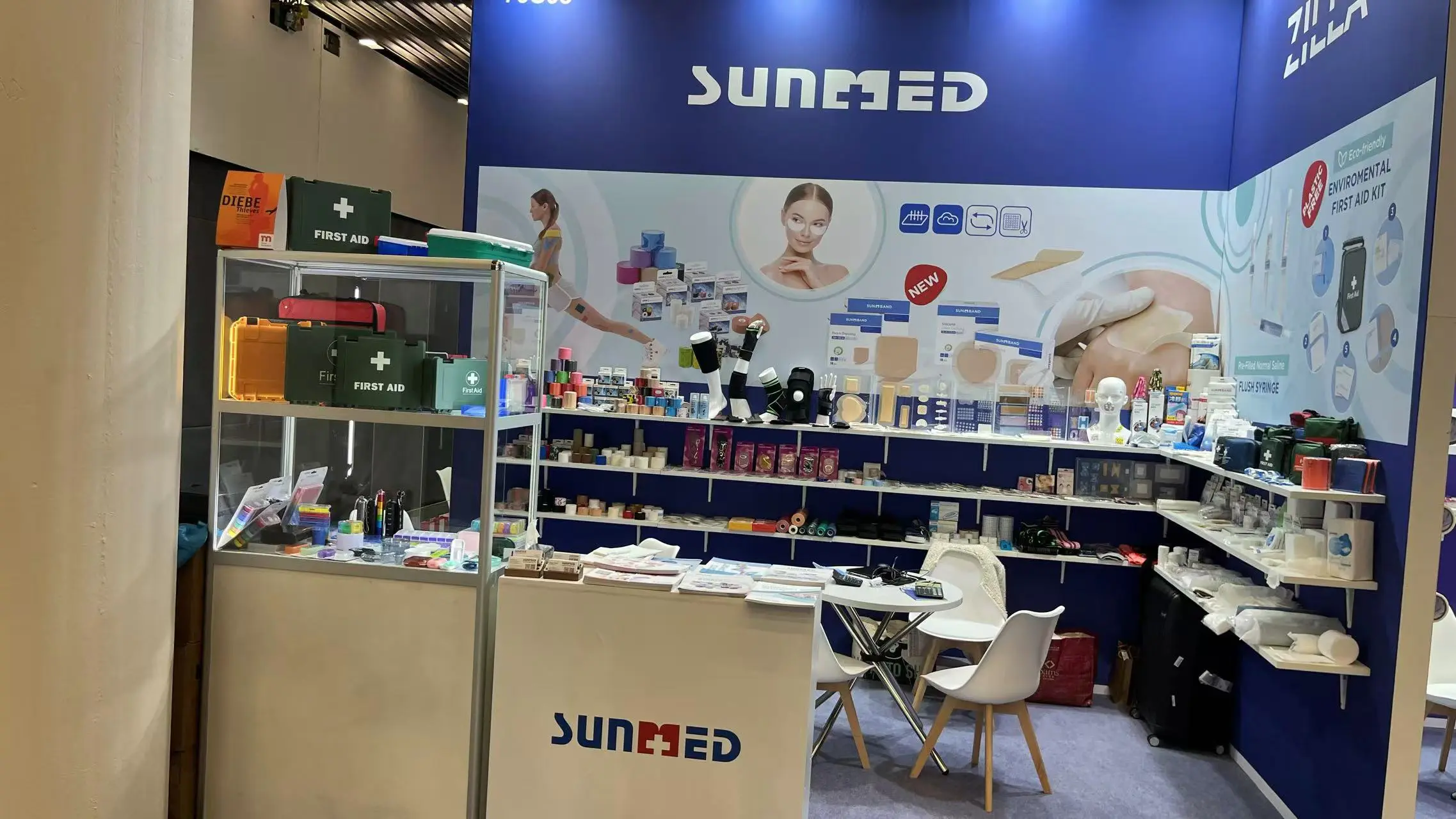
Suzhou Sunmed Co., Ltd. describes itself as a professional manufacturer and exporter of first-aid, medical, and healthcare products in China. The company has approximately 30 years of experience in the medical device and medical consumables industry and operates multiple production bases in Jiangsu, Zhejiang, and Anhui Province. This broader manufacturing background is relevant because face masks are part of a wider medical supply portfolio that includes gauze, bandages, medical tape, cotton products, non-woven products, sports bandages, family healthcare items, surgical consumables, syringes, catheters, and other medical supplies.
A supplier with experience across related product categories may be better positioned to understand the procurement standards of hospitals, first-aid distributors, pharmacies, supermarkets, and retail sports shops. Such experience can also support coordinated purchasing when a customer wants masks together with wound-care products, PPE items, medical tapes, gauze, or other consumables.
The company reports exports to more than 60 countries, including markets in Europe, Southeast Asia, Africa, and Oceania. International experience can help a supplier understand that different countries may require different product documents, package markings, language formats, testing records, and import procedures. Buyers should still confirm the exact regulatory and documentation requirements for their destination market before placing an order.
6. Quality Systems and Regulatory Awareness
Medical consumables require disciplined quality management because they are used in environments where cleanliness, consistency, and traceability are important. Suzhou Sunmed reports that its professional quality control team includes hundreds of personnel and follows inspection procedures aligned with ISO 13485:2016 standards. The company also states that most of its products are CE certified and that its Suzhou factories comply with FDA requirements.
These statements should be understood as indicators of the manufacturer’s quality-system orientation rather than a replacement for product-specific verification. Buyers should request the certificates, declarations, test reports, and technical files relevant to the exact mask model, configuration, and destination market. Regulatory status may differ by product, production site, intended use, and importing jurisdiction.
ISO 13485:2016 is associated with quality management systems for medical devices. A quality system based on this standard generally emphasizes documented procedures, risk-based thinking, supplier control, production records, corrective actions, complaint handling, and traceability. These controls can contribute to more predictable manufacturing, especially for high-volume disposable products.
For international buyers, quality assurance should include both factory-level and product-level review. Factory-level review may consider production capacity, clean working areas, equipment maintenance, personnel training, inspection resources, and recordkeeping. Product-level review may consider dimensions, material composition, layer count, fastening method, filtration-related test data, breathability, packaging, labeling, and shelf-life information where applicable.
7. Competitive Advantages Over Inconsistent Low-Cost Alternatives
Price is an important factor in disposable medical supply purchasing, but the lowest quoted unit price does not always represent the lowest total cost. A product with inconsistent dimensions, weak earloop welding, poor packaging, or unstable material quality can create waste, complaints, returns, and interruptions in supply. A professionally managed product can provide better value by reducing these hidden costs.
7.1 More consistent product specifications
Controlled automated production and documented inspection procedures can reduce variation from batch to batch. Consistent mask dimensions, pleat formation, color, nose-strip placement, and loop attachment make it easier for hospitals and distributors to standardize their use and communicate product instructions.
7.2 More dependable bulk supply
Large buyers need a supplier that can support repeated orders rather than only one successful shipment. A manufacturer with multiple production bases and broad medical product experience may be able to plan capacity, coordinate raw materials, and maintain a more stable supply program. This is particularly valuable for distributors that serve healthcare customers with ongoing requirements.
7.3 Wider customization potential
The available one-ply, two-ply, three-ply, and four-ply formats, together with earloop and tie-on options, allow buyers to specify a product that matches their market. Color selection and packing arrangements can also be discussed for private-label, institutional, or retail programs. Customization should be confirmed against production feasibility, minimum order quantities, tooling requirements, and regulatory obligations.
7.4 Better communication and technical coordination
Experienced exporters are familiar with the need to clarify product details before production. This includes confirming the exact model, layer count, mask size, color, fastening method, packaging, carton dimensions, labeling, inspection requirements, and shipping documents. Clear communication at this stage prevents misunderstandings that may be difficult to correct after goods are manufactured.
7.5 Broader medical product sourcing
Customers often prefer supplier consolidation because it reduces administrative workload. A buyer that sources face masks, adhesive bandages, medical gauze, cotton products, first-aid kits, cohesive bandages, hot and cold packs, pill boxes, syringes, catheters, or surgical consumables from one established supplier may simplify purchasing, quality review, and shipment coordination.

8. Applications in Healthcare and Daily Care
The Disposable Non-Woven 3 Layer Medical Face Mask can be considered for a wide range of general applications, subject to the requirements of the relevant market and user environment. Hospitals may use disposable masks in reception areas, general wards, outpatient departments, treatment rooms, and administrative areas. Clinics and dental practices may use them during routine patient interaction and basic procedures where the selected mask specification is appropriate.
First-aid providers can include disposable masks in emergency kits, workplace cabinets, public-event supplies, and travel health packages. Pharmacies and supermarkets may offer them as everyday protective products for customers. Schools, offices, factories, hotels, and transportation operators may purchase them for staff, visitors, or contingency stock.
Laboratories and healthcare training centers may also require disposable masks for routine activities. The appropriate product choice depends on the nature of the work, the likelihood of fluid exposure, the presence of hazardous particles, and the requirements established by occupational health personnel. A standard disposable medical mask should not automatically be treated as appropriate for every high-risk task.
For personal daily care, the mask can be useful in crowded public areas, during seasonal illness periods, while traveling, or when users wish to reduce exposure to common droplets and environmental dust. Users should follow local health guidance and replace masks when they become damp, damaged, visibly soiled, or difficult to breathe through.
9. Packaging, Logistics, and Inventory Planning
Packaging plays an important role in the commercial success of disposable masks. The stated packing method of 50 pieces per color box provides a manageable quantity for warehouse handling and distribution. It can also support retail presentation, institutional issue control, and internal stock counting.
For importers, packaging details should be confirmed before shipment. Important information may include the number of boxes per master carton, carton dimensions, gross and net weight, pallet configuration, carton markings, barcode requirements, language requirements, and shipping marks. These details affect freight calculations, warehouse capacity, customs processing, and final delivery planning.
Color separation should be maintained throughout packing and cartonization. If a customer orders blue, white, and green products, each color should be clearly identified on the inner box and outer carton. Lot numbers and production dates, where applicable, can improve traceability and support stock rotation.
Disposable masks are relatively lightweight but may occupy significant carton volume. Efficient folding and packaging can help buyers use container space effectively. A professional supplier should be able to provide estimated carton packing information for quotation and logistics planning. Buyers can then compare not only the unit price but also the landed cost per usable mask.
Inventory managers should establish reorder points based on average consumption, seasonal demand, lead time, safety stock, and customs clearance. Because masks are consumable products, stockouts can create operational inconvenience. A stable supplier relationship and a clear forecasting process can help reduce emergency purchasing.
10. Purchasing Checklist for Importers and Distributors
Before ordering the DC660501 mask or a customized equivalent, buyers should prepare a detailed specification sheet. The document should identify the required layer count, mask dimensions, color, fastening method, nose-strip design, packaging quantity, labeling, and intended application. Any market-specific performance or regulatory requirements should be included at the quotation stage.
Buyers should request a product sample before approving mass production. Sample evaluation can cover appearance, softness, odor, pleat formation, nose-strip position, earloop comfort, loop attachment, packaging quality, and general fit. If the product is intended for a regulated market, the buyer should also review the relevant declarations and test reports.
It is useful to clarify whether the quoted product is a standard item or a customized production. Standard items may have shorter preparation times and established packaging, while customized items may require new artwork, special colors, revised labels, or different carton arrangements. The buyer should confirm how customization affects the minimum order quantity and production schedule.
Inspection arrangements should also be agreed in advance. Depending on the order size and customer policy, inspection may involve supplier self-inspection, pre-shipment inspection, random sampling, laboratory testing, or a combination of these methods. Acceptance criteria should be written clearly so that both parties understand how defects and shortages will be handled.
Finally, buyers should confirm payment terms, shipping terms, production lead time, documentation, warranty or complaint procedures, and contact information. The manufacturer provides a main sales email at [email protected] and telephone contacts including +86-512-68785855 and +86-13812795048. Commercial details should be verified directly with the supplier before an order is placed.
11. Use, Handling, and Disposal Considerations
A disposable mask should be handled with clean hands before application. The user should inspect the mask for visible damage and identify the correct inner and outer surfaces according to the manufacturer’s instructions. The mask should cover the nose, mouth, and chin, with the nose strip adjusted to reduce unnecessary gaps.
Users should avoid touching the front surface while wearing the mask. If adjustment is necessary, hand hygiene should be performed before and after contact. Earloop or tie-on fastening should be handled by the straps rather than by repeatedly touching the central filtering area.
A mask should be replaced when it becomes wet, dirty, damaged, loose, or uncomfortable to breathe through. Disposable masks are not generally intended for washing or repeated use unless the specific product documentation expressly states otherwise. Reuse may compromise material performance, cleanliness, fastening integrity, and fit.
After removal, the mask should be discarded according to local healthcare, workplace, and municipal waste procedures. Healthcare facilities may have specific rules for handling used protective products. Users should not leave used masks in public spaces or dispose of them in a way that creates avoidable environmental or hygiene risks.
12. Company Manufacturing and Export Strengths
Suzhou Sunmed Co., Ltd. combines product manufacturing with international export experience. Its stated product scope covers first aid, wound dressing, medical supply, sports support, family healthcare, medical instruments, and other medical consumables. This breadth can be useful for buyers that want a supplier capable of supporting several categories within a medical or healthcare portfolio.
The company reports that its first-aid factory was established in 2008 to meet the demands of first-aid customers. In 2021, it established a factory for kinesiology tape, cohesive bandages, and elastic adhesive bandages to respond to growing customer needs. These developments indicate an approach centered on expanding specialized production capacity in response to market demand.
Multiple production bases can provide operational flexibility, although buyers should identify the exact production site for the ordered mask and confirm which certificates and quality records apply to that facility. Manufacturing location, production line, and product model should be traceable through the purchase documentation.
The company’s export markets reportedly include the United Kingdom, Germany, Spain, Denmark, the Netherlands, Japan, Malaysia, the Philippines, Thailand, Tanzania, Mauritius, South Africa, Australia, and New Zealand, among other countries. Experience with different regions can support more effective communication regarding packaging, logistics, and documentation. Nevertheless, the importer remains responsible for verifying local compliance and market-entry requirements.
13. Sustainability and Responsible Product Management
Disposable masks provide convenience and hygiene benefits, but their single-use nature also creates waste. Responsible procurement should therefore consider efficient packaging, accurate demand forecasting, correct stock rotation, and avoidance of unnecessary over-ordering. Buyers can reduce waste by selecting suitable quantities and managing inventory carefully.
Manufacturers can contribute through efficient cutting, reduced material waste, controlled packaging, and practical carton design. Where local regulations permit, buyers may also review packaging materials and recycling guidance. However, used masks may be contaminated depending on their application and should be handled according to applicable waste rules rather than placed automatically into ordinary recycling streams.
Product durability should be appropriate to the intended period of use. A mask that fails prematurely may create more waste because it must be replaced unnecessarily. Consistent welding, stable fabric, and reliable packaging can support responsible use by reducing damaged or rejected units.
14. Recommended Quality Evaluation Criteria
A professional evaluation should consider both visible and measurable characteristics. Visual checks can examine whether the mask is clean, evenly folded, correctly colored, free from holes, and properly assembled. The edges should be secure, and the fastening components should be attached in consistent positions.
Fit-related checks can examine whether the mask opens fully, covers the face appropriately, and allows the nose strip to be shaped. Comfort evaluation can include the softness of the inner layer, the feel of the edges, the tension of the earloops, and the practicality of the tie-on arrangement.
Technical evaluation may include the tests required by the buyer’s specification or destination market. Depending on the classification and intended use, these may relate to bacterial filtration, particle filtration, differential pressure, splash resistance, microbial cleanliness, biocompatibility, or other performance characteristics. The applicable test standards should be agreed before testing because different markets use different classifications and methods.
Packaging evaluation should verify the count per box, color identification, model number, lot information, manufacturing information, and carton condition. A sample from each production lot may be retained for comparison with future shipments. This can help buyers investigate complaints and confirm whether later deliveries remain consistent with the approved sample.
15. Frequently Asked Questions
Q1: What is the main structure of this disposable mask?
The product is a non-woven disposable face mask available in one-, two-, three-, or four-ply configurations. The three-layer version generally uses an outer layer, a middle filtration-related layer, and an inner layer selected for wearer contact and comfort. Exact material specifications should be confirmed in the product documentation.
Q2: What is the model number?
The model number provided for this product is DC660501. Buyers should use the model number in inquiries, quotations, purchase orders, samples, and shipping documents to reduce the risk of product confusion.
Q3: Which colors are available?
The standard color information lists blue, white, and green, with other colors available subject to production discussion. Color availability, minimum quantities, and color-matching requirements should be confirmed before ordering.
Q4: Is the mask available with earloops?
Yes. The product information identifies both earloop and tie-on types. The buyer should specify the preferred fastening method because loop length, attachment position, packing, and production arrangements may differ.
Q5: How many masks are packed in one color box?
The stated standard packing is 50 pieces per color box. The outer-carton quantity and any customized packing requirements should be confirmed with the supplier before shipment.
Q6: What is the minimum order quantity?
The stated minimum order quantity is 3,000 pieces. Customized colors, packaging, labels, and special configurations may require different quantities, so buyers should request a specific quotation.
Q7: Is the product suitable for every medical procedure?
No. The appropriate mask depends on the procedure, exposure risk, fluid hazard, particle hazard, and applicable regulations. A general disposable medical mask should not automatically be used where a specialized surgical mask, respirator, or other protective equipment is required.
Q8: Can the manufacturer provide samples?
Sample availability should be confirmed directly with Suzhou Sunmed Co., Ltd. Buyers are encouraged to review samples before approving mass production, particularly when they require customized colors, private labeling, special packaging, or destination-market documentation.
Q9: What quality information should an importer request?
An importer should request the product specification, applicable certificates, test reports, declaration documents, packing details, lot information, and production-site information relevant to the exact model and destination market. The buyer should verify that the documentation corresponds to the actual product configuration.
Q10: Can this supplier provide other medical consumables?
Yes. The company describes a broader product portfolio that includes first-aid products, wound dressings, gauze, medical tape, cotton products, non-woven products, sports bandages, kinesiology tape, cohesive bandages, hot and cold packs, pill boxes, syringes, catheters, surgical consumables, and other healthcare products.
Q11: How should the mask be stored?
Masks should generally be stored in a clean, dry location away from excessive heat, moisture, direct sunlight, dust, chemicals, and physical damage. Buyers should follow the storage instructions on the product documentation and maintain appropriate stock rotation.
Q12: Can a disposable mask be washed and reused?
Unless the specific product documentation expressly permits reuse, disposable masks should not be washed or reused. Washing can affect the structure, filtration-related characteristics, cleanliness, fastening, and fit of the product.
16. Conclusion
The Disposable Non-Woven 3 Layer Medical Face Mask, model DC660501, offers a practical format for healthcare, first-aid, retail, workplace, and daily-care supply programs. Its principal advantages include multilayer non-woven construction, lightweight design, available earloop and tie-on configurations, several color choices, convenient 50-piece color-box packing, and support for bulk procurement beginning at 3,000 pieces.
Its value is strengthened when the product is manufactured through controlled material management, automated forming, ultrasonic bonding, consistent nose-strip insertion, fastening inspection, and documented packing procedures. These manufacturing practices can help provide the repeatability that professional buyers need when supplying hospitals, distributors, pharmacies, supermarkets, and institutional customers.
Suzhou Sunmed Co., Ltd. brings approximately three decades of medical consumables experience, multiple production bases, international export knowledge, a broad healthcare product portfolio, and a reported quality-control organization aligned with ISO 13485:2016 principles. The company’s stated CE and FDA-related capabilities should be verified for the exact product, production site, and destination market before purchase.
For importers and distributors, the best purchasing decision should balance unit price, product consistency, documentation, customization, packaging, logistics, quality control, and long-term supply reliability. By evaluating these factors together, buyers can select a disposable face mask program that is practical for users and dependable for professional procurement.
References
1. Suzhou Sunmed Co., Ltd. Product information for Disposable Non-Woven 3 Layer Medical Face Mask, model DC660501.
2. Suzhou Sunmed Co., Ltd. Corporate information regarding medical consumables manufacturing, production bases, export markets, and quality management.
3. ISO 13485:2016. Medical devices — Quality management systems — Requirements for regulatory purposes.
4. World Health Organization. General guidance on the appropriate use, handling, and disposal of medical masks.
5. International standards and national regulatory guidance applicable to medical face masks, filtration performance, breathability, labeling, and product conformity.
6. General principles of medical device risk management, supplier qualification, incoming material inspection, production-process control, and finished-product release.

 English
 Español
 русский
 Français
 Deutsch
 italiano
 By Admin