Cosmetic cotton pads are simple-looking products, but their performance depends on material quality, fiber construction, absorbency, softness, cleanliness, and manufacturing consistency. A well-designed cotton pad should help users apply toner smoothly, remove makeup efficiently, cleanse the skin gently, and reduce unnecessary liquid waste. It should also remain comfortable when used around delicate areas such as the eyes and lips. For beauty salons, retailers, wholesalers, professional makeup artists, and everyday consumers, these details directly influence user satisfaction and product value.
The Skin Care Absorbent Cosmetic Round Cotton Pad, model DC662004, is designed for daily skin care, beauty routines, makeup removal, nail care, and general cleansing. Made from soft and absorbent cotton, the pad combines a gentle touch with effective liquid absorption and release. Its lint-free construction helps prevent loose fibers from remaining on the skin, nails, or cosmetic tools. The product is available in white and can be supplied in round or square shapes, with several standard sizes and customized dimensions available for specific customer requirements.
With 80 pieces per pack and a convenient resealable package, the product is suitable for professional and personal use. It is easy to store, transport, and carry during travel. The cotton pad is also suitable for private-label programs, wholesale distribution, beauty supply channels, skin-care brands, salons, pharmacies, supermarkets, and other retail environments.
Why Cosmetic Cotton Pads Matter in Modern Skin Care
Cotton pads are used at several stages of a skin-care routine. They can distribute toner evenly across the face, remove residual cleanser, apply makeup remover, clean the skin before treatment, or wipe away nail polish. In professional settings, they may also be used for preparing the skin before a beauty procedure, applying cosmetic solutions, or cleaning small surfaces and accessories.
Although many cotton pads look similar, users can quickly notice differences in performance. Low-quality pads may shed lint, tear during use, absorb liquid unevenly, or release too much product at once. Some pads can feel rough against the skin, while others may become saturated quickly and waste toner or makeup remover. These weaknesses reduce convenience and can damage the perceived quality of the liquid cosmetic being applied.
The DC662004 cotton pad addresses these common concerns through a combination of soft cotton material, balanced absorbency, controlled liquid release, and a smooth, low-lint surface. The result is a versatile product that supports both efficient skin care and a more comfortable user experience.
Product Overview
The product is a disposable cosmetic cotton pad intended for skin cleaning, makeup application, makeup removal, nail care, and related beauty uses. It is made from cotton and is described as soft and absorbent. The standard pack contains 80 pieces, allowing customers to maintain a convenient supply at home, in a salon, or in a retail package.
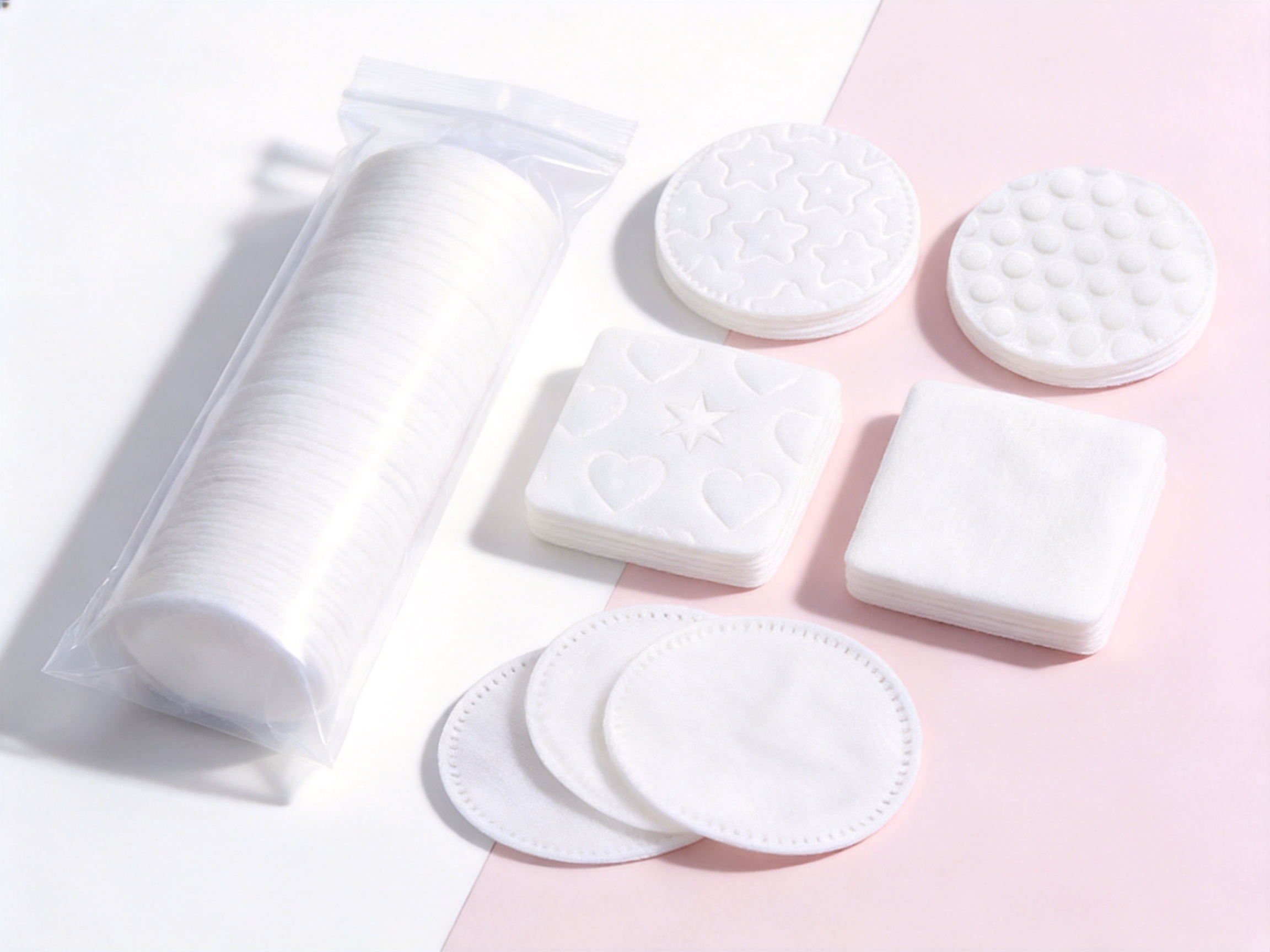
The product is available in a round shape or a square shape. Round pads are especially suitable for facial applications because their curved edges can move smoothly around the cheeks, forehead, nose, lips, and eye area. Square pads may be preferred for larger wiping surfaces, nail care, cosmetic work, or customers who want a different handling format.
Standard size options include approximately 5.6 centimeters, 5.8 centimeters, 6 centimeters, and 8 centimeters. Customized sizes can also be discussed for customers with special packaging, application, or brand requirements. This flexibility allows distributors and beauty companies to select a size that matches their intended market and product positioning.
| Product Feature |
Specification or Benefit |
| Product type |
Absorbent cosmetic cotton pad |
| Model |
DC662004 |
| Material |
Soft and absorbent cotton |
| Color |
White |
| Pack quantity |
80 pieces per pack |
| Shape options |
Round and square |
| Standard sizes |
Approximately 5.6 centimeters, 5.8 centimeters, 6 centimeters, and 8 centimeters |
| Customization |
Customized sizes and product programs may be available |
| Main applications |
Skin cleaning, toner application, makeup removal, nail care, and beauty use |
| Packaging feature |
Convenient resealable bag |
| HS code |
3005901000 |
The specifications make this product appropriate for both standard wholesale orders and customized business-to-business projects. Buyers can select the shape, size, quantity, and packaging direction that best supports their sales channel.
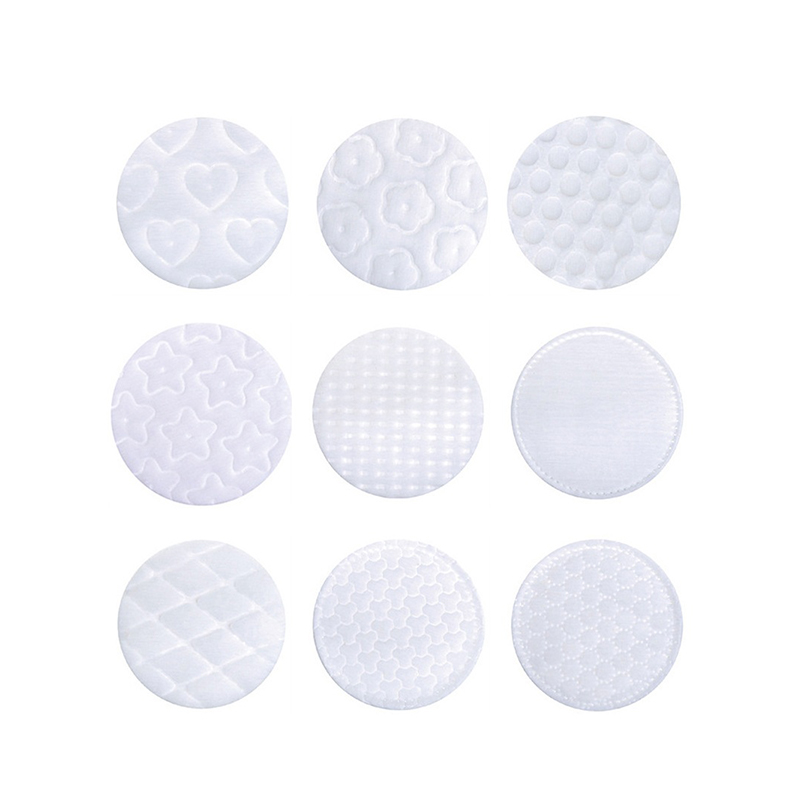
Skin Care Absorbent Cosmetic Round Cotton Pad for Beauty Salon
Soft Cotton Construction for Comfortable Daily Use
Skin is exposed to repeated contact with cleansing and cosmetic products every day. For that reason, the surface feel of a cotton pad is important. A pad that feels abrasive or uneven may be uncomfortable, especially when used around the eyes, lips, or other sensitive areas. The cotton material used for this product is intended to provide a soft touch while maintaining enough structure for practical handling.
Softness is not only a comfort feature. It also supports more controlled application. When a pad moves smoothly across the skin, the user can apply toner or remove makeup without excessive pressure. Less pressure may help make the daily routine feel more pleasant and can reduce the likelihood of dragging the skin during wiping.
The product is described as being made from premium cotton without chemical composition or chemical addition. This positioning is useful for customers who prefer straightforward material content and a gentle-feeling product. Buyers should always confirm the final technical specification, regulatory requirements, and intended cosmetic use with the supplier before placing a commercial order, but the cotton-focused construction provides a clear basis for product communication.
Compared with rough, loosely assembled, or poorly finished alternatives, a soft cotton pad can create a stronger impression of quality. This is particularly important for salons, cosmetic retailers, and private-label skin-care brands. Customers often judge a beauty product through direct sensory experience. A smooth, clean, well-formed pad can help reinforce the quality of the toner, cleanser, makeup remover, or other liquid being used with it.
Lint-Free Performance and Cleaner Application
One of the most important differences between cosmetic cotton pads is the amount of lint they leave behind. Loose fibers can remain on the face, eyelashes, eyebrows, lips, nails, or cosmetic tools. This can be inconvenient when a user is preparing for makeup application or removing dark eye makeup. Fibers may also become visible when they adhere to wet skin or remain around the edge of a nail.
The DC662004 product is designed with a lint-free material approach. Its construction helps reduce messy fibers during use, supporting a cleaner skin-care and beauty routine. A low-lint pad is particularly useful when applying toner before makeup, removing mascara, cleaning nail polish, or wiping valuable cosmetic accessories.
Lint control also contributes to professional presentation. In a beauty salon, customers notice whether the working area is clean and whether disposable materials perform reliably. A pad that maintains its integrity and does not leave visible fibers can improve workflow and reduce the need for repeated wiping. For makeup artists, photographers, and cosmetic professionals, a cleaner application surface can help save time during preparation and touch-ups.
Compared with ordinary cotton wool that may separate easily, a finished cotton pad provides a more consistent shape and surface. It can be held between the fingers, applied to a selected area, and discarded after use. This controlled format is convenient for both individual consumers and professional operators.
Strong Absorption with Balanced Liquid Release
Absorption is a central performance feature of a cosmetic cotton pad, but maximum absorption alone is not enough. If the pad holds too much liquid and releases too little, the user may need to apply excessive product or press the pad repeatedly. If it releases liquid too quickly, the skin may receive an uneven amount and the product may run or be wasted.
The DC662004 cotton pad is designed to provide strong water retention and water absorption together with balanced release. This means the pad can take up toner, makeup remover, cosmetic water, or another suitable liquid and then release it progressively during application. The balanced behavior supports smoother distribution across the skin.
The product information states that the double-effect design can release up to 96 percent of the retained liquid. This performance description indicates an emphasis on reducing liquid waste and supporting efficient product use. Actual results may vary according to the viscosity of the liquid, the quantity applied, the way the pad is squeezed, and the application method. Nevertheless, the design objective is clear: absorb enough liquid for practical use while allowing a high proportion of it to reach the skin.
Efficient release is particularly valuable for premium toners, essences, makeup removers, and other beauty liquids that may be relatively expensive. A pad that uses liquid more efficiently can help customers make better use of each bottle. For a salon or retail customer, this may also improve operating costs over time.
The ultra-thin structure described for the product can contribute to liquid efficiency. A thinner pad may require less liquid to become ready for use, while still providing enough surface area for wiping and application. It may also dry more quickly after use and take up less space in a travel bag or storage cabinet.
Multi-Purpose Use in Beauty and Personal Care
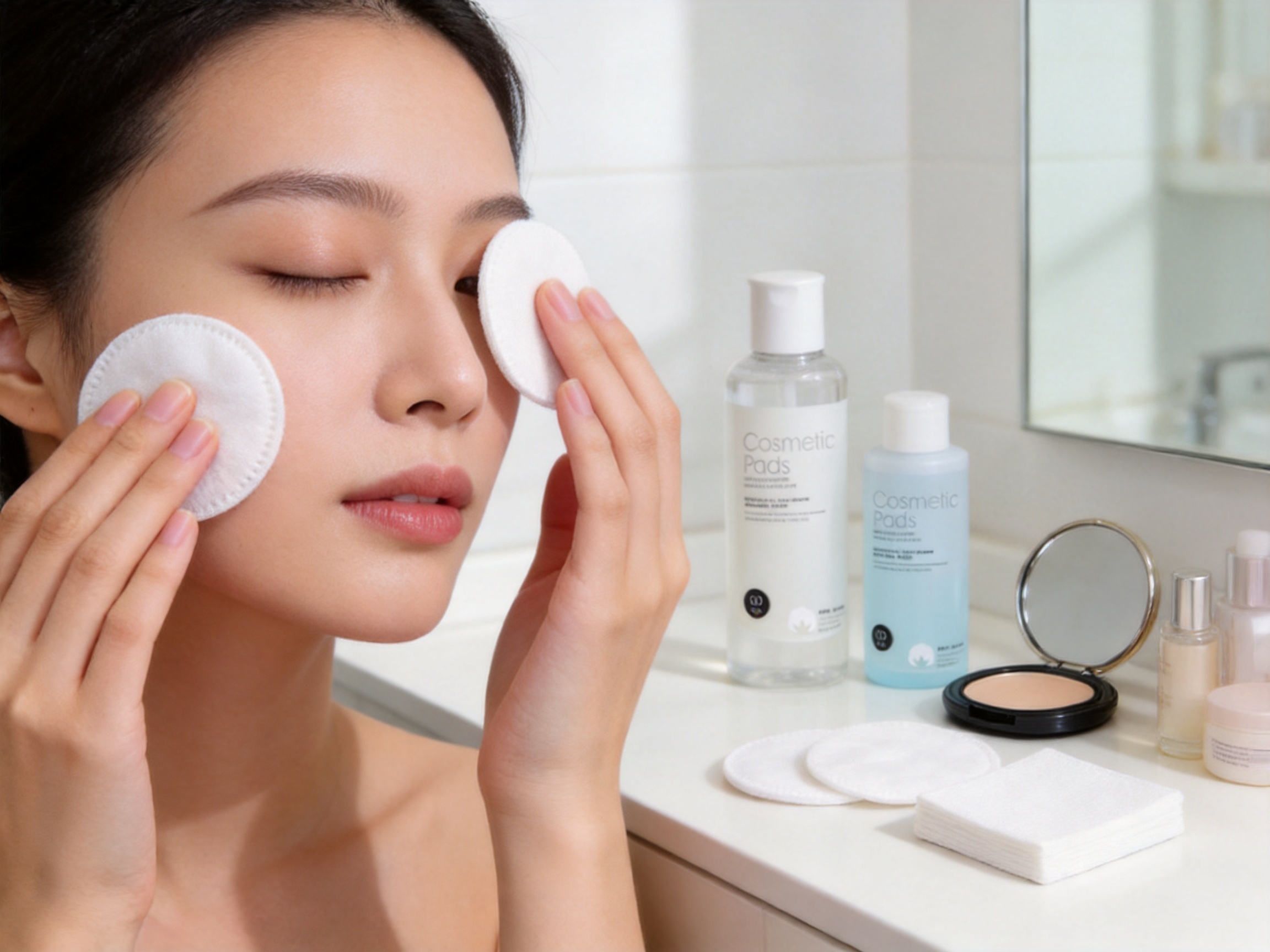
The main application of the cotton pad is skin cleaning and beauty care. It can be used with toner to distribute liquid across the face, helping users complete a daily cleansing or moisturizing routine. It can also be used with makeup remover to lift foundation, blush, concealer, eye makeup, and lip products.
For eye makeup removal, the pad can be placed gently over the closed eyelid for a short period before wiping. This approach may help soften makeup and reduce the need for repeated rubbing. Users should select products specifically intended for the eye area and follow the instructions supplied with the makeup remover.
For lip care, the pad can help remove lipstick, lip stain, or residual cosmetic products. Its soft cotton surface provides a convenient alternative to rough tissues or unsuitable materials. For facial cleansing, the pad can be used around the nose, chin, forehead, and cheeks, where liquid products may need to be spread evenly.
The product can also support nail care. It may be used to remove nail polish, clean around the nails, or wipe tools and work surfaces where appropriate. The lint-free design is valuable in this application because loose fibers can interfere with polish application or remain on the nail surface.
Beyond personal use, the pad may be suitable for beauty salons, makeup counters, hotels, spas, travel kits, cosmetic gift sets, and personal-care subscription boxes. Its simple white appearance makes it easy to coordinate with different packaging styles and brand identities.
Common Applications
Daily skin cleansing: Use the pad with an appropriate cleansing water or skin-care liquid to wipe away surface residue after washing.
Toner application: Apply a suitable quantity of toner to the pad and distribute it across the face with gentle movements.
Makeup removal: Use with makeup remover to remove foundation, blush, concealer, eye makeup, and lip products.
Nail polish removal: Apply an appropriate nail-polish remover to the pad and wipe the nail surface.
Beauty salon services: Keep pads available for facial care, makeup preparation, touch-ups, and post-treatment cleaning.
Travel and on-the-go care: Place the resealable pack in a travel bag for convenient personal-care use outside the home.
Cosmetic tool cleaning: Use the pad for wiping suitable cosmetic accessories and small personal-care items, according to the relevant cleaning instructions.
Convenient Packaging for Home, Retail, and Travel
Convenience affects whether a product is used consistently. The cotton pads are supplied in a handy resealable bag, which helps users store unused pads after opening. Resealable packaging can reduce exposure to dust and help keep the pack organized between uses. It is also more practical than an open container when the product is carried in a handbag, suitcase, salon drawer, or professional kit.
The 80-piece pack offers a useful balance between quantity and portability. It provides enough pieces for repeated daily use without creating an oversized package. Retailers can position the product as a practical skin-care essential, while salons can keep several packs available for regular operations.
The white color provides a clean and familiar appearance. It allows users to see makeup residue, cleanser residue, or nail polish as it is removed. This visible result can help users determine whether additional cleansing is needed.
For distributors, the resealable bag can also simplify shelf presentation and inventory management. The package can be placed in beauty-care aisles, cosmetic sections, pharmacy displays, travel-care areas, or salon supply catalogs. Customers can understand the product quickly because the format is familiar and the main applications are broad.
Advantages Over Ordinary Cotton Wool and Low-Quality Pads
Ordinary loose cotton wool may be useful for some basic tasks, but it is not always convenient for controlled cosmetic application. It can separate into uneven pieces, create loose fibers, and make it difficult to apply a consistent amount of liquid. A finished cotton pad provides a more standardized shape, thickness, and surface.
Compared with poorly bonded pads, the DC662004 design emphasizes lint control and practical integrity. A pad that remains together during wiping can make the user experience cleaner and more predictable. This is especially important when removing dark or highly pigmented makeup, because loose white fibers may become noticeable against the skin.
Compared with very thick pads, an ultra-thin format may help reduce the amount of toner or makeup remover needed to begin use. It can also take up less storage space. Customers who prefer an economical routine may appreciate a pad that releases a high proportion of the liquid it absorbs.
Compared with rough or uneven materials, soft cotton offers a more comfortable feel. This can be a meaningful advantage in premium skin-care programs, where the texture of the applicator contributes to the overall perception of quality.
Compared with products available in only one size or shape, this product supports round and square options, several standard dimensions, and customized sizes. Such flexibility can benefit importers, distributors, and private-label customers who want to create differentiated product lines.
| Comparison Point |
DC662004 Cosmetic Cotton Pad |
Potential Limitation of Basic Alternatives |
| Material feel |
Soft cotton designed for comfortable skin contact |
Some low-quality materials may feel rough or uneven |
| Fiber control |
Lint-free material approach helps reduce loose fibers |
Loose cotton or weakly finished pads may leave lint |
| Liquid handling |
Strong absorption with balanced release |
Some pads may absorb unevenly or release liquid too quickly |
| Liquid efficiency |
Double-effect design is intended to reduce waste |
Very thick pads may require more liquid to become saturated |
| Shape selection |
Round and square options |
Some suppliers offer only one format |
| Size selection |
Several sizes plus customization possibilities |
Limited size choices may not suit every application |
| Portability |
Resealable bag supports storage and travel |
Open packaging may be less convenient after first use |
| Commercial suitability |
Suitable for retail, salons, wholesalers, and private-label programs |
Generic products may provide fewer customization options |
These advantages do not mean that every user requires the same specification. Different markets may prefer different thicknesses, sizes, packaging formats, and surface finishes. The strength of this product is its combination of core performance and customization potential.
Manufacturing Expertise Behind the Product
A reliable cosmetic cotton pad depends on more than the raw cotton material. Manufacturing processes must control fiber preparation, formation, shaping, cutting, packaging, cleanliness, and inspection. Variation at any stage can affect the final product. A professional manufacturer therefore needs stable production systems, trained personnel, documented procedures, and a quality-control structure capable of identifying defects before shipment.
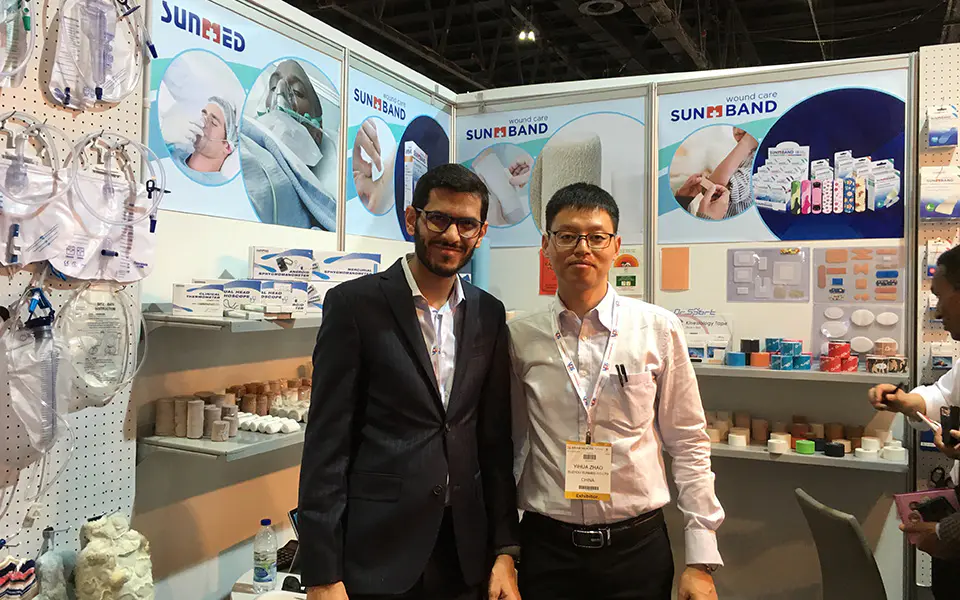
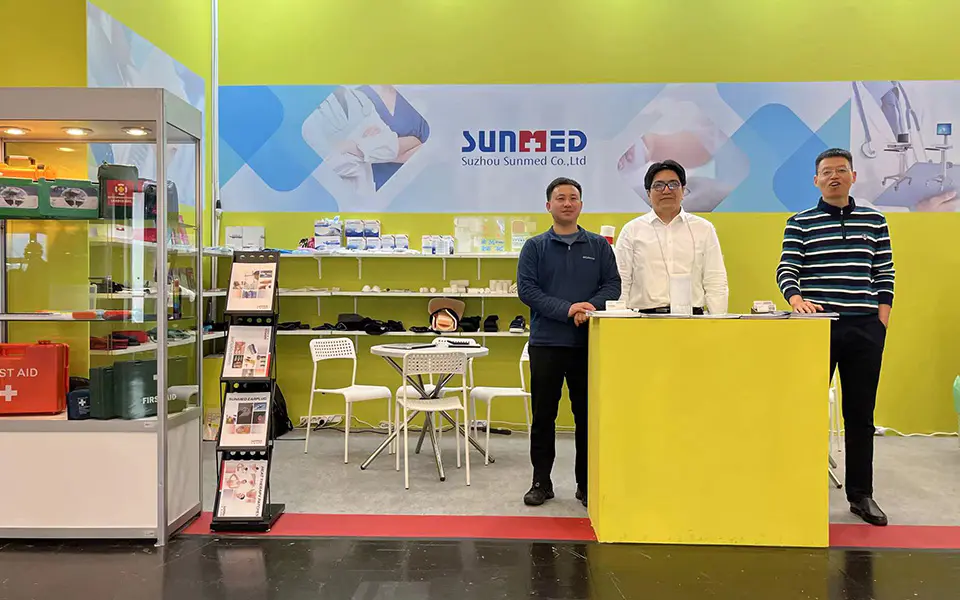
Suzhou Sunmed Co., Ltd. is a professional manufacturer and exporter of first-aid, medical, and health-care products in China. The company operates multiple production bases in Jiangsu, Zhejiang, and Anhui Province. Its experience covers medical consumables, wound-care products, medical gauze, bandages, medical tape, medical cotton, non-woven products, sports bandages, family health-care products, medical instruments, and other related categories.
This broad manufacturing background is relevant to cotton products because it reflects experience with materials that must be clean, consistent, carefully handled, and suitable for contact with the body. Knowledge gained through medical cotton, gauze, wound dressing, and other disposable product categories can support disciplined production practices for cosmetic cotton pads.
The company reports approximately 30 years of experience in the medical device and medical consumables industry. Long-term industry experience can help a supplier understand international purchasing requirements, packaging expectations, export documentation, quality procedures, and the importance of stable product specifications.
Production Base and Category Integration
The company’s production network includes facilities in several Chinese provinces. A multi-base structure can provide broader manufacturing capacity and allow different product categories to be supported by specialized teams and facilities. It may also help the supplier coordinate raw materials, production planning, quality management, and export fulfillment for customers purchasing more than one category.
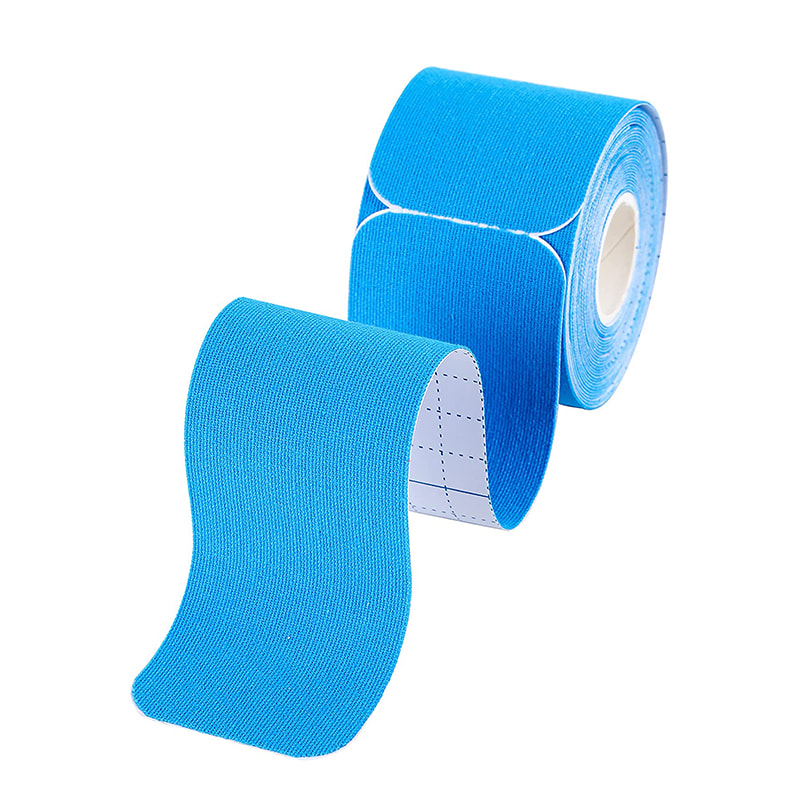
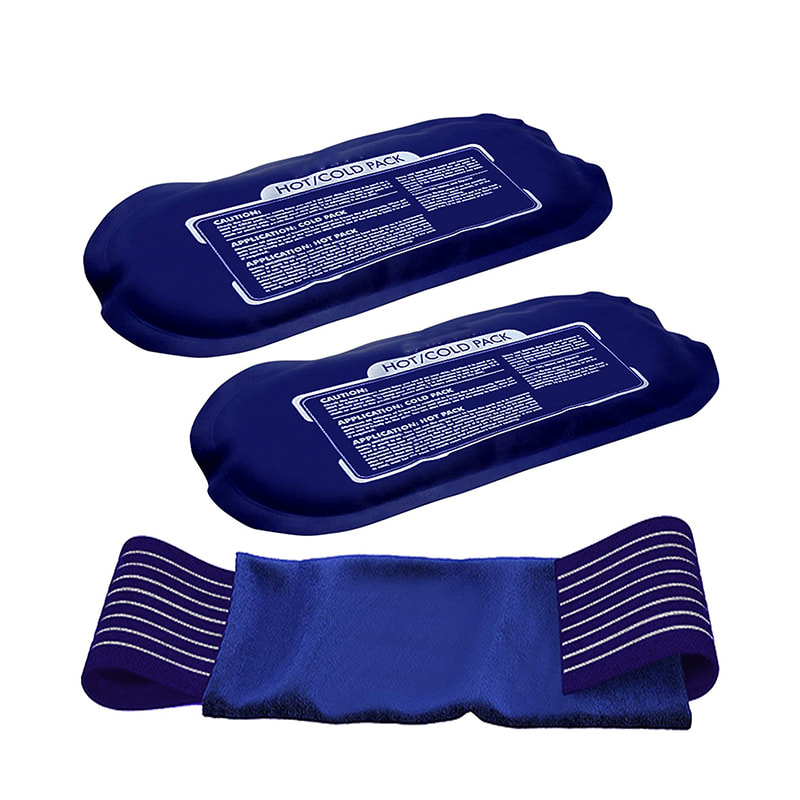
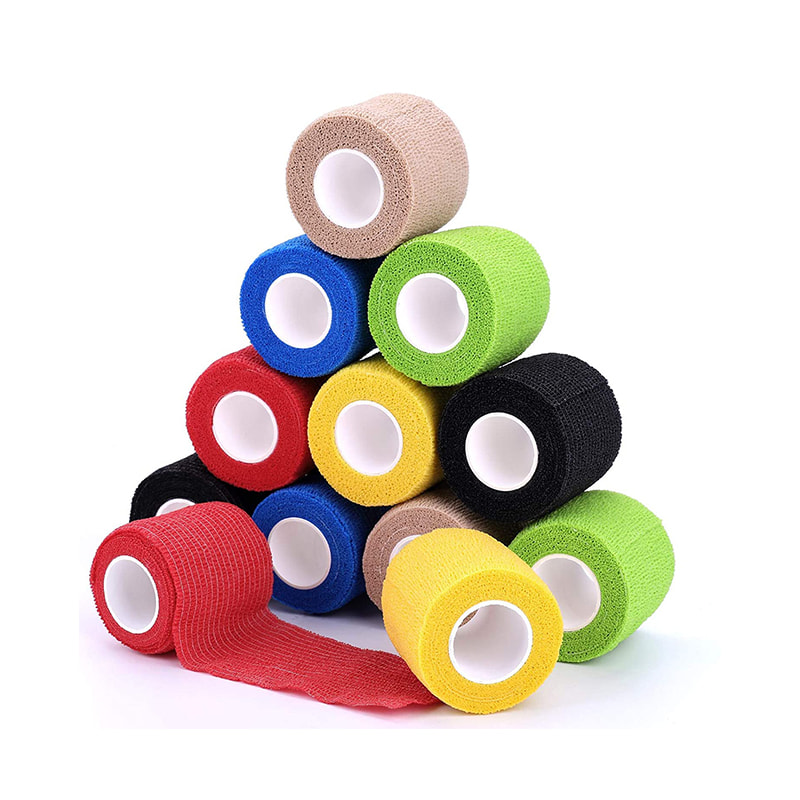
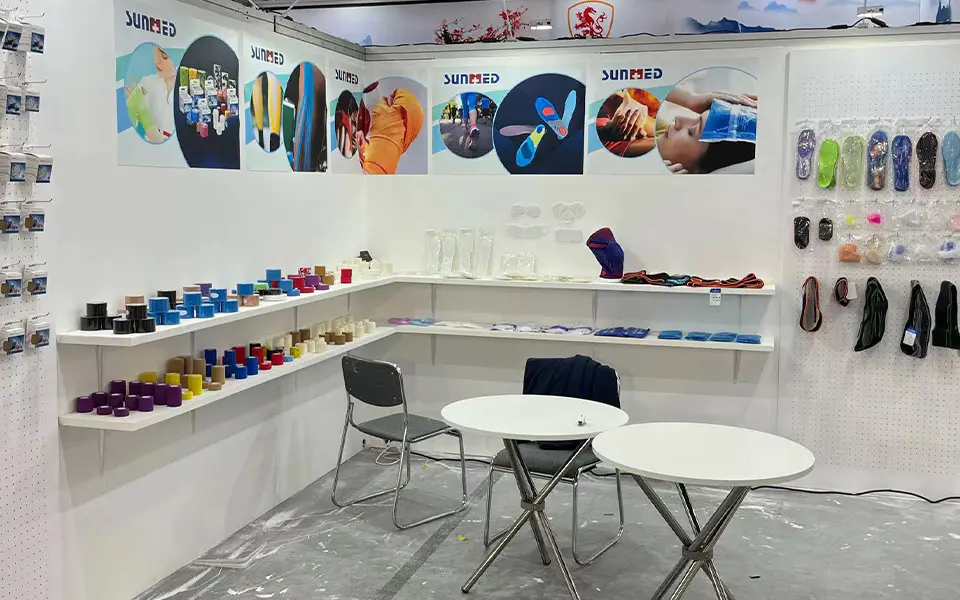
In addition to cotton products, the company manufactures or supplies first-aid products, wound dressings, sports supports, kinesiology tape, cohesive bandages, elastic adhesive bandages, pill boxes, hot and cold packs, disposable syringes, catheters, surgical consumables, and other medical supplies. This category knowledge gives international buyers an opportunity to consolidate sourcing across related product lines.
For a distributor, one supplier capable of supporting several product families may simplify communication and reduce the number of separate vendor relationships. A buyer may source cosmetic cotton pads alongside medical cotton, gauze, adhesive bandages, first-aid products, or family health-care items, subject to product-specific requirements and order conditions.
The company established its first-aid factory in 2008 to meet customer demand. In 2021, it established a factory for kinesiology tape, cohesive bandages, and elastic adhesive bandages. These developments demonstrate an approach based on expanding dedicated production capability as customer requirements grow. Such investment is relevant to buyers looking for a supplier with experience building and managing specialized manufacturing operations.
Quality Control and Manufacturing Discipline
Quality control is especially important for cotton products because defects may not always be obvious before use. A pad may look acceptable but still perform poorly if it contains excessive loose fibers, has inconsistent thickness, tears easily, or absorbs and releases liquid unevenly. A structured inspection program helps reduce these risks.
Suzhou Sunmed reports a professional quality-control team comprising hundreds of personnel. The company states that its teams follow inspection procedures aligned with ISO 13485:2016 standards. ISO 13485 is a quality-management standard associated with medical devices and emphasizes controlled processes, documentation, risk awareness, traceability, and continual maintenance of an effective quality system.
For cosmetic cotton pads, the buyer should confirm which quality system, product testing, and regulatory documents apply to the specific item and destination market. Even when a product is used for beauty care rather than a medical procedure, careful production control remains valuable. Consistent inspection can help monitor material appearance, dimensions, packaging integrity, quantity, and general product conformity.
A professional quality team can also support pre-shipment inspections, customer specifications, sample approval, batch consistency, and corrective-action procedures. These capabilities are important for wholesale buyers, especially when products are sold under a private label or distributed across multiple countries.
Quality Factors Relevant to Cosmetic Cotton Pads
Material consistency: Cotton should have a stable appearance and texture appropriate for the agreed product specification.
Surface finish: The pad should be formed and finished to reduce loose fibers and support smooth application.
Dimensional accuracy: The selected shape and size should remain consistent across production batches.
Absorption performance: The pad should demonstrate practical liquid uptake for its intended applications.
Liquid release: The structure should allow the absorbed liquid to be released during normal use rather than remaining unnecessarily trapped.
Pack quantity: The number of pieces per pack should match the product specification and customer order.
Packaging integrity: The resealable bag should be properly closed and suitable for storage, handling, and transportation.
Visual cleanliness: White cotton pads should be checked for visible contamination, discoloration, or foreign matter.
Documentation: Commercial buyers may require specifications, inspection records, declarations, certificates, or other documents according to the destination market.
These factors help turn a basic cotton item into a dependable commercial product. They also support repeat purchasing because customers receive a more predictable experience from one order to the next.
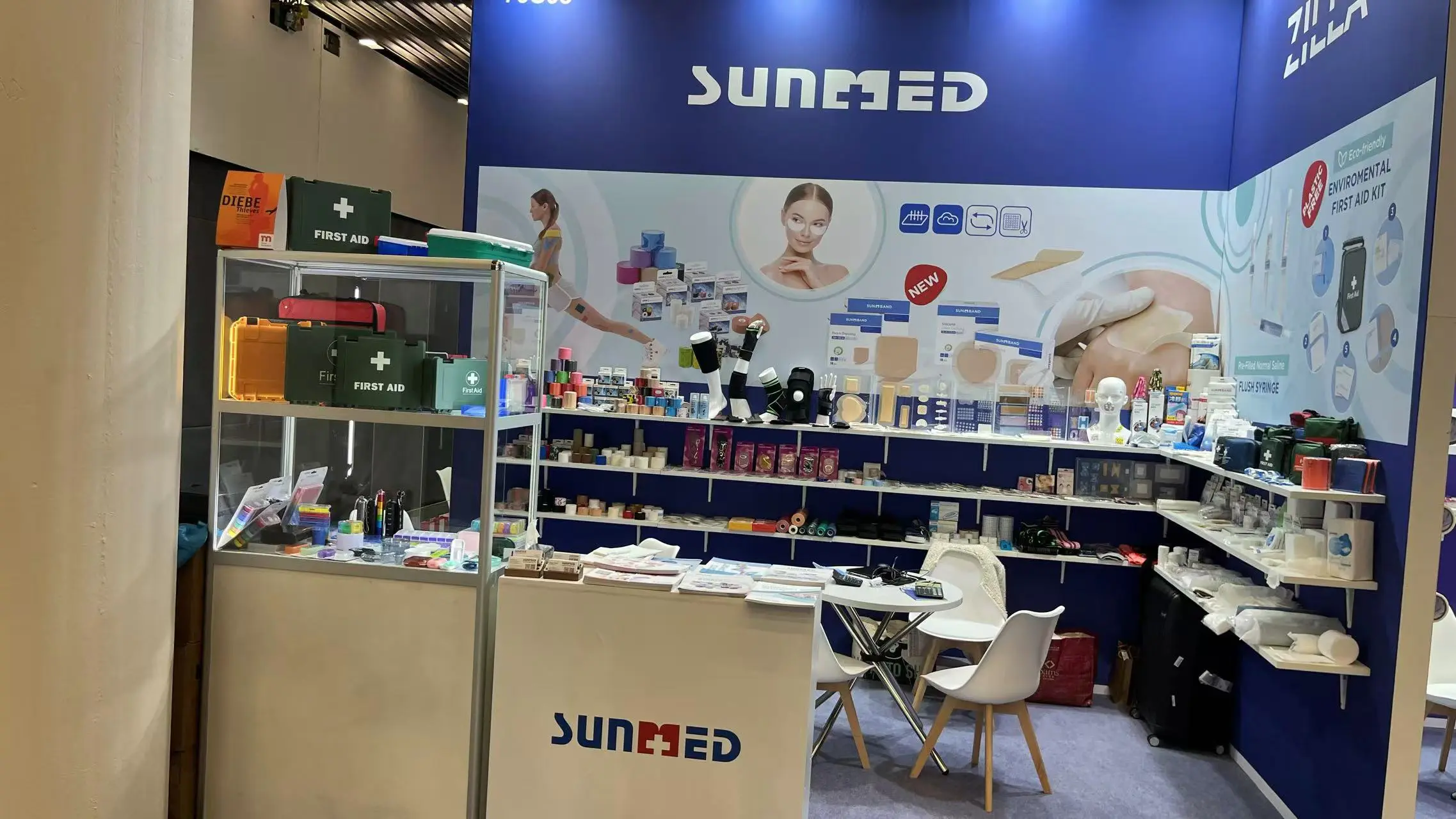
International Supply Capability
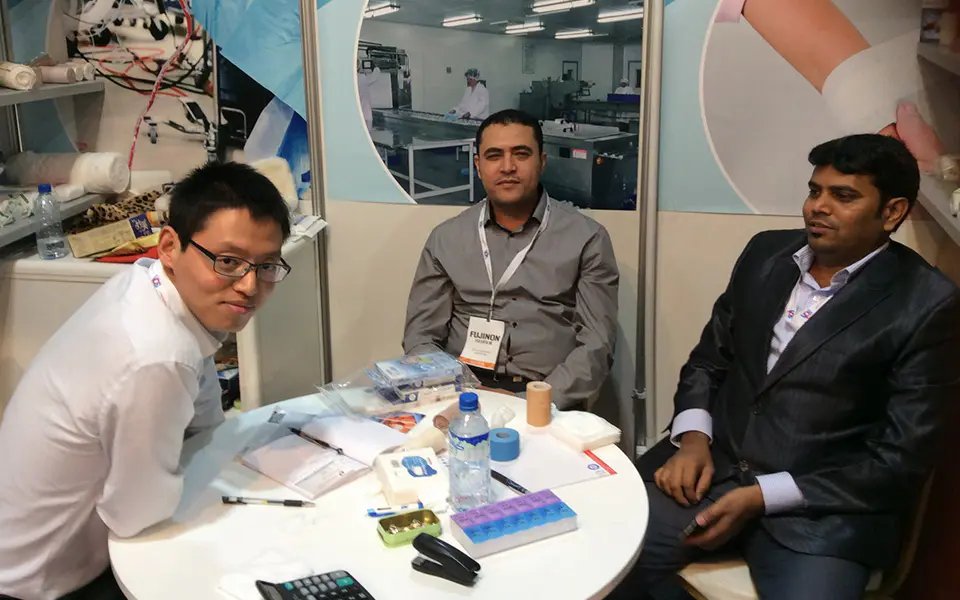
Suzhou Sunmed reports that its products have been exported to more than 60 countries worldwide. Its stated markets include Europe, Southeast Asia, Africa, and Oceania. The company identifies customers and applications in hospitals, first-aid supply businesses, supermarkets, and retail sports shops.
International export experience can be valuable for buyers of cosmetic cotton pads because importing involves more than manufacturing. The supplier must understand product communication, commercial documentation, packaging requirements, shipping coordination, and the practical expectations of overseas customers.
European markets such as the United Kingdom, Germany, Spain, Denmark, and the Netherlands may require careful attention to documentation, packaging language, product claims, and importer responsibilities. Southeast Asian markets, including Japan, Malaysia, the Philippines, and Thailand, may have different retail formats and purchasing preferences. African markets, including Tanzania, Mauritius, and South Africa, and Oceania markets such as Australia and New Zealand, may likewise require destination-specific planning.
A buyer should always confirm the exact compliance pathway for the cosmetic cotton pad, including whether it is classified as a general beauty product, cosmetic accessory, hygiene product, or another category in the target country. The supplier can then work with the buyer to review technical details, packaging statements, labeling, and applicable documentation.
OEM and Wholesale Opportunities
The product is suitable for wholesale supply and may also support OEM or private-label projects. A beauty brand, retailer, salon chain, pharmacy group, hotel supplier, or distributor may choose to sell the cotton pads under its own packaging identity. Customized sizes can help the buyer create a differentiated product, while the standard 80-piece pack provides a clear starting point for retail planning.
Private-label customers may wish to consider the following decisions:
Target customer: The product may be positioned for sensitive-skin routines, everyday cleansing, makeup removal, salon use, travel, or professional beauty work.
Shape: Round pads may emphasize facial care, while square pads may be positioned for broader cosmetic and nail-care applications.
Size: Smaller formats can support eye and lip work, while larger formats may be useful for facial cleansing or salon procedures.
Pack quantity: The standard 80-piece pack can be retained or reviewed according to the customer’s sales strategy.
Packaging: A resealable bag can be combined with customized graphics, product instructions, barcode information, and language requirements.
Product claims: Buyers should use accurate, supportable statements regarding cotton content, softness, absorbency, lint control, and intended use.
Market positioning: The product may be presented as an economical daily essential, a professional salon accessory, a premium skin-care tool, or a convenient travel item.
OEM development normally requires sample confirmation before mass production. Buyers may evaluate the pad’s feel, thickness, size, liquid absorption, release behavior, packaging, and appearance. Once the specification is approved, the supplier can coordinate production and inspection according to the agreed order.
Safe and Effective Use Recommendations
Cosmetic cotton pads should be used with suitable products and according to the instructions for those products. Before applying a new cosmetic liquid to the entire face, users should consider the manufacturer’s directions and any individual skin sensitivities. The cotton pad itself is intended for external personal-care use.
For toner application, place an appropriate amount of toner onto the pad without oversaturating it. Move the pad gently across the skin rather than rubbing forcefully. For makeup removal, hold the pad on the area briefly when appropriate, then wipe with controlled movements.
When removing eye makeup, keep the eyes closed and avoid pushing the pad directly into the eye. Do not share used cotton pads between people. Dispose of the pad after use and keep unused pads in the closed package.
For nail care, use a product specifically suitable for nail-polish removal and follow its safety instructions. Avoid using the cotton pad with chemicals that are not intended for contact with cotton or skin. Store the package in a clean, dry place away from excessive moisture and direct contamination.
Why the Product Fits Professional Beauty Environments
Professional beauty environments require supplies that are consistent, easy to organize, and suitable for repeated use. A salon may use cotton pads for facial treatments, makeup services, product demonstrations, nail care, and cleanup. The resealable pack helps staff store the product between appointments, while the 80-piece quantity supports routine replenishment.
The lint-free design can help keep the treatment process neat. A soft surface can also contribute to a more comfortable customer experience, particularly during facial cleansing or makeup removal. Because the pads are available in different shapes and sizes, a salon can select the format most suitable for its service menu.
Beauty retailers can position the product beside toner, micellar water, makeup remover, nail-polish remover, facial masks, and other daily-care products. The broad application range makes it an accessible add-on item. It can also be included in travel sets, introductory skin-care kits, professional makeup cases, or seasonal gift packages.
For wholesalers, the product offers a practical combination of broad demand and straightforward storage. Cotton pads do not require complex consumer education, and the main benefits can be communicated clearly through packaging and product descriptions.
Environmental and Resource Considerations
Disposable cotton pads are designed for single-use personal care, so responsible product planning should consider material efficiency, packaging volume, and appropriate disposal. The thin structure and balanced liquid-release design may help reduce the quantity of cosmetic liquid used for each application. Customers can also avoid unnecessary waste by using an appropriate amount of liquid rather than oversaturating the pad.
Packaging selection should be reviewed according to the customer’s market, product protection needs, and sustainability objectives. Buyers may ask about available packaging materials, pack sizes, carton configuration, and opportunities to reduce unnecessary secondary packaging. Any environmental claims should be supported by documented material and packaging information.
Users should dispose of used cotton pads according to local waste rules. Cotton pads should not normally be flushed down toilets because they can contribute to blockages. Clear disposal guidance can be included in private-label packaging when appropriate.
Purchasing Considerations for Importers and Distributors
Before placing an order, professional buyers should define the intended application and required specification. Important questions include whether the pad is for general skin care, professional salon use, makeup removal, nail care, or a mixed retail program. The answer may affect the preferred shape, size, thickness, packaging, and product claims.
Buyers should request samples and compare them under realistic conditions. A useful evaluation may include applying toner, makeup remover, or another representative liquid; checking whether the pad maintains its structure; observing the amount of lint; and assessing how evenly the liquid is released. The pad should also be evaluated when dry and wet, because handling characteristics may change after saturation.
Commercial discussions should cover minimum order quantity, production lead time, packaging design, carton dimensions, shipping terms, inspection arrangements, payment terms, and destination-market documentation. For customized products, the buyer should approve the final artwork, size, material description, pack quantity, and product claims before production begins.
Importers should also confirm whether the HS code supplied for the product is appropriate for their customs declaration. The listed HS code is 3005901000, but classification may depend on local customs interpretation, product composition, intended use, and current regulations. The importer remains responsible for confirming the correct declaration with its customs adviser or relevant authority.
Company Strengths Supporting Long-Term Cooperation
Suzhou Sunmed Co., Ltd. presents itself as a long-term manufacturer and exporter rather than a single-product trading business. Its product range covers first aid, wound care, medical consumables, sports support, family health care, surgical supplies, and medical instruments. This broad scope can be useful to buyers seeking a consolidated supply partner.
The company’s reported experience in more than 60 export markets indicates familiarity with international business communication and shipment coordination. Its production bases in Jiangsu, Zhejiang, and Anhui provide a broader operational foundation. Its reported quality-control organization, ISO 13485:2016-oriented procedures, and experience with medical product categories further support a structured approach to production.
The company also states that most of its products are CE certified and that its Suzhou factories comply with FDA requirements. Certification and compliance status should be reviewed for the specific product, production site, and target market. Even so, the company’s stated compliance orientation is relevant for buyers who require organized technical documentation and controlled manufacturing.
Long-term cooperation depends on more than a single shipment. Buyers typically value stable quality, responsive communication, clear specifications, reliable delivery, reasonable customization support, and the ability to solve problems when they occur. The company’s stated objective is to support easy and productive cooperation and develop lasting customer relationships.
Recommended Product Positioning
The cotton pad can be positioned in several ways depending on the customer’s market strategy. For everyday consumers, the central message may focus on softness, convenience, lint-free use, and suitability for toner and makeup removal.
For professional salons, the emphasis may be on clean handling, consistent shape, practical pack quantity, and suitability for repeated skin-care services.
For premium skin-care brands, the product may be presented as a carefully made applicator designed to support efficient use of valuable liquids. Claims should remain accurate and correspond to available testing or technical documentation.
For travel retailers, the resealable bag, compact format, and multi-purpose use can be highlighted. For pharmacies and family-care stores, the focus may be on clean personal-care routines and practical daily use.
For wholesalers, the strongest commercial points may be the broad application range, multiple size options, round and square formats, customization possibilities, and the manufacturer’s wider product portfolio.

Frequently Asked Questions
What is the main use of the DC662004 cotton pad?
The main uses are skin cleaning, toner application, makeup removal, nail care, and general beauty routines. It is suitable for home users, salons, makeup professionals, retailers, and wholesalers.
What material is used to make the cotton pad?
The product is made from cotton and is described as soft and absorbent. Buyers should confirm the final material specification and any applicable documentation for their intended market.
Is the cotton pad suitable for sensitive skin?
The product is designed to provide a soft touch and is described as containing no chemical addition. However, individual skin sensitivity varies. Users should follow the instructions for the cosmetic liquid being applied and stop use if irritation occurs.
Does the cotton pad leave lint?
The product uses a lint-free material approach intended to reduce loose fibers on the skin, nails, and cosmetic surfaces. Performance may vary according to handling and the liquid used, but lint control is one of the product’s principal design features.
How many cotton pads are included in one pack?
The standard packing specification is 80 pieces per pack.
What shapes are available?
The product is available in round and square shapes. Round pads are commonly used for facial care, while square pads may be selected for broader wiping or nail-care applications.
What sizes are available?
Listed standard sizes include approximately 5.6 centimeters, 5.8 centimeters, 6 centimeters, and 8 centimeters. Customized sizes may be discussed for OEM and wholesale projects.
Can the cotton pad be used with toner?
Yes. The pad is suitable for applying toner and other appropriate skin-care liquids. Apply a suitable amount and move the pad gently across the skin.
Can it remove eye makeup?
It can be used with an appropriate eye-makeup remover. Users should keep their eyes closed, avoid direct contact with the eye, and follow the instructions of the makeup-remover manufacturer.
Can it be used for nail-polish removal?
Yes, the product information identifies nail care as a suitable application. Use it with a nail-polish remover intended for that purpose and follow the remover’s safety instructions.
Does the pad help reduce cosmetic liquid waste?
The product is designed for strong absorption and balanced release. Its double-effect design is stated to release up to 96 percent of the retained liquid, although actual performance can vary with the liquid type and user method.
Is the packaging suitable for travel?
Yes. The product comes in a convenient resealable bag intended to support storage and on-the-go use.
Is the product available for private-label sales?
The product is suitable for wholesale and may support OEM or private-label programs. Buyers should discuss customization, packaging artwork, minimum order requirements, and final specifications with the manufacturer.
What quality systems does the manufacturer report?
The company reports a professional quality-control team comprising hundreds of personnel and states that its inspection procedures follow ISO 13485:2016 standards. Product-specific documentation should be confirmed during the purchasing process.
What markets does the company serve?
The company reports exports to more than 60 countries, including markets in Europe, Southeast Asia, Africa, and Oceania. Buyers should confirm destination-specific requirements before ordering.
What should buyers check before placing an order?
Buyers should confirm the shape, size, thickness, material, pack quantity, packaging, product claims, inspection requirements, shipping terms, lead time, documentation, and destination-market compliance conditions.
Conclusion
The Skin Care Absorbent Cosmetic Round Cotton Pad, model DC662004, is designed to provide a practical and comfortable solution for daily skin care and professional beauty use. Its main strengths include soft cotton construction, lint-free performance, strong absorption, balanced liquid release, an ultra-thin design, multiple application possibilities, and convenient resealable packaging.
Compared with loose cotton wool and basic low-quality pads, the product offers a more consistent format, cleaner handling, better control of liquid use, and greater flexibility in shape and size. Its suitability for toner, makeup remover, facial cleansing, nail care, salons, travel kits, and retail beauty programs gives it broad commercial potential.
The manufacturing background of Suzhou Sunmed Co., Ltd. adds further value for wholesale and OEM buyers. The company reports approximately 30 years of industry experience, multiple production bases, international export coverage, a large quality-control team, and inspection procedures aligned with ISO 13485:2016 standards. Its wider portfolio of medical, first-aid, wound-care, sports-support, and family-health products may also support consolidated sourcing.
For buyers seeking a dependable cosmetic cotton pad, the best next step is to evaluate samples under actual use conditions and confirm all commercial, technical, packaging, and regulatory requirements. With the correct specification and market positioning, this cotton pad can serve as a reliable everyday beauty accessory and a practical addition to professional and retail product lines.
References
1. Product specification information for Skin Care Absorbent Cosmetic Round Cotton Pad, model DC662004.
2. Manufacturer-provided company profile and product-category information for Suzhou Sunmed Co., Ltd.
3. ISO 13485:2016, Quality Management Systems for Medical Devices.
4. General principles of cotton fiber processing, absorbent material construction, and disposable personal-care product quality control.
5. General guidance on cosmetic hygiene, external personal-care product handling, and appropriate disposal of disposable cotton materials.

 English
 Español
 русский
 Français
 Deutsch
 italiano
 By Admin