A paper mask is a simple, lightweight face-covering solution designed for environments where basic protection, hygiene, cleanliness, and user convenience are important. The Paper Mask range identified by codes SMD-281201 and SMD-281202 includes two practical configurations: a one-ply paper mask with ear loops and a two-ply paper mask with ear loops. Both options are designed to be easy to wear, simple to distribute, and suitable for applications where disposable face coverings are needed.
Although the construction of a paper mask is straightforward, product performance depends on much more than the visible material. The quality of the paper or non-woven layer, the consistency of cutting, the strength of the ear loops, the cleanliness of production, the reliability of packaging, and the stability of the supply chain all influence the user experience. A well-manufactured mask should be comfortable enough for its intended period of use, remain securely positioned, and provide a practical barrier against ordinary dust, droplets, and non-specific environmental contaminants according to its intended application.
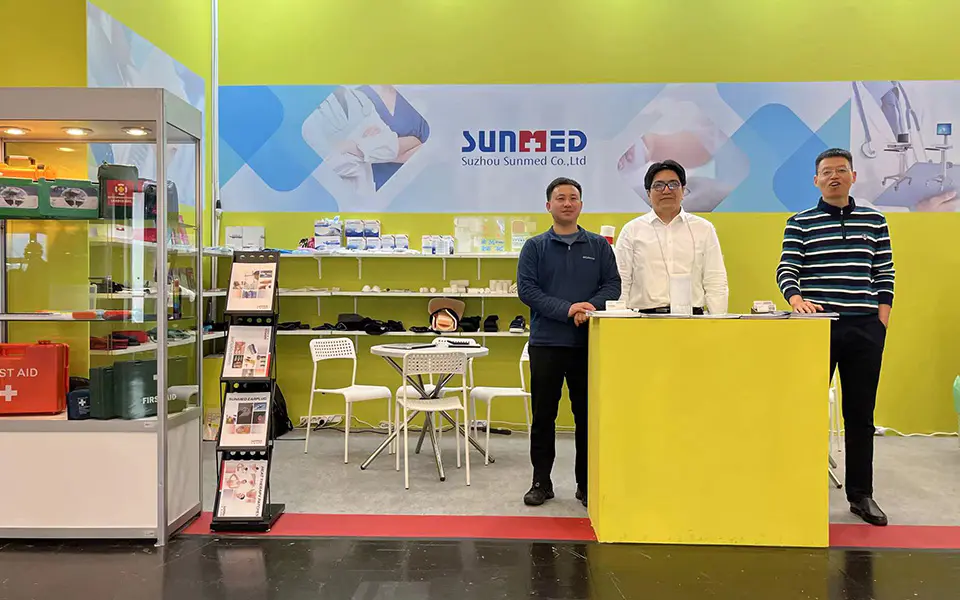
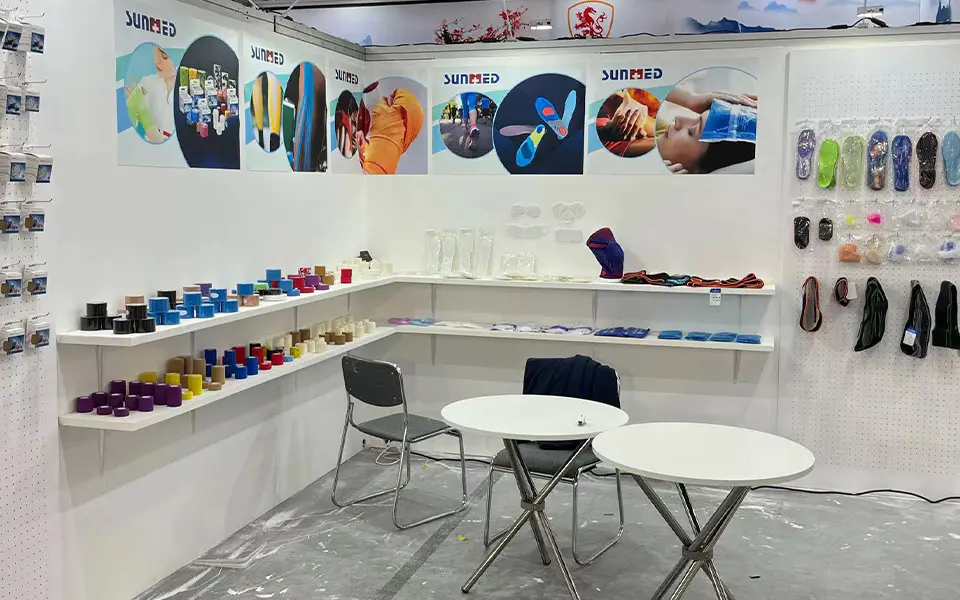
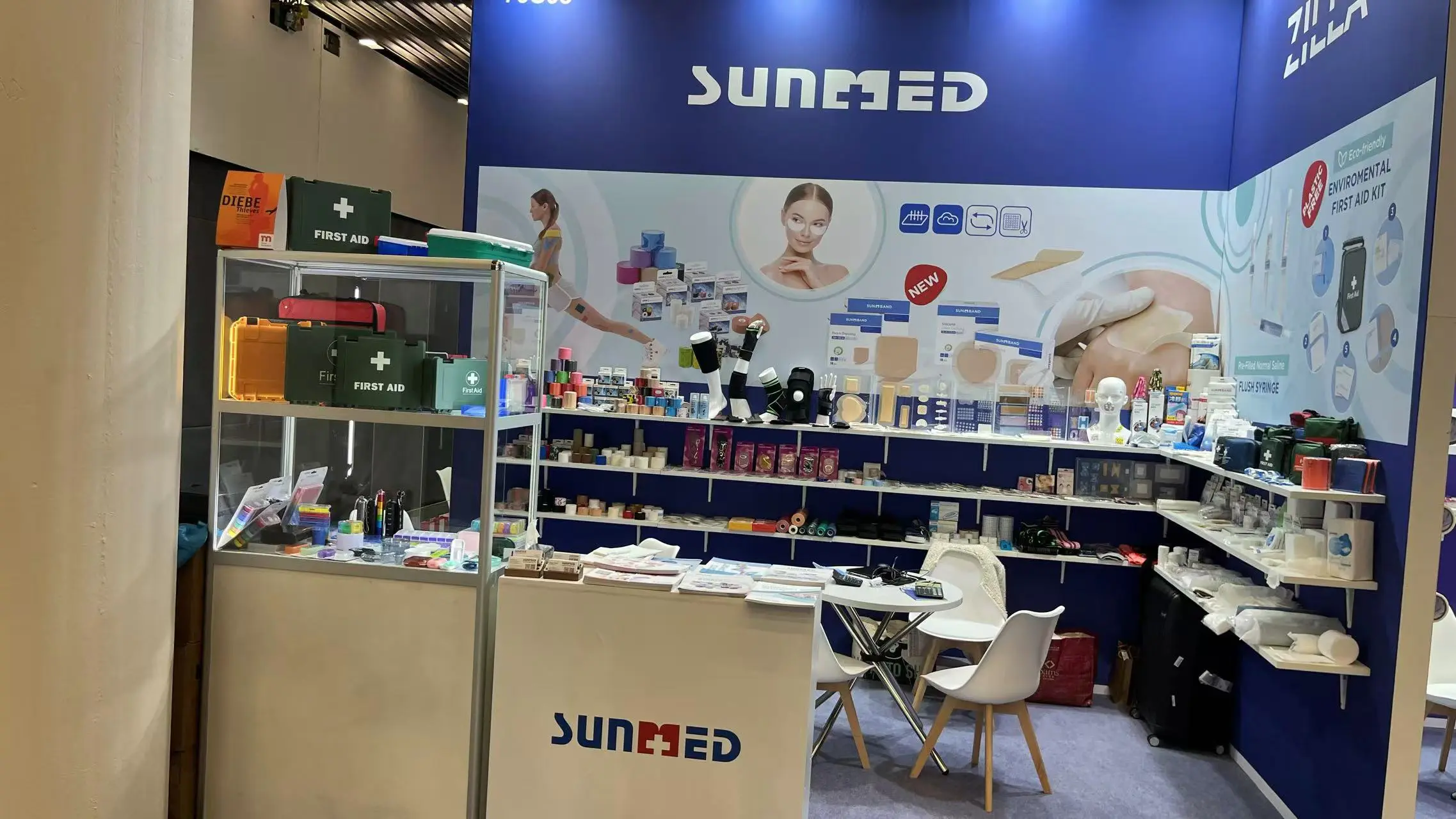
The Paper Mask product range is manufactured and supplied by Suzhou Sunmed Co., Ltd., a Chinese manufacturer and exporter of first aid, medical, healthcare, sports support, and related disposable products. With production bases in Jiangsu, Zhejiang, and Anhui Province, the company combines product development, manufacturing experience, quality control, and international distribution capabilities. Its broader portfolio includes medical gauze, bandages, medical tape, cotton products, non-woven products, family healthcare items, surgical consumables, syringes, catheters, and other medical supplies.
This article examines the design, advantages, applications, quality considerations, manufacturing strengths, purchasing factors, and frequently asked questions associated with the Paper Mask range. It is intended to help distributors, healthcare buyers, first aid suppliers, retailers, and institutional purchasers understand how a lightweight disposable mask can fit into a wider medical consumables program.

Paper Mask
1. Product Overview
The Paper Mask range consists of two listed product codes. SMD-281201 is described as a paper mask with one ply and ear loops. SMD-281202 is described as a paper mask with two plies and ear loops. The two configurations allow purchasers to select a product according to the desired balance between lightness, coverage, breathability, and basic barrier performance.
| Product Code | Product Description | Construction | Fastening Method |
|---|
| SMD-281201 | Paper mask with ear loop | 1 ply | Ear loops |
| SMD-281202 | Paper mask with ear loop | 2 plies | Ear loops |
The one-ply version is the lighter and more economical option. It may be useful for short-duration wear, general hygiene programs, visitor areas, cleaning environments, retail distribution, or situations where a basic disposable covering is required. Its reduced material consumption may also support cost-sensitive purchasing and high-volume distribution.
The two-ply version provides an additional layer compared with the one-ply design. This construction may offer a greater sense of coverage and a more substantial feel during use. It can be considered for settings where users prefer a slightly more structured mask or where the purchaser wants to provide an additional layer for general-purpose use.
Neither product should be assumed to provide the same performance as a certified respirator, a surgical mask, or another regulated medical face mask unless the relevant product documentation specifically confirms those claims. The correct application depends on the product specification, applicable regulations, and the purchaser’s intended use. Clear product positioning is therefore an important part of responsible distribution.
2. Why a Simple Paper Mask Remains Relevant
Healthcare and workplace buyers often require large quantities of uncomplicated disposable products. In these situations, a paper mask can be valuable because it addresses a basic need without introducing unnecessary complexity. It is easy to store, easy to issue, and easy for users to understand. The design does not require complicated adjustment systems, batteries, filters, or special maintenance.
Disposable masks are also useful in environments where reusable products may be inconvenient. Reusable face coverings require laundering, inspection, drying, and controlled redistribution. A disposable paper mask can be issued when needed and discarded after use according to local waste-management procedures. This can simplify daily operations in reception areas, visitor programs, cleaning services, classrooms, warehouses, retail shops, and selected healthcare support activities.
The lightweight construction is another important benefit. Many users prefer a face covering that does not feel heavy during short periods of use. A lighter mask can be more practical for visitors, customers, staff members, or patients who need a temporary covering while entering a facility or completing a routine activity.
Paper masks can also serve as a cost-management tool. In high-volume purchasing, even a small difference in unit price can influence the overall budget. The one-ply and two-ply alternatives enable buyers to match the product to the risk level and operational requirement rather than applying one expensive solution to every situation.
For distributors, the product is easy to explain. A buyer can quickly distinguish between the one-ply and two-ply options, while the ear-loop design is familiar to most users. This simplicity can shorten purchasing discussions, reduce training requirements, and make the product suitable for inclusion in first aid kits, workplace supply programs, hygiene stations, and general medical consumables catalogs.
3. Key Product Advantages
3.1 Lightweight Construction
The paper mask format is designed around low weight and straightforward use. A lightweight face covering is useful when the expected wear period is limited or when users need a basic covering without the bulk associated with more specialized products. Lower material use can also support compact packaging and efficient storage.
Lightness should not be interpreted as a universal measure of quality. Instead, it is an advantage when it corresponds to the intended application. For short-duration use, a light mask may be more acceptable to users than a heavier alternative. Higher acceptance can support better compliance with an organization’s hygiene procedures.
3.2 Ear-Loop Convenience
Both listed models use ear loops. This fastening method allows users to put on and remove the mask quickly without tying straps behind the head. Ear loops are particularly convenient in high-turnover areas where masks are distributed to many individuals throughout the day.
The ear-loop format can also reduce the amount of user instruction required. Staff can demonstrate the basic procedure quickly: identify the correct orientation, place the loops over the ears, adjust the mask across the face, and remove it by the loops when appropriate. Consistent production of the loops is important because uneven positioning or insufficient attachment strength may affect comfort and usability.
3.3 Choice of One-Ply and Two-Ply Options
Offering two constructions gives purchasers greater flexibility. The one-ply model may suit economical, short-term, or general-purpose requirements. The two-ply model may be preferred when the customer wants a more substantial product with an additional layer. This product choice can help distributors serve different customer segments without sourcing from multiple suppliers.
A two-option product family can also simplify inventory management. Instead of carrying a large variety of unrelated disposable masks, a distributor may organize its offering around clearly differentiated basic and enhanced configurations. This approach can make forecasting, warehouse allocation, and customer communication more efficient.
3.4 Disposable Hygiene
Disposable use supports a clean issuance process. Each mask can be packed and distributed as a new item, reducing concerns associated with repeated handling and reuse. The purchaser can establish a procedure for storage, distribution, use, and disposal that matches local regulations and the application environment.
Disposable products are especially practical where cleaning infrastructure is limited or where users change frequently. They can be placed at entrances, reception counters, first aid rooms, staff rooms, customer service points, or inside emergency supply kits.
3.5 High-Volume Suitability
The simple design of the Paper Mask makes it appropriate for volume purchasing. Hospitals, clinics, first aid distributors, retail chains, schools, industrial facilities, hospitality businesses, and public service organizations may require a dependable supply of basic masks. A manufacturer with established production and export experience can help buyers maintain continuity when demand changes.
3.6 Easy Product Positioning
Because the product specification is concise, it is relatively easy to position in a catalog. The core information includes the product name, ply count, fastening method, product code, and intended general use. Clear positioning helps avoid confusion between a basic paper mask and products designed for specialized respiratory protection.

4. Comparison with Other Disposable Face-Covering Options
Paper masks occupy a specific position in the broader face-covering market. They are not intended to replace every other type of mask. Instead, they provide a basic and economical option for environments that do not require the features of a medical surgical mask or a particulate respirator.
| Feature | One-Ply Paper Mask | Two-Ply Paper Mask | Specialized Medical or Respiratory Product |
|---|
| Primary advantage | Very lightweight and economical | Additional layer with a more substantial feel | Designed for defined regulated performance requirements |
| Typical use | Basic short-duration covering | General-purpose covering where extra layering is preferred | Clinical, procedural, or respiratory-risk applications subject to specification |
| Fastening | Ear loops | Ear loops | May use ear loops, ties, head straps, or fitted systems |
| Maintenance | Disposable | Disposable | Usually disposable, depending on product type |
| Purchasing priority | Cost, availability, convenience | Balance of cost and coverage feel | Verified performance, certification, fit, and intended-use compliance |
Compared with a reusable cloth covering, the paper mask offers a ready-to-use disposable format. The purchaser does not need to arrange washing or monitor the number of reuse cycles. Compared with a molded or fitted respirator, the paper mask is simpler, lighter, and generally more economical, although it is not a substitute for a product designed to provide a tight facial seal or specialized filtration performance.
Compared with a more elaborate disposable medical mask, the paper mask may use fewer components and may be easier to produce and pack. This can support competitive pricing and rapid distribution. However, buyers should select the product according to the environment rather than using price as the only criterion.
The main competitive advantage of the Paper Mask range is therefore practical suitability. It combines a familiar ear-loop format with one-ply and two-ply choices, allowing buyers to select an appropriate basic disposable option. Its strength is simplicity, not the promise of performance beyond the stated construction.
5. Intended Applications
5.1 First Aid and General Healthcare Supply
First aid suppliers often need compact, affordable products that can be included in kits or sold as individual supplies. The Paper Mask can be considered for first aid cabinets, emergency supply boxes, reception areas, and general hygiene stations where a basic disposable face covering is appropriate.
In clinics and outpatient facilities, masks may be issued to visitors or used in non-specialized areas. The product can complement other consumables such as gauze, adhesive bandages, medical tape, cotton products, gloves, and wound-care supplies. Its inclusion in a broad product portfolio allows buyers to consolidate orders with one medical consumables supplier.
5.2 Workplace and Industrial Environments
Some workplaces require a simple covering during cleaning, maintenance, storage, or routine operations. A lightweight paper mask can be placed in staff supply areas or distributed as part of a workplace hygiene program. The suitability of the mask must be evaluated against the specific hazards present. It should not be used as a substitute for an approved respiratory protective device where dust, fumes, aerosols, or hazardous substances require specialized protection.
5.3 Retail and Hospitality
Retail stores, hotels, restaurants, and service businesses may need masks for employees, visitors, contractors, or customers. The ear-loop format supports quick distribution, while the simple construction makes the product easy to keep near entrances, service desks, or staff areas.
For businesses, a mask that is easy to store and issue can reduce interruptions. Staff members do not need extensive training to understand the basic wearing procedure. Bulk packaging can also help businesses maintain a consistent supply during periods of increased demand.
5.4 Schools and Public Institutions
Schools, libraries, community centers, and public offices may use general-purpose disposable masks in selected circumstances. The one-ply design may be useful where the priority is economical short-duration distribution. The two-ply design may be selected when users prefer a more substantial covering.
Institutions should establish clear policies regarding when masks are provided, how they are worn, and how they are discarded. The product should be stored in a clean, dry area and protected from crushing, moisture, dust, and excessive heat.
5.5 Beauty, Personal Care, and Daily-Service Environments
Beauty salons, personal-care facilities, and daily-service businesses often value disposable products that support a clean and orderly working environment. A paper mask can be incorporated into a broader disposable supply program alongside cotton products, protective items, and other personal-care supplies.
In these settings, comfort and convenience are often important because staff and customers may wear a mask during short appointments. The ear-loop design enables quick wearing and removal between tasks, subject to the business’s hygiene procedures.
6. Manufacturing Quality and Process Control
A reliable paper mask begins with controlled material selection. The manufacturer must ensure that the material is suitable for the intended product construction and that incoming rolls or sheets are consistent in weight, appearance, cleanliness, and physical condition. Variation in the raw material can affect cutting, folding, loop attachment, packaging, and the final appearance of the mask.
Production control normally begins with incoming inspection. Materials are checked against purchasing specifications before entering the production process. Relevant checks may include material identification, dimensions, surface condition, color consistency, packaging integrity, and supplier documentation. These controls help prevent unsuitable materials from entering the manufacturing line.
During converting, the paper material is cut into the required mask shape. Accurate cutting is important because uneven edges can reduce the visual quality of the product and may affect comfort. Controlled equipment settings help maintain consistency across large production runs.
Where folding or layering is required, the production line must maintain proper alignment. The two-ply version depends on consistent positioning of both layers. Misalignment may create exposed edges, uneven coverage, or an inconsistent appearance. Stable machine operation and regular in-process inspection help reduce these risks.
Ear-loop attachment is another key manufacturing stage. The loops must be positioned consistently and attached securely enough for normal handling and wearing. Quality personnel can inspect loop placement, attachment points, symmetry, and basic pull resistance according to internal specifications and applicable customer requirements.
Production operators also monitor cleanliness and handling. Disposable face coverings should be manufactured in an environment that is appropriate for the product category and customer expectations. Work areas, equipment, personnel practices, and packaging procedures should be controlled to reduce contamination and preserve product integrity.
Packaging is not merely a final presentation step. It protects the masks during storage and transportation. Packaging materials should prevent unnecessary exposure to dust and moisture while allowing the product to be identified by product code, quantity, batch information, and other relevant details. Proper carton organization also helps distributors receive and count inventory efficiently.
6.1 In-Process Inspection
In-process inspection provides an opportunity to identify problems before a full production lot is completed. Inspectors may review the mask dimensions, ply structure, edge quality, loop placement, attachment, visual cleanliness, and packaging condition. Sampling frequency can be determined by production risk, customer requirements, historical performance, and internal quality procedures.
When a deviation is found, the affected material can be isolated for assessment. Corrective action may include machine adjustment, operator retraining, material review, additional inspection, or controlled rework when appropriate. This approach helps maintain consistent output and provides traceability for quality decisions.
6.2 Final Inspection
Final inspection confirms that finished goods meet the agreed product specification before shipment. The review may include product identity, quantity, appearance, packaging, labeling, carton condition, and documentation. A final release procedure helps prevent mixed products or incorrectly labeled cartons from reaching customers.
For international distribution, final inspection is especially important because products may travel long distances and pass through several logistics stages. A well-controlled release process can reduce problems related to damaged cartons, incorrect quantities, or mismatched product codes.
7. Manufacturing Strengths of the Supplier
Suzhou Sunmed Co., Ltd. brings approximately 30 years of experience in the medical device and medical consumables industry. This experience is relevant to the Paper Mask because disposable products require disciplined purchasing, production, quality management, documentation, packaging, and export coordination.
The company operates multiple production bases in Jiangsu, Zhejiang, and Anhui Province. A multi-location manufacturing structure can support broader capacity planning and product specialization. It may also help the supplier respond to different product categories, production schedules, and customer requirements across its portfolio.
The supplier established its first aid factory in 2008 to meet the needs of first aid customers. In 2021, it established a dedicated factory for kinesiology tape, cohesive bandages, and elastic adhesive bandages. These investments demonstrate an ongoing focus on manufacturing capability and product-category development rather than reliance on a single narrow product line.
Although the Paper Mask is a relatively simple item, the broader manufacturing background is valuable. A supplier experienced in gauze, bandages, tapes, cotton products, non-woven products, surgical consumables, syringes, catheters, and family healthcare products is familiar with the quality expectations of medical and healthcare buyers.
The company reports a professional quality control team comprising hundreds of personnel. Its quality procedures are described as aligned with ISO 13485:2016 requirements, and most products are reported to be CE certified. The Suzhou factories are also described as complying with FDA requirements. Buyers should request the documentation relevant to the exact Paper Mask model, market, and intended application before making regulatory or performance claims.
A large quality team can provide support at multiple points: incoming material inspection, process monitoring, finished-product review, document control, corrective action, supplier evaluation, and customer complaint handling. These functions are important because product reliability depends on the complete system, not only on the final visual inspection.
The company’s export experience is another operational strength. Products have been supplied to more than 60 countries, including markets in Europe, Southeast Asia, Africa, and Oceania. International experience can help with carton preparation, shipping documents, customer communication, production scheduling, and the practical requirements of overseas distribution.
Sunmed serves hospitals, first aid suppliers, supermarkets, and retail sports shops. This varied customer base indicates experience with different purchasing styles. Hospitals may emphasize documentation and consistency, while retail customers may emphasize packaging, product presentation, and dependable replenishment. First aid distributors may prioritize mixed orders and product breadth, while sports shops may require convenient consumer-facing formats.

8. How the Product Can Improve Procurement Efficiency
Procurement teams often evaluate more than unit price. They consider product availability, order quantities, consistency, lead time, documentation, packaging, supplier communication, and the risk of stockouts. The Paper Mask range can support efficient procurement by providing two clearly defined options within one product family.
A product code system helps buyers distinguish between the one-ply and two-ply versions. SMD-281201 identifies the one-ply mask, while SMD-281202 identifies the two-ply mask. Accurate use of these codes in purchase orders, inventory systems, cartons, invoices, and shipping documents helps reduce picking and receiving errors.
Purchasers should confirm the following information before placing an order: product code, ply count, dimensions, color, ear-loop specifications, individual or bulk packaging, quantity per inner box, quantity per carton, carton dimensions, gross weight, net weight, minimum order quantity, production lead time, and available quality documents.
It is also useful to establish a sample approval procedure. A pre-production or reference sample allows the buyer to confirm the appearance, material feel, loop positioning, packaging, and labeling before a larger order is manufactured. This is particularly valuable for distributors that sell under a private label or require a specific retail presentation.
Forecasting is another important factor. Disposable masks can experience sudden demand increases during seasonal events, public health concerns, weather conditions, or organizational policy changes. Buyers should discuss expected annual volume and possible demand fluctuations with the supplier so that production and raw-material planning can be coordinated.
For distributors, combining the Paper Mask with related products may improve order efficiency. The supplier’s portfolio includes first aid, wound care, gauze, medical tape, cotton products, sports support products, family healthcare products, medical diagnostic devices, surgical instruments, syringe products, infusion products, blood collection and transfusion products, patient transfer products, and anesthesia and respiratory products. A broader supply relationship may reduce the administrative burden of managing multiple vendors.
9. Storage, Handling, and Distribution
Paper masks should be stored in a clean, dry, and well-ventilated area. Cartons should be protected from direct sunlight, excessive humidity, water exposure, dust, pests, and strong odors. Heavy objects should not be placed on top of cartons if this could crush the packaging or deform the product.
Warehouse personnel should use a first-in, first-out or an appropriate stock-rotation system. Product codes and batch information should remain visible during storage. Damaged cartons should be separated and inspected before release. If the inner packaging has been compromised, the affected product should be evaluated according to the distributor’s quality procedure.
During transportation, cartons should be secured to minimize movement, compression, and moisture exposure. International shipments may encounter changes in temperature and humidity, so suitable outer packaging and container loading practices are important. The supplier and buyer should agree on shipping conditions before dispatch.
At the point of use, masks should be handled by the ear loops or other designated areas when possible. Users should avoid touching the front surface unnecessarily. A mask that becomes wet, visibly soiled, damaged, or difficult to wear should be replaced according to the organization’s procedure.
10. User Guidance and Responsible Product Communication
Product communication should be accurate and proportional to the mask’s construction. The product can be presented as a lightweight disposable paper mask with ear loops. The one-ply and two-ply versions can be explained as basic and additional-layer options. Claims about filtration efficiency, bacterial filtration, fluid resistance, medical use, or regulatory classification should only be made when supported by the relevant test reports and certifications for the exact model.
Users should be instructed to select a clean mask, inspect it before use, and ensure that the loops and material are intact. The mask should cover the nose and mouth as fully as the design permits. Users should avoid sharing disposable masks. After use, the mask should be removed carefully and disposed of according to local waste procedures.
Organizations should remember that a mask is only one element of a broader hygiene and safety program. Hand hygiene, ventilation, cleaning procedures, personal protective equipment selection, workplace hazard assessment, and local public health guidance may also be necessary. The Paper Mask should be integrated into the correct operational context rather than treated as a universal solution.
11. Advantages for Distributors and OEM Buyers
Distributors often need products that can be described clearly and supplied consistently. The Paper Mask has a straightforward product family structure, making it suitable for catalogs, institutional tenders, first aid kits, wholesale programs, and retail channels.
The manufacturer’s experience with OEM medical consumables can be useful for customers that need customized packaging, labeling, carton marks, or product presentation. Specific customization options depend on order volume, technical feasibility, regulatory requirements, and written agreement. Buyers should discuss artwork, language, barcode requirements, private-label responsibilities, and approval samples at the quotation stage.
International customers may also benefit from the company’s export experience. Supplying more than 60 countries requires familiarity with shipping coordination, customer documentation, product communication, and market-specific expectations. While every destination has its own rules, an established export supplier can help buyers identify the information that must be confirmed before shipment.
The company’s broad product range can create opportunities for product bundling. A distributor may be able to combine paper masks with adhesive bandages, gauze swabs, medical tape, elastic bandages, cotton products, hot and cold therapy items, pill boxes, or other healthcare products. This can support complete first aid or daily-care offerings for institutional and retail customers.
12. Quality Questions Buyers Should Ask
Before purchasing, buyers should ask whether the supplied product exactly matches the listed code and construction. The one-ply and two-ply versions should not be mixed in the same carton unless the packaging and agreement clearly identify the mixed configuration.
Buyers should request confirmation of the material specification, mask dimensions, ear-loop material, attachment method, packaging format, shelf-life information if applicable, batch traceability, and available inspection records. If the product is intended for a regulated market, the buyer should identify the applicable classification and request the documents needed for import and distribution.
It is also appropriate to ask how nonconforming products are handled. A mature quality system should include procedures for identifying, segregating, investigating, and resolving products that do not meet requirements. Buyers may also ask about complaint handling, corrective actions, change notification, and supplier communication.
For large or recurring orders, customers may discuss quality agreements, inspection plans, shipment release documents, and periodic performance reviews. These arrangements help both parties understand responsibilities and reduce the risk of different expectations after production begins.
13. Sustainability and Waste Considerations
As a disposable paper-based product, the Paper Mask should be evaluated within the customer’s waste-management system. The product uses fewer components than many complex protective devices, which may simplify handling after use. However, disposability still creates waste, and purchasers should order quantities responsibly to reduce expired or unused inventory.
Efficient packaging can also contribute to lower storage and transportation impact. Buyers may ask whether packaging dimensions can be optimized without compromising product protection. They can also review carton quantities, pallet arrangements, and shipping consolidation opportunities.
Waste procedures must follow local requirements, especially where masks have been used in healthcare, laboratory, industrial, or other controlled environments. The supplier can provide product information, but the final disposal procedure is generally determined by the user’s facility, local regulations, and the nature of the environment in which the mask was used.
14. Selecting Between SMD-281201 and SMD-281202
The selection between the two models should begin with the intended use. SMD-281201, the one-ply paper mask with ear loops, is suitable when low weight, economical purchasing, and short-duration use are the principal priorities. It may be useful for general distribution and basic hygiene applications where a single layer meets the purchaser’s requirements.
SMD-281202, the two-ply paper mask with ear loops, may be preferred when the user wants an additional layer and a more substantial product feel. It can be suitable for general-purpose environments where the purchaser wants a balance between simple construction and increased layering.
Neither option should be selected solely because it has a lower or higher ply count. The buyer should consider the environment, user expectations, applicable standards, required documentation, storage conditions, and the organization’s risk assessment. A technical representative or quality professional should be consulted where the intended use involves specific medical or occupational hazards.
| Purchasing Priority | Recommended Consideration |
|---|
| Lowest material use and basic short-term distribution | Review the one-ply SMD-281201 option |
| Preference for an additional layer | Review the two-ply SMD-281202 option |
| High-volume institutional supply | Confirm carton quantity, lead time, batch control, and replenishment planning |
| Retail or private-label distribution | Confirm packaging artwork, labeling, barcodes, and sample approval |
| Regulated medical application | Request exact-model technical documents and verify applicable requirements |
15. Why Manufacturing Experience Matters
Product simplicity should not be confused with manufacturing simplicity. A paper mask may contain only a few visible components, but each component must be produced and assembled consistently. A small variation in material width, cutting position, loop placement, or packaging can become significant when thousands or millions of units are produced.
Long-term experience helps a manufacturer recognize these risks. A supplier that has worked with medical gauze, adhesive products, non-woven materials, cotton products, surgical consumables, and other healthcare items is accustomed to controlled production environments and documented quality procedures.
Manufacturing experience also improves communication. Buyers may require a specific package count, carton configuration, language, private label, shipping mark, or inspection procedure. A supplier with established export operations is more likely to have internal teams capable of coordinating sales, production, quality, documentation, and logistics.
Sunmed’s stated quality-control structure and multi-site manufacturing network provide a foundation for serving both standard and recurring orders. The reported ISO 13485:2016-oriented procedures and CE-related product experience may also be relevant to customers evaluating a supplier for broader medical consumables programs. Exact compliance must always be verified for the individual product and destination market.

16. Customer Service and Long-Term Cooperation
A dependable medical consumables relationship involves more than one successful shipment. Buyers need responsive communication, stable specifications, timely documentation, transparent production updates, and practical assistance when market conditions change. The supplier’s stated objective is to support easy and fruitful cooperation and to establish long-term relationships.
For a product such as a paper mask, communication is particularly important when the buyer sells into several channels. A hospital customer may require one type of packaging and documentation, while a supermarket or sports retailer may need another. A distributor may also want to combine several products in the same order. Early discussion helps prevent avoidable problems.
Customers can contact the supplier through the provided sales email, [email protected], or by telephone at +86-512-68785855. An additional contact number is listed as +86-13812795048. The company address is 20F-2001, Gold River Center Building, No. 88 Shishan Road, Suzhou, Jiangsu Province, China, 215011.
When making an inquiry, buyers should provide the required product code, estimated quantity, destination country, preferred packaging, target delivery date, intended application, and any required compliance documents. A detailed inquiry allows the supplier to prepare a more accurate quotation and identify questions that may affect production or shipping.
17. Frequently Asked Questions
Q1. What products are included in the Paper Mask range?
The listed range includes SMD-281201, a one-ply paper mask with ear loops, and SMD-281202, a two-ply paper mask with ear loops. Both are disposable face-covering products designed for general-purpose applications according to their specifications.
Q2. What is the main difference between the two models?
The primary difference is the number of plies. SMD-281201 has one ply, while SMD-281202 has two plies. Both use ear loops. The one-ply version emphasizes lightness and economy, while the two-ply version provides an additional layer and a more substantial feel.
Q3. Is the Paper Mask a respirator?
No assumption should be made that the Paper Mask is a respirator. A respirator is designed and tested for specific filtration and fit requirements. The Paper Mask should be used only for applications supported by its product documentation and the buyer’s risk assessment.
Q4. Can the masks be reused?
They are disposable masks. Reuse is not recommended unless the manufacturer’s written instructions and the applicable local requirements specifically permit it. A mask that is wet, visibly dirty, damaged, or difficult to wear should be replaced according to the user’s procedure.
Q5. Why are ear loops useful?
Ear loops allow quick wearing and removal without tying straps behind the head. This makes them convenient for visitor areas, retail distribution, workplaces, first aid programs, and other environments where many users may need a mask with minimal instruction.
Q6. Can buyers request customized packaging?
Customization should be discussed directly with the supplier. Depending on order quantity, production capability, regulatory requirements, and written approval, customers may be able to request private-label packaging, language changes, carton marks, or other presentation adjustments.
Q7. What should be confirmed before ordering?
Buyers should confirm the product code, ply count, dimensions, color, ear-loop details, packaging configuration, quantity per carton, minimum order quantity, lead time, batch identification, available technical documents, and destination-market requirements.
Q8. Is the product suitable for hospitals?
The Paper Mask may be considered for suitable general-purpose hospital areas, visitor programs, reception points, or other applications where its specification is appropriate. It should not automatically be used for surgical, sterile, isolation, or high-risk procedures unless the exact model has the required classification and supporting documentation.
Q9. How should the masks be stored?
They should be kept in a clean, dry, well-ventilated area away from direct sunlight, moisture, dust, pests, strong odors, and excessive heat. Cartons should be protected from crushing, and damaged packaging should be inspected before the product is released for use.
Q10. Does the supplier offer other medical products?
Yes. The supplier’s portfolio includes first aid products, wound dressings, gauze, medical tape, cotton products, non-woven products, sports support products, pill boxes, hot and cold therapy items, urology products, enteral feeding products, surgical suction management products, anesthesia and respiratory products, surgical and nursing products, diagnostic devices, foot care products, earplugs, rehabilitation shoes, surgical instruments, syringes, infusion products, blood collection and transfusion products, and patient transfer products.
Q11. What quality systems are associated with the supplier?
The company states that its quality control procedures follow ISO 13485:2016 standards and that most of its products are CE certified. It also states that its Suzhou factories comply with FDA requirements. Buyers should request current documents applicable to the exact Paper Mask model and the destination market.
Q12. How can international buyers contact the supplier?
International buyers can contact the sales team at [email protected] or by telephone at +86-512-68785855. An additional phone number, +86-13812795048, is also provided for contact.
18. Conclusion
The Paper Mask range provides a practical choice for buyers seeking lightweight, disposable face coverings with a familiar ear-loop design. The one-ply SMD-281201 model emphasizes economy and lightness, while the two-ply SMD-281202 model offers an additional layer and a more substantial wearing experience. Together, the two options address different general-purpose purchasing preferences.
The product’s advantages include simple use, easy distribution, disposable hygiene, compact inventory management, and suitability for high-volume programs. Its competitive value comes from matching a straightforward design with the manufacturing, quality-control, export, and customer-service capabilities of an established medical consumables supplier.
Suzhou Sunmed Co., Ltd. supports the product with approximately 30 years of industry experience, multiple production bases, a broad medical and healthcare portfolio, international export activity, and a large quality-control organization. Its experience with first aid products, wound care, tapes, gauze, cotton products, non-woven materials, surgical consumables, and other healthcare goods provides a strong foundation for consistent production and coordinated supply.
For responsible purchasing, buyers should select the model according to the intended application, verify the exact technical and regulatory documentation, confirm packaging and logistics requirements, and communicate clearly with the supplier before production. When used within its intended scope, the Paper Mask can be a convenient and economical addition to first aid, healthcare, workplace, retail, institutional, and daily-care supply programs.
References
1. Product specification supplied for Paper Mask models SMD-281201 and SMD-281202.
2. Supplier information supplied for Suzhou Sunmed Co., Ltd., including company profile, manufacturing locations, product categories, export markets, and contact details.
3. ISO 13485:2016, Medical Devices—Quality Management Systems—Requirements for Regulatory Purposes.
4. General principles of medical device quality management, incoming inspection, in-process control, final inspection, traceability, and corrective action.
5. General workplace guidance concerning the selection, use, storage, and disposal of disposable face coverings and personal protective equipment.
6. General procurement principles for disposable healthcare products, including specification verification, sample approval, packaging review, batch control, and supplier evaluation.

 English
 Español
 русский
 Français
 Deutsch
 italiano
 By Admin