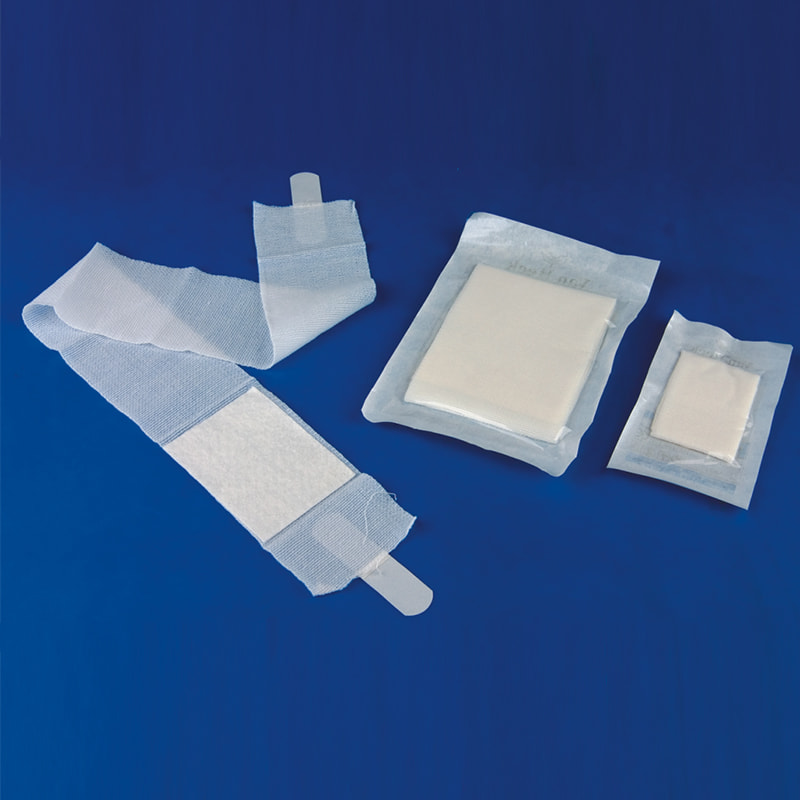
Wound care often begins at the moment when speed, cleanliness, and confidence matter most. Whether a dressing is being applied in a first aid kit, a workplace clinic, a hospital emergency area, a sports facility, or a household, the first covering must be practical, sterile, secure, and gentle to the injured area. Wound Rapid Application Dressings are designed to support this essential stage of care by combining a sterile non-adherent wound pad with an extra-long, fast-edged conforming bandage in a folded, ready-to-use format.
The product range includes three pad sizes: SMD-210301 with a 4 cm x 6 cm pad, SMD-210302 with a 6 cm x 8 cm pad, and SMD-210303 with an 8 cm x 10 cm pad. The choice of sizes allows users to select an appropriate dressing for different wound dimensions while maintaining a consistent product concept across first aid and professional medical environments.
Unlike a simple gauze square that may require a separate roll of bandage, scissors, and adhesive tape, this dressing integrates the essential components needed for rapid wound coverage. The non-adherent pad is positioned over the wound, while the attached conforming bandage helps hold the dressing in place. Two pieces of plaster are also included to assist with securing and confirming the dressing after application.
For distributors, wholesalers, hospitals, first aid suppliers, retailers, and healthcare purchasing departments, this design offers a combination of convenience, product consistency, and broad application potential. For manufacturers and private-label buyers, it also represents a practical category product that can be incorporated into emergency kits, workplace first aid cabinets, sports first aid packs, travel kits, and general wound care ranges.
Wound Rapid Application Dressings
Understanding Wound Rapid Application Dressings
A rapid application dressing is a pre-arranged wound care product intended to reduce the number of separate components needed during the initial treatment of a wound. Conventional wound treatment may involve opening a sterile gauze pack, positioning the gauze, wrapping a bandage around the affected area, and using adhesive tape to secure the covering. Each additional step creates an opportunity for delay, contamination, incorrect positioning, or excessive handling.
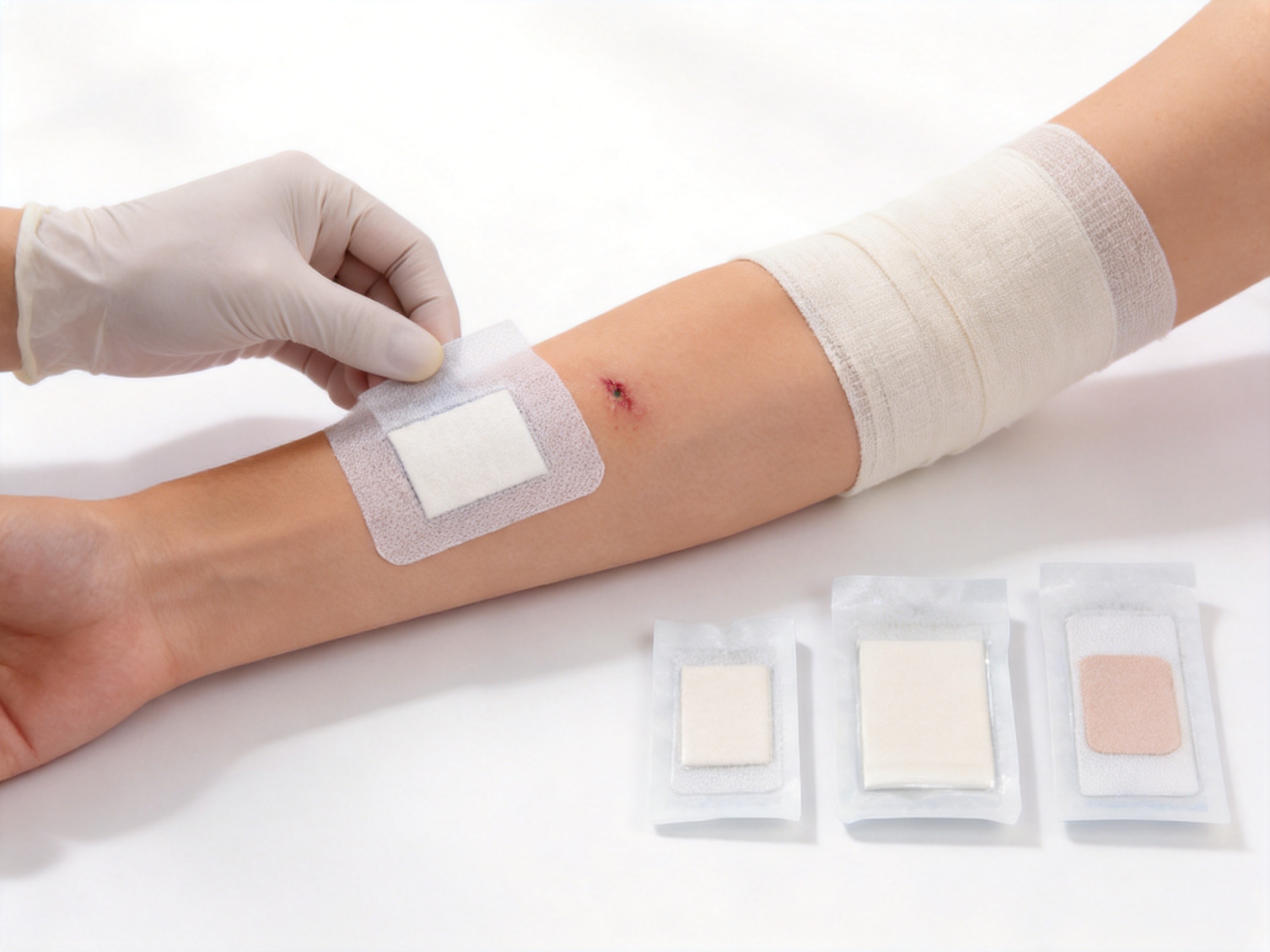
The Wound Rapid Application Dressings range simplifies this process. The dressing is sterile and includes a non-adherent pad attached to an extra-long conforming bandage. The folded construction supports quick opening and application. Once the pad is placed over the wound, the bandage can be wrapped around the relevant body part. The included plasters provide additional support and make it easier to confirm that the dressing has been fixed securely.
The design is especially useful when a wound needs to be covered immediately and the person applying the dressing has limited access to equipment. In first aid situations, the user may be working under pressure, wearing gloves, or assisting someone in an awkward position. A product that combines the pad and bandage can help reduce preparation time and make the dressing process more straightforward.
These dressings are intended for external wound coverage and first aid use. They should be applied according to appropriate first aid procedures, with attention to bleeding control, wound cleanliness, circulation, and the need for professional medical assessment. Severe bleeding, deep wounds, bites, burns, wounds involving foreign objects, and injuries affecting the eyes, face, joints, or major blood vessels require suitable medical attention.
Core Product Construction
Sterile Wound Contact Pad
The sterile pad is the part of the dressing placed directly over the wound. Sterility is an important feature for products used on broken skin because it supports hygienic wound coverage before further medical evaluation or healing. The pad is intended to create a protective barrier between the wound and the external environment while helping absorb wound exudate during the early stage of care.
The product description identifies the pad as non-adherent. This means the pad is designed to reduce unwanted attachment to the wound surface compared with ordinary absorbent materials that may adhere as exudate dries. Reduced adherence can make dressing removal more comfortable and may help minimize disruption to newly formed tissue. It can also make follow-up care easier when the dressing needs to be replaced.
Non-adherent performance is particularly valuable in first aid because users may not have access to specialized wound care products. A dressing that can be removed with less pulling or sticking is more user-friendly for households, sports teams, workplace responders, and caregivers. It also supports a more controlled change procedure when the wound requires inspection.
Extra-Long Conforming Bandage
The attached bandage is described as extra long and conforming. Its length provides flexibility during application, while its conforming structure is intended to follow the contours of the body. This is useful because wounds may occur on areas that are not flat, including the hands, arms, legs, elbows, knees, and other body regions where a rigid or short covering may not remain in position.
A conforming bandage can help distribute holding pressure across the dressing rather than concentrating pressure in one small area. Correct application remains important: the bandage should be secure but not so tight that it restricts circulation. Users should check the fingers or toes beyond the dressing when appropriate and seek professional guidance if numbness, discoloration, increasing pain, or swelling develops.
The bandage’s extra length can also make the product adaptable to different application techniques. A first aider may need to wrap around a limb, secure an area with movement, or accommodate a thicker underlying dressing. The same basic product can therefore support several common first aid situations without requiring a separate bandage roll.
Folded Ready-to-Use Format
The folded format contributes to the product’s rapid application concept. A neatly folded dressing is easier to package, store, distribute, and open in an emergency. It can be placed into first aid kits and cabinets without requiring a large amount of space, while the integrated components reduce the chance that the pad and bandage will become separated before use.
Product organization is important in emergency care. A first aid kit may contain many individual items, and users need to identify and retrieve a dressing quickly. A clearly presented rapid application dressing can help reduce search time and simplify stock management for organizations that maintain multiple first aid stations.
Two Pieces of Plaster
The inclusion of two pieces of plaster provides an additional securing option. After the bandage has been wrapped, the plasters can help hold the end in place or reinforce the dressing. They may also help users visually confirm that the dressing has been secured as intended.
This feature distinguishes the product from a basic sterile pad that must be secured with separately purchased tape or an additional bandage. By including securing materials within the product configuration, the dressing is better suited to environments where simplicity and completeness are priorities.
Available Sizes and Practical Selection
The range consists of three product codes. Each code corresponds to a defined pad size, allowing purchasing departments and distributors to organize inventory according to the needs of their customers.
| Product Code |
Pad Size |
Typical Use Considerations |
| SMD-210301 |
4 cm x 6 cm |
Small wounds and compact first aid applications |
| SMD-210302 |
6 cm x 8 cm |
Medium-sized wounds requiring broader coverage |
| SMD-210303 |
8 cm x 10 cm |
Larger wounds and applications requiring an expanded pad area |
The smallest size is suitable where a compact pad is sufficient and a smaller dressing profile is preferred. It can be useful in personal first aid kits, travel kits, school kits, and general household supplies. The medium size offers a balance between coverage and compactness and may be appropriate for many common minor injuries. The largest size provides a broader contact area for wounds that cannot be adequately covered by the smaller options.
Size selection should always be based on the wound and the surrounding body area rather than on convenience alone. The pad should fully cover the wound with an adequate margin of clean material around the injured area. Users should avoid placing the absorbent pad only partially over the wound, as incomplete coverage may reduce the protective value of the dressing.
For distributors, offering all three sizes can improve product range completeness. Customers may prefer a family of related products that uses the same packaging logic and product description while addressing different wound coverage requirements. Hospitals and first aid suppliers can also simplify procurement by purchasing a coordinated series rather than unrelated products from multiple sources.
Advantages Compared with Basic Dressing Components
Faster Preparation
A major advantage of the rapid application format is the reduction in preparation steps. With a conventional dressing method, the responder may need to locate sterile gauze, open it without contaminating the contact surface, position it, find a roll bandage, wrap the area, and locate adhesive tape. The integrated format brings several of these functions together in one item.
Fewer components can be particularly valuable during urgent first aid. A person who is bleeding may be anxious or moving, and a responder may need to use one hand to maintain pressure or support the injured person. A dressing that can be opened and applied efficiently may help the responder focus on the injury rather than on assembling materials.
Reduced Risk of Component Separation
When a wound pad, bandage, and tape are stored separately, one item may be missing, damaged, or difficult to locate. An integrated dressing reduces this risk by packaging the principal dressing elements together. This is helpful for emergency cabinets that are accessed frequently, mobile first aid kits that are transported between locations, and sports bags that may be exposed to repeated handling.
Integrated packaging also supports easier replenishment. After a product is used, the replacement requirement is clear: one rapid application dressing can replace the complete used unit. Inventory staff do not need to calculate whether enough gauze, bandage, and tape remain to create a complete dressing.
Gentler Wound Contact
The non-adherent pad is an important functional advantage over ordinary cotton or basic woven gauze when those materials may stick to the wound. A dressing that is less likely to adhere can improve the user experience during removal, particularly when a wound has begun to dry or when dressing changes are uncomfortable.
Non-adherent construction may also reduce the tendency to disturb the wound surface during replacement. It does not eliminate the need for careful removal, and it does not replace clinical assessment, but it provides a more wound-conscious approach than using unmodified absorbent material as the primary contact layer.
Secure Application Without a Separate Tape Roll
The conforming bandage and two included plasters provide a practical securing system. Separate medical tape may still be preferred in some clinical procedures, but the integrated components make the product more complete for general first aid. The user can place the pad, wrap the bandage, and use the plasters to help stabilize the dressing.
This is particularly advantageous in outdoor, sports, workplace, and travel situations where the available first aid equipment must be compact. The product can help reduce the number of loose items needed to cover a minor wound effectively.
Consistent Product Experience
A coordinated product series allows users to follow a repeatable application method across three sizes. Consistency is beneficial for organizations that train multiple first aid responders. Staff members can become familiar with the product construction and then select the appropriate size without learning an entirely different dressing system.
Consistency also benefits retailers and distributors. A product family with clear size variations is easier to explain, display, catalog, and reorder. The three product codes provide a straightforward structure for inventory systems, quotations, and private-label product development.
Applications Across First Aid and Healthcare Settings
Household First Aid
Homes commonly experience minor cuts, abrasions, puncture injuries, and injuries caused by kitchen tools, garden equipment, or household maintenance. A sterile rapid application dressing can be stored in a home first aid kit and used when an injury requires more coverage than a small adhesive bandage can provide.
The integrated format is useful for family members who may not have professional first aid experience. The dressing can be opened and placed over the wound without assembling a separate bandage system. Clear instructions and appropriate supervision should always be provided where necessary, especially when the injured person is a child or when the wound is more serious than a minor surface injury.
Workplace First Aid Stations
Workplaces may need to support employees in offices, warehouses, workshops, factories, construction environments, laboratories, and service industries. Different workplaces create different injury risks, but many require accessible dressings for cuts and abrasions. The product’s sterile pad, conforming bandage, and securing plasters make it a practical addition to workplace first aid cabinets.
In larger workplaces, standardizing the contents of first aid stations can improve purchasing efficiency and training. Employers can stock the three available sizes and establish internal guidance on selecting the appropriate pad size. Used products can be recorded and replenished as complete units, supporting more reliable readiness.
Sports and Recreation
Sports activities can result in abrasions, cuts, and contact injuries. A dressing for sports use must be practical to carry and quick to apply, as athletes may need care during training, competition, travel, or outdoor recreation. The conforming bandage can help the dressing follow body contours, while the integrated structure reduces the need to carry multiple loose supplies.
Sports first aid personnel should assess whether an injury requires more than a dressing. Significant bleeding, suspected fractures, head injuries, ligament injuries, and wounds contaminated by soil or water require suitable evaluation. The rapid application dressing is best understood as a first-response wound covering rather than a replacement for professional diagnosis or treatment.
Travel and Emergency Kits
Travel kits must balance usefulness with limited space. A folded dressing can be stored alongside adhesive bandages, antiseptic products, gloves, gauze, and other basic supplies. The three sizes allow travelers to prepare for different minor wound scenarios without carrying bulky rolls of separate material.
Emergency preparedness kits may also benefit from integrated dressings. During power outages, natural disasters, transport incidents, or remote outdoor activities, access to medical facilities may be delayed. A sterile, ready-to-use wound covering can provide an important temporary protective measure while professional assistance is being arranged.
Clinics, Pharmacies, and First Aid Suppliers
Clinics and pharmacies may stock the products for routine first aid sales or for use in treatment areas. First aid suppliers can include them in workplace kits, sports kits, travel kits, and customized emergency packs. The product series is suitable for channels that value practical packaging and simple size selection.
For wholesalers, the range can complement other medical consumables such as medical gauze, adhesive bandages, medical tape, cotton products, cohesive bandages, and personal protective equipment. Its positioning between a basic adhesive bandage and a more complex clinical dressing makes it relevant to a broad customer base.

Manufacturing and Quality Strengths
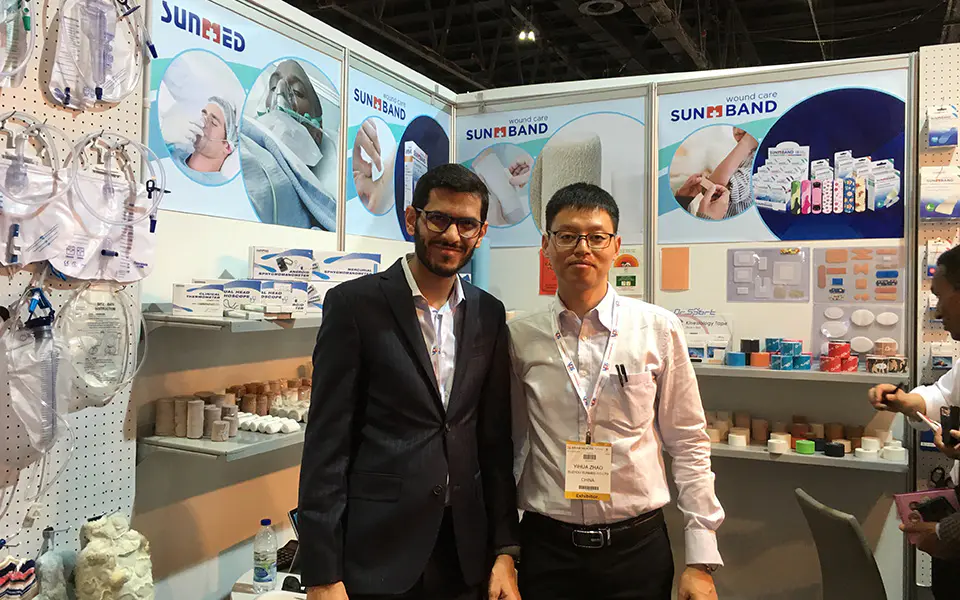
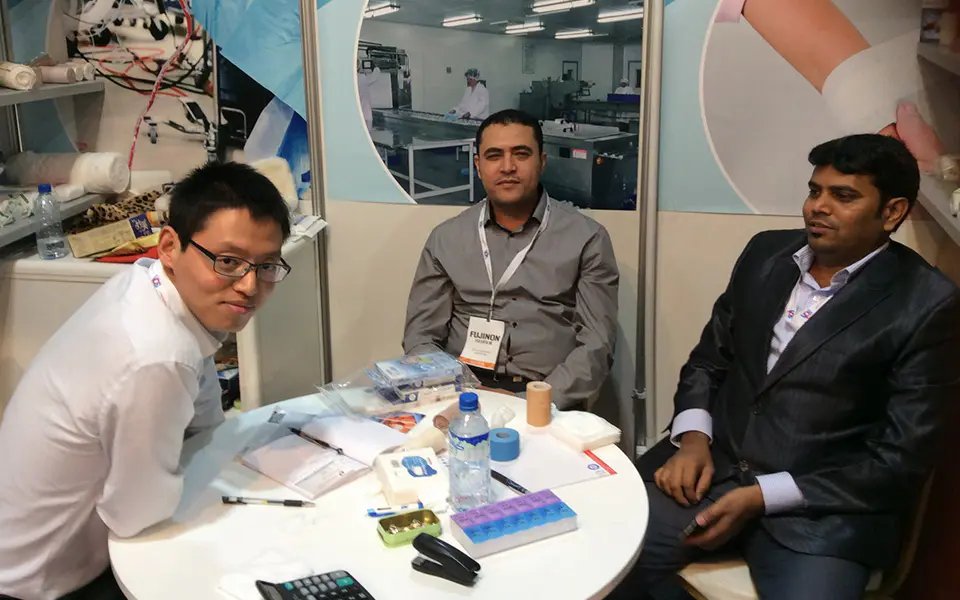
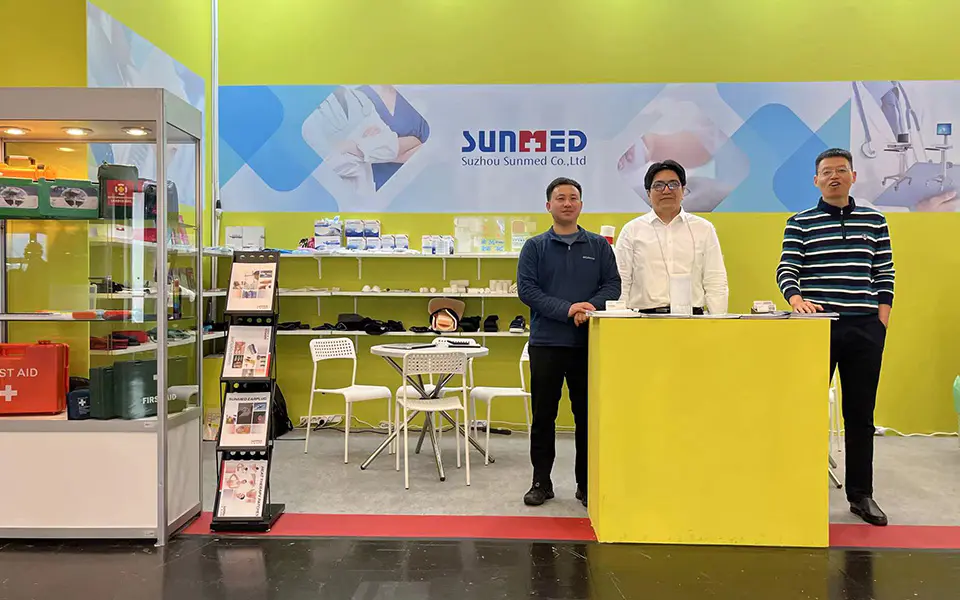
Product performance begins with manufacturing control. A wound dressing is not simply a textile item; it is a medical consumable that must be produced, packed, inspected, and supplied with attention to cleanliness, consistency, and regulatory expectations. Suzhou Sunmed Co., Ltd. presents itself as a professional manufacturer and exporter of first aid, medical, and healthcare products, with approximately 30 years of experience in the medical device and medical consumables industry.
The company operates multiple production bases in Jiangsu, Zhejiang, and Anhui Province. A multi-base manufacturing structure can support a broad product portfolio and provide production resources for different categories, including wound dressings, medical gauze, bandages, medical tape, cotton products, non-woven products, sports bandages, family healthcare products, and medical instruments.
This breadth is relevant to buyers seeking a long-term supplier. A customer interested in rapid application dressings may also need complementary products such as adhesive bandages, elastic adhesive bandages, cohesive wraps, first aid products, hot and cold therapy products, syringes, catheters, surgical consumables, or other medical supplies. A manufacturer with experience across these categories can support wider sourcing programs.
Quality Control Organization
According to the supplied company information, Sunmed has a professional quality control team comprising hundreds of personnel. The stated quality system follows inspection procedures designed to support compliance with ISO 13485:2016 standards. ISO 13485 is associated with quality management systems for medical devices and emphasizes controlled processes, documented procedures, risk-based thinking, traceability, and continual maintenance of product quality.
For a sterile dressing, quality control can involve many stages. Materials must be selected and received according to defined requirements. Production areas must be managed to reduce contamination risks. The pad and bandage must be assembled consistently, the package must protect the product, and finished units must be inspected before release. Documentation and batch control are also important for maintaining a reliable supply chain.
A substantial quality team can help divide responsibilities among incoming material inspection, production monitoring, finished product inspection, packaging checks, warehouse control, and documentation review. The exact inspection plan may vary by product and market, but a structured quality organization provides a foundation for stable manufacturing.
Medical Device Manufacturing Experience
Sunmed’s experience includes both medical equipment and medical consumables. This background is significant because medical consumables require attention to functional details that may not be visible at a glance. For a rapid application dressing, the pad must be correctly positioned, the bandage must be properly attached and folded, the package must remain intact, and the product must be suitable for its stated use.
Experience in related categories can also promote process knowledge. Manufacturers that produce gauze, bandages, tapes, cotton materials, non-woven products, and first aid items are familiar with the requirements of absorbency, softness, flexibility, cutting, folding, bonding, packaging, and product presentation. This category experience can support practical design decisions when developing or supplying integrated dressings.
Export and Market Experience
The company reports exports to more than 60 countries, including markets in Europe, Southeast Asia, Africa, and Oceania. International distribution requires awareness of different customer expectations, packaging requirements, product documentation, logistics procedures, and regulatory environments.
For buyers, export experience can make communication and order coordination more efficient. A supplier accustomed to serving hospitals, first aid suppliers, supermarkets, and retail sports shops may understand that each channel has different priorities. Hospitals may focus on documentation and reliable replenishment. Retailers may prioritize packaging and shelf presentation. Sports distributors may emphasize portability and practical application. Wholesalers may focus on product range, order quantities, and delivery planning.
Certifications and Regulatory Awareness
The supplied information states that most of the company’s products are CE certified and that its Suzhou factories comply with FDA requirements. Certification and regulatory status can vary by individual product, destination market, and intended use, so buyers should request the relevant documentation for the specific Wound Rapid Application Dressing model and sales region.
Regulatory awareness is nevertheless an important supplier strength. Medical product buyers need more than a product photograph and a brief description. They may require technical files, declarations, certificates, packaging information, sterilization details, labeling data, shelf-life information, and quality records. A supplier familiar with international medical product channels is better positioned to discuss these requirements during procurement.
Manufacturing Process Considerations for Rapid Application Dressings
The following process overview explains the manufacturing controls that are important for this type of product. Exact production parameters are determined by the manufacturer’s validated procedures, equipment, materials, and regulatory obligations.
Material Preparation
Production begins with the preparation and inspection of the pad material, bandage material, securing components, packaging materials, and labeling materials. Each material should be identified and controlled before entering production. Proper material management helps prevent mix-ups between product sizes and ensures that the correct components are used for each product code.
For a three-size product series, product identification is especially important. The pad dimensions for SMD-210301, SMD-210302, and SMD-210303 must correspond to the relevant specifications. Clear work instructions, line clearance, and inspection records can help reduce the risk of incorrect size combinations.
Pad Cutting and Preparation
The pad must be prepared to the specified dimensions, with edges and surface condition controlled according to the product design. Consistent cutting supports predictable coverage and helps the product maintain a professional appearance. The pad should also be free from visible foreign matter and defects that could affect use.
Inspection may include dimensional checks, visual examination, material verification, and sampling according to the manufacturer’s quality plan. These controls are important because small variations can affect the fit of the pad over the wound or the way it aligns with the attached bandage.
Bandage Conversion and Folding
The conforming bandage is prepared, cut, and folded into the specified format. The extra-long design must be managed so that the bandage remains practical to unwrap and apply. Folding should preserve the product’s readiness while preventing unnecessary tangling or distortion inside the package.
Production personnel may verify the bandage length, width, edge condition, elasticity or conforming behavior, attachment position, and fold sequence. Controlled folding is especially important for a product marketed as rapid application because poor folding could delay use or make the product difficult to handle.
Assembly of the Pad and Bandage
The pad and bandage are assembled into one dressing according to the approved design. The attachment must be strong enough to maintain the relationship between the pad and bandage during handling, opening, and application. At the same time, the pad must remain correctly positioned so that the user can place it over the wound without unnecessary adjustment.
Assembly inspection may confirm alignment, attachment integrity, pad dimensions, bandage orientation, and the presence of the two plasters. These details are simple in appearance but central to the usability of the final product.
Sterilization and Sterile Barrier Protection
The product is identified as sterile. Sterility depends not only on the sterilization process but also on product preparation, packaging, validated process conditions, sterile barrier integrity, storage, and handling. A medical manufacturer must establish appropriate procedures for the relevant sterilization method and verify that the finished pack maintains protection throughout its claimed shelf life.
Packaging plays a critical role. The sterile barrier should protect the dressing from contamination and physical damage under expected transportation and storage conditions. Finished packs may be inspected for seal quality, package integrity, correct labeling, and visible defects. Buyers should obtain product-specific information about sterilization method, shelf life, storage conditions, and packaging validation.
Final Inspection and Release
Before products are released, finished units may undergo checks for appearance, dimensions, component completeness, packaging, label accuracy, and batch information. Sampling plans and acceptance criteria should be defined within the manufacturer’s quality system. Nonconforming products should be identified and controlled rather than mixed with conforming stock.
Batch traceability supports responsible supply management. If a question arises about a particular shipment, the manufacturer and buyer should be able to identify the relevant production information. This is especially important for medical consumables distributed through multiple countries and channels.
Packaging, Storage, and Distribution
Correct storage is essential for maintaining dressing quality. Sterile products should generally be kept in a clean, dry environment and protected from excessive heat, moisture, direct sunlight, dust, compression, and sharp objects that could damage the packaging. The product should remain in its original packaging until needed.
Warehouse teams should use stock rotation principles so that earlier-received products are distributed appropriately. Packaging should be inspected before dispatch and upon receipt. If a sterile package is torn, punctured, wet, open, or otherwise compromised, the product should not be used as a sterile dressing.
Distribution packaging should be selected to protect the individual sterile packs during handling and transportation. Carton labeling should support product identification, size differentiation, quantity verification, and batch tracking. For international orders, outer cartons and shipping documents should be coordinated with the buyer’s import and regulatory requirements.
Retail packaging may also influence product success. Customers need to understand that the product is sterile, identify the pad size, and recognize how the dressing differs from a basic plaster or gauze pad. Clear product naming and consistent presentation across the three codes can improve shelf navigation and reduce selection errors.
Advantages for Wholesale and OEM Buyers
Broad Product Category Compatibility
Sunmed’s stated product portfolio covers first aid, wound care, gauze, medical tape, cotton products, sports support, family healthcare, medical diagnostic devices, infusion products, blood collection and transfusion products, surgical instruments, patient transfer products, and other medical consumables. This broad category experience can be valuable for buyers attempting to consolidate suppliers.
A distributor may be able to combine rapid application dressings with related products in one sourcing program. Such coordination can reduce the administrative effort associated with managing many small suppliers and can help create complete product assortments for hospitals, retailers, workplace safety programs, and sports organizations.
Support for Private-Label Programs
The product structure is suitable for private-label discussion because the three product codes are clearly differentiated by pad size. Buyers may request information about packaging formats, labeling, carton quantities, languages, branding requirements, and market-specific documentation. Any private-label project should be reviewed against the applicable regulatory and quality requirements of the intended market.
Private-label customers may also benefit from the ability to build a related range. For example, the rapid application dressings can be positioned alongside adhesive bandages, sterile gauze, medical tape, cohesive wraps, and sports first aid items. A consistent range can strengthen brand recognition and give buyers more options for different wound care situations.
Supply Reliability and Communication
A long-established manufacturer with production bases and international export experience can provide a useful foundation for ongoing supply. Buyers should still confirm production lead times, minimum order quantities, sample procedures, packaging specifications, shipping terms, quality documents, and after-sales procedures before placing an order.
Effective communication is particularly important for medical products. Product codes, pad sizes, sterilization status, labeling, packaging artwork, and destination requirements should be confirmed in writing. Sunmed provides sales contact details for commercial inquiries, enabling buyers to discuss these matters directly with the supplier.
Proper Application Principles
Before applying the dressing, the responder should assess the situation and use appropriate personal protective equipment, such as disposable gloves, when available. The dressing should be selected according to the wound size and opened carefully. The pad should be placed over the wound without touching the wound-contact surface unnecessarily.
The conforming bandage should then be wrapped around the affected area to hold the pad in position. It should be secure but not excessively tight. The two plasters can be used to help secure the bandage end or reinforce the dressing. After application, the responder should observe the dressing for excessive soaking, slippage, and signs that circulation may be impaired.
First aid dressings do not replace bleeding control procedures. Direct pressure may be necessary for active bleeding, and emergency medical assistance should be requested when bleeding is heavy, persistent, spurting, or associated with a serious injury. If blood soaks through the dressing, an additional dressing may be placed over the first one rather than removing a dressing that has become attached during active bleeding, unless professional guidance indicates otherwise.
The dressing should be changed or professionally assessed according to the wound’s condition. Users should monitor for increased redness, swelling, warmth, worsening pain, pus, fever, red streaking, or other signs that may indicate infection. Individuals with diabetes, poor circulation, immune system conditions, or other health concerns may require earlier professional care for wounds that appear minor.
How the Product Compares with Alternative Formats
Small adhesive bandages are convenient for minor superficial wounds, but they may not provide enough pad area or wrapping support for larger injuries. Wound Rapid Application Dressings offer a broader wound pad and a conforming bandage, making them more suitable when a simple strip bandage is insufficient.
Loose sterile gauze is flexible and widely used, but it normally requires separate securing materials. A rapid application dressing combines the wound pad with the bandage and includes two plasters. This can make it easier to use in environments where speed and completeness are more important than assembling a customized dressing.
Traditional roller bandages can provide adaptable wrapping, but they may require a separate dressing pad. The integrated product reduces the need to choose and coordinate two components. It can therefore be more accessible to occasional first aid users and more efficient for pre-packed kits.
Highly specialized clinical dressings may include advanced materials for particular wound conditions. Those products have their own indications and should be selected by healthcare professionals. The Wound Rapid Application Dressings range is positioned as a practical sterile first aid dressing for prompt wound coverage, not as a substitute for every advanced wound management product.
Product Benefits at a Glance
The product combines several functional benefits in one format. It is sterile for hygienic first aid use, includes a non-adherent wound contact pad, and uses an extra-long conforming bandage for flexible fixation. Its folded structure supports rapid opening, while two plasters help with securing and confirmation.
The three available sizes allow users to match the dressing to different wound coverage needs. The product can be stored in homes, workplaces, sports facilities, travel kits, medical supply cabinets, pharmacies, clinics, and emergency preparedness packs. Its integrated construction may reduce the need for separate gauze, roller bandage, and tape components.
For professional buyers, the product is supported by a manufacturer with stated experience in medical consumables, multiple production bases, an extensive quality control organization, international export experience, and a broad portfolio of related products. These strengths can support both individual product procurement and wider category sourcing.
Q&A
What are Wound Rapid Application Dressings?
They are sterile first aid dressings that combine a non-adherent wound pad with an extra-long conforming bandage in a folded, ready-to-use format. Two pieces of plaster are included to help secure the dressing.
What sizes are available?
There are three sizes: SMD-210301 has a 4 cm x 6 cm pad, SMD-210302 has a 6 cm x 8 cm pad, and SMD-210303 has an 8 cm x 10 cm pad.
What does non-adherent mean?
Non-adherent means the pad is designed to reduce unwanted sticking to the wound compared with ordinary absorbent materials. This can make dressing removal more comfortable and may help reduce disturbance to the wound surface.
Why is the bandage described as conforming?
A conforming bandage is designed to follow the contours of the body and help hold the wound pad in position. It can be wrapped around areas such as limbs and joints, although it must not be applied so tightly that circulation is restricted.
Are the dressings suitable for serious injuries?
They can provide temporary coverage during first aid, but serious injuries require professional medical assessment. Heavy bleeding, deep wounds, burns, animal bites, embedded objects, suspected fractures, and injuries involving sensitive areas should be referred to appropriate emergency or medical services.
Can the dressing be used without separate medical tape?
The product includes a conforming bandage and two pieces of plaster to help secure the dressing, so separate tape may not be necessary for many basic applications. The exact securing method depends on the wound location and the user’s first aid procedure.
Who can purchase these products?
The range is suitable for hospitals, first aid suppliers, wholesalers, pharmacies, retailers, workplace safety programs, sports organizations, and other buyers of medical consumables. OEM and private-label requirements should be discussed directly with the manufacturer.
What information should buyers request before ordering?
Buyers should confirm the product code, pad size, sterile status, packaging configuration, labeling language, shelf life, storage requirements, sterilization information, applicable certificates, minimum order quantity, production lead time, shipping terms, and destination-market documentation.
What manufacturing experience does the supplier have?
Suzhou Sunmed Co., Ltd. describes itself as a professional manufacturer and exporter with approximately 30 years of experience in medical devices and medical consumables. Its stated portfolio includes first aid, wound care, gauze, bandages, tapes, cotton products, sports support products, family healthcare products, medical instruments, and other healthcare supplies.
Does the company support international markets?
The supplied company information states that products have been exported to more than 60 countries across Europe, Southeast Asia, Africa, and Oceania. Buyers should request product-specific export and regulatory documentation for their intended market.
How should the dressing be stored?
It should remain in its original packaging and be stored in a clean, dry place away from excessive heat, moisture, direct sunlight, dust, and physical damage. A sterile dressing with compromised packaging should not be used as a sterile product.
Conclusion
Wound Rapid Application Dressings provide a practical answer to a common first aid requirement: covering a wound quickly with a sterile and secure dressing while reducing the number of separate components needed. The non-adherent pad supports more comfortable removal, the extra-long conforming bandage helps adapt the dressing to body contours, and the two included plasters provide an additional securing option.
The three product codes cover pad sizes from 4 cm x 6 cm to 8 cm x 10 cm, enabling users and purchasing departments to select an appropriate size for different wound coverage needs. The range is suitable for household kits, workplaces, sports facilities, travel supplies, pharmacies, clinics, first aid distributors, and broader medical consumables programs.
Its advantages are strengthened by the supplier’s stated manufacturing background. Suzhou Sunmed Co., Ltd. has approximately 30 years of experience in the medical device and healthcare product industry, operates production bases in several Chinese provinces, maintains a large quality control organization, follows inspection procedures aligned with ISO 13485:2016 standards, and serves customers in more than 60 countries. Its broad portfolio may also help buyers source complementary first aid and medical products from one experienced supplier.
When selecting a wound dressing, product design, sterile protection, usability, quality control, documentation, and supply capability should all be considered together. Wound Rapid Application Dressings bring these practical considerations into a compact product format designed for efficient first response and dependable wound coverage.
References
1. Product specification information for Wound Rapid Application Dressings, product codes SMD-210301, SMD-210302, and SMD-210303.
2. Company profile and manufacturing information supplied by Suzhou Sunmed Co., Ltd.
3. ISO 13485:2016, Medical Devices — Quality Management Systems — Requirements for Regulatory Purposes.
4. General first aid principles for external bleeding control, wound coverage, dressing application, and circulation monitoring.
5. General medical device packaging, sterile barrier, storage, traceability, and quality control practices.

 English
 Español
 русский
 Français
 Deutsch
 italiano
 By Admin