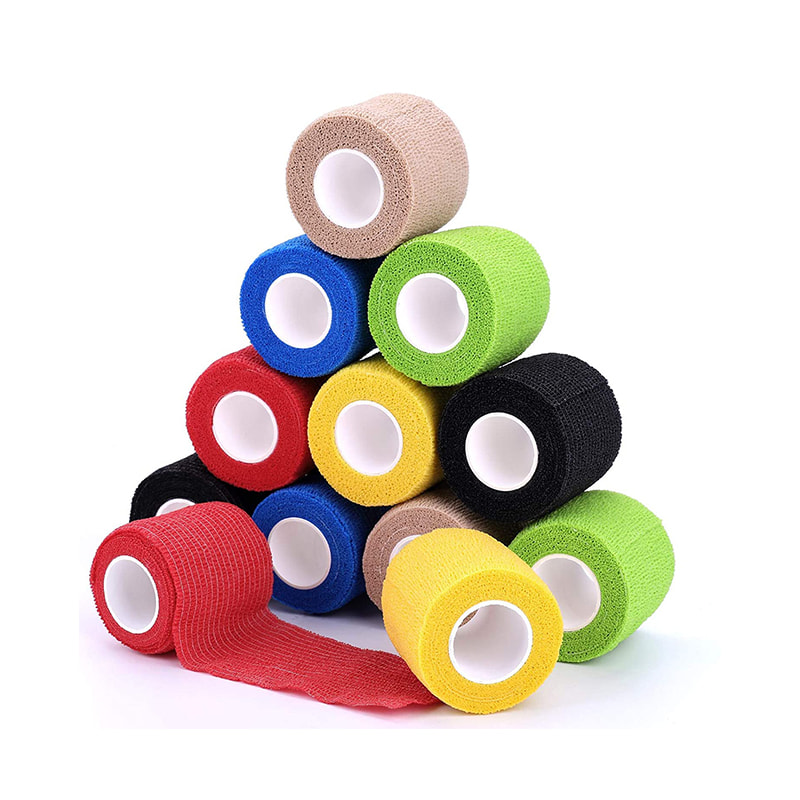
Waterproof first aid sports cohesive bandages are designed to provide practical support, controlled compression, wound coverage, and secure fixation without the need for clips, pins, or adhesive contact with the skin. They are widely used in sports medicine, first aid, nursing, family healthcare, rehabilitation, and everyday injury management. By wrapping around itself, a cohesive bandage can remain securely positioned while helping users protect dressings, stabilize soft tissue, and manage minor bleeding.
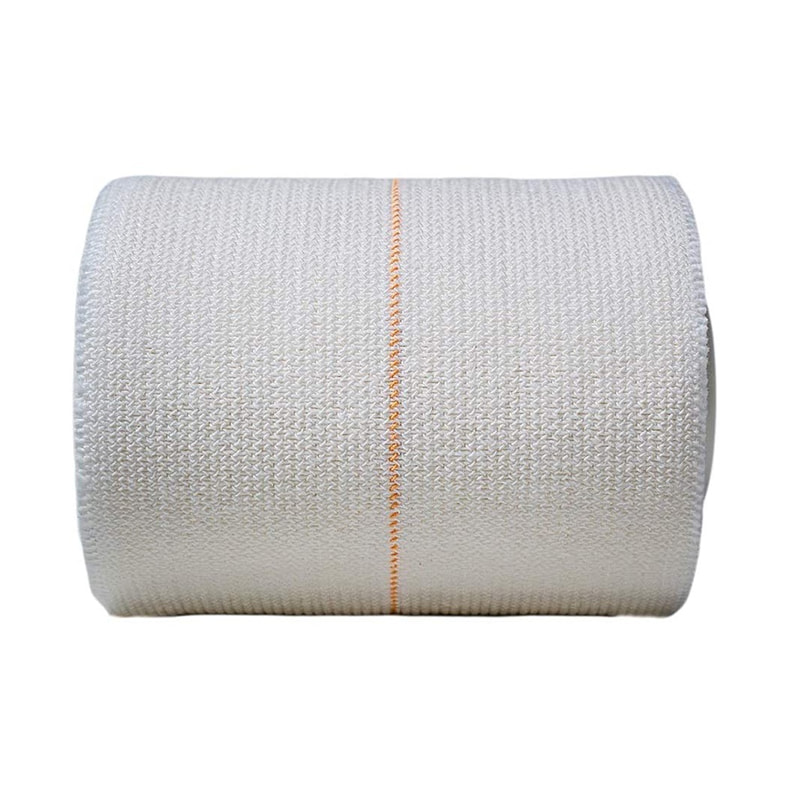
The Waterproof First Aid Sports Cohesive Bandage described in this article is a self-adhesive bandage wrap made from cotton or non-woven material. Its special adhesive coating is formulated to stick to the bandage itself rather than directly to skin or hair. This feature creates an important advantage for users who need secure fixation but want to minimize discomfort during application and removal.
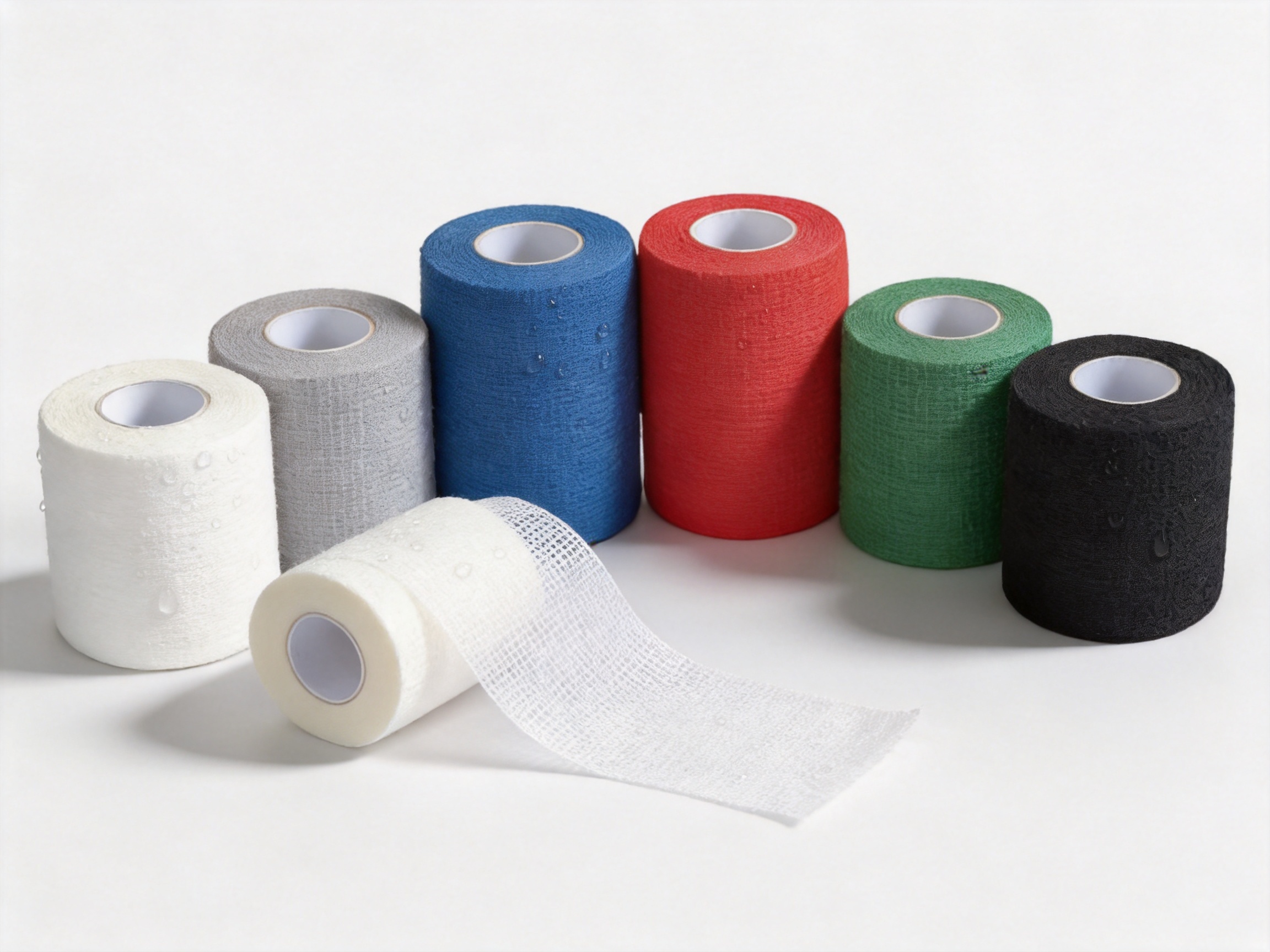
The product combines stretchability, breathability, water resistance, comfortable handling, and convenient tear-by-hand application. It is available in several widths, offered in a 4.5-meter roll length, and can be produced in a range of colors and configurations. The material may be supplied in latex-free or latex-containing versions, depending on application requirements and customer specifications.
For medical distributors, sports retailers, first aid suppliers, hospitals, and original equipment manufacturing customers, this cohesive bandage offers a flexible platform for different markets. It can be supplied in cotton or non-woven formats, individually wrapped for hygiene and storage, and configured in multiple sizes to meet diverse clinical and consumer needs.
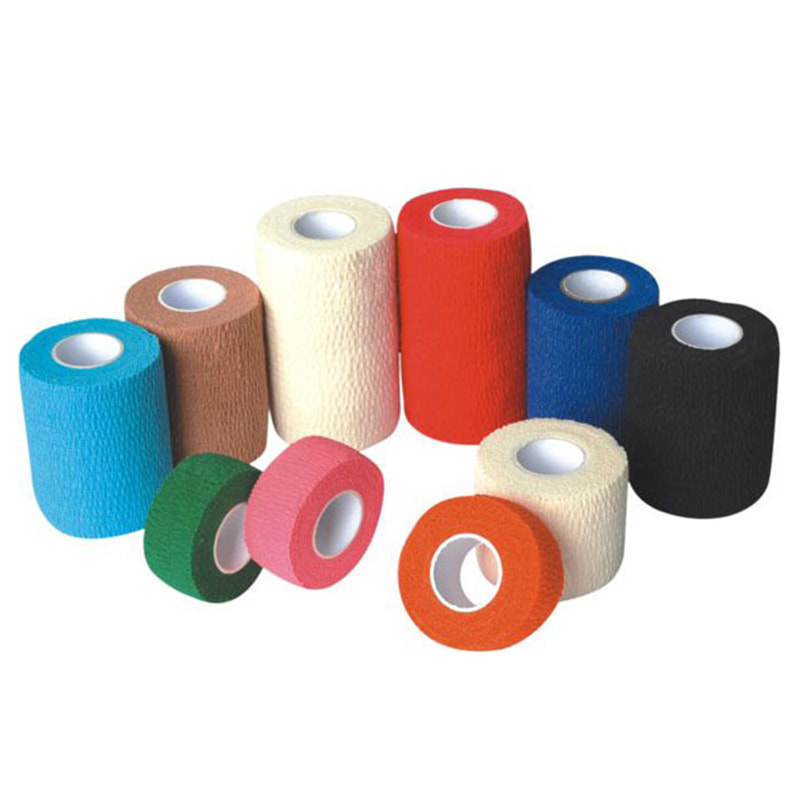
Waterproof First Aid Sports Cohesive Bandage
What Is a Cohesive Sports Bandage?
A cohesive sports bandage is a self-adhering elastic wrap that bonds to itself when overlapped. Unlike conventional adhesive tape, it does not normally require direct adhesive contact with the skin. Unlike a traditional elastic bandage, it does not depend entirely on clips or fasteners to remain in position.
When wrapped with suitable tension, the bandage can provide support and compression around limbs, joints, dressings, and other body areas. It can be used to secure gauze, wound pads, cold packs, and other first aid materials. In sports settings, it is commonly considered for support around wrists, ankles, knees, elbows, fingers, and other areas requiring light stabilization or dressing retention.
The cohesive action is created by a specialized glue coating applied to the bandage surface. The coating allows overlapping layers to adhere to one another while helping prevent excessive attachment to body hair or skin. This makes the wrap convenient for repeated first aid procedures and for users who may be sensitive to conventional medical adhesives.
Although the bandage is easy to use, it should be applied by trained personnel when it is being used for compression, bleeding control, or support of an injured body part. The wrap should not be applied so tightly that it causes numbness, discoloration, coldness, increasing pain, or impaired circulation.
Core Product Characteristics
Self-Adhesive Fixation
The principal feature of the product is its self-adhesive construction. The bandage adheres to itself through overlapping layers, helping it remain in position during movement. This reduces dependence on metal clips, hook-and-loop closures, pins, or separate fixation tape.
Self-adhering fixation is especially useful when a user needs to work quickly. In an emergency kit, sports bag, clinic, or workplace first aid station, the bandage can be torn, wrapped, and secured with minimal preparation. The user does not need scissors for ordinary applications, and the wrap can be adjusted during application.
Waterproof Performance
The waterproof feature helps the wrap maintain practical performance when exposed to water or moisture. This is beneficial for outdoor sports, athletic training, physical work, household first aid, and situations in which the user may wash hands or encounter perspiration after application.
Water resistance can help protect the wrapped area and support the integrity of the bandage during short-term exposure to moisture. It also contributes to product versatility in environments where a conventional paper-based or less resistant wrap may become weak, lose shape, or require replacement.
Waterproof performance should be understood in relation to the specific application and product specification. The bandage is not a substitute for a sterile wound dressing when a wound requires sterile protection, and it should not be used to create an airtight or watertight seal over a wound unless the application has been clinically evaluated for that purpose.
Stretchability and Controlled Compression
The product has a strong stretching ability that allows the user to adapt the wrap to different body contours. Stretchability is important because wrists, ankles, fingers, and other anatomical areas are not flat or uniform. A flexible bandage can follow the shape of the body and provide more consistent coverage than a rigid material.
When applied correctly, the elastic structure can support controlled compression. Compression may be useful for securing a dressing, helping hold a cold pack in place, or supporting a soft tissue area. The actual level of compression depends on the material, width, overlap, stretch percentage, wrapping technique, and number of layers.
Because compression must be controlled, users should avoid excessive stretching. A cohesive wrap should be applied smoothly and comfortably, with circulation checked after application. Professional medical guidance is recommended for significant swelling, suspected fracture, severe sprain, uncontrolled bleeding, or injuries requiring immobilization.
Breathable Cotton Structure
The cotton version has a porous texture that allows air permeability and provides a soft, comfortable feel. Breathability can improve user comfort during extended wear by helping reduce the sensation of heat and trapped moisture beneath the wrap.
Cotton is familiar to consumers and healthcare professionals because of its soft hand feel and natural textile character. It can be suitable for sports support, first aid kits, dressing retention, and general household healthcare applications where comfort is important.
The non-woven version provides an alternative material option. Non-woven construction can offer a different balance of softness, strength, cost, and production flexibility. It is suitable for customers who prefer a synthetic or non-textile format or who require specific private-label product configurations.
Hypoallergenic Design Option
The product is described as hypoallergenic, supporting its use for customers who want a skin-conscious bandage solution. Since individual sensitivities vary, a small-area test may be appropriate for users with a history of skin reactions. Product labeling should accurately identify the material, adhesive, latex status, and intended use.
The availability of latex-free versions is particularly important for healthcare facilities, sports organizations, workplaces, and retailers that maintain latex-reduction policies. Latex-containing versions may also be available where permitted and where the customer specifically requires them. This flexibility allows distributors to select a configuration aligned with market regulations and user expectations.
Easy Lateral Tearing
The bandage can be torn laterally by hand. This feature reduces the need for scissors and helps speed up application in mobile or emergency situations. It is useful for athletic trainers working beside a playing field, first aid providers assisting at an event, and families using the product at home.
Hand tearing also makes it easier to control the final length of the wrap. The user can apply the required amount without automatically using a full roll or leaving a long loose end. Correct tearing and secure overlapping help reduce waste and improve the neatness of the finished application.
Individual Wrapping
Each roll can be individually wrapped to support hygiene, storage, handling, and distribution. Individual packaging helps protect the product before use and allows hospitals, pharmacies, retailers, and first aid suppliers to manage inventory more efficiently.
Individually wrapped rolls are convenient for emergency kits and professional medical supply cabinets. They can also support private-label packaging programs in which customers require their own product identification, barcodes, language panels, or retail presentation.
Advantages Over Conventional Bandage Solutions
Compared with Ordinary Adhesive Tape
Conventional adhesive tape generally attaches directly to the skin, hair, dressing, or another surface. Although this can provide firm fixation, removal may be uncomfortable, especially when the tape adheres to body hair or fragile skin. Some users may also be concerned about adhesive residue.
A cohesive bandage avoids many of these issues because its adhesive coating is intended to bond to itself. The wrap can be secured by overlapping layers rather than by pressing adhesive directly onto the skin. This makes it a practical alternative for people who want strong fixation with a gentler removal experience.
The cohesive structure also allows the bandage to be repositioned during application. Conventional tape may lose adhesion when removed and reapplied, whereas a properly handled cohesive wrap can be adjusted by managing the overlap and tension.
Compared with Traditional Gauze Rolls
Plain gauze is primarily used for wound coverage, absorption, or padding. It may require separate tape, clips, or another fastening method to remain in position. A cohesive bandage can act as an outer securing layer for gauze and dressings, reducing the number of separate products needed for a basic first aid application.
The cohesive wrap does not replace absorbent gauze when fluid management is required. Instead, it complements gauze by helping hold the dressing in place. This combination can simplify first aid procedures and reduce the risk of a dressing shifting during movement.
Compared with Elastic Bandages with Clips
Traditional elastic bandages are often supplied with clips or fasteners. These components can be misplaced, may require two hands to use, and can create pressure points if applied incorrectly. A self-adhering wrap remains secured through its own overlapping layers, which can make application faster and more convenient.
The absence of separate clips can also improve inventory management. Distributors and users handle one integrated product rather than a roll plus additional fastening accessories. This can be useful in sports kits, ambulances, clinics, workplaces, and household medical cabinets.
Compared with Non-Stretch Wraps
Non-stretch wraps may not conform as easily to joints or curved body areas. A stretchable cohesive bandage can adapt more naturally to changes in body shape and movement. Its flexibility may also help reduce wrinkling when the wrap is applied carefully.
Stretchability does not mean that the bandage should be pulled as tightly as possible. Its advantage lies in controlled, even application. The user can adjust tension according to the required support, the body area, and the medical direction provided.
Applications in Sports and Athletic Care
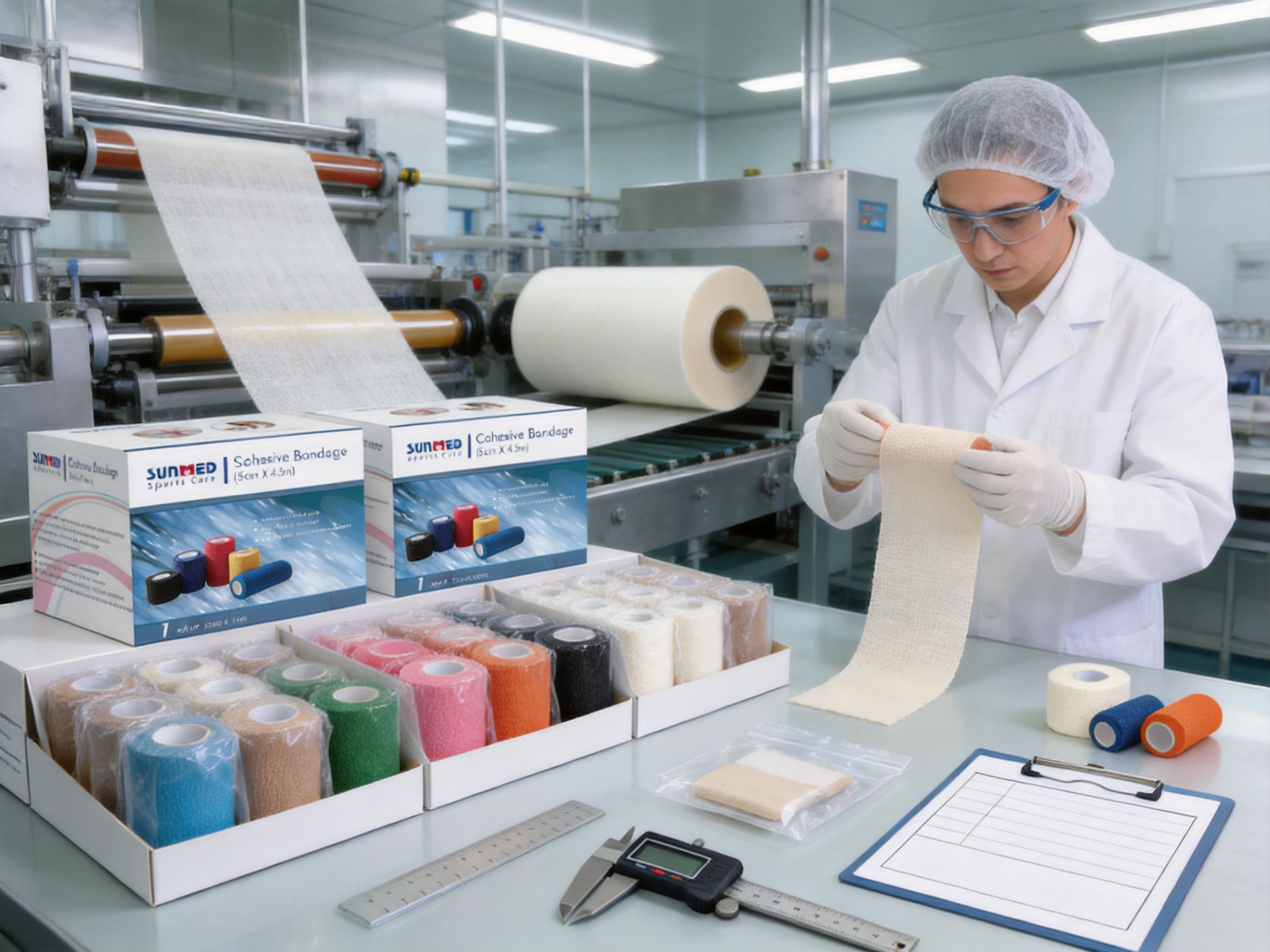
Sports teams, fitness centers, athletic trainers, schools, and outdoor activity groups frequently require compact products that are fast to apply and easy to carry. A cohesive sports bandage fits these requirements because it is lightweight, individually wrapped, tearable by hand, and available in several widths.
The wrap can be used to secure a protective pad, hold a dressing over a minor wound, support a cold pack, or provide light compression after an appropriate assessment. It may also be used as part of a broader sports first aid system that includes gauze, wound dressings, medical tape, ice packs, protective gloves, and disinfecting products.
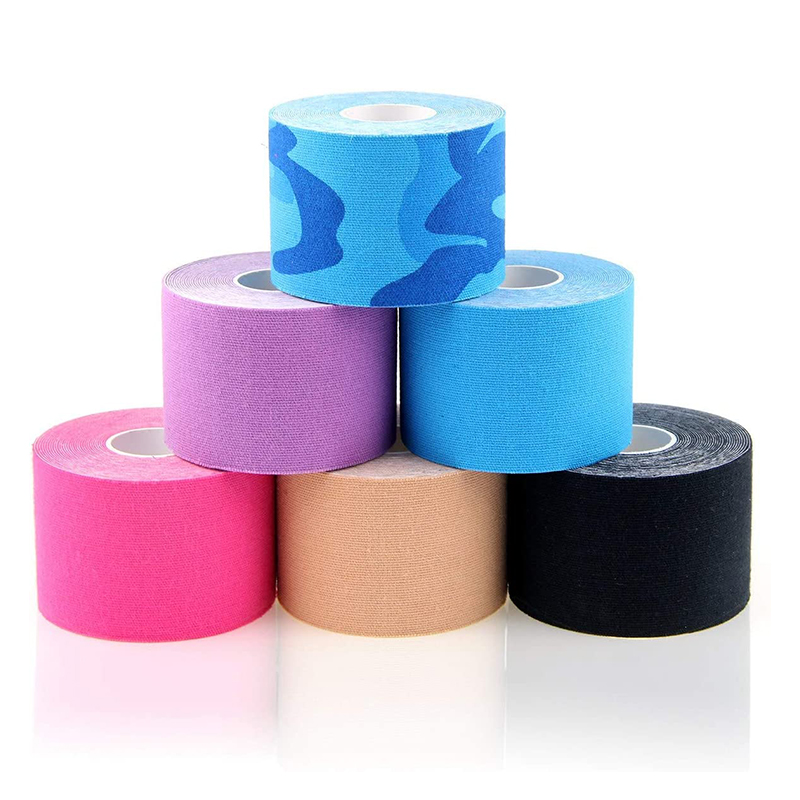
Color options can be useful in sports environments. Teams may select colors that match uniforms, support quick visual identification, or distinguish different first aid kits. Retailers can also offer multiple colors to appeal to athletes, families, trainers, and younger consumers.
For outdoor activities, waterproof performance and individual wrapping can be especially valuable. Hiking groups, cycling teams, runners, and recreational athletes may encounter perspiration, rain, or wet equipment. A water-resistant self-adhering wrap can remain a practical part of an emergency kit in these conditions.
When used for an athletic injury, the bandage should not conceal symptoms that require medical examination. Severe pain, deformity, inability to bear weight, rapidly increasing swelling, loss of sensation, or suspected fracture requires professional assessment rather than reliance on a wrap alone.
First Aid and Wound Care Applications
The product can be used to apply pressure over a wound dressing to help control minor bleeding. A sterile absorbent dressing or gauze pad should be placed over the wound as appropriate, and the cohesive bandage can then help maintain pressure and hold the dressing in place.
For bleeding that is heavy, persistent, spurting, or associated with a serious injury, emergency medical services should be contacted. The cohesive bandage is a support product and should not delay urgent medical care.
In household first aid, the wrap can help secure gauze on areas where ordinary tape is difficult to use. Fingers, wrists, ankles, and curved body areas can present challenges for conventional tape. A flexible self-adhering format can make it easier to complete a neat wrap without excessive adhesive contact.
In clinical settings, the product may support dressing retention, light compression, and temporary fixation. Healthcare professionals should select the appropriate size and material for the patient, confirm circulation after application, and follow facility protocols for wound care and infection prevention.
Available Materials and Size Range
The product is available in cotton and non-woven material options. Cotton provides a soft, breathable textile feel, while non-woven material offers an alternative construction for customers with different performance, cost, or sourcing requirements.
| Item Number |
Width |
Roll Length |
Material |
Typical Product Positioning |
| SMD-310501 |
2.5 cm |
4.5 m |
Cotton |
Finger, small-area, and compact first aid applications |
| SMD-310502 |
5.0 cm |
4.5 m |
Cotton |
General sports support and dressing retention |
| SMD-310503 |
7.5 cm |
4.5 m |
Cotton |
Broader limb and athletic support applications |
| SMD-310504 |
10.0 cm |
4.5 m |
Cotton |
Large-area coverage and compression applications |
| SMD-310601 |
2.5 cm |
4.5 m |
Non-woven |
Compact first aid and small-area applications |
| SMD-310602 |
5.0 cm |
4.5 m |
Non-woven |
General medical and sports applications |
| SMD-310603 |
7.5 cm |
4.5 m |
Non-woven |
Broader support and dressing fixation |
| SMD-310604 |
10.0 cm |
4.5 m |
Non-woven |
Large-area wrapping and compression applications |
The 2.5-centimeter width is suitable for smaller areas and compact kits. The 5.0-centimeter size is a versatile general-purpose option. The 7.5-centimeter and 10.0-centimeter widths provide broader coverage and may be preferred for larger limbs or applications requiring a wider support layer.
Actual suitability depends on the user, body area, wrapping technique, and intended purpose. Customers should confirm technical specifications, packaging details, latex status, and regulatory requirements before placing a commercial order.
Manufacturing Process and Quality Considerations
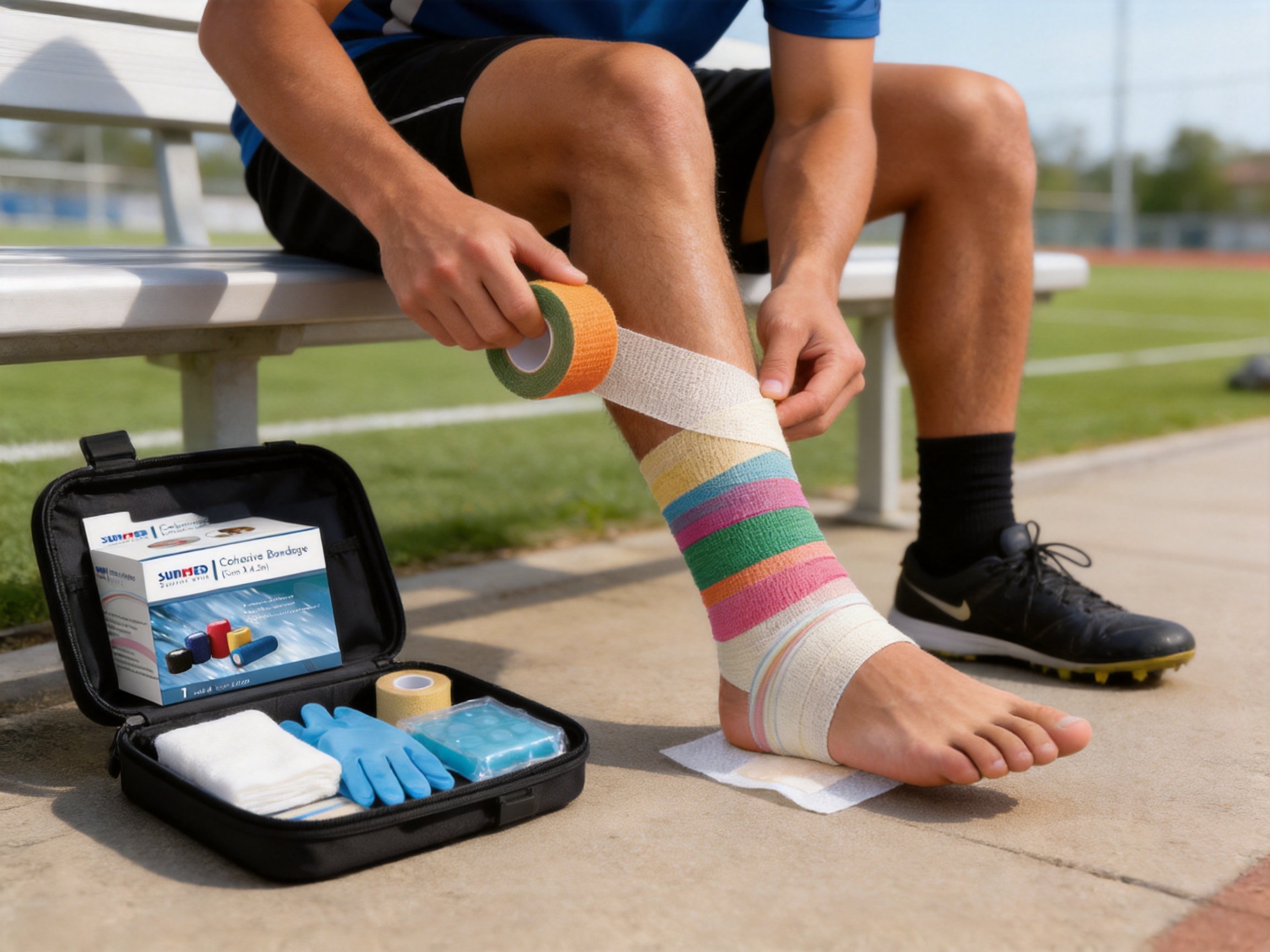
Reliable cohesive bandage performance depends on more than the choice of fabric. The material, adhesive, coating uniformity, elasticity, slitting, winding, packaging, and inspection process must work together. A weakness in any one stage can affect the user experience.
Material Selection
Manufacturing begins with the selection and verification of cotton or non-woven substrate materials. Key considerations include basis weight, thickness, tensile strength, stretch characteristics, surface texture, softness, air permeability, and dimensional stability.
Materials are selected according to the desired product configuration. A cotton bandage may be engineered for a soft, breathable feel, while a non-woven bandage may be adjusted for a particular balance of strength, flexibility, and cost. Incoming materials should be identified, inspected, and managed through controlled production procedures.
Adhesive and Coating Control
The adhesive coating is central to cohesive performance. It must be applied evenly across the intended surface so that overlapping layers bond consistently. Too little coating may result in weak fixation, while excessive or uneven coating may affect handling, comfort, tearing, or packaging.
Controlled coating equipment helps maintain consistency across the roll. Production teams monitor coating conditions and inspect the finished material for defects such as bare areas, excessive deposits, contamination, uneven edges, or inconsistent adhesion.
The adhesive system can be selected in accordance with the required latex-free or latex-containing specification. Clear material identification and batch control are important so that the correct product configuration is packed and supplied to customers.
Elasticity and Mechanical Testing
Stretchability is evaluated through mechanical testing and production inspection. Testing may consider elongation, recovery, tensile strength, tear behavior, and the ability of the material to remain intact during wrapping.
The objective is not simply to create the most elastic bandage. The product must provide a balanced combination of stretch, strength, cohesion, softness, and controlled handling. An overly weak wrap may break during use, while an excessively rigid or difficult-to-stretch wrap may be uncomfortable and less adaptable.
Slitting and Roll Formation
Wide coated material is slit into the required widths, including 2.5 centimeters, 5.0 centimeters, 7.5 centimeters, and 10.0 centimeters. Slitting accuracy helps ensure that each roll has a consistent width and clean edges.
The material is then wound into rolls with controlled tension. Proper winding supports smooth dispensing and helps prevent telescoping, loose edges, crushing, or uneven roll density. Consistent roll formation is especially important for retail presentation and for predictable application by professional users.
Packaging and Individual Protection
After inspection, rolls are individually wrapped. Packaging protects the product from dust, handling contamination, moisture, and damage during transportation. It also provides a surface for item numbers, size information, material identification, usage instructions, warnings, and customer branding where applicable.
Packaging design may be adapted for hospitals, distributors, supermarkets, sports retailers, emergency kits, and private-label programs. Customers can discuss carton configuration, language requirements, barcode systems, master packing, and export documentation with the manufacturer.
Manufacturing Strengths of the Supplier
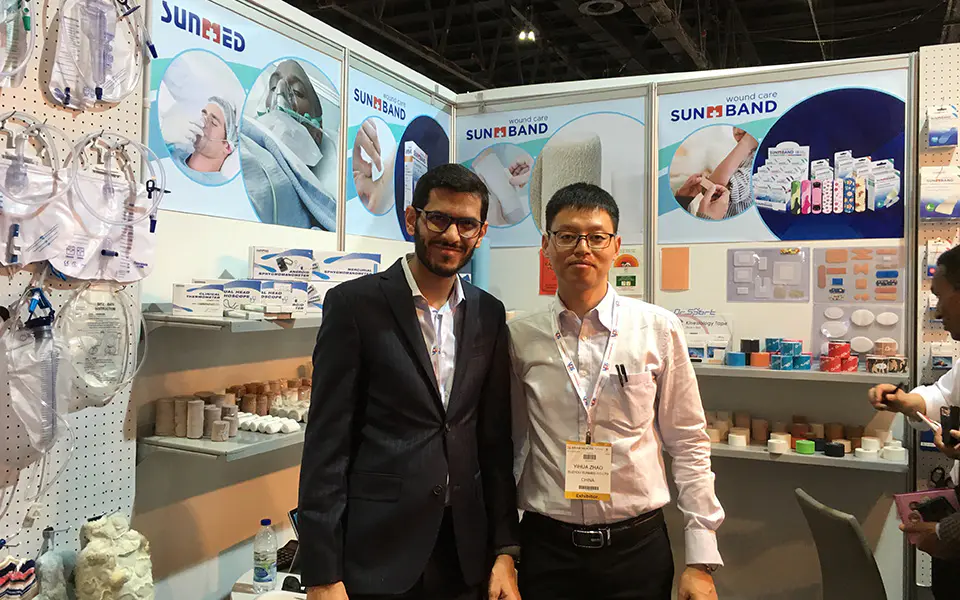
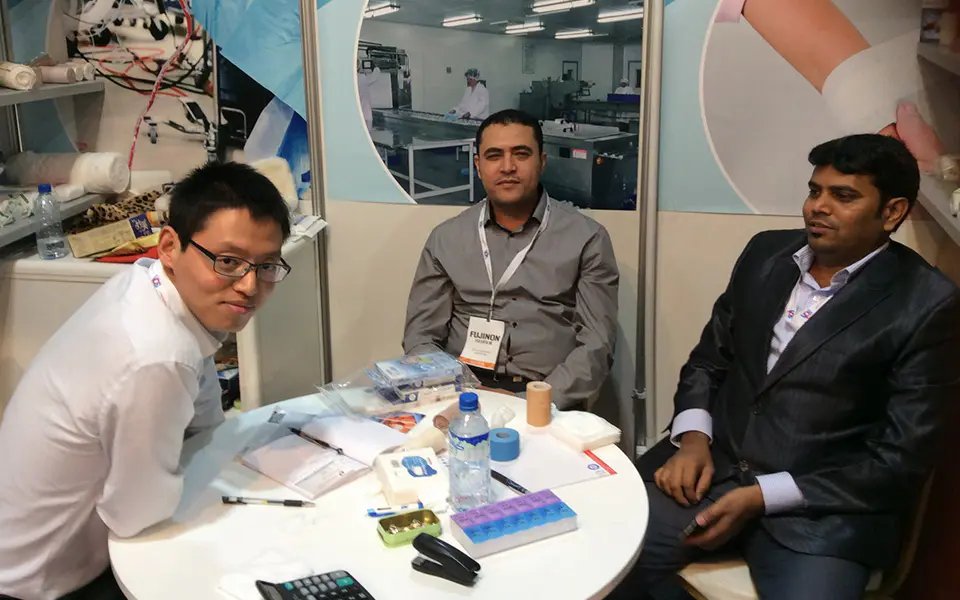
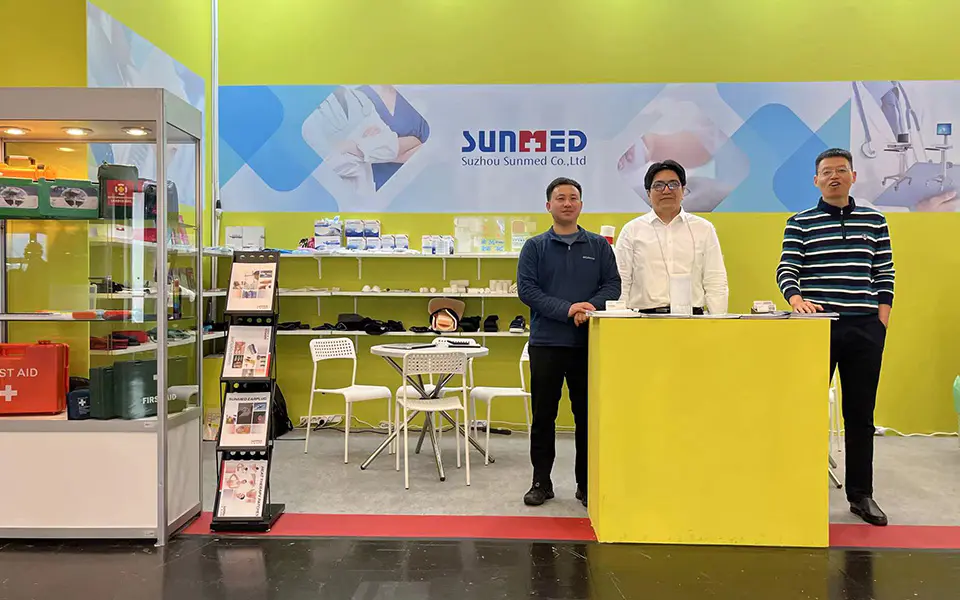
Suzhou Sunmed Co., Ltd. is a professional manufacturer and exporter of first aid, medical, and healthcare products in China. Its product portfolio includes wound dressings, medical gauze, bandages, medical tape, medical cotton, non-woven products, sports bandages, kinesiology tape, family healthcare products, medical instruments, syringes, catheters, surgical consumables, and other medical supplies.
The company operates multiple production bases in Jiangsu, Zhejiang, and Anhui Province. This manufacturing network supports product specialization, supply capacity, and coordination across several categories. The company established its first aid factory in 2008 and later established a dedicated factory for kinesiology tape, cohesive bandages, and elastic adhesive bandages in 2021.
The dedicated production capability for cohesive bandages is important because self-adhering wraps require specialized knowledge of coating, elasticity, roll formation, and quality control. A supplier with experience across related medical consumable categories can also better understand packaging, customer specifications, distribution requirements, and regulatory documentation.
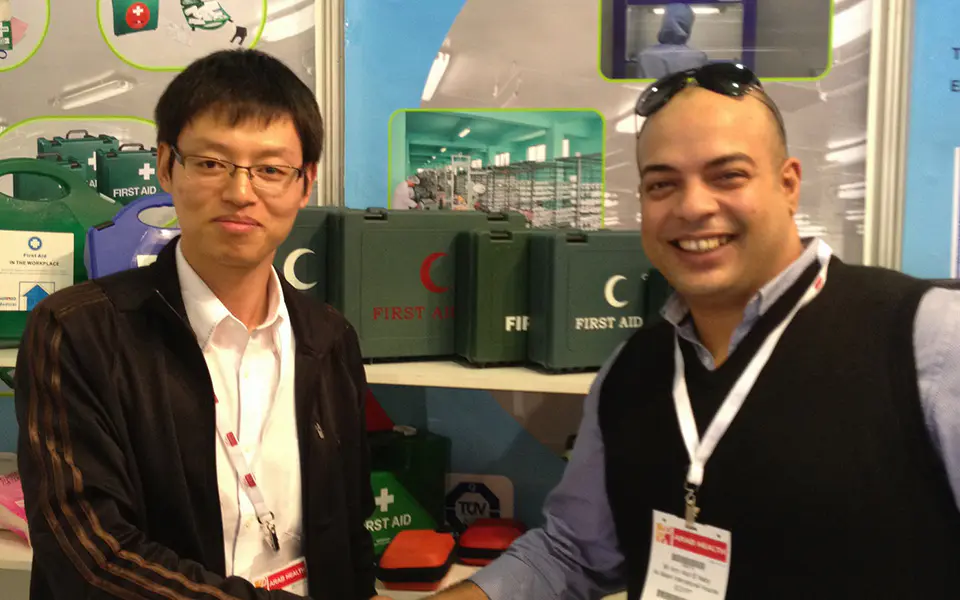
The company reports approximately 30 years of experience in the medical device and medical consumables industry. It has exported to more than 60 countries, including markets in Europe, Southeast Asia, Africa, and Oceania. Its customers and application markets include hospitals, first aid suppliers, supermarkets, and retail sports shops.
A professional quality control team comprising hundreds of personnel supports inspection procedures. The company states that its quality system follows ISO 13485:2016 standards, that most products are CE certified, and that its Suzhou factories comply with FDA requirements. Customers should request the current certificates, declarations, test reports, and product-specific documentation applicable to their market and intended use.
Quality Assurance from Incoming Materials to Finished Goods
Quality assurance should cover the entire product life cycle rather than rely only on final inspection. For a cohesive bandage, this includes incoming material verification, adhesive and coating monitoring, in-process dimensional checks, mechanical testing, packaging inspection, and traceability.
Incoming Inspection
Incoming inspection can confirm the identity and condition of cotton, non-woven substrates, adhesive materials, packaging films, labels, and cartons. Materials may be checked for visible damage, contamination, dimensions, documentation, and conformity with approved specifications.
In-Process Inspection
During production, inspection personnel can monitor coating uniformity, roll width, roll length, edge quality, winding condition, and visual appearance. In-process checks help identify deviations before a large quantity of product is completed.
Finished Product Inspection
Finished rolls can be evaluated for adhesion between overlapping layers, stretch behavior, tearability, appearance, package integrity, labeling, and item number accuracy. The exact inspection plan should be established according to the product specification, regulatory requirements, risk assessment, and customer agreement.
Traceability
Batch identification supports traceability from raw materials to finished goods. Clear lot coding and production records help manufacturers and customers investigate questions related to quality, shipment, packaging, or market feedback.
For international customers, traceability is particularly important because products may pass through importers, distributors, hospitals, retailers, and sports supply channels. A well-managed documentation system supports responsible product management throughout the supply chain.
Private Label and OEM Opportunities
The cohesive bandage can be adapted for wholesale, OEM, and private-label programs. Customers may request different colors, widths, materials, latex status, roll specifications, individual wrapping styles, carton quantities, and retail packaging formats.
Private-label development typically begins with confirmation of the intended market and product positioning. A hospital supplier may prioritize clinical packaging and regulatory information, while a sports retailer may focus on color choices, consumer-friendly instructions, and compact shelf presentation.
OEM discussions should also address product claims. Terms such as waterproof, hypoallergenic, latex-free, breathable, and compression support should be used only when supported by the relevant product specifications and testing. Accurate claims protect the customer, distributor, manufacturer, and end user.
Sample approval is an important stage before mass production. Customers can assess material feel, color, adhesion, tearing, stretch, packaging, label information, and overall application performance. Once the sample is approved, the agreed specification should be controlled through production and shipment.
How to Select the Correct Bandage Width
Width selection depends on the body area, the desired coverage, the dressing size, and the level of control required during wrapping. Narrower widths are easier to handle around fingers and small joints. Medium widths are commonly suitable for wrists, ankles, and general first aid applications. Wider widths can cover larger areas with fewer turns.
A 2.5-centimeter roll may be appropriate for small-area applications, finger support, or compact first aid kits. A 5.0-centimeter roll is a balanced option for many general-purpose uses. A 7.5-centimeter roll offers broader coverage for limbs and athletic support. A 10.0-centimeter roll may be preferred for larger areas or when a wide securing layer is required.
Users should avoid wrapping over an unnecessarily large area or applying more layers than needed. The goal is secure, even fixation without restricting circulation or causing discomfort.
Recommended Application Principles
Before application, inspect the roll and confirm that the packaging is intact. Prepare the skin and dressing area according to the first aid or clinical procedure being followed. If a wound is present, use an appropriate dressing between the wound and the cohesive bandage.
Begin with a stable section of the body and overlap each turn smoothly. Use only the tension required for support or fixation. Avoid wrinkles, folds, and excessively tight sections. Tear the bandage laterally by hand when the desired length has been reached, then press the final layer against the underlying wrap so that it remains secure.
After application, check comfort and circulation. Watch for numbness, tingling, increasing pain, pale or blue discoloration, coldness, swelling below the wrap, or other signs that the bandage may be too tight. Loosen or remove the wrap if such symptoms occur and seek medical advice when necessary.
The bandage should not be applied directly over an untreated wound when a dressing is required. It should also not be used as a replacement for professional treatment in cases of serious injury, severe bleeding, suspected fracture, vascular problems, or significant infection.
Storage, Handling, and Shelf Management
Cohesive bandages should be stored in a clean, dry environment away from excessive heat, direct sunlight, moisture, and damaging chemicals. Products should remain in their original individual packaging until use whenever possible.
Distributors and healthcare organizations should manage inventory according to lot numbers and expiration information where applicable. Stock rotation helps ensure that older approved inventory is used before newer stock. Packages should be inspected for punctures, tears, water damage, or other signs of compromised protection.
During transportation, cartons should be protected from crushing and excessive humidity. Appropriate outer packaging helps preserve roll shape and individual wrapping integrity. Customers with special logistics requirements should confirm shipping conditions and carton configuration before ordering.
Why This Product Fits Multiple Distribution Channels
The product is suitable for professional and consumer-oriented channels because it combines a simple application method with features that address common user concerns. Hospitals and clinics can use it for dressing retention and support. Sports shops can position it as a practical athletic first aid item. Supermarkets and pharmacies can offer it as part of a household healthcare range.
First aid kit manufacturers can include individual rolls in emergency, workplace, school, travel, and outdoor kits. Medical distributors can select different widths and materials for different customer groups. Sports organizations can choose color options that align with team identity or simplify kit organization.
The product also complements other categories supplied by the manufacturer, including gauze, adhesive bandages, medical tape, cotton products, hot and cold therapy products, rehabilitation supplies, and other medical consumables. This broader portfolio can simplify sourcing for customers seeking multiple first aid and healthcare items from one experienced supplier.
Q&A
What does “cohesive” mean in a bandage?
Cohesive means that the bandage adheres to itself when overlapping layers meet. It is designed to provide fixation without relying on direct adhesive contact with the skin or hair.
Is this cohesive bandage waterproof?
The product is designed with waterproof performance for practical use in moist conditions, including perspiration and short-term exposure to water. Customers should review the exact product specification and intended-use instructions for their selected version.
Can the bandage be applied directly to a wound?
The bandage is generally used as an outer securing or support layer. A suitable wound dressing or sterile gauze should be placed over an open wound when required. Serious or uncontrolled bleeding requires urgent medical attention.
Does it contain latex?
The product can be supplied in latex-free or latex-containing versions. The selected specification should be confirmed before ordering, and the packaging should clearly identify the latex status.
What materials are available?
The available material options include cotton and non-woven material. Cotton offers a soft, breathable feel, while non-woven material provides an alternative construction for customers with different performance or sourcing preferences.
What sizes are available?
The listed widths are 2.5 centimeters, 5.0 centimeters, 7.5 centimeters, and 10.0 centimeters. Each listed roll has a length of 4.5 meters, with cotton and non-woven versions available for the corresponding item numbers.
Can it be torn without scissors?
Yes. The bandage is designed to be torn laterally by hand, which supports fast application during sports, first aid, workplace, and household situations.
Will it stick to skin or hair?
The special glue coating is designed to stick to the bandage itself rather than to skin or hair. Normal application technique and overlapping are important for achieving secure fixation.
Can it be used for compression?
It can be used for controlled compression when applied correctly and according to suitable medical guidance. Excessive tension can impair circulation, so the wrap should be checked for comfort and circulation after application.
Is the bandage suitable for children?
It may be included in family first aid use when applied by a responsible adult. Children should not apply or handle the product unsupervised, and medical advice should be obtained for significant injuries.
Can customers request custom colors or packaging?
The product is available in various colors and sizes, and OEM or private-label configurations can be discussed. Custom requirements may include color, packaging, labeling, carton quantity, material, latex status, and market-specific documentation.
What should buyers verify before placing an order?
Buyers should verify material, width, roll length, adhesive characteristics, latex status, waterproof claims, packaging, shelf-life information, applicable certificates, quality documentation, order quantity, and destination-market requirements.
Conclusion
The Waterproof First Aid Sports Cohesive Bandage is a versatile self-adhering wrap for sports support, first aid, dressing retention, controlled compression, and general healthcare applications. Its principal advantages include self-adhesive fixation, water resistance, strong stretchability, breathable cotton construction, non-woven material availability, hand tearability, individual wrapping, multiple widths, and latex-free product options.
Compared with conventional adhesive tape, the cohesive format can reduce direct adhesive contact with skin and hair. Compared with plain gauze, it provides an integrated method of securing a dressing. Compared with elastic bandages requiring clips, it offers a simpler fastening process. These features make it attractive to hospitals, distributors, sports retailers, first aid suppliers, workplaces, families, and OEM customers.
Product quality depends on controlled material selection, adhesive coating, elasticity testing, slitting, winding, packaging, and inspection. With multiple production bases, dedicated cohesive bandage manufacturing capabilities, broad medical product experience, international export knowledge, and a quality management approach aligned with ISO 13485:2016 requirements, Suzhou Sunmed Co., Ltd. is positioned to support wholesale and customized supply programs.
For the best result, buyers should match the bandage width and material to the intended application, confirm the required regulatory documents, and establish clear specifications before production. When used responsibly and applied with appropriate tension, this cohesive bandage can provide a convenient, comfortable, and reliable solution for everyday first aid and athletic support.
References
1. ISO 13485:2016, Medical Devices—Quality Management Systems—Requirements for Regulatory Purposes.
2. General principles of first aid wound dressing, bleeding control, and bandage application used in professional healthcare and emergency response training.
3. General medical device quality-control practices covering incoming inspection, in-process inspection, finished-product testing, packaging integrity, and lot traceability.
4. Product specification information for Waterproof First Aid Sports Cohesive Bandage, including cotton and non-woven material options, listed widths, roll length, self-adhesive construction, and individual wrapping.
5. Manufacturer-provided company information concerning first aid products, medical consumables, production bases, export experience, quality management, and cohesive bandage manufacturing capabilities.

 English
 Español
 русский
 Français
 Deutsch
 italiano
 By Admin