Non woven swabs have steadily replaced traditional gauze swabs in many clinical environments — and for good reason. Their consistent fibre structure, low-linting properties, and reliable absorbency make them a practical upgrade in settings where performance predictability and patient safety are priorities. From wound cleaning and skin preparation to post-operative dressing changes and general clinical use, non woven swabs now occupy a central position in the medical consumables supply chain. Suzhou Sunmed produces a professional range of non woven swabs designed to meet the technical and regulatory expectations of international healthcare procurement.
What Is a Non Woven Swab and How Does It Differ from Gauze?
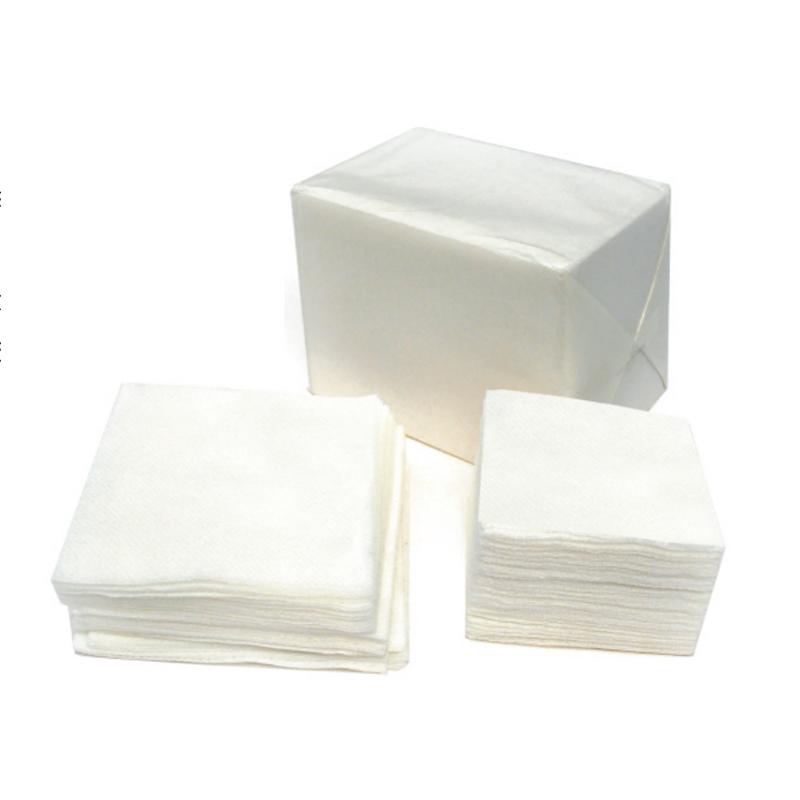
A non woven swab is a medical-grade pad made from fibres that are bonded together through mechanical, thermal, or chemical processes — rather than being woven or knitted into a fabric structure. The result is a uniform, consistent material with defined absorbency characteristics and a surface texture that is gentler on delicate or sensitised skin than traditional open-weave cotton gauze.
The key structural difference between non woven and gauze swabs lies in the fibre arrangement. Gauze is an open-weave fabric with visible thread crossings, which can create uneven absorption and occasional thread shedding if the weave integrity is compromised. Non woven fabric, by contrast, is manufactured to be inherently lint-free or low-lint, meaning it releases fewer fibres into the wound environment. This is particularly significant in wound care and surgical applications where fibre contamination can complicate healing or cause inflammatory responses.
Non woven swabs are also typically softer and more conformable than gauze swabs of equivalent ply, making them better suited for use on facial wounds, mucous membranes, or areas where patient comfort during dressing changes is a clinical consideration.
Materials Used in Non Woven Swab Production
The clinical performance of a non woven swab is heavily influenced by the raw fibre composition used in its manufacture. Different materials confer different absorbency rates, tensile strengths, and surface characteristics. The most commonly used materials in medical-grade non woven swabs include:
- Viscose (Rayon): A regenerated cellulose fibre with excellent absorbency and softness. Viscose is highly hydrophilic and draws fluid rapidly into the pad, making it effective for wound exudate management. It is the most widely used fibre in non woven swab production.
- Polyester: A synthetic fibre that adds structural strength and dimensional stability to the swab. Polyester fibres do not absorb fluid but contribute to the pad's durability and resistance to tearing when wet, which is critical during active wound cleaning.
- Viscose/Polyester Blends: The most common clinical formulation — typically 70% viscose and 30% polyester, or 60/40 — balancing high absorbency from the viscose component with structural integrity from the polyester. This blend is the standard for general-purpose medical non woven swabs.
- 100% Polyester: Used in applications requiring low particle generation and resistance to chemical agents, such as in cleanroom environments or certain wound irrigation procedures.
Suzhou Sunmed's non woven swabs are produced using viscose/polyester blends, with the specific blend ratio selectable based on the buyer's clinical requirements or product specification. Raw materials are sourced from verified suppliers and subject to incoming quality inspection before entering production.
Product Specifications and Size Options
Non woven swabs are manufactured to standardised dimensions that align with clinical use patterns. The most common sizes in international procurement are 5×5 cm and 10×10 cm, though other sizes are available for specific applications. Ply count — the number of fabric layers in the finished swab — determines thickness, absorbency capacity, and padding effect. The table below outlines the primary configurations available from Suzhou Sunmed:
| Size (cm) |
Ply Options |
Fibre Blend |
Sterile Available |
Typical Use |
| 5×5 |
4-ply / 8-ply |
70/30 Viscose/Polyester |
Yes / No |
Wound cleaning, skin prep, dressing changes |
| 7.5×7.5 |
4-ply / 8-ply |
70/30 Viscose/Polyester |
Yes / No |
General ward use, outpatient clinics |
| 10×10 |
4-ply / 8-ply / 12-ply |
70/30 or 60/40 blend |
Yes / No |
Surgical prep, high-exudate wound care |
| 10×20 |
8-ply |
70/30 Viscose/Polyester |
Yes |
Larger wound coverage, abdominal care |
Custom sizing is available for institutional buyers with specific dressing protocol requirements. All swabs are folded with inward-facing edges so that no raw fibre margins contact the wound surface, consistent with clinical safety expectations for wound care consumables.
Low-Linting Performance: Why It Matters Clinically
One of the most cited advantages of non woven swabs over traditional gauze is their low-linting behaviour — meaning they release significantly fewer loose fibres during use. In clinical terms, this matters for several reasons. Fibres shed into an open wound can act as foreign bodies, triggering an inflammatory response that delays healing, increases infection risk, and in some cases contributes to granuloma formation. In surgical settings, fibre contamination of the wound field is a known complication that surgeons and scrub nurses actively work to minimise.
The low-lint property of non woven swabs is a direct consequence of how the fibre matrix is manufactured. Because the fibres are thermally or mechanically bonded into a stable web structure rather than interlaced through weaving, they are less likely to detach individually under mechanical stress. This structural stability is maintained even when the swab is saturated with wound fluid, saline, or antiseptic solution — conditions under which a gauze swab may begin to break down at the thread intersections.
For procurement teams specifying wound care consumables for surgical wards, intensive care units, or burn care departments, low-linting performance should be a specified product requirement — not merely a desirable feature — and suppliers should be able to provide test data demonstrating compliance.
Sterility Options and Packaging Configurations
Non woven swabs are available in both sterile and non-sterile formats. The choice between the two is determined by the clinical application: sterile swabs are required for direct wound contact, surgical use, and any procedure where sterile field maintenance is required; non-sterile swabs are appropriate for skin preparation with antiseptic, general cleaning, and non-contact applications where the product itself does not enter or directly contact an open wound.
Sterile Non Woven Swab Packaging Formats
- Individually wrapped peel-open pouches (1 or 2 swabs per pack) for single-use clinical and surgical applications
- 5-swab sterile peel-open pouches for dressing trolleys and procedural trays
- EO-sterilized, with sterility assurance level (SAL) of 10⁻⁶ as required by international medical device standards
Non-Sterile Packaging Formats
- Bulk packs of 100 swabs in sealed polybags for ward stock and controlled dispensing environments
- Dispenser boxes for clinic countertops and procedure rooms
- Retail-formatted packaging for pharmacy and first-aid kit supply chains
All sterile products from Suzhou Sunmed carry lot number and expiry date labeling on each individual pack, enabling full traceability from production batch to point of use. Packaging materials are validated for sterile barrier integrity under standard storage and distribution conditions, with a typical shelf life of 3 to 5 years from the sterilization date.
Regulatory Certifications Supporting Market Access
Non woven swabs sold into regulated healthcare markets are classified as medical devices and must be supported by appropriate regulatory documentation. For international distributors and procurement bodies, the presence of verifiable certifications is a prerequisite for supplier approval — not a supplementary consideration. Suzhou Sunmed's non woven swab range is supported by the following:
- CE Marking: Confirms compliance with EU medical device regulations, enabling product registration and distribution across European Economic Area member states without additional type examination.
- ISO 13485 Certification: Demonstrates that the quality management system governing design control, production, and post-market surveillance meets international medical device manufacturing standards.
- FDA Facility Registration: Required for any manufacturer exporting medical devices to the United States market; confirms the facility is known to and registered with the US Food and Drug Administration.
- NMPA Registration: Ensures compliance with China's National Medical Products Administration requirements for domestic production and distribution.
Buyers should request copies of current, unexpired certificates as part of their supplier qualification process and verify certificate authenticity directly with the issuing body where possible. Product-level test reports — covering absorbency rate, tensile strength when wet, lint release, and dimensional accuracy — should also be requested and reviewed before finalising procurement decisions.
Comparing Non Woven Swabs to Gauze Swabs: When to Specify Which
For procurement managers developing or revising consumables formularies, understanding when non woven swabs offer a genuine clinical advantage over gauze — and when gauze remains the more practical choice — prevents both unnecessary cost escalation and inappropriate product substitution.
- Prefer non woven swabs when: Low-lint performance is clinically critical; patient comfort during dressing changes is a priority; the wound environment is sensitive to fibre contamination; or the application involves skin preparation with antiseptic agents where softer surface contact is beneficial.
- Prefer gauze swabs when: Very high fluid absorbency is required (such as in major trauma or intraoperative haemostasis); X-ray detectability is required for surgical retained item prevention; or when cost constraints in high-volume, lower-acuity settings make gauze the more economical option.
In many hospital formularies, both product types coexist — non woven swabs for general ward and outpatient use, and gauze swabs (with X-ray detectable thread) for theatre use. A supplier like Suzhou Sunmed that manufactures both product types allows procurement teams to consolidate sourcing while maintaining appropriate product differentiation across clinical areas.
Pre-Order Evaluation: What Buyers Should Request
Before committing to a bulk non woven swab supply agreement, a structured pre-order evaluation protects the buyer from receiving products that fail to perform as specified. The following steps are recommended for any new supplier qualification process:
- Request production samples and physically assess folding quality, edge finish, and dimensional consistency across multiple units.
- Perform or commission an absorbency test — immerse a weighed dry swab in water, allow it to absorb, remove and allow to drain for 30 seconds, then weigh again. A high-quality swab should absorb at least 6–8 times its own dry weight.
- Conduct a lint assessment by using the swab on a dark surface and examining for fibre release — a simple but effective proxy for clinical lint performance.
- For sterile products, verify packaging seal integrity on sample units by visual inspection and, if possible, dye penetration testing.
- Review all regulatory documentation — CE certificate, ISO 13485 scope, FDA registration — and confirm that the product type being ordered is explicitly covered by the stated certifications.
A manufacturer prepared to support this evaluation process with samples, documentation, and responsive technical communication demonstrates the operational maturity expected of a long-term medical supply partner. Suzhou Sunmed's export-oriented production model is structured to support exactly this kind of pre-qualification engagement.
Conclusion: Non Woven Swabs as a Clinical and Procurement Standard
Non woven swabs represent an evolution in wound care consumables — offering consistent absorbency, low-lint performance, and patient comfort advantages that have made them the default choice in many modern healthcare settings. Their clinical utility depends on material composition, ply construction, folding quality, and sterility management — all of which must be verifiable through supplier documentation and physical product evaluation.
Suzhou Sunmed's non woven swab range covers the principal size, ply, and sterility configurations required by hospital procurement, distributor portfolios, and humanitarian supply chains. Backed by CE, ISO 13485, and FDA credentials, the product range is positioned for international market access with the regulatory infrastructure already in place. For buyers evaluating non woven swab suppliers, Suzhou Sunmed merits inclusion in the qualification shortlist — with the recommendation, as always, that sample evaluation and documentation review precede any volume commitment.

 English
 Español
 русский
 Français
 Deutsch
 italiano
 By Admin