A wound plaster — the small adhesive dressing that many people simply call a bandage or a sticking plaster — is one of the few medical products almost everyone has used and almost nobody thinks about. It covers a cut, a graze, a blister or a minor burn, holds a dressing in place, and lets the day carry on. Simple as it looks, it is also one of the most frequently reordered items in any medical consumables catalogue, and that is exactly why the details deserve more attention than they usually get.
We supply adhesive plasters across a wide range of backings, shapes, sizes and packaging formats, and over the years we have had plenty of conversations with buyers who thought they were ordering "just plasters" and then discovered halfway through a project that there was rather more to it. This guide pulls together what we have learned: what a plaster actually does, how the different types behave, and what to check before committing to a bulk order.
What a Wound Plaster Actually Does
At its core, a plaster does four jobs at once, and a good one does all four without you noticing. First, it creates a mechanical barrier, keeping dirt, bacteria and friction away from broken skin. Second, the pad absorbs the small amount of exudate or blood that a minor wound produces. Third, it holds the wound edges still, which helps them settle and close. Fourth, it keeps the surface slightly moist, and a wound that stays moist generally heals faster and scars less than one left to dry out.
The subtle part is the pad. If the absorbent material sticks to the wound bed, changing the plaster reopens the injury and undoes the previous day's healing. That is why wound-contact layers — a perforated film, a non-adherent mesh or a silicone-coated pad — matter as much as the adhesive on the outside. When a customer tells us a plaster "hurt more coming off than going on", the pad is usually the culprit, not the glue.
The Four Layers Behind a Reliable Plaster
Once you look at a plaster in cross-section, the specification questions become much easier to ask. Almost every product on the market is built from the same four components:
- Backing material: woven fabric, non-woven, PE film, PU film or foam. This decides how the plaster feels, how much it stretches and whether it lets air through.
- Adhesive mass: usually acrylic, hot-melt or zinc oxide rubber. This decides initial tack, how well it holds on a knuckle, and how gently it releases from skin.
- Absorbent pad: viscose, cotton or a blended non-woven, sometimes with a perforated wound-contact film laminated on top.
- Release liner: the paper or film you peel away, which also affects how easily the plaster can be opened one-handed.
Change any one of those and you have a different product, even if the outer box looks identical. A fabric plaster and a PE plaster in the same size can behave completely differently after ten minutes of hand-washing.
Matching the Plaster to the Wound
There is no single best plaster, only the right one for a given situation. The table below is the short version we share with buyers who are building an assortment rather than ordering a single line.
Common wound plaster types and where each one earns its place in an assortment.
| Type |
Backing |
Best for |
Watch out for |
| Fabric plaster |
Woven or non-woven textile |
Fingers, joints, everyday cuts |
Can fray at the edges with heavy wear |
| Waterproof plaster |
PE or PU film |
Washing up, wet work, swimming |
Less breathable; adhesion drops on oily skin |
| Transparent plaster |
Thin PE film |
Small, neat cuts where appearance matters |
Small pad; not for heavier bleeding |
| Hydrocolloid plaster |
Flexible hydrocolloid sheet |
Blisters, friction spots, healing support |
Higher unit cost |
| Blue detectable plaster |
Fabric or film with metal strip |
Food handling and catering environments |
Limited size range in some markets |
| Kids plaster |
Soft fabric or PE film |
Paediatric use, retail and gift packs |
Novelty print quality varies a lot |
In practice, most distributors end up carrying three or four of these rather than one. A fabric strip covers the general case, a waterproof version covers hands and kitchen work, and a hydrocolloid line handles blisters, which is where repeat purchase tends to be strongest.
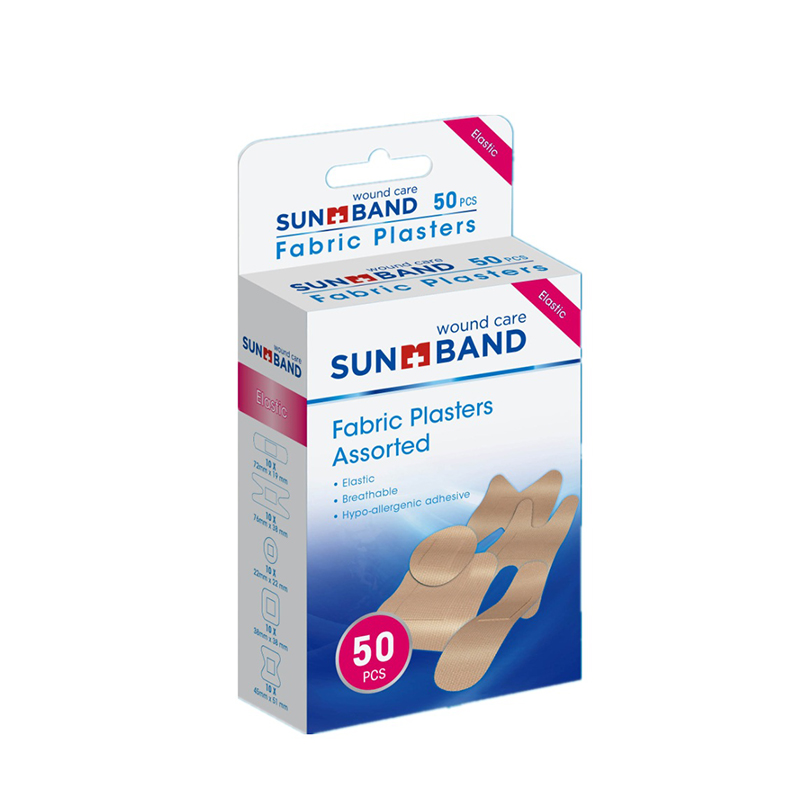
 Flexible Fabric Plasters for Everyday and Sensitive-Skin Wound CareSoft, breathable fabric plasters with gentle adhesion and flexible shapes, including fingertip and assorted formats for minor cuts, grazes, and first aid kits.View Product →
Sizes, Shapes and Everyday Practicalities
The classic strip is around 19 mm by 72 mm, and the next size up, roughly 25 mm by 72 mm, is what most households actually reach for. Beyond that come square and oval shapes, extra-large patches, and the two shapes that quietly do a lot of work: fingertip and knuckle. Both are awkward to improvise from a straight strip, and both are appreciated far more than their price difference suggests.
Shape is not only about coverage. A plaster that overlaps itself on the inside of a finger will lift within minutes; a slightly shorter strip applied along the joint rather than across it will hold for hours. That is why our own advice to buyers is to stock a small range of sizes rather than a large quantity of one, and to keep fingertip and knuckle formats in the mix even if they sell more slowly.
 Waterproof Plasters for Showers, Swimming, and Outdoor UseWaterproof, breathable plaster options in elastic fabric, clear film, and hydrocolloid formats, suited to water activities, showering, outdoor use, and blister protection.View Product →
Adhesion, Breathability and Sensitive Skin
Adhesion is where cheap plasters reveal themselves. Good acrylic adhesive holds through a wash and releases without pulling, while an under-cured mass will grab hard at first and then slide off the moment it gets damp. Zinc oxide adhesives on woven cloth hold exceptionally well but are less forgiving on delicate skin, which is why the choice depends on who will wear the product and for how long.
Breathability works against adhesion in a fairly predictable trade-off. A film-backed waterproof plaster keeps water out and also keeps moisture in, so it should not stay on intact skin for days at a stretch. Fabric and non-woven backings let air through and are gentler on sensitive skin, but they will not survive a shower as reliably. When a buyer asks for a "hypoallergenic" plaster, the honest answer is that we can minimise the risk with a low-allergen adhesive and a breathable backing, but no adhesive product can promise zero reaction on every skin type.
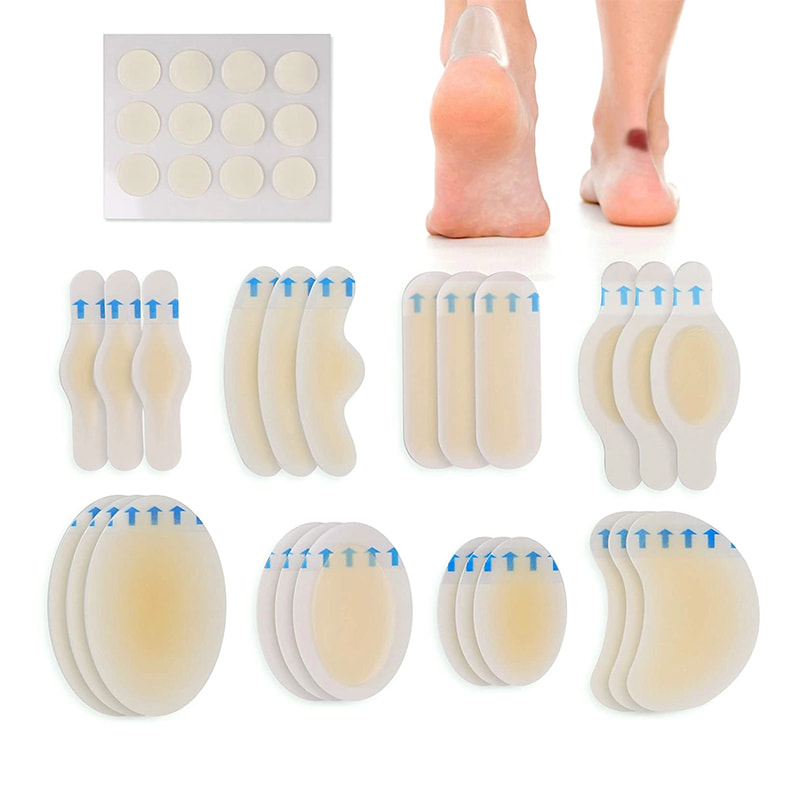 Hydrocolloid Blister Plasters for Friction-Prone Areas and Wholesale SupplyFlexible, waterproof hydrocolloid plasters absorb fluid and cushion blisters and hot spots in friction-prone areas, available for wholesale and OEM supply.View Product →
What to Check Before You Place a Bulk Order
Most of the problems we see in plaster orders come from specifications left open rather than from manufacturing itself. A short checklist saves a lot of back-and-forth:
- Confirm the destination market and the labelling or documentation it requires before artwork is finalised.
- Write down the backing, adhesive type, pad weight and pad dimensions — not just the plaster size.
- Decide whether the product must be sterile, and if so, which sterilisation method the market expects.
- Specify pack configuration precisely: plasters per box, boxes per inner, inners per carton.
- Check shelf life and storage conditions, particularly for hydrocolloid and zinc oxide lines.
- Ask for production samples from the actual line, not only lab samples, and test them on real hands.
Alongside those basics, decide early whether you want a standard product or your own branding. Private label plasters are straightforward once the tin, box or carton artwork is settled, and our OEM programme is built around exactly that kind of custom work. Lead time usually depends far more on artwork approval and packaging than on the plasters themselves, so getting the design signed off early is the single best way to keep a schedule on track.
Packing, Private Label and the Long Tail of Demand
Plasters sell in two very different rhythms. Medical channel buyers want clinical, restrained packaging with clear specifications and sensible strip counts. Retail and promotional buyers want something that stands out on a shelf or in a gift pack, which is where novelty prints, coloured backings and shaped tins come in. Both can be produced from the same base materials, which keeps tooling costs down and makes smaller trial orders more realistic than most people assume.
One pattern we have noticed repeatedly: demand for a specific size or shape rarely disappears, it just becomes seasonal. Blister plasters spike when hiking and running season begins, waterproof formats move faster in summer, and character plasters cluster around school holidays and gifting periods. Planning an assortment around those rhythms is usually more effective than chasing a single best-seller.
If you are weighing up which wound plaster formats belong in your next order, we are always glad to talk it through — including the awkward questions about adhesive choice, packaging and realistic quantities for a first run. You can find answers to the most common buying questions on our FAQ page, or simply send us a sample request and tell us what the product needs to do. After enough of these conversations, we have learned that a good plaster is rarely the cheapest one on the quotation sheet, and almost always the one the customer reorders without thinking about it.

 English
 Español
 русский
 Français
 Deutsch
 italiano
 By Admin