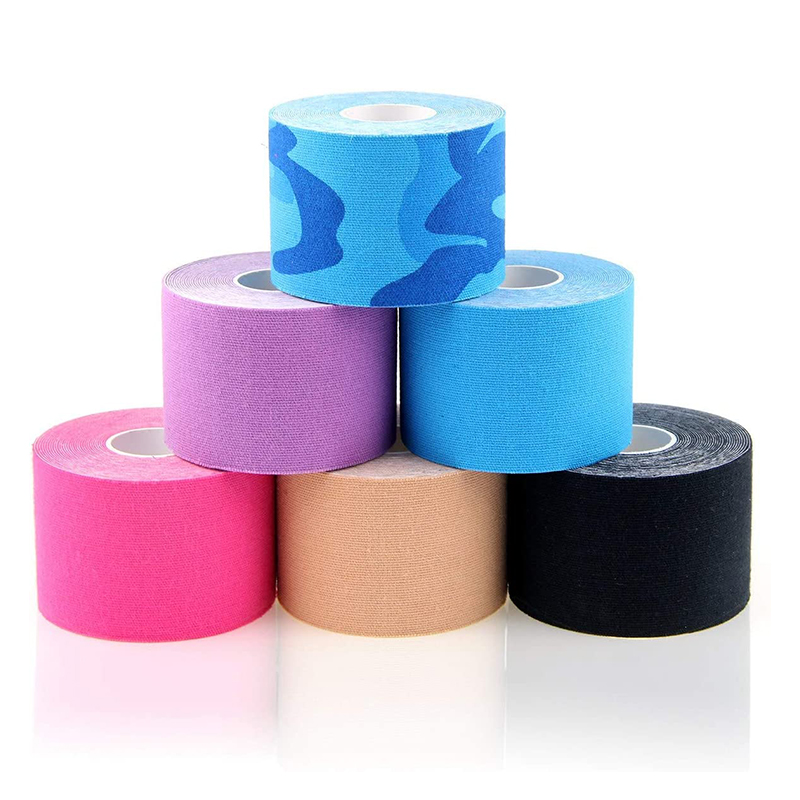
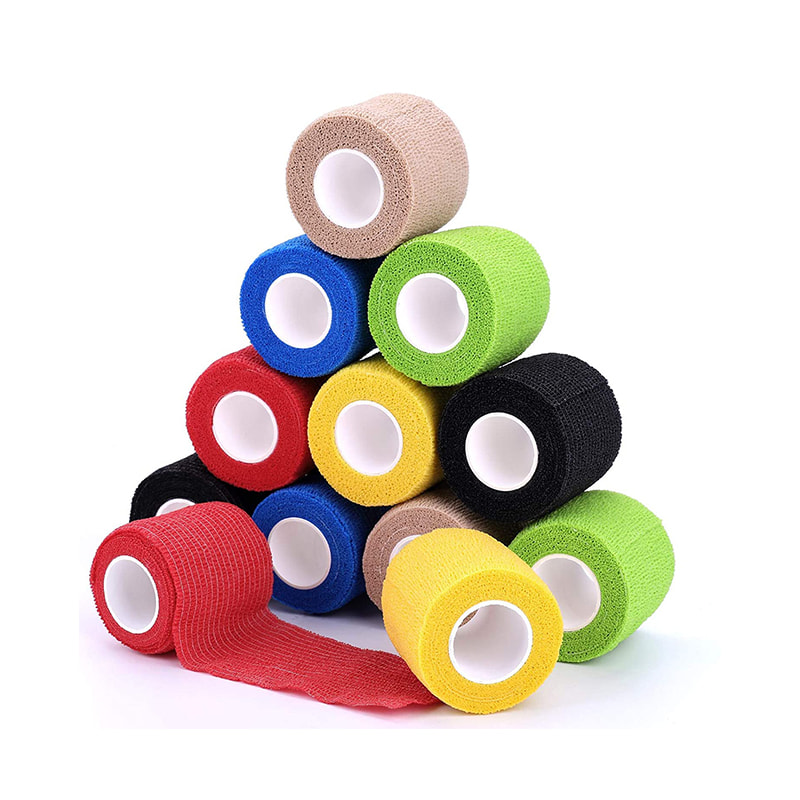
Sports tape looks simple from the outside. It arrives on a roll, it sticks where you tell it to, and it comes off at the end of the session. Anyone who has placed more than a couple of orders knows the reality is more layered than that. Adhesive tack, stretch recovery, roll-to-roll consistency and clean unwind behaviour decide whether a tape performs in a physio room or on a muddy sideline, and all of those things are settled long before the tape reaches a box.
We are Suzhou Sunmed Co., Ltd., a medical supplies supplier based in Suzhou, China, and sports tape sits inside a much wider catalogue that runs from gauze and wound dressings to first aid kits, braces and foot care. That breadth is useful when you are sourcing, because it means the same partner can often cover the tape, the underwrap, the scissors and the packaging that goes around them.
What Buyers Actually Mean by "Sports Tape Manufacturers"
Search that phrase and you will meet three quite different kinds of company. The first is a brand owner who designs tape and outsources every physical step. The second is a converter: someone who buys jumbo rolls and slits, rewinds and prints them without ever touching adhesive chemistry. The third is a full-scope manufacturer that coats its own adhesive, controls the fabric or rayon supply, slits in house and packs to your artwork.
None of these is automatically wrong. A converter can be excellent for small runs and fast turnarounds. A brand owner may be the only route to a patented design. But if you are planning consistent bulk volume, the questions you need answered about adhesive formulation, stretch tolerance and batch traceability only have real answers from the third group. Working out which type you are talking to is the fastest way to avoid three months of conversations that go nowhere.
The Tape Families You Will Be Quoted On
Most sourcing conversations settle into the same handful of product families, and it helps to know where each one earns its place before you compare prices. The table below is the short version of what buyers usually end up ordering together.
Table 1: The tape families most often quoted under the heading of sports tape, with the customization levers buyers typically negotiate.
| Tape family |
Typical material |
Where it is used |
What can be customized |
| Rigid strapping tape |
Rayon or cotton cloth with zinc oxide adhesive |
Joint locking and ankle strapping during play |
Width, adhesive tack, roll length, printed core |
| Elastic adhesive bandage |
Cotton or viscose blended with spandex |
Compression and support for sprains |
Stretch ratio, colour, clip type, retail packing |
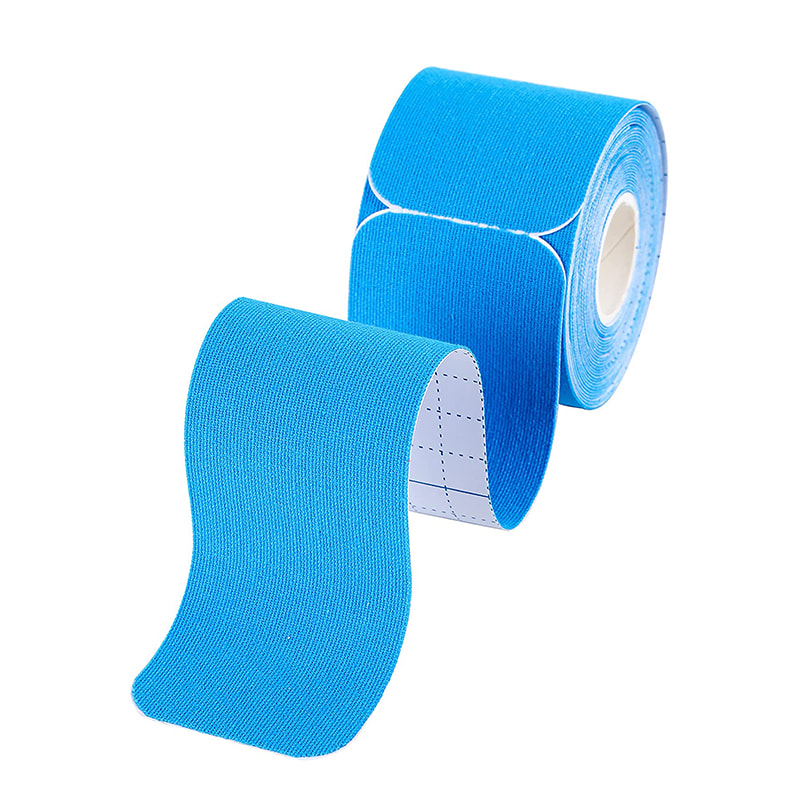
| Kinesiology tape |
Elastic cotton or nylon with wave-pattern adhesive |
Muscle support and rehabilitation clinics |
Pre-cut shapes, perforation, logos, pouches |
| Cohesive self-adhesive wrap |
Non-woven or cotton with cohesive coating |
Light support, pet use, outdoor and camping |
Colour range, prints, latex-free options |
| Pre-wrap foam underwrap |
Polyurethane foam on non-woven backing |
Underlay beneath rigid tape, blister prevention |
Thickness, adhesive level, roll length |
| Fixation tape |
PE, paper or silk film |
Securing dressings and devices |
Microporous or waterproof, adhesive type |
If you want a sense of how these families sit alongside each other in a real catalogue, the athletic tapes and wraps range shows the full spread of rigid, elastic, kinesiology and pre-wrap items in one place.
 Athletic Tapes and Wraps Category for OEM SupplyBrowse Sunmed's athletic tapes and wraps range, covering kinesiology, cohesive, elastic adhesive, rigid sport tape, and pre-wrap options for bulk sourcing.View Product →
Inside the Factory: What Separates a Manufacturer from a Trading Office
Tape performance is decided in two places: the coating line and the slitting room. Everything downstream is logistics.
Adhesive and coating control
Zinc oxide, acrylic and hot-melt adhesives behave differently at different temperatures, and a supplier who coats in house can tell you the coat weight and how it holds up in a warm warehouse. This matters more than most buyers expect. Tape that peels cleanly in a European winter can leave residue in a Gulf summer, and the fix is a formulation decision, not a packaging one.
Slitting, winding and packing
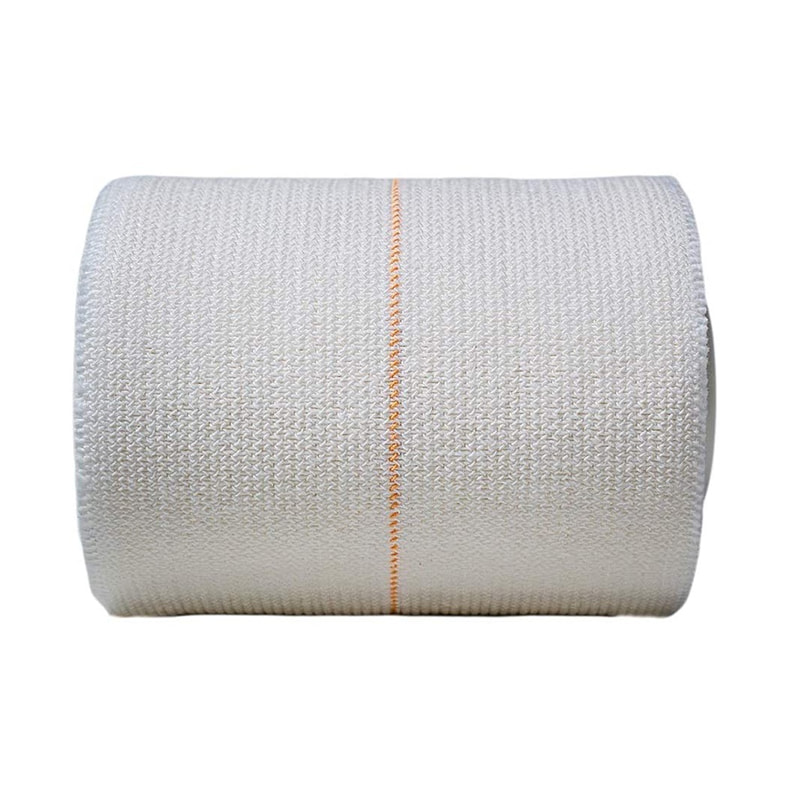
Clean edges and even tension are what stop a roll from telescoping or tearing mid-application. Ask who slits the jumbo rolls, how tension is verified, and whether the same line handles the elastic bandage grades. On the elastic side, a cotton sports elastic adhesive bandage is a good test case, because stretch recovery is easy to claim and harder to hold across a full container load.
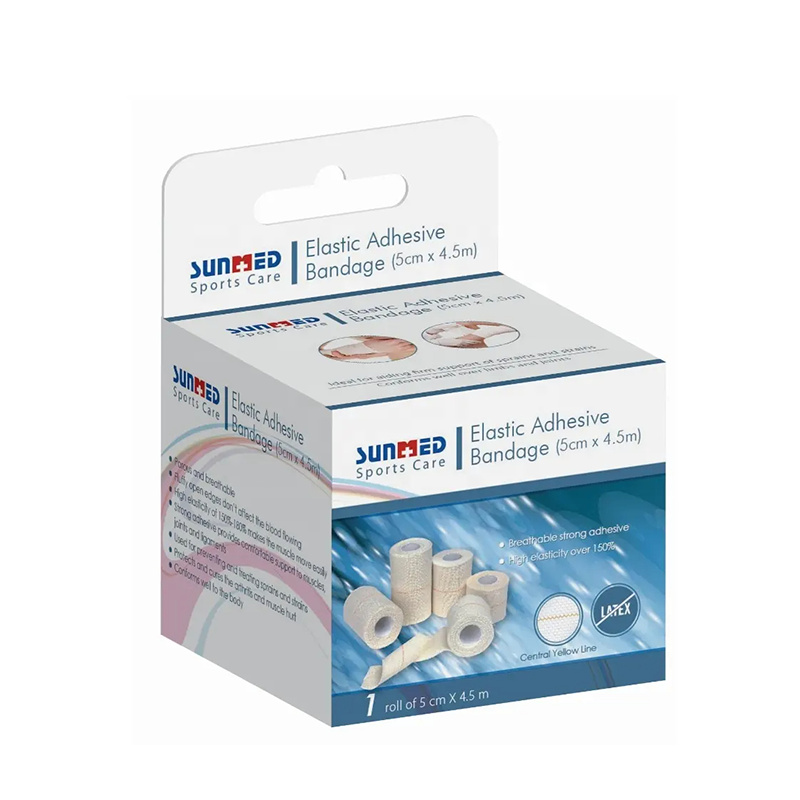 Cotton Sports EAB Elastic Adhesive Bandage by SunmedView this cotton sports EAB for breathable, latex-free support and a practical test of elastic recovery, slitting quality, and full-container consistency.View Product →
How to Vet a Supplier Before You Commit
A short, structured first round of questions will tell you more than a brochure ever will. The sequence below works well for both new suppliers and long-standing ones you are re-evaluating.
- Ask for the exact material composition and adhesive type, in writing, for each quoted item.
- Request a batch record or inspection sheet from a recent production run, not a sample prepared for you.
- Confirm who owns the tooling, print cylinders and packaging artwork in a custom project.
- Check lead time on repeat orders as well as first orders; the gap is often where problems hide.
- Ask what happens when a shipment fails inspection, and get the answer before you need it.
- Request samples from the same production batch you would be buying, at the same roll width.
Documentation, Standards and the Honest Limits of Paperwork
Certificates are a starting point, not a conclusion. CE marking, ISO references, biocompatibility reports and sterility documentation all have a place, but they describe a system rather than the roll in your hand. The useful question is which certificate applies to which specific product, and who issued it.
A supplier who can walk you through the OEM process, from drawing and sampling to mass production and packaging, is usually also the one who can explain which documents travel with each order. If that explanation is vague, treat it as a signal rather than an inconvenience.
Common Mistakes Buyers Make When Sourcing Tape
- Comparing unit price without normalising roll length, width and coat weight.
- Approving a hand-made sample that will never be reproduced on the production line.
- Ignoring storage conditions in the destination market, then blaming the adhesive.
- Leaving artwork, colour codes and label wording until the last week before shipment.
- Ordering a full container of an untested SKU because the sample felt right.
- Working with a single supplier on every tape family, including ones they clearly do not coat themselves.
Where OEM and Private Label Work Begins
Once volume is stable, most buyers start asking for something that looks like their own product rather than a generic roll. That usually starts with colour and width, then moves into printed adhesive backing, custom roll lengths, pre-cut kinesiology shapes, header cards and pouch or box artwork.
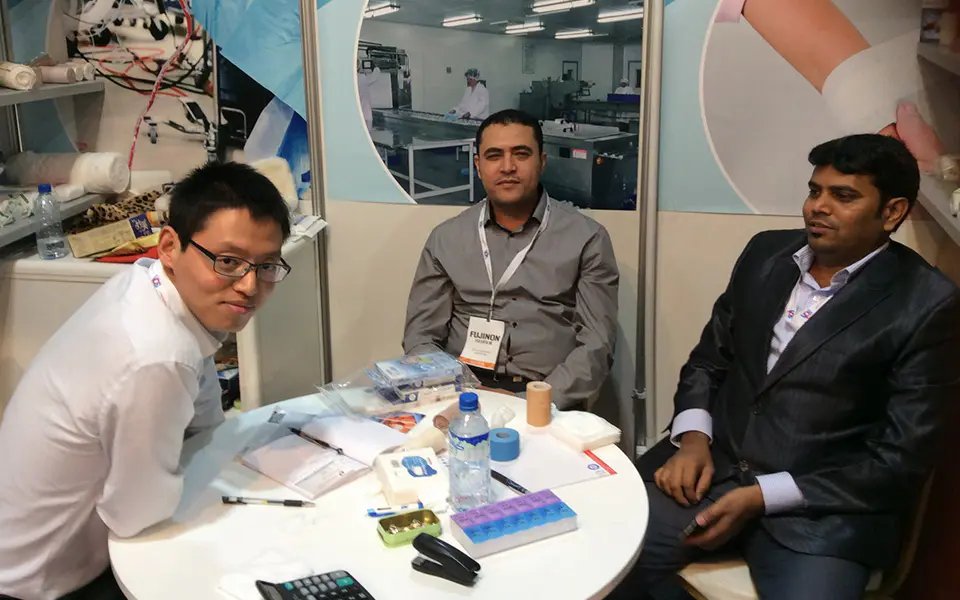
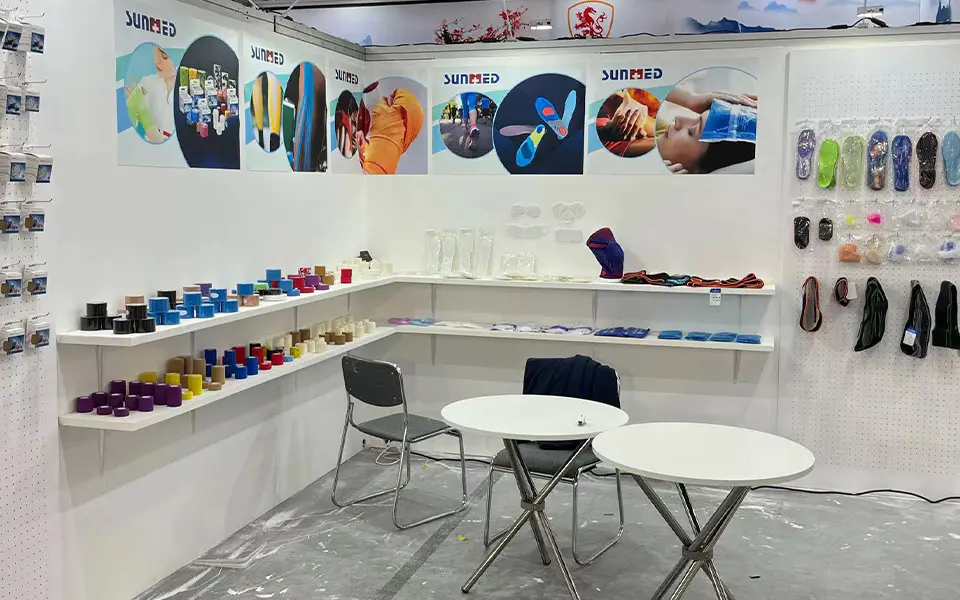
If you want to see how the manufacturing side is presented, our factory and exhibition pages cover the production and trade show side of the business. Kinesiology tape is a good example of where private label adds the most value, since pre-cut shoulder, knee and elbow shapes are difficult to produce consistently without dedicated tooling and a stable elastic substrate.
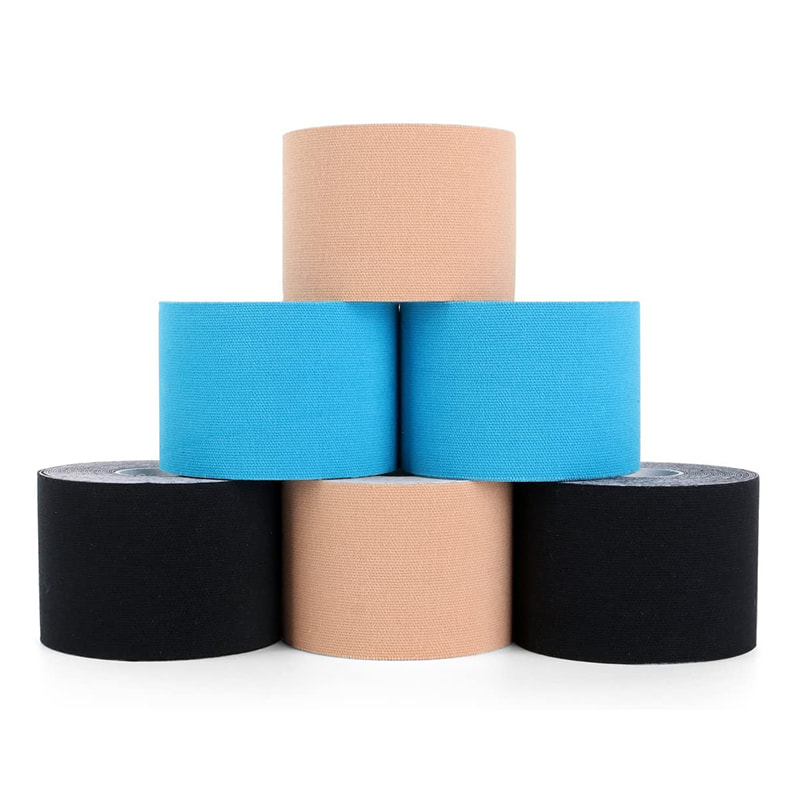 Athletic Sports Physio Kinesiology Tape for Pain ReliefView this cotton kinesiology tape for sports and physio use, with pre-cut or uncut options and private-label potential for shaped joint support.View Product →
You can also review the OEM page for the wider custom programme, including printed packaging and blended product sets.
custom manufacturing and private label options
production facilities and exhibition history
Questions We Get Asked Most Often
How long does a first sports tape order usually take?
Samples for a standard tape can move in a couple of weeks. Custom printing, pre-cut shapes and bespoke packaging add time, and the honest answer depends on whether the artwork is final before production is scheduled.
Can we mix tape families in one shipment?
Yes, and most buyers do, since rigid tape, elastic bandage and underwrap are usually sold together. Mixed loading does require the packaging and carton marks to be agreed early.
What is the minimum order for private label?
It depends on the item and the level of customization. Printed adhesive and custom cartons carry higher minimums than a colour change on a standard roll.
A Practical Way to Start
Pick two tape families, ask for production-batch samples rather than display samples, and measure them against what you already sell. If the unwind, stretch and adhesive behaviour hold up, the commercial conversation becomes straightforward. If they do not, you have lost a few weeks rather than a container. That approach has served our buyers well for years, and it tends to build partnerships that survive their first busy season.

 English
 Español
 русский
 Français
 Deutsch
 italiano
 By Admin