Medication routines can become difficult to manage when several doses must be taken throughout the day. People may need different tablets in the morning, at midday, in the evening, and at bedtime. Remembering each dose, opening multiple containers, and carrying medicines safely can create unnecessary complexity for users, caregivers, pharmacies, hospitals, and home healthcare providers. A well-designed weekly pill organizer provides a simple way to arrange medication in advance, improve routine visibility, and reduce confusion during everyday use.
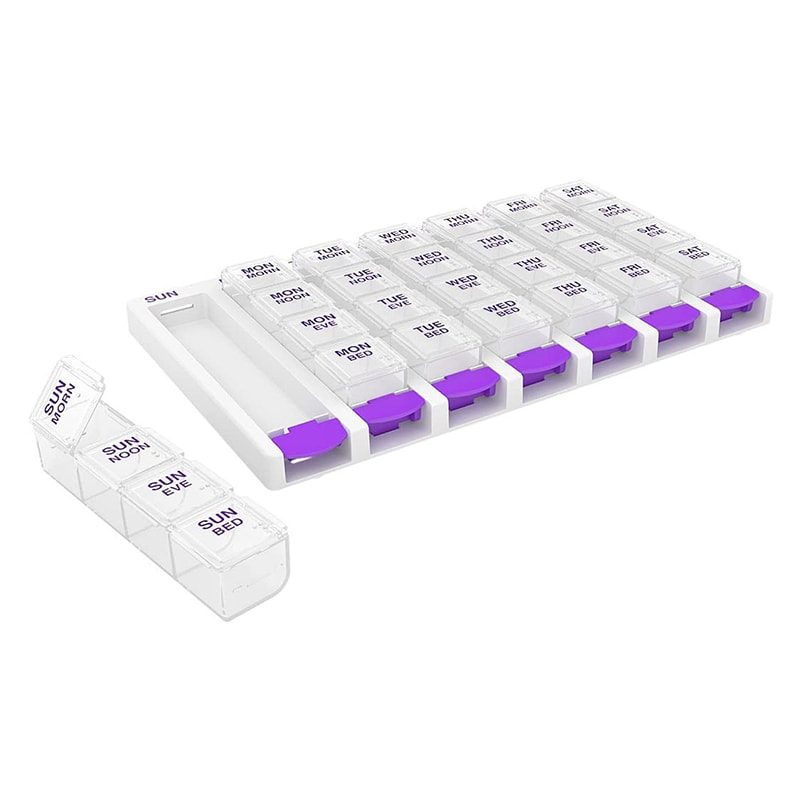
The Removable Weekly 4 Times a Day Push Button Pill Organizer, model DC661313, is designed for organized weekly medication storage. It combines seven days of planning with four daily compartments, creating a total of 28 medication sections. Its push-button opening mechanism, rounded compartment bottoms, removable construction, and durable plastic body are intended to make medication retrieval straightforward and convenient.
This product is suitable for consumer healthcare distribution, pharmacy retail, hospital discharge programs, elderly care services, family medicine management, travel preparation, and promotional healthcare programs. It is also appropriate for wholesalers and importers seeking a practical pill box that offers clear dose organization without requiring an overly complicated mechanism.
Understanding the Product Concept
A weekly pill organizer is more than a container divided into small sections. Its value depends on how easily users can identify a dose, open the correct compartment, retrieve medication, and prepare the organizer for repeated use. The DC661313 addresses these functional requirements through a structured seven-day format with four daily dosing periods.
Each day is divided into four compartments. This arrangement can help users prepare medication according to their own schedules, such as morning, noon, evening, and bedtime. The exact dosing schedule should always be determined by a healthcare professional or the medication label. The organizer is intended to support an existing medication plan rather than replace professional instructions.
The removable design adds flexibility to the weekly format. A user may be able to handle a smaller section instead of carrying the entire organizer, depending on the configuration and intended use. Removable sections can also support preparation, cleaning, transportation, and distribution. For caregivers, a removable format may make it easier to organize doses for a particular day or transfer a prepared section for short-term use.
The product is made from PP and ABS plastic. Polypropylene is widely used for lightweight consumer and healthcare-related products because it offers a useful balance of low weight, chemical resistance, and practical durability. ABS plastic is valued for its rigidity, impact resistance, and ability to support molded structural components. The combination allows the organizer to remain light enough for daily handling while providing a robust external structure.
Key Product Features
Seven-Day Medication Planning
The seven-day format supports weekly preparation. Instead of opening several original containers every time a dose is due, a user can arrange suitable medication in advance, subject to the advice of a pharmacist or healthcare professional. A complete week can be visually reviewed, making it easier to identify whether a particular time period has been prepared.
Weekly planning can be helpful for individuals who take recurring medicines, vitamins, supplements, or other oral products. It may also help family members or caregivers review whether a routine has been organized. However, medicines with special storage requirements, moisture sensitivity, light sensitivity, refrigeration requirements, or complex administration instructions may not be suitable for transfer into a general pill organizer. Users should follow the recommendations on the product packaging and consult a qualified professional when uncertain.
Four Daily Compartments
Four compartments per day provide a practical structure for people with multiple daily dosing periods. The layout is more detailed than a simple seven-compartment weekly box while remaining easier to manage than a large collection of separate containers. The four-time-a-day format supports common routines that divide medication into morning, midday, evening, and nighttime periods.
The compartment arrangement can also help distinguish medications taken at different times. This may reduce the chance of selecting from the wrong time period, particularly when the organizer is prepared carefully and stored in a consistent location. Clear labeling and good visibility are important elements in any medication organization system, and the daily multi-compartment format contributes to that purpose.
Push-Button Opening Mechanism
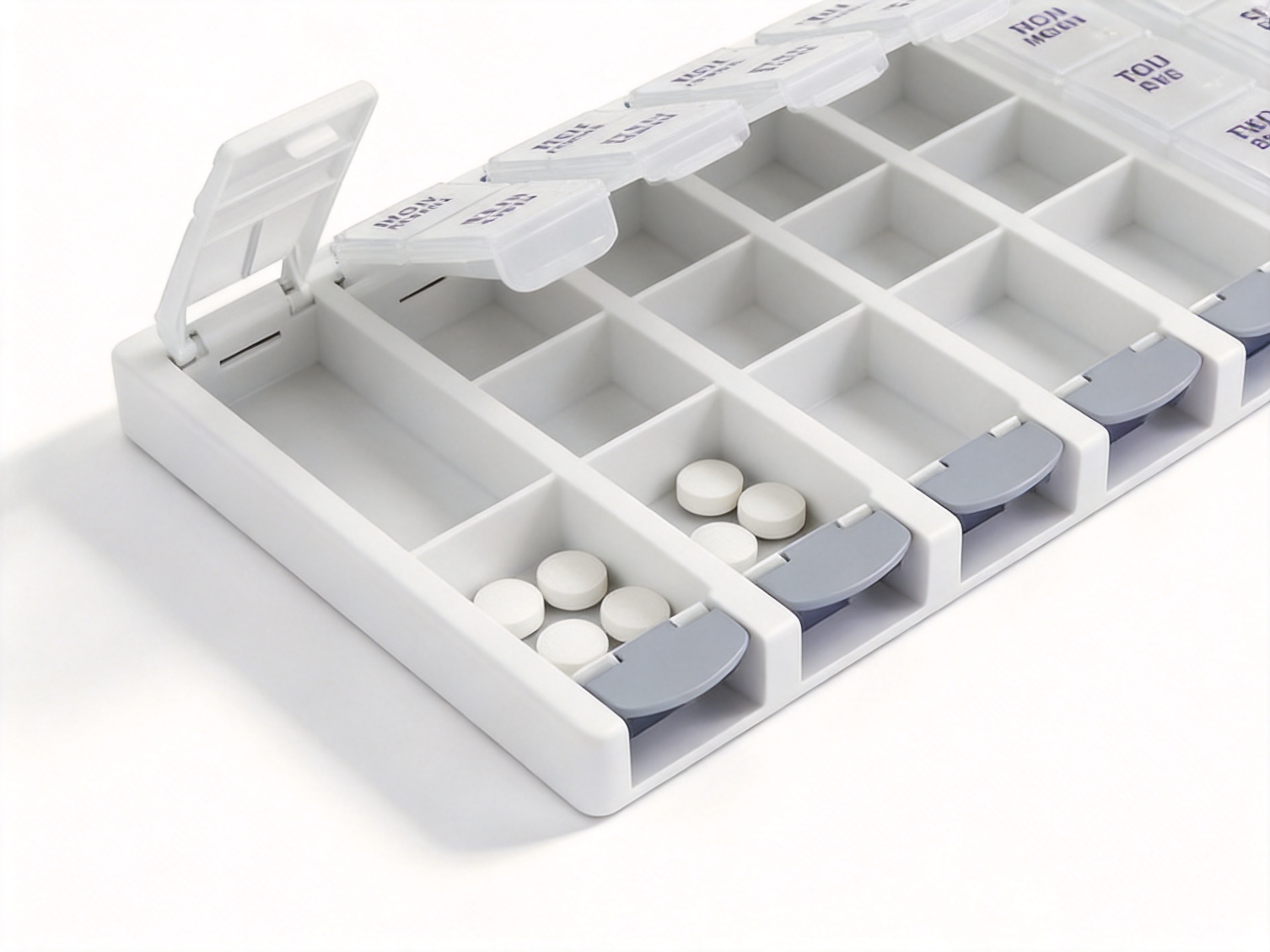
The push-button design is one of the organizer’s primary user-oriented features. Conventional pill boxes may require users to lift small lids with their fingernails or apply pressure to a narrow edge. Such actions can be inconvenient for older adults, people with limited hand strength, or users experiencing reduced dexterity.
A push-button opening system gives the user a defined point of interaction. Pressing the button releases the corresponding compartment lid, helping make access more intuitive. The mechanism is especially useful when the product is opened repeatedly throughout the day. By providing a consistent opening action, it can make the organizer feel more predictable and easier to use than a box with loose or difficult-to-grip flaps.
Ease of opening should not be confused with a child-resistant closure. The product information identifies the organizer as easy to open and does not state that it is child-resistant. It should therefore be stored safely and kept out of the reach of children and anyone who might accidentally consume the contents.
Rounded Bottoms for Easier Retrieval
Small rectangular compartments can make it difficult to remove tablets when the contents settle into the corners. The rounded-bottom construction helps reduce this inconvenience. Medication can be easier to reach with a fingertip, and the curved base may reduce the likelihood that small tablets remain trapped in sharp internal corners.
This design detail is particularly relevant for users who need to retrieve a small number of tablets quickly. It can also simplify emptying and cleaning compared with a compartment that has deep, square corners. The rounded interior is a functional improvement that supports the overall objective of convenient daily use.
Capacity for Aspirin-Sized Pills
Each compartment holds up to 11 aspirin-sized pills, according to the provided product specifications. Capacity can vary depending on tablet shape, thickness, coating, capsule size, and the way items are arranged. The stated capacity should therefore be considered an approximate reference rather than a guarantee for every type of medication.
The capacity is suitable for many ordinary daily medication routines, especially when the user takes several small or medium-sized tablets. It also gives wholesalers a clear specification to communicate to customers. Retail packaging and product instructions should explain that larger tablets, bulky capsules, irregular shapes, and loose supplements may occupy more space.
Removable Construction
Removability increases the organizer’s potential applications. A complete seven-day unit can support home planning, while an individual day section may be useful for travel, work, school, short visits, or caregiver handover. The ability to separate sections can also make the organizer easier to handle when one day needs to be transported independently.
For healthcare distributors, the removable feature may create opportunities for different packaging presentations and user instructions. For example, a retailer can position the product as a weekly home organizer while highlighting its flexibility for short-term portability. The construction may also support different color-coding or labeling strategies, depending on the customer’s customization requirements.
Durable Material Selection
The body uses PP and ABS plastic, materials commonly selected for molded products that must withstand regular handling. The organizer is intended for repeated use rather than one-time disposal. Its durability is important because users may open and close compartments daily, carry the organizer between locations, and refill it regularly.
A durable product can also reduce replacement frequency and improve customer satisfaction. For distributors, this may support a stronger value proposition than a very low-cost box with fragile hinges, weak lids, or inconsistent buttons. Durability does not mean the organizer is indestructible. Users should avoid excessive force, extreme heat, heavy impact, and improper cleaning methods.
Removable Weekly 4 Times a Day Push Button Pill Organizer
Advantages Compared with Basic Pill Boxes
Basic pill boxes often contain one compartment for each day of the week. Although this format can be adequate for people taking medication once daily, it may not provide enough separation for users with several scheduled doses. Combining seven days with four dosing periods creates a more detailed organizational system without requiring 28 unrelated containers.
The push-button mechanism is another advantage over ordinary snap-lid products. Some basic pill boxes use small hinged covers that can be difficult to lift, particularly when the user has short fingernails, weak grip strength, joint discomfort, or limited dexterity. The defined push-button action gives the product a more accessible operating concept.
Rounded bottoms also distinguish the organizer from compartments designed solely for manufacturing simplicity. When a pill settles into a narrow corner, retrieval may require tapping the container or using a fingertip awkwardly. A curved base supports a smoother user experience and may reduce frustration during repeated daily use.
The removable design offers greater flexibility than a fixed, single-piece weekly box. A user can prepare the complete week and then potentially separate a daily section for transportation. This is useful for people who spend time away from home, travel frequently, attend appointments, or receive assistance from a caregiver.
The organizer also offers a clear balance between capacity and portability. Very small pill boxes may be convenient to carry but offer little room for multiple daily doses. Large medication cases may provide more capacity but become bulky and difficult to store. The DC661313 measures 21 x 21.5 x 2.3 centimeters, providing a broad weekly layout in a relatively shallow profile.
Comparison of Functional Characteristics
| Feature |
DC661313 Organizer |
Basic Daily Pill Box |
Potential User Benefit |
| Planning period |
Seven days |
Often one day or seven single compartments |
Supports advance weekly preparation |
| Daily organization |
Four compartments per day |
May offer one compartment per day |
Separates several dosing periods |
| Opening method |
Push-button access |
Commonly uses lift lids or snap covers |
Provides a defined and repeatable opening action |
| Compartment base |
Rounded bottoms |
May have square or narrow corners |
Helps make tablets easier to retrieve |
| Construction |
Removable weekly format |
Often fixed construction |
Supports flexible carrying and handling |
| Material |
PP and ABS plastic |
Varies by supplier |
Combines light weight with practical durability |
| Approximate capacity |
Up to 11 aspirin-sized pills per compartment |
Varies widely |
Offers a clear planning reference |
The comparison does not mean that every competing product lacks these features. Pill organizers are available in many designs, and product quality varies among suppliers. The principal advantage of this model is the combination of features in one unit: weekly planning, four daily time periods, push-button access, rounded compartment bottoms, removable sections, and a durable plastic construction.
Practical Applications
Home Medication Management
At home, the organizer can help users prepare a recurring schedule at the beginning of the week. The user or caregiver can fill each compartment according to written instructions, then review the complete layout before use. This may reduce the need to handle several bottles multiple times a day.
Preparation should take place in a clean, dry, well-lit area. Different medications should only be combined in the same compartment when permitted by a pharmacist or another qualified professional. Some medicines must remain in their original packaging or require protection from moisture, heat, or light. The organizer is a planning and storage aid, not a universal replacement for original pharmaceutical packaging.
Caregiver Support
Caregivers often assist older adults or people managing long-term treatment routines. A weekly organizer can provide a visible planning structure that helps caregivers check whether doses have been prepared. The removable daily format may also be convenient when a caregiver prepares one day at a time or transfers a daily section to another location.
Caregivers should confirm the medication schedule from an authoritative source and avoid relying only on memory. A written chart, prescription label, medication management system, or healthcare professional’s instructions should be used during preparation. The organizer can support the process, but it does not verify the medicine, dosage, or timing.
Travel and Daily Mobility
A full weekly organizer may be used at home, while a removable section can potentially support short trips or daily outings. This can reduce the need to carry an entire collection of bottles for a brief period. Users should consider local regulations, airline requirements, original labeling requirements, and the sensitivity of specific medicines before transferring medication for travel.
The product’s shallow 2.3-centimeter profile may help it fit into a drawer, bedside cabinet, handbag, medical supply case, or travel bag. Its width and length provide room for a complete weekly layout, so users should select a storage location that protects the organizer from pressure, excessive heat, moisture, and unauthorized access.
Pharmacy and Retail Distribution
Pharmacies and healthcare retailers can offer this organizer as a reusable medication-management accessory. Its features are easy to explain to consumers: seven days, four periods per day, push-button openings, removable sections, and capacity for aspirin-sized pills. These clear benefits support shelf communication and product comparison.
Wholesalers may also supply the product to hospitals, eldercare institutions, home healthcare businesses, rehabilitation centers, and first aid suppliers. The model number DC661313 helps buyers identify the exact product during quotation, ordering, inspection, and repeat purchasing.
Institutional and Promotional Programs
Healthcare organizations, insurance-related programs, community health campaigns, and wellness initiatives may use pill organizers as part of medication adherence education. The product can be distributed alongside printed instructions, medication review services, or caregiver guidance. Any program should emphasize safe preparation, responsible storage, and consultation with healthcare professionals.
Design Details That Influence User Experience
Medication organizers are used frequently, so minor design decisions can have a significant effect on satisfaction. The opening force, button position, lid alignment, compartment depth, surface finish, labeling clarity, and overall stability all contribute to the user’s experience.
The push-button mechanism should operate consistently across the organizer. A button that is too stiff may be difficult for some users, while a mechanism that is too loose may open unintentionally during transport. Manufacturing control is therefore important. Proper tooling, assembly checks, and functional testing help ensure that the buttons and lids perform within the intended range.
Rounded bottoms require attention to molding and finishing. The internal curves should be formed smoothly, without sharp flash, rough edges, or obstructive molding defects. A clean interior supports comfortable retrieval and makes routine cleaning more practical.
Removable sections require reliable engagement between components. Sections should remain together during ordinary handling while still allowing the intended separation action. Alignment, fit, and dimensional consistency are key quality factors. If the parts are molded inconsistently, the product may feel loose, difficult to separate, or unsuitable for repeated use.
The external dimensions of 21 x 21.5 x 2.3 centimeters provide a useful reference for packaging designers, retailers, and logistics teams. Carton dimensions, protective inserts, shipping quantities, and warehouse shelving can be planned using these measurements, with additional space allowed for individual packaging and protection.
Manufacturing Process and Quality Considerations
Reliable production of a multi-compartment pill organizer requires more than selecting suitable plastic materials. It involves product engineering, mold design, material preparation, injection molding, trimming, assembly, functional inspection, cleaning, packaging, and final quality control. Each stage can influence the appearance, durability, and usability of the finished product.
Product Engineering
The manufacturing process begins with a defined product specification. For this model, the main requirements include the seven-day, four-times-a-day structure; removable construction; push-button opening; rounded compartment bottoms; PP and ABS materials; approximate capacity; external dimensions; and repeated-use expectations.
Engineering teams review the relationship between component size, wall thickness, hinge or connection areas, button travel, lid clearance, and moldability. A design must be practical for the user and suitable for stable mass production. Excessively thin areas may be vulnerable to deformation, while unnecessarily thick sections may increase weight, cycle time, or material consumption.
Mold Design and Injection Molding
PP and ABS components are generally manufactured through injection molding. In this process, plastic material is heated until it reaches a flowable state, injected into a shaped mold cavity, cooled, and removed as a formed component. Mold design determines the external shape, interior curves, button openings, connection features, and surface details.
For a product with many repeated compartments, dimensional consistency is essential. The mold must reproduce the same geometry across the weekly layout. Proper gate design, cooling channels, ejection mechanisms, and draft angles help reduce warping and support smooth removal from the mold.
Manufacturing teams may monitor injection pressure, melt temperature, cooling time, cycle time, and material drying or preparation requirements. Stable parameters help reduce common defects such as short shots, sink marks, flash, color variation, warpage, and inconsistent wall thickness.
Material Control
Material control includes verifying the specified PP and ABS materials, checking incoming batches, maintaining proper storage conditions, and ensuring that production staff use the approved material formulation. Colorants or additives, when applicable, should be managed consistently to maintain appearance and performance.
Material traceability is valuable for organized manufacturing. Batch records can help identify when a component was produced, which raw material lot was used, and which inspection results were recorded. This supports corrective action if a quality issue is discovered during internal inspection or customer feedback.
Component Assembly
After molding, components may require trimming, deburring, cleaning, printing, labeling, or assembly. Push buttons and removable sections must be fitted correctly. Assembly operators should verify that each compartment opens as intended and that no component is missing, cracked, distorted, or incorrectly positioned.
Assembly fixtures can help maintain consistent positioning and reduce variation between operators. Clear work instructions and line inspections are also important, especially when the product contains multiple similar components that could otherwise be assembled incorrectly.
Functional Testing
Functional testing may include opening and closing checks, push-button operation, section removal and reconnection, dimensional verification, visual inspection, and simulated handling. Repeated-use testing can provide information about whether the mechanism remains functional after many opening cycles.
Capacity checks may use standardized aspirin-sized reference items or other approved test pieces. Because actual medications vary in size and shape, capacity testing should be used as a production reference rather than a guarantee for every medicine. Packaging should communicate the approximate nature of the stated capacity.
Visual and Dimensional Inspection
Visual inspection can identify flash, sharp edges, cracks, discoloration, contamination, incomplete molding, uneven surfaces, and printing errors. Dimensional inspection confirms that the product remains within approved tolerances. Key dimensions may include overall length, width, thickness, compartment size, button position, and connection geometry.
Inspection standards should be defined before mass production. A structured quality plan can specify sampling levels, acceptable defect limits, critical defects, major defects, and minor cosmetic defects. Consistent inspection criteria help protect both the manufacturer and the buyer from uncertainty during shipment acceptance.
Quality Management Strengths
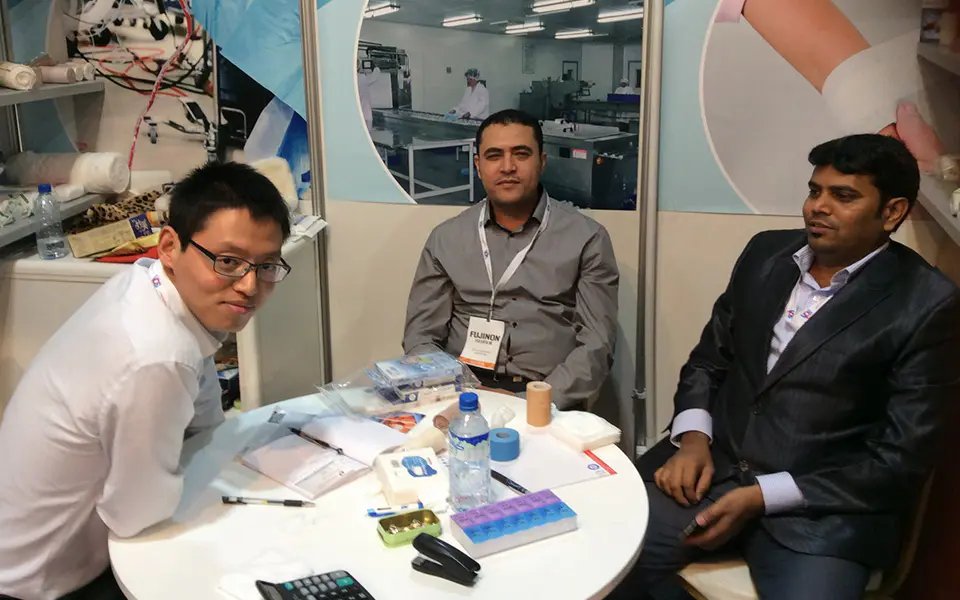
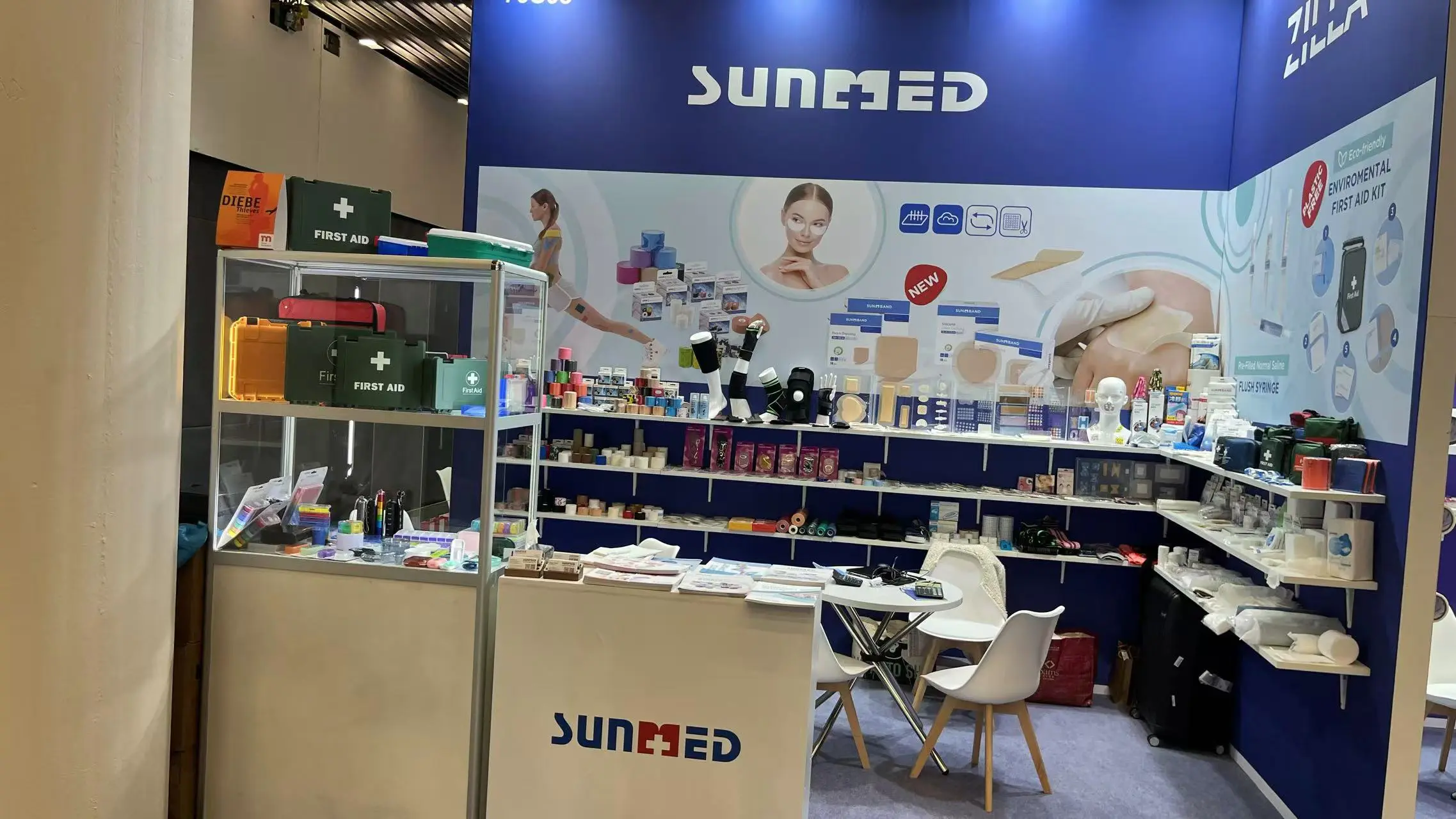
Suzhou Sunmed Co., Ltd. states that it maintains a professional quality control team comprising hundreds of personnel and that its inspection procedures follow ISO13485:2016 standards. The company also states that most of its products are CE certified and that its Suzhou factories comply with FDA requirements. These statements indicate an organized quality-management orientation and experience with medical and healthcare product expectations.
Certification and compliance statements should always be reviewed against the exact product, market, intended use, and current supporting documentation. Buyers should request relevant certificates, declarations, test reports, technical files, labeling information, and quality agreements where appropriate. Requirements can differ between countries and product classifications.
Company Manufacturing and Supply Capabilities
Suzhou Sunmed Co., Ltd. is described as a professional manufacturer and exporter of first aid, medical, and healthcare products in China. The company operates multiple production bases in Jiangsu, Zhejiang, and Anhui Province. This multi-location production structure may provide broader manufacturing capacity and support for different product categories.
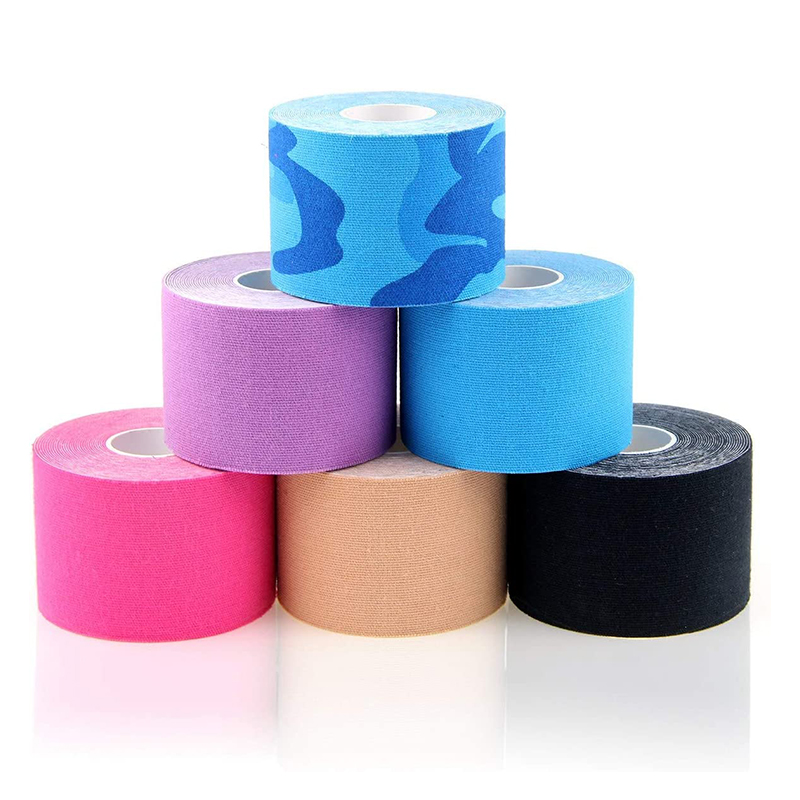
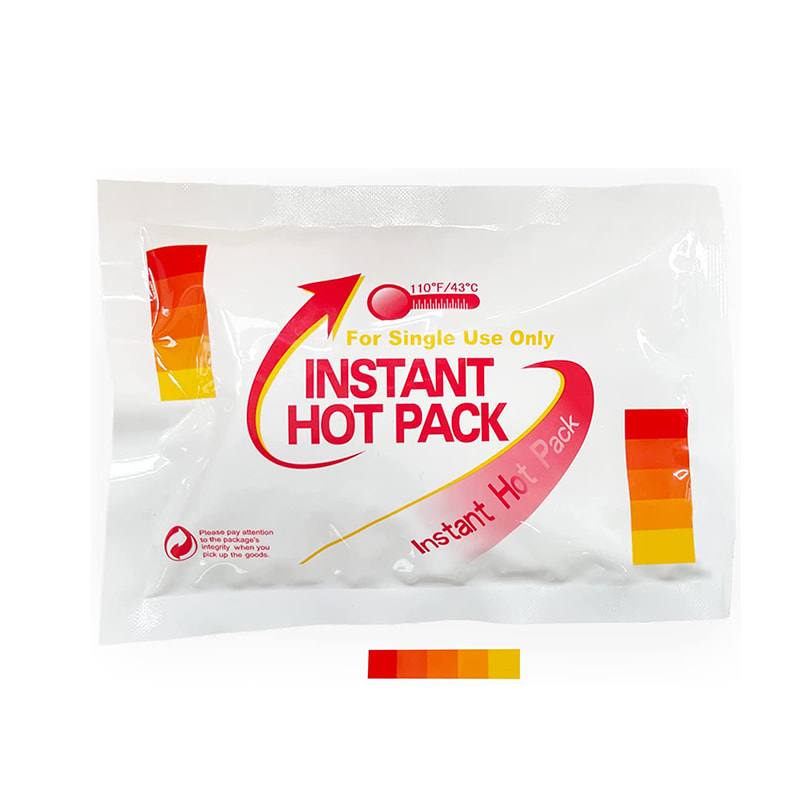
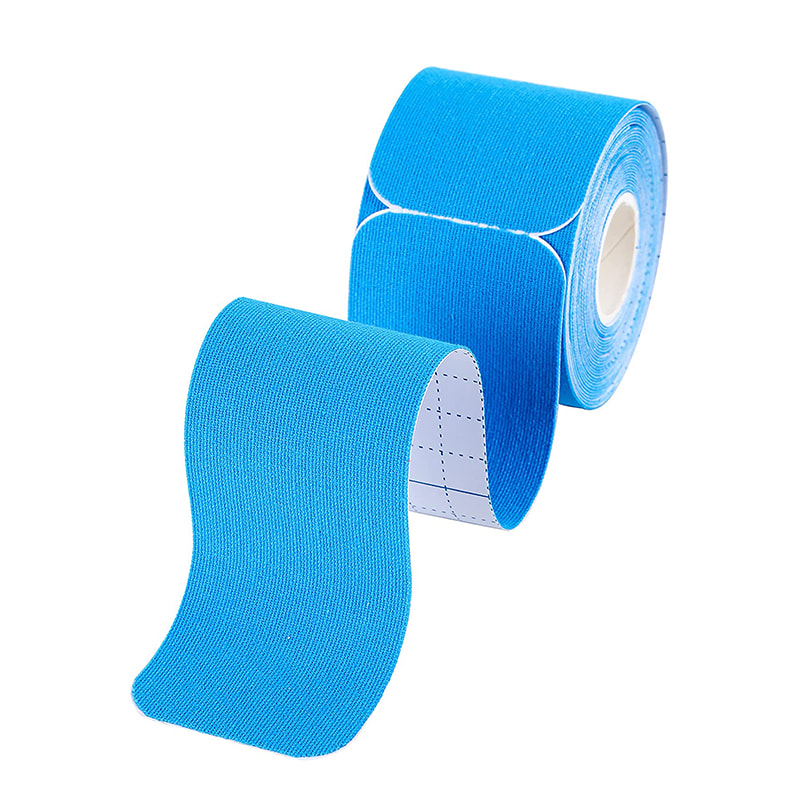
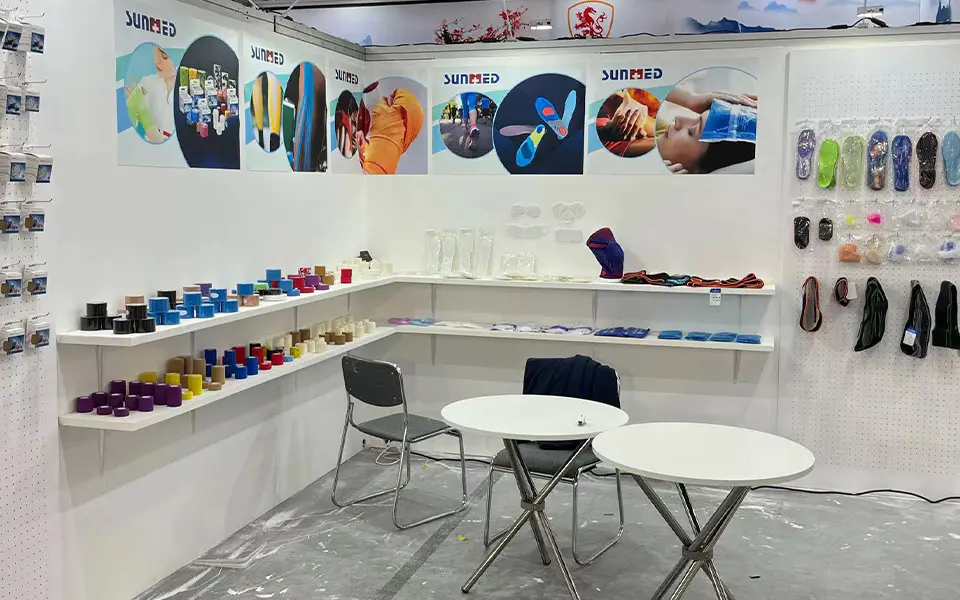
The company reports approximately 30 years of experience in the medical device, medical equipment, and medical consumables industry. Its product expertise includes first aid products, wound dressings, medical gauze, bandages, medical tape, medical cotton, non-woven products, sports bandages, kinesiology tape, cohesive bandages, elastic adhesive bandages, family healthcare products, hot and cold packs, pill boxes, disposable syringes, catheters, surgical consumables, and other medical supplies.
This broad product range can benefit buyers seeking consolidated sourcing. A distributor may be able to discuss pill organizers alongside first aid, wound care, sports support, family healthcare, or medical consumable products. Consolidated communication can simplify supplier qualification, sample coordination, purchasing administration, and shipment planning.
Experience Across International Markets
The company reports exporting to more than 60 countries worldwide. Its stated markets include Europe, Southeast Asia, Africa, and Oceania. The named countries include the United Kingdom, Germany, Spain, Denmark, the Netherlands, Japan, Malaysia, the Philippines, Thailand, Tanzania, Mauritius, South Africa, Australia, and New Zealand.
International distribution requires attention to packaging, labeling, documentation, shipping protection, customs classification, and customer communication. Experience with different markets can help a supplier understand that buyers may require different carton marks, languages, declarations, inspection documents, or packaging formats. Final requirements remain the responsibility of the buyer and should be confirmed for the destination market.
Investment in Specialized Production
The company states that it established its first aid factory in 2008 to serve first aid customers. It also reports establishing its own factory for kinesiology tape, cohesive bandages, and elastic adhesive bandages in 2021 in response to growing customer demand. These investments demonstrate an approach based on developing dedicated production resources for important product categories.
Although the pill organizer is a different product from adhesive bandages or tapes, the wider manufacturing background is relevant. It suggests experience with product development, material handling, production planning, inspection procedures, and international order fulfillment across multiple healthcare categories.
OEM and Wholesale Support
The company presents itself as an OEM medical consumables manufacturer and medical devices factory. For buyers, OEM capability may support customized packaging, private-label projects, color selection, printed instructions, product inserts, and other approved modifications. The feasibility of each option depends on order quantity, tooling, regulatory requirements, artwork approval, and production scheduling.
The listed minimum order quantity for DC661313 is 5,000 pieces. This quantity is suitable for wholesalers, national distributors, pharmacy groups, institutional buyers, and private-label programs that require commercial-scale purchasing. Smaller customers may need to discuss available stock, mixed orders, standard packaging, or alternative quantities directly with the supplier.
OEM projects should include a documented approval process. Artwork should be checked for spelling, translations, dosage-related wording, warnings, symbols, dimensions, color references, and legal information. Samples or pre-production proofs should be approved before mass production begins.
Packaging, Storage, and Distribution Considerations
Packaging should protect the organizer from scratches, dust, impact, pressure, and contamination during handling and transport. Because the product contains buttons, lids, and removable sections, packaging should prevent excessive movement that could cause damage or separation during shipment.
Retail packaging may include the product name, model number, dimensions, material information, approximate compartment capacity, usage guidance, cleaning recommendations, safety warnings, and manufacturer information. If the product is sold in a regulated market, labeling should be reviewed against local requirements.
Carton planning should account for the product’s dimensions of 21 x 21.5 x 2.3 centimeters. Internal carton dividers or protective bags may help maintain presentation quality. Buyers should confirm whether the quoted dimensions refer to the product alone or include any attached packaging components.
Warehouses should store the organizer in a dry, clean environment away from direct sunlight, extreme temperatures, chemical vapors, and heavy objects. Stacking pressure should be controlled to avoid warping. The first-in, first-out principle may be used to support organized inventory management, especially for products with printed packaging or market-specific labels.
Cleaning and Responsible Use
The organizer should be cleaned according to the manufacturer’s instructions. In general, users should avoid harsh chemicals, abrasive tools, excessive heat, and prolonged soaking unless the product documentation specifically permits those methods. The organizer should be completely dry before medication is placed inside.
Medication residue should not be mixed with new medication during refilling. Users should empty and inspect compartments, remove dust or residue, and confirm that each section is clean and dry. If a compartment becomes cracked, heavily scratched, distorted, or difficult to close, the organizer should be replaced.
The product should not be shared without proper cleaning and consideration of hygiene. It should be kept away from children and pets. Users should confirm whether each medication is suitable for storage outside its original packaging. Special formulations, fragile tablets, moisture-sensitive products, and medicines with particular storage instructions may require alternative handling.
A pill organizer does not identify tablets, confirm doses, prevent drug interactions, or guarantee medication adherence. It is an organizational accessory. Medication decisions must be based on prescriptions, labels, professional advice, and the user’s established care plan.
Purchasing and Quality Evaluation Checklist
Buyers evaluating this product should begin by confirming the exact model, product configuration, materials, dimensions, color, packaging, and quantity. The model number DC661313 should appear consistently on quotations, purchase orders, inspection documents, and shipping records.
Samples should be reviewed for button performance, lid alignment, removal and reconnection of sections, rounded compartment quality, surface finish, structural strength, labeling clarity, and overall appearance. Buyers may also conduct a practical capacity review using representative aspirin-sized reference items.
For larger orders, a written specification should define acceptable cosmetic standards, functional requirements, packaging configuration, carton quantity, shipping marks, and inspection procedures. If the buyer requires third-party inspection, this should be arranged before production completion and communicated to the supplier in advance.
| Evaluation Area |
Recommended Verification |
| Product identity |
Confirm model DC661313 and approved product drawings or sample |
| Dimensions |
Check approximately 21 x 21.5 x 2.3 cm against agreed tolerances |
| Materials |
Confirm PP and ABS plastic specifications and approved colors |
| Function |
Test push buttons, lids, removable sections, and repeated opening |
| Capacity |
Use standardized aspirin-sized reference items for comparison |
| Appearance |
Inspect for flash, cracks, contamination, scratches, and color variation |
| Packaging |
Confirm individual packaging, carton quantity, protection, and markings |
| Documentation |
Request applicable quality, compliance, and shipping documents |
| Order quantity |
Review the stated MOQ of 5,000 pieces and production lead time |
Why Supplier Experience Matters
When purchasing a pill organizer in commercial quantities, the product itself is only one part of the decision. Supplier reliability, quality consistency, communication, documentation, production capacity, and after-sales support can strongly influence the total outcome.
A supplier with experience across medical consumables may already understand the importance of controlled production, batch traceability, inspection records, packaging accuracy, and export documentation. This experience can reduce avoidable delays and improve the consistency of repeat orders.
The company’s reported production bases in several Chinese provinces and its history in first aid, wound care, sports support, family healthcare, and medical instruments indicate a diversified operating background. Diversification can support broader sourcing discussions while also requiring buyers to confirm which factory, production line, and quality system apply to the specific pill organizer order.
Communication is especially important for OEM and wholesale projects. Buyers should provide detailed requirements early, including target market, language, packaging style, color, logo, testing expectations, delivery terms, and inspection arrangements. Clear specifications help prevent misunderstandings and allow the manufacturer to evaluate feasibility accurately.
Potential Market Positioning
The product can be positioned as a reusable weekly medication-planning accessory rather than a simple storage box. Its strongest selling points are the four daily compartments, push-button opening, rounded bottoms, removable format, and durable PP plus ABS construction.
For retail consumers, the product can be presented as a practical solution for organizing recurring medication routines. For caregivers, the focus can be on weekly preparation and easier dose review. For pharmacies, the product can be positioned as a helpful accessory for customers managing multiple daily dosing periods. For institutional buyers, the emphasis can be placed on standardized supply, repeatable organization, and wholesale availability.
Marketing materials should use responsible language. It is appropriate to describe the organizer as helping users arrange or manage medication. It is not appropriate to claim that it cures disease, guarantees adherence, eliminates medication errors, or replaces professional advice unless such claims are specifically supported and legally permitted.

Frequently Asked Questions
What is the main purpose of this pill organizer?
The main purpose is to organize medication for seven days, with four compartments available for each day. It helps users prepare and identify daily dosing periods in a structured format. It does not prescribe medication or replace instructions from a healthcare professional.
How many compartments does the organizer have?
The organizer is designed for seven days and four daily times, providing 28 compartments in total.
How many pills fit in each compartment?
Each compartment holds up to 11 aspirin-sized pills according to the provided specification. Actual capacity varies depending on tablet size, thickness, shape, capsules, and other contents.
What materials are used?
The listed materials are PP and ABS plastic. PP can help provide a lightweight and practical body, while ABS can contribute rigidity and impact resistance in suitable structural components.
What are the product dimensions?
The stated dimensions are 21 x 21.5 x 2.3 centimeters.
How does the push-button mechanism work?
The user presses the designated button to open the corresponding compartment. The push-button design provides a defined opening point and is intended to be easier to use than a small lift tab on some conventional pill boxes.
What is the benefit of rounded compartment bottoms?
Rounded bottoms can make pills easier to reach by reducing deep, sharp internal corners. This may improve retrieval and make emptying or cleaning more convenient.
What does removable mean in this product?
The product uses a removable weekly format, allowing sections to be separated according to the intended design. This may support preparation, transportation, or short-term daily use. Buyers should confirm the exact separation method with the supplier sample or technical drawing.
Is the organizer child-resistant?
The supplied information does not identify the organizer as child-resistant. It should be stored securely and kept away from children and anyone who could accidentally consume the contents.
Can every medicine be transferred into the organizer?
No. Some medicines require original packaging or special protection from moisture, light, air, heat, or contamination. Users should follow medication labels and consult a pharmacist or healthcare professional before transferring any medicine.
Can the organizer be used for travel?
A removable section may be convenient for short trips or daily transportation, but users should review travel regulations and medication-storage requirements. For some journeys, original labeled packaging may be necessary.
Is the product suitable for wholesale purchasing?
Yes. The listed minimum order quantity is 5,000 pieces, which is suitable for wholesalers, distributors, pharmacy groups, institutions, and private-label projects that require commercial quantities.
Does the manufacturer offer OEM support?
The company describes itself as an OEM medical consumables manufacturer. Buyers can discuss private-label packaging, artwork, colors, inserts, and other customization options. Feasibility depends on quantity, specifications, tooling, approvals, and market requirements.
What quality systems does the company report?
The company reports a professional quality control team comprising hundreds of personnel and inspection procedures that follow ISO13485:2016 standards. It also states that most products are CE certified and that its Suzhou factories comply with FDA requirements. Product-specific documentation should be requested and verified for the intended market.
What is the model number?
The model number is DC661313. Buyers should use this number in quotations, purchase orders, samples, inspection records, and shipping documentation.
Conclusion
The Removable Weekly 4 Times a Day Push Button Pill Organizer offers a practical combination of weekly planning, daily dose separation, accessible opening, easy retrieval, portability, and repeated-use construction. Its seven-day and four-time-a-day structure gives it greater organizational detail than many basic single-compartment daily pill boxes. The push-button mechanism and rounded bottoms focus on everyday usability, while the removable format provides additional flexibility for caregivers, travelers, and mobile users.
The use of PP and ABS plastic supports a balance of light weight and durability. The stated dimensions, capacity, model number, and minimum order quantity provide clear information for commercial buyers. For wholesalers and private-label customers, the product may be especially attractive when combined with the supplier’s broader experience in first aid, wound care, sports support, family healthcare, and medical consumables.
Manufacturing quality depends on controlled materials, accurate molds, consistent injection molding, careful assembly, functional testing, dimensional inspection, and reliable packaging. The manufacturer reports extensive industry experience, multiple production bases, international export activity, a large quality control team, and procedures aligned with ISO13485:2016 standards. Buyers should still request current product-specific documentation and conduct sample and shipment inspections appropriate to their market.
As a medication organization accessory, the product should be used responsibly. It can help structure a routine, but it cannot replace professional medication advice, original storage instructions, or secure handling. When properly selected, prepared, labeled, and maintained, the organizer can provide a convenient and durable solution for home healthcare, pharmacy retail, institutional supply, and international wholesale distribution.
References
1. Product specification for Removable Weekly 4 Times a Day Push Button Pill Organizer, Model DC661313.
2. Supplier-provided product information covering dimensions, materials, capacity, minimum order quantity, and intended features.
3. ISO 13485:2016, Medical devices — Quality management systems — Requirements for regulatory purposes.
4. General principles of safe medication storage and handling provided through pharmacy and healthcare practice guidance.
5. General technical references on thermoplastic injection molding, dimensional inspection, and quality control for molded consumer healthcare products.
6. Supplier-provided company profile describing manufacturing bases, export markets, product categories, OEM capabilities, and quality-management practices.

 English
 Español
 русский
 Français
 Deutsch
 italiano
 By Admin