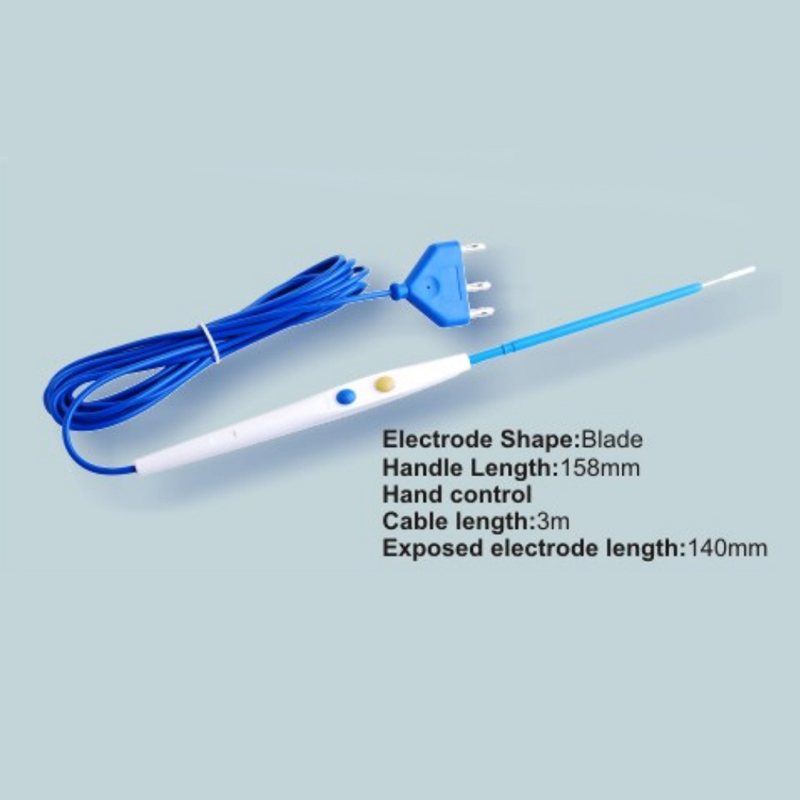
In modern operating rooms, precision, consistency, and practical usability are essential qualities for every surgical instrument. The electrosurgical pencil is one of the most frequently used devices in procedures that require controlled cutting and coagulation through electrosurgical energy. The Electrosurgical Pencil SMD-312103 is designed for clinical environments where surgeons and operating teams need a dependable hand-control instrument with a blade-shaped electrode, a 158 mm handle, a 3 m cable, and an exposed electrode length of 140 mm. These specifications support practical surgical handling, stable positioning, and convenient connection to compatible electrosurgical generator systems.
This article focuses on the product features, competitive advantages, manufacturing strengths, quality management, and practical application value of the electrosurgical pencil. It also explains why a professionally manufactured electrosurgical pencil can help support efficient surgical workflow, reduce unnecessary handling interruptions, and provide a reliable option for hospitals, surgical centers, distributors, and medical supply purchasers.
Electrosurgical Pencil
Product Overview
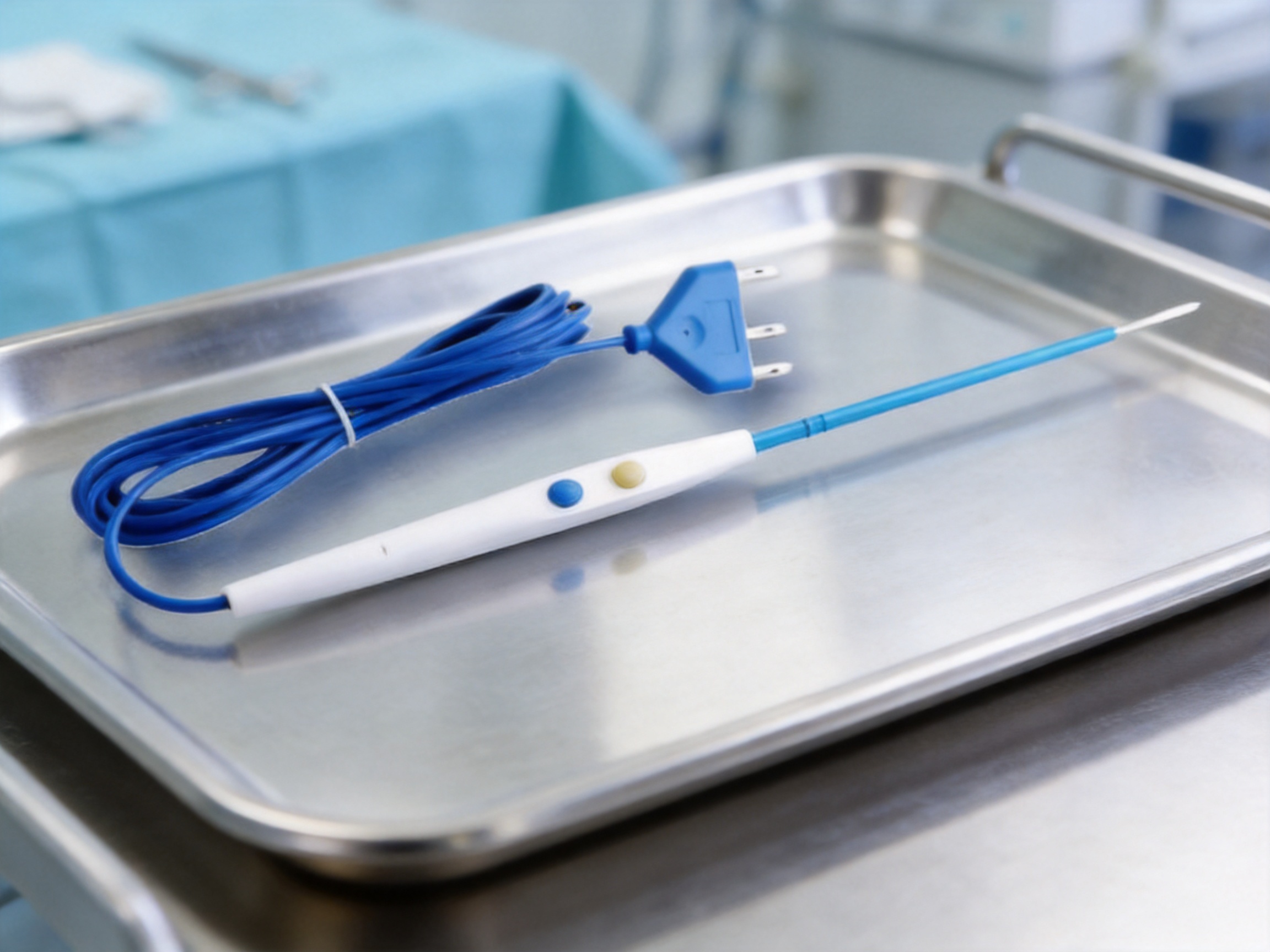
The Electrosurgical Pencil SMD-312103 is a hand-control surgical instrument used with compatible electrosurgical units. Its blade electrode shape is suitable for procedures that require accurate tissue cutting and controlled coagulation. The 158 mm handle length provides a practical grip size for many surgical users, while the 3 m cable length supports flexible movement around the sterile field and operating table. The exposed electrode length of 140 mm allows the working tip to reach the target area while maintaining convenient hand positioning.
As a surgical instrument, an electrosurgical pencil must combine functional design, material reliability, electrical compatibility, and clean manufacturing control. The product is intended to help surgical personnel manage electrosurgical activation through hand control, allowing the operator to activate cutting or coagulation modes without depending entirely on foot-pedal operation. This can support workflow efficiency, especially in procedures where the surgeon needs direct and immediate control.
The main product specifications are summarized below.
| Specification |
Product Detail |
Practical Value |
| Product Name |
Electrosurgical Pencil |
Used as a surgical hand-control instrument with compatible electrosurgical equipment |
| Model |
SMD-312103 |
Identifiable product reference for procurement and documentation |
| Electrode Shape |
Blade |
Supports precise cutting and controlled contact with tissue |
| Handle Length |
158 mm |
Provides a practical grip size for surgical handling |
| Control Type |
Hand Control |
Allows direct activation from the pencil body |
| Cable Length |
3 m |
Supports operating room flexibility and convenient generator connection |
| Exposed Electrode Length |
140 mm |
Supports access to surgical sites while maintaining controlled handling |
| Product Category |
Surgical Instruments |
Suitable for medical supply channels serving operating room needs |
Why Electrosurgical Pencils Matter in Surgical Practice
Electrosurgery is widely used because it can combine tissue dissection and hemostasis in one system. Instead of using only mechanical cutting tools, surgeons can use controlled electrical energy to cut tissue or coagulate bleeding vessels. The electrosurgical pencil is the handheld interface between the operator and the electrosurgical generator. Its design directly affects usability, response, comfort, and procedural continuity.
A well-designed electrosurgical pencil helps the surgical team maintain focus. When a pencil is easy to hold, responsive to hand activation, and supported by a cable of practical length, the surgeon can operate with fewer distractions. The assistant and circulating nurse can also manage positioning and equipment connection more easily. In busy operating rooms, these details are not minor; they contribute to a smoother surgical process.
For purchasers and medical distributors, selecting an electrosurgical pencil is not only about price. It is about stable supply, quality consistency, production traceability, packaging integrity, regulatory awareness, and after-sales communication. A product that appears simple externally may require strict control over materials, assembly, insulation, electrical safety, and clean packaging. This is why the manufacturing background behind the device is an important part of its value.
Key Design Features of the Electrosurgical Pencil SMD-312103
Blade Electrode Shape for Controlled Surgical Contact
The blade-shaped electrode is a practical and familiar form for electrosurgical cutting applications. A blade profile helps the operator make controlled contact with tissue and supports linear movement along the intended cutting path. Compared with less focused electrode forms, a blade shape can provide a familiar working feel for users accustomed to scalpel-like movement while still enabling electrosurgical activation.
The shape of an electrode affects how energy is delivered to the contact area. A blade electrode can help concentrate energy at the working edge, supporting controlled cutting when connected to an appropriate generator mode. It also allows the surgeon to adjust angle and contact according to procedural requirements. In a competitive market, electrode geometry is a meaningful factor because it influences both user confidence and clinical convenience.
158 mm Handle Length for Balanced Grip
The handle length of 158 mm offers a practical balance between compact control and sufficient gripping surface. If a handle is too short, the user may experience limited control or awkward hand positioning. If it is too long, it may become cumbersome in confined surgical fields. The 158 mm length is designed to support comfortable handling while maintaining easy access to control buttons.
In surgical settings, grip comfort contributes to precision. Surgeons may hold the pencil for extended periods, shift their grip depending on tissue depth, or pass the instrument between team members. A handle with practical length supports stable holding and reduces unnecessary repositioning. The benefit is especially important in procedures requiring repeated activation and fine adjustment.
Hand Control for Direct Activation
The hand-control function allows activation directly from the instrument. This is a major usability advantage compared with systems that rely only on foot control. Foot pedals remain useful in many operating rooms, but hand control gives the surgeon immediate access at the point of use. When the operator can activate the pencil without changing posture or searching for a pedal, workflow can become more direct.
Hand control is also helpful when the operating room layout is crowded or when the surgeon changes position during a procedure. The ability to activate from the pencil body can reduce dependence on pedal placement and support faster response during cutting or coagulation. For many surgical teams, this feature is not merely convenient; it becomes part of the normal rhythm of electrosurgical work.
3 m Cable Length for Operating Room Flexibility
The 3 m cable length supports flexible positioning between the sterile field and the electrosurgical generator. In an operating room, equipment is not always located in the same position. The generator may be placed on a cart, near the anesthesia side, or beside the operating table depending on the procedure and available space. A cable that is too short can create tension, restrict movement, or require inconvenient equipment repositioning.
A 3 m cable helps reduce these issues by providing adequate reach while still being manageable. Cable flexibility is an important purchasing consideration because it affects the daily experience of surgical teams. A suitable cable length can help maintain a tidy setup, reduce the risk of pulling, and support efficient instrument handling during the procedure.
140 mm Exposed Electrode Length for Access and Visibility
The exposed electrode length of 140 mm supports access to target areas while allowing the user to maintain control from the handle. In surgical procedures, visibility and reach are important. A properly extended electrode can help the surgeon approach the surgical site without bringing the handle too close to tissue, fluid, or other instruments.
This specification can be useful in situations where the operative field requires careful positioning. The exposed length contributes to functional access while preserving the general handling characteristics of the pencil. When compared with poorly proportioned alternatives, a well-defined electrode length can improve practical usability and instrument confidence.
Advantages Over Common Competing Products
Practical Specification Balance
Many competing electrosurgical pencils may emphasize only one feature, such as low price, cable length, or electrode type. The SMD-312103 offers a balanced specification set: blade electrode, 158 mm handle, hand control, 3 m cable, and 140 mm exposed electrode. This combination is practical for routine surgical use because it addresses multiple points of user experience at the same time.
A product that is inexpensive but uncomfortable to hold may create user dissatisfaction. A product with a long cable but poor control response may interrupt workflow. A product with a suitable electrode but inconsistent manufacturing quality may create procurement risk. The competitive strength of this model lies in its integrated design approach, where each specification contributes to overall surgical usability.
Hand-Control Convenience
Compared with basic electrosurgical accessories that depend heavily on external control methods, a hand-control pencil provides direct activation. This can be a clear advantage in procedures where rapid switching between cutting and coagulation is needed. The surgeon does not need to rely exclusively on foot placement, which may vary during surgery.
Hand control may also support more natural coordination. The operator’s visual focus remains on the surgical field, and activation can be performed with the hand already holding the instrument. This helps reduce unnecessary movement and supports procedural continuity. In competitive evaluations, this user-centered convenience can distinguish a better-designed pencil from a more basic alternative.
Usable Cable Length Without Excessive Bulk
The 3 m cable length offers a practical reach that suits many operating room layouts. Some competing products may use shorter cables, creating tension or limiting placement options. Others may use overly long cables that become difficult to manage or increase clutter. The 3 m length provides a useful middle ground for many routine surgical environments.
Good cable design is an operational advantage. A cable that supports free movement but remains manageable can help reduce setup frustration. It also assists nurses and technicians during preparation and cleanup. For hospitals and distributors, this can improve product acceptance among end users.
Reliable Manufacturing Background
A surgical instrument is only as dependable as the manufacturing system behind it. Suzhou Sunmed Co., Ltd. has 30 years of experience in the medical device and medical consumables industry. The company operates multiple production bases in Jiangsu, Zhejiang, and Anhui Province and serves international markets across Europe, Southeast Asia, Africa, and Oceania. This export experience supports familiarity with diverse purchasing expectations, documentation needs, and quality requirements.
The company’s broader product portfolio includes first aid products, wound dressings, medical gauze, bandages, medical tape, medical cotton, non-woven products, sports support products, syringes, catheters, surgical consumables, and other medical supplies. This wide manufacturing and supply background gives the company practical insight into medical product consistency, packaging, quality inspection, and international distribution.
Quality Management and Inspection Strength
The company follows ISO 13485:2016 quality management practices and maintains a professional quality control team. Quality control personnel follow inspection procedures to support product consistency and compliance expectations. Many of the company’s products are CE certified, and its Suzhou factories comply with FDA requirements. These strengths are important for buyers who need reliable supply and documentation from an experienced manufacturer.
Compared with competitors that may lack mature inspection systems, a manufacturer with established quality processes can offer stronger procurement confidence. Electrosurgical accessories require careful checks related to materials, assembly, labeling, packaging, and product appearance. Consistency across batches is critical, especially for distributors supplying hospitals and surgical centers.
Manufacturing Process Strengths
Material Selection and Incoming Inspection
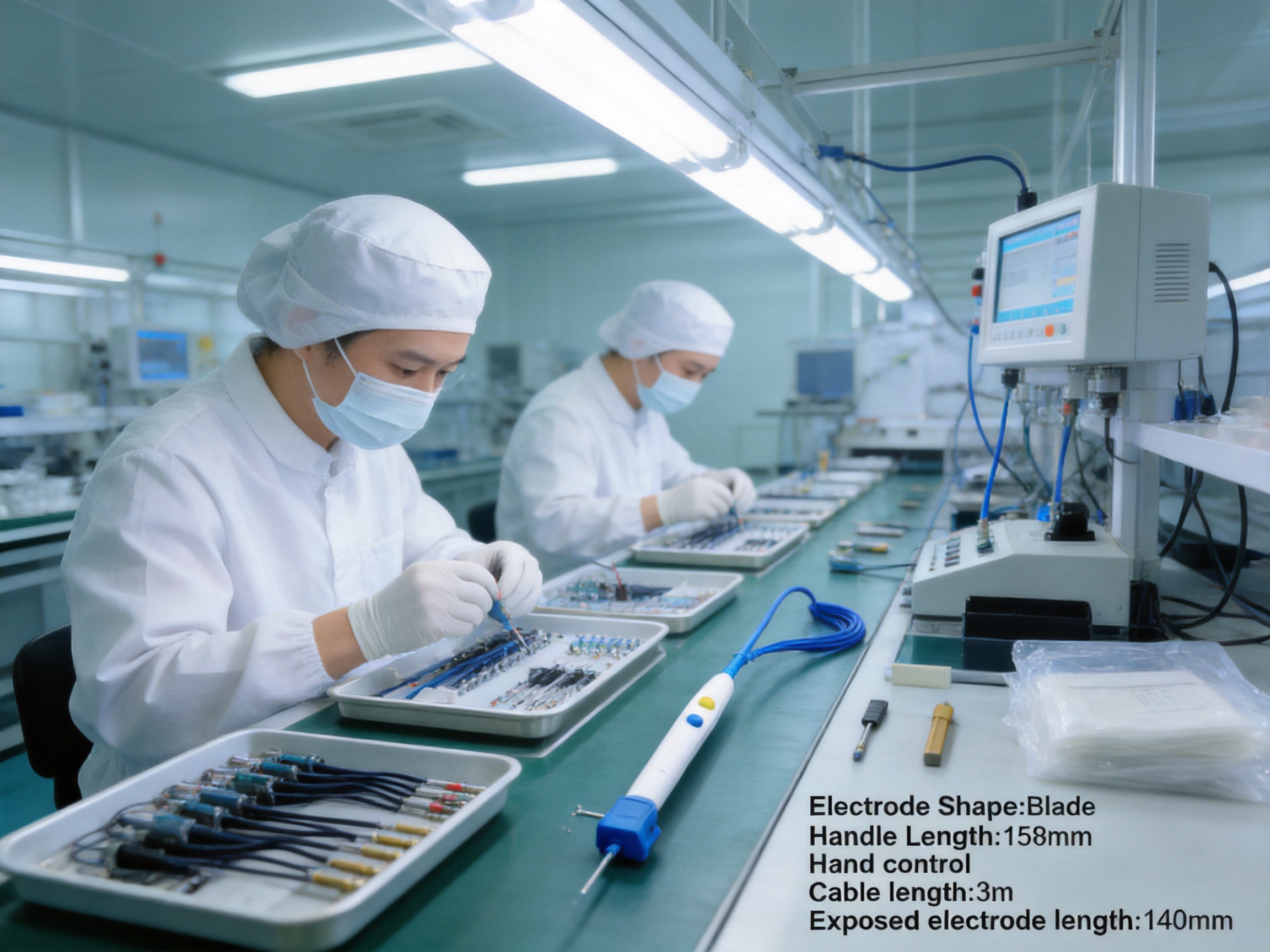
Manufacturing an electrosurgical pencil begins with appropriate material selection. Components must be suitable for medical use, compatible with production requirements, and consistent from batch to batch. Incoming materials may include plastic handle components, conductive electrode materials, cable assemblies, control components, connectors, and packaging materials. Each category requires inspection before being released into production.
Incoming inspection is a key step because it prevents nonconforming materials from entering the production flow. Material appearance, dimensions, supplier documentation, and functional characteristics may be checked according to established criteria. This stage helps reduce downstream assembly problems and supports final product consistency.
Precision Component Processing
The handle, electrode interface, and cable connection areas must be produced with dimensional consistency. Precision processing helps ensure that the product can be assembled correctly and that the final instrument provides stable handling. Even small deviations in component fit can affect button placement, insulation integrity, or user feel.
Advanced manufacturing processes focus on repeatability. For a product used in surgical settings, repeatability matters because hospitals and distributors expect every unit in a shipment to perform according to the same specification. Controlled tooling, standardized work instructions, and production monitoring contribute to stable product output.
Assembly Under Controlled Procedures
Assembly is a critical step for electrosurgical pencils. The blade electrode, handle body, cable, and hand-control components must be combined according to defined procedures. Proper assembly helps support electrical continuity, mechanical stability, and convenient user operation. Assembly personnel must follow standardized instructions to avoid variation between units.
Controlled procedures can include component verification, positioning checks, button function checks, cable connection checks, and visual inspection. A reliable manufacturer documents these steps and trains workers to perform them consistently. This is one of the key differences between professional medical device production and low-control accessory assembly.
Electrical and Functional Verification
Because the electrosurgical pencil is used with electrosurgical energy, electrical and functional verification is important. The product must support reliable activation through hand control and must be compatible with intended electrosurgical systems. Functional checks may confirm that the control buttons respond correctly and that the cable and electrode connection are properly assembled.
Electrical accessories for surgery require attention to insulation, conductivity, and connection stability. A failure in these areas can disrupt a procedure or cause user dissatisfaction. Therefore, a professional quality system places emphasis on checking performance before product release. This gives buyers greater confidence in the final product.
Appearance, Packaging, and Label Control
Appearance inspection is also important. The handle should be clean, properly formed, and free from defects that may affect usability. The cable should be properly attached, and the electrode should be correctly positioned. Packaging must protect the product during storage and transportation.
Label control supports traceability and correct product identification. For distributors and hospitals, accurate labeling helps inventory management and reduces confusion during procurement. A professional manufacturer pays attention not only to the product itself but also to the complete supply presentation, including packaging and documentation.
Company Manufacturing Strengths and Global Supply Capability
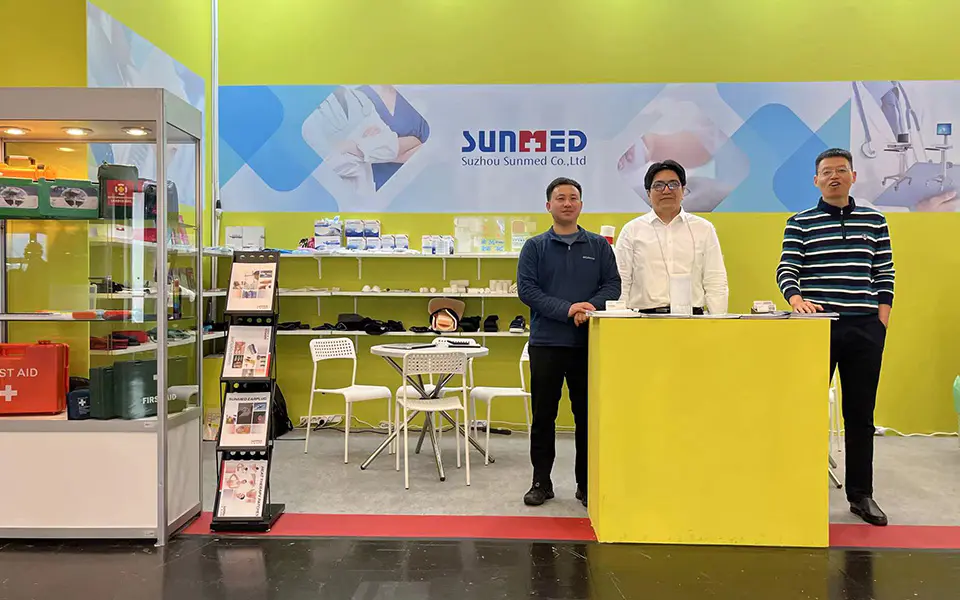
Suzhou Sunmed Co., Ltd. is a professional manufacturer and exporter of first aid, medical, and healthcare products in China. With multiple production bases in Jiangsu, Zhejiang, and Anhui Province, the company has developed broad manufacturing capacity across medical consumables and healthcare categories. This foundation supports stable supply for distributors and institutional buyers.
The company has accumulated 30 years of professional experience in the medical device and medical consumables industry. Experience is valuable because medical supply purchasing involves not only production but also communication, customization, documentation, export handling, and long-term consistency. Buyers often prefer suppliers who understand the practical requirements of international markets.
The company’s markets include hospitals, first aid suppliers, supermarkets, and retail sports shops. Its export destinations include the United Kingdom, Germany, Spain, Denmark, the Netherlands, Japan, Malaysia, the Philippines, Thailand, Tanzania, Mauritius, South Africa, Australia, and New Zealand. Serving these markets requires the ability to respond to varied quality expectations and purchasing standards.
In 2008, the company established its first aid factory to meet customer demand. In 2021, it established its own factory for kinesiology tape, cohesive bandages, and elastic adhesive bandages. These developments show a willingness to invest in production capacity according to market needs. For surgical instruments and consumables, this manufacturing mindset is valuable because buyers need suppliers capable of maintaining and expanding production according to demand.
Quality Control as a Competitive Advantage
Quality control is one of the most important factors in medical product purchasing. The company maintains a professional quality control team with hundreds of personnel who follow inspection procedures designed to support ISO 13485:2016 standards. This structured quality management approach helps ensure that products meet defined specifications before shipment.
For an electrosurgical pencil, quality control may involve checks at multiple stages: incoming material inspection, in-process assembly monitoring, functional verification, visual inspection, packaging review, and final shipment inspection. Multi-stage quality control reduces the chance that problems will be discovered only after delivery. It also creates a record-based approach to product consistency.
Compared with suppliers that rely only on final inspection, a process-based quality system offers stronger assurance. If quality is built into each stage, the manufacturer can identify potential issues earlier and correct them before they affect finished goods. This is especially important for products used in operating rooms, where end users expect dependable performance.
The company’s compliance background also supports distributor confidence. Many products are CE certified, and the Suzhou factories comply with FDA requirements. While each product and market may have specific regulatory requirements, a manufacturer familiar with international standards is better positioned to support buyers with documentation and quality communication.
Ergonomics and Surgical Workflow
Ergonomics is a critical design consideration for handheld surgical instruments. The electrosurgical pencil is not a passive accessory; it is actively manipulated by the surgeon throughout a procedure. A practical handle length, accessible controls, and suitable cable movement all contribute to user comfort and workflow efficiency.
The 158 mm handle length provides a balanced form that can be held securely. The hand-control buttons are intended to support direct activation. The 3 m cable helps maintain connection without forcing the operator into a restricted position. The blade electrode and exposed length support access and visibility. Together, these features make the instrument practical for daily surgical use.
In a competitive purchasing environment, ergonomic usability can influence repeat orders. Surgeons and operating room nurses often develop preferences based on daily experience. If a product feels awkward, has an inconvenient cable, or does not respond predictably, users may request alternatives. A well-designed electrosurgical pencil can help create positive user feedback and support long-term customer relationships.
Application Scenarios
The electrosurgical pencil is suitable for use in surgical environments where compatible electrosurgical units are available and where procedures require cutting and coagulation functions. It may be used in hospitals, outpatient surgical centers, and other professional medical settings by trained personnel. The exact application depends on clinical procedure requirements, generator compatibility, and institutional protocols.
The blade electrode design supports controlled tissue contact. The hand-control function supports direct mode activation. The cable length supports setup flexibility. These features are applicable across many general surgical workflows where electrosurgery is part of the procedure.
It is important that electrosurgical instruments be used only by trained professionals according to medical protocols and equipment instructions. Compatibility with the electrosurgical generator and other accessories should be confirmed before use. Proper preparation, inspection, and handling help ensure safe and effective operation.
Procurement Value for Distributors and Hospitals
For distributors, the value of an electrosurgical pencil includes product specification, manufacturing reliability, packaging consistency, communication efficiency, and supply stability. Distributors need products that can be presented clearly to hospitals and clinics. A model with defined specifications, such as SMD-312103, supports catalog organization and purchasing communication.
For hospitals and surgical centers, procurement value depends on clinical acceptance and dependable supply. Operating room teams need instruments that are ready to use, easy to handle, and compatible with established workflows. Purchasing departments need suppliers capable of providing consistent quality and responsive service.
The manufacturer’s broad export experience supports international buyers. Experience with customers in Europe, Southeast Asia, Africa, and Oceania demonstrates the ability to serve different market structures. This can be beneficial for importers and distributors who need suppliers familiar with export procedures and medical product expectations.
OEM and Wholesale Supply Advantages
As an experienced medical consumables manufacturer and medical devices factory, Suzhou Sunmed Co., Ltd. is positioned to support OEM and wholesale requirements. OEM buyers often need customized packaging, documentation support, stable production schedules, and clear communication. Wholesale buyers need consistent product quality, competitive pricing, and reliable shipment planning.
The company’s product range and manufacturing background allow it to serve varied customer needs. Its experience in first aid, wound care, bandages, medical tape, cotton products, sports support, syringes, catheters, surgical consumables, and other medical supplies gives it broad market understanding. This is useful for buyers who prefer consolidating multiple medical supply categories through one experienced supplier.
The electrosurgical pencil can be offered as part of a broader surgical consumables portfolio. Distributors supplying operating room products may benefit from adding a dependable electrosurgical pencil to their catalog. Hospitals may also appreciate working with suppliers capable of providing related medical consumables and instruments.
Safety and Handling Considerations
Electrosurgical pencils should always be used according to professional medical standards, institutional protocols, and compatible generator instructions. Before use, the user should inspect packaging, product condition, cable integrity, electrode condition, and control function. Any product showing visible damage should not be used.
During surgery, the pencil should be handled carefully to avoid accidental activation. The active electrode should be kept away from unintended contact when not in use. Operating room staff should follow standard electrosurgical safety practices, including correct placement of accessories, proper generator settings, and awareness of flammable materials or oxygen-rich environments.
After use, disposal or reprocessing requirements should follow the product design, institutional policy, and local regulations. If supplied as a single-use product, it should not be reused. If supplied under specific instructions, those instructions should be followed strictly. Proper handling supports user safety and product performance.
How the Product Supports Efficient Surgical Teams
Efficiency in surgery is not only about speed. It is about reducing interruptions, improving coordination, and allowing the surgical team to focus on the procedure. A well-designed electrosurgical pencil contributes to efficiency by providing direct control, appropriate reach, stable handling, and practical electrode access.
The hand-control design allows the surgeon to activate the device without depending only on foot-pedal positioning. The cable supports flexible operating room setup. The handle length supports a stable grip. The blade electrode supports controlled surgical movement. These design elements help reduce small frustrations that can accumulate during a procedure.
For surgical teams, reliable instruments create trust. When users know that a product responds consistently, they can concentrate on clinical decision-making rather than instrument management. This is why the combination of product design and manufacturing quality is so important.
Packaging, Storage, and Logistics Considerations
Medical products must be packaged to protect them during transportation and storage. Packaging should help preserve product cleanliness, prevent mechanical damage, and support easy identification. For export buyers, packaging must also be suitable for international logistics, warehouse handling, and distributor inventory systems.
The manufacturer’s export background supports practical logistics planning. Products exported to more than 60 countries must meet varied shipping, labeling, and documentation expectations. This experience can help reduce purchasing complications for distributors and importers.
Storage conditions should follow product instructions and general medical supply practices. Products should be stored in clean, dry environments away from damage, excessive heat, or contamination risk. Proper storage helps maintain product readiness until use.

Frequently Asked Questions
Q1: What is the main function of the Electrosurgical Pencil SMD-312103?
The product is a hand-control electrosurgical pencil intended for use with compatible electrosurgical units. It helps the surgical operator activate cutting or coagulation functions through the pencil body, depending on the generator settings and clinical procedure requirements.
Q2: What electrode shape does this model use?
This model uses a blade-shaped electrode. The blade shape supports controlled surgical contact and is suitable for many procedures requiring precise cutting and coagulation.
Q3: What is the handle length?
The handle length is 158 mm. This size is designed to provide a practical grip for surgical handling while maintaining convenient access to the hand-control buttons.
Q4: How long is the cable?
The cable length is 3 m. This length supports flexible positioning in the operating room and helps connect the pencil to compatible electrosurgical equipment without unnecessary restriction.
Q5: What is the exposed electrode length?
The exposed electrode length is 140 mm. This specification supports access to surgical areas while helping the user maintain controlled positioning from the handle.
Q6: What makes this electrosurgical pencil competitive?
Its competitive advantages include a practical blade electrode, hand-control activation, balanced 158 mm handle, useful 3 m cable length, 140 mm exposed electrode, and support from an experienced manufacturer with strong quality management and international export experience.
Q7: Is the product suitable for all electrosurgical generators?
Compatibility should always be confirmed before use. The product is intended for use with compatible electrosurgical units, and users should follow generator instructions, hospital protocols, and product documentation.
Q8: Why is hand control important?
Hand control allows the surgeon to activate the device directly from the pencil body. This can support faster response, convenient operation, and reduced dependence on foot-pedal positioning during procedures.
Q9: What quality system supports the manufacturing process?
The manufacturer follows ISO 13485:2016 quality management practices and maintains a professional quality control team. Many products are CE certified, and the Suzhou factories comply with FDA requirements.
Q10: Who can purchase this product?
The product is suitable for professional medical supply purchasers, hospitals, surgical centers, importers, distributors, and OEM or wholesale buyers seeking surgical instruments and consumables from an experienced manufacturer.
Conclusion
The Electrosurgical Pencil SMD-312103 is a practical surgical instrument designed around the essential needs of modern operating rooms: precision, usability, direct control, and dependable supply. Its blade electrode, 158 mm handle, hand-control operation, 3 m cable, and 140 mm exposed electrode length create a balanced specification profile suitable for many surgical workflows using compatible electrosurgical systems.
Beyond the product itself, the manufacturing background adds significant value. Suzhou Sunmed Co., Ltd. brings 30 years of experience in medical devices and consumables, multiple production bases, international export experience, ISO 13485:2016 quality management practices, a professional quality control team, and broad product capability. These strengths help support stable supply, consistent quality, and responsive cooperation for global buyers.
For hospitals, distributors, and OEM customers, choosing an electrosurgical pencil should involve more than selecting a basic accessory. It should include evaluation of ergonomic design, cable practicality, control convenience, quality processes, packaging, traceability, and supplier reliability. The SMD-312103 electrosurgical pencil offers a strong combination of these qualities, making it a competitive option for professional surgical supply channels.
References
1. International Organization for Standardization. ISO 13485:2016 Medical Devices: Quality Management Systems Requirements for Regulatory Purposes.
2. Association of periOperative Registered Nurses. Guidelines for Perioperative Practice.
3. ECRI Institute. Electrosurgical Safety and Operating Room Risk Management Publications.
4. World Health Organization. Medical Device Regulations: Global Overview and Guiding Principles.
5. Association for the Advancement of Medical Instrumentation. Medical Electrical Equipment and Electrosurgical Device Safety Standards.

 English
 Español
 русский
 Français
 Deutsch
 italiano
 By Admin