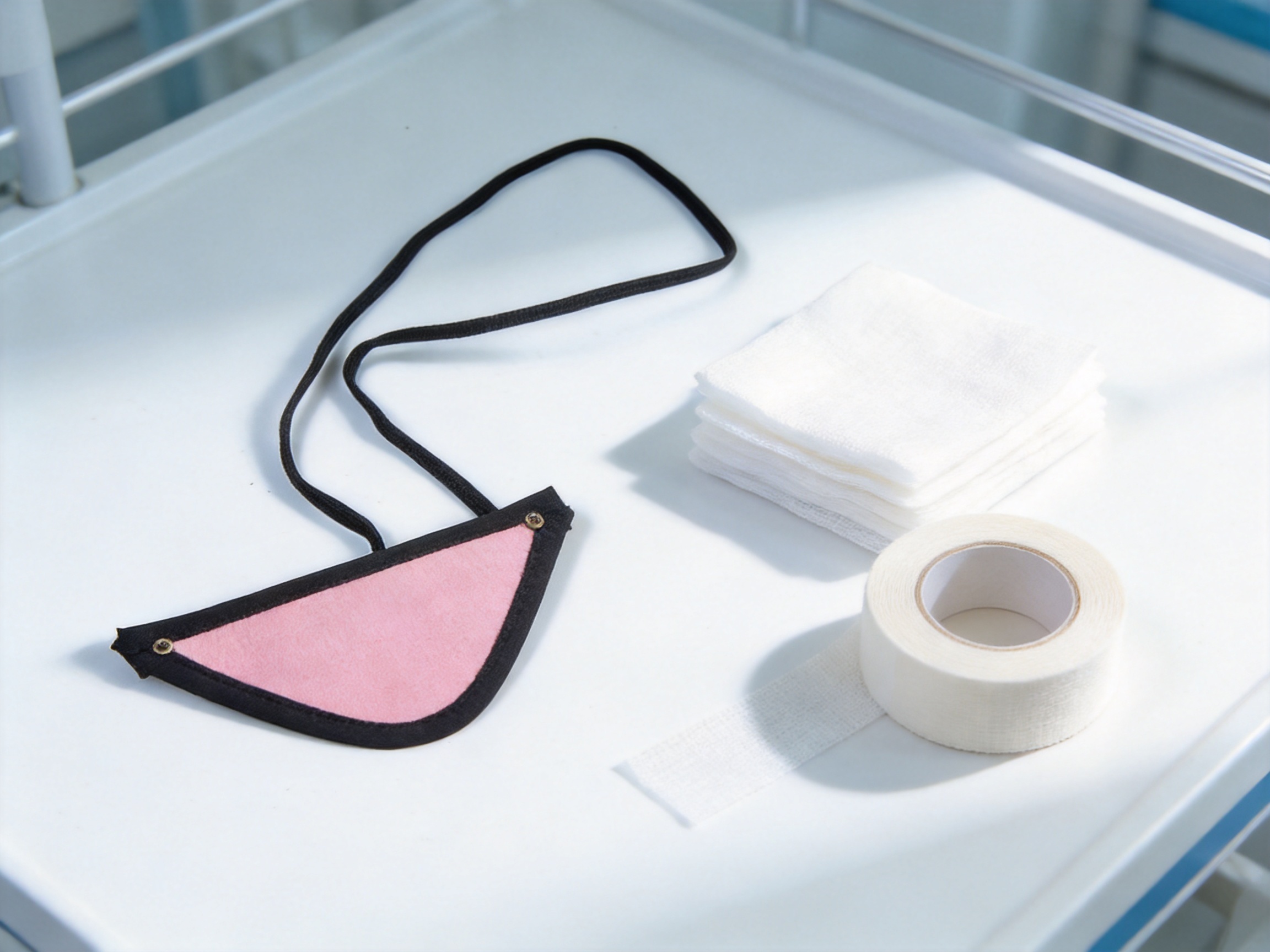
In first aid, ophthalmic care, emergency response, and routine nursing, small products often make a major difference in patient protection and treatment continuity. The Eye Cover, product code SMD-211101, is designed for one clear purpose: to secure eye dressings and help keep the dressing clean while the wearer rests, moves, or receives further care. As a first aid dressing accessory, it supports the management of minor eye injuries, post-treatment protection, and temporary coverage when the eye area needs to be shielded from contamination, accidental touching, or dressing displacement.
The product is an eye cover with an elastic headband, offering a practical solution for clinics, first aid suppliers, hospitals, emergency kits, occupational health rooms, schools, sports facilities, retail medical channels, and home healthcare use. Unlike improvised coverings, loosely taped gauze, or uncomfortable rigid shields that may not stay in place during movement, this eye cover is purpose-built to maintain dressing position with minimal effort. It is simple, clean, lightweight, and easy to apply, making it especially useful in situations where speed and reliability matter.
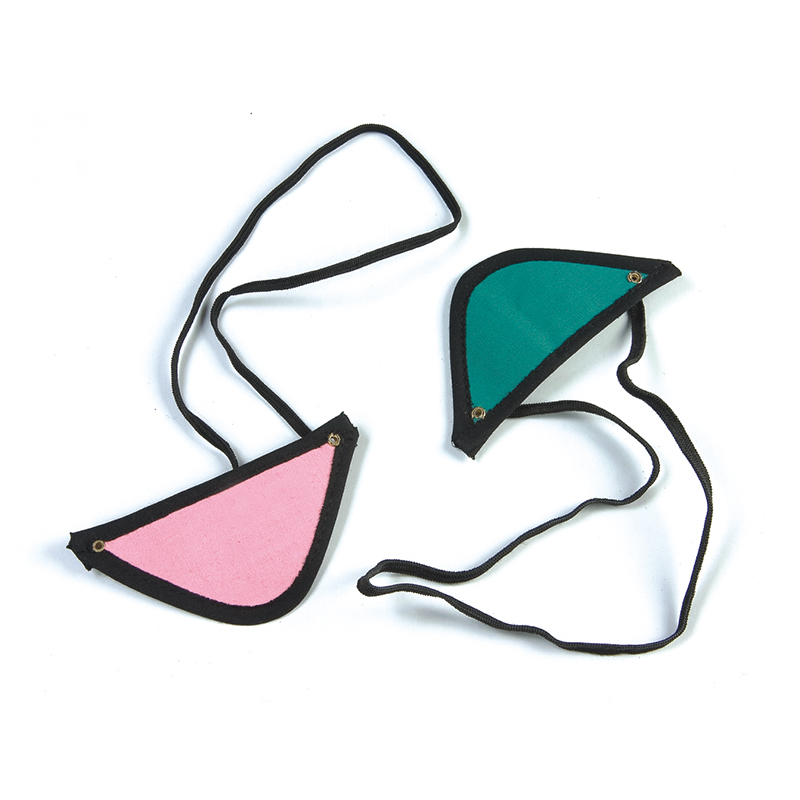
Eye Cover
Product Overview
The SMD-211101 Eye Cover belongs to the First Aid Dressing category and is part of a broader medical consumables portfolio that includes wound dressing products, gauze, medical tape, cotton products, adhesive bandages, athletic tapes, bandages, and other healthcare essentials. Its primary function is to cover and secure an eye dressing. The elastic headband provides a stable fit around the head, reducing the need for additional tape and helping the dressing remain in position without excessive pressure on the delicate eye area.
In many first aid scenarios, the initial dressing is only part of proper care. Once a sterile or clean dressing is placed over the eye, it must stay clean and remain correctly positioned. If the dressing shifts, falls away, or becomes contaminated, the wearer may experience discomfort, exposure, or a need for repeated replacement. The Eye Cover helps solve this problem by acting as a protective retaining layer. It offers quick application and can be used by trained medical staff, first aid responders, caregivers, or properly instructed users in non-emergency home settings.
The product is not intended to replace professional medical diagnosis or specialized ophthalmic treatment. Instead, it provides supportive dressing security. For eye trauma, chemical exposure, foreign bodies, sudden vision changes, bleeding, severe pain, or suspected serious injury, professional medical evaluation is essential. However, in the practical chain of first aid and nursing care, a secure eye dressing cover can help maintain hygiene and reduce unnecessary disturbance before or during further treatment.
Core Product Information
| Item |
Details |
| Product Name |
Eye Cover |
| Product Code |
SMD-211101 |
| Category |
First Aid Dressing |
| Description |
Eye cover with elastic headband |
| Main Function |
Secures eye dressings and helps keep the dressing clean |
| Typical Use Settings |
First aid kits, clinics, hospitals, emergency care, workplaces, schools, home healthcare, sports facilities |
| Key Advantages |
Easy application, stable retention, clean dressing protection, comfortable wearing, reduced need for extra tape |
Why a Dedicated Eye Cover Matters
The eye is one of the most sensitive parts of the body, and even minor irritation can cause discomfort, tearing, rubbing, or involuntary blinking. When an eye dressing is applied, it is often necessary to minimize disturbance to the area. A dressing that is poorly secured may rub against the eyelid, shift over the lashes, collect dust, or become detached. A dedicated eye cover provides a controlled method of retention and protection that improvised methods often cannot match.
Many users try to secure eye dressings with ordinary adhesive tape. While tape has value in wound care, it may not always be ideal around the eye. Facial skin can be sensitive, perspiration can weaken adhesion, facial contours can make positioning difficult, and removing tape may cause discomfort. A headband-style eye cover can reduce dependence on adhesive fixation and provide a more convenient alternative, especially for users who need temporary dressing support.
Compared with loose gauze held by hand, the Eye Cover allows hands-free protection. Compared with bulky head wrapping, it is easier and faster to apply. Compared with generic fabric patches that may not be designed for medical dressing coverage, it is more appropriate for first aid dressing support. These qualities make it an effective addition to professional and consumer first aid supplies.
Advantages Over Common Alternatives
A major advantage of the SMD-211101 Eye Cover is its focused design. It does not try to be a universal bandage or a complicated eye shield. Instead, it performs a specific task efficiently: it helps hold an eye dressing in place and supports cleanliness. This focused functionality creates advantages over multiple competing approaches, including adhesive tape fixation, general-purpose patches, improvised cloth covers, and bulky bandage wraps.
First, the elastic headband supports stable placement without requiring skillful tape application. In urgent conditions, responders may need a solution that can be placed quickly and adjusted easily. Tape application around the eye can be difficult, particularly when the patient is anxious, sweating, moving, or sensitive to touch. The elastic headband simplifies the process by providing consistent circumferential retention around the head.
Second, the product helps reduce unnecessary contact with the dressing surface. When dressings are repeatedly touched to adjust position, the risk of contamination increases. A secure eye cover helps maintain the dressing location, which can reduce the need for frequent handling. This is especially important in first aid and nursing environments where hygiene discipline is central to product performance.
Third, the Eye Cover can improve user comfort compared with heavy wrapping. Full head bandaging may feel hot, restrictive, or excessive for a simple eye dressing. A compact eye cover with an elastic headband provides sufficient retention without covering unnecessary areas. This can make the product more acceptable for short-term wear, especially in school health rooms, sports first aid stations, and outpatient settings.
Fourth, the product contributes to kit readiness. First aid kits are most effective when components are easy to identify and use. A dedicated eye cover avoids confusion and supports standardized care procedures. Instead of searching for tape, gauze, scissors, and wrapping materials, the responder can use a purpose-designed cover to complete dressing protection more efficiently.
Fifth, the product can help reduce material waste. Improvised fixation may require several strips of tape or additional bandage material, and if the first application is not successful, even more material may be used. A ready-to-use eye cover simplifies the dressing process and can help first aid providers use supplies more consistently.
Design Features and Practical Value
The defining feature of the Eye Cover is the elastic headband. Elastic retention gives the product flexibility for different head sizes while keeping application intuitive. A headband also allows the cover to be repositioned more easily than adhesive-based fixation, which may lose adhesion after adjustment. In a busy clinical or first aid environment, adjustability can be a meaningful advantage.
The cover portion is intended to protect the dressing from external contact and help maintain cleanliness. Although the specific material structure may vary according to production requirements and customer specifications, the concept is centered on lightweight coverage, dressing stability, and user convenience. For OEM and wholesale medical supply channels, this type of simple but effective design is valuable because it meets a common need without adding unnecessary complexity.
The product’s compact format also supports storage efficiency. First aid distributors, hospital supply departments, and retail channels often need products that are easy to package, transport, store, and dispense. A small eye cover is easy to include in first aid kits, emergency response packs, travel medical pouches, workplace medical cabinets, and institutional supply rooms.
Applications in First Aid and Healthcare
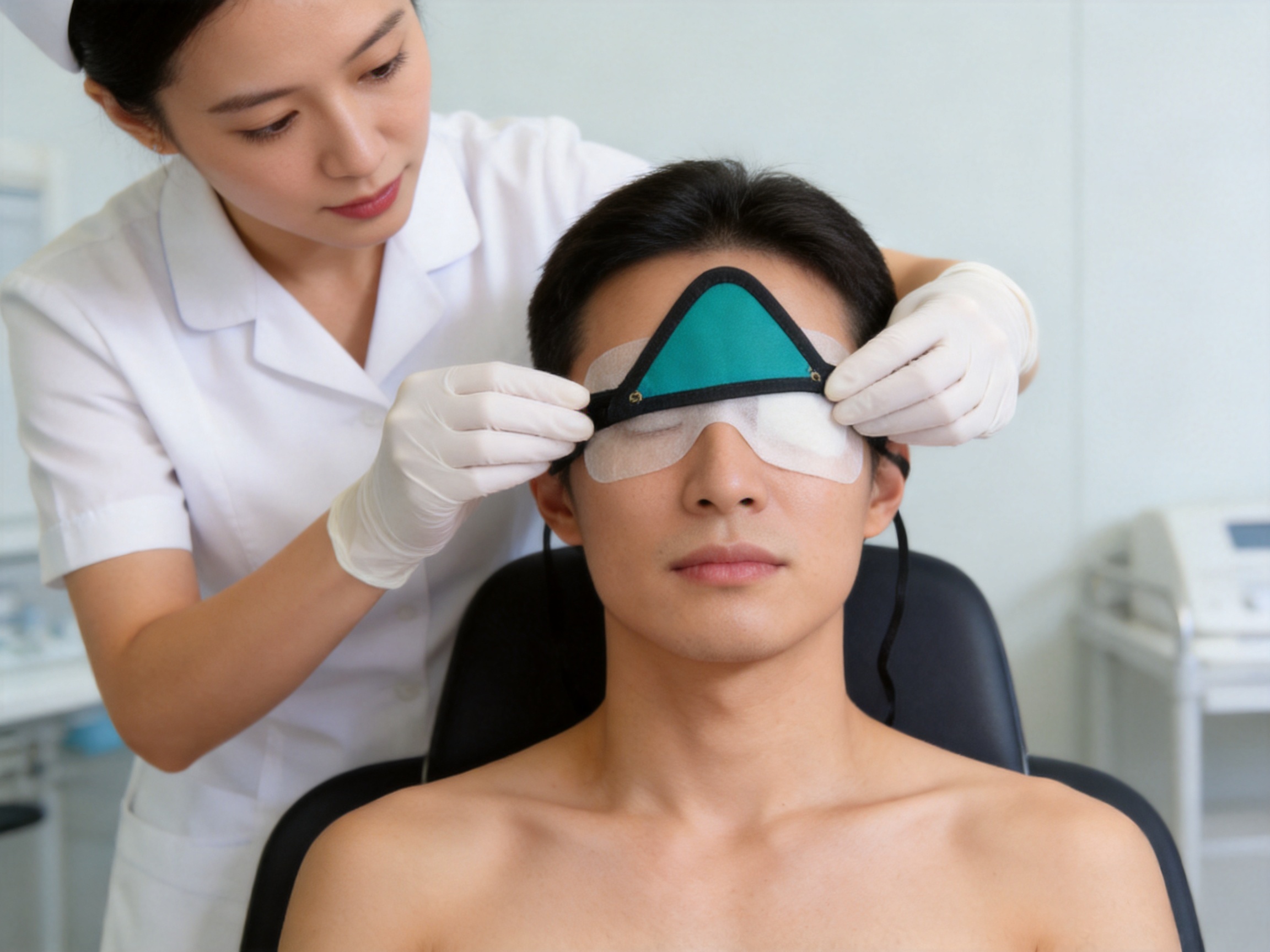
In first aid settings, the Eye Cover can be used when an eye dressing needs to remain in place after initial care. This may include minor superficial irritation, post-cleaning coverage when directed by a healthcare professional, protection after application of sterile gauze, or temporary shielding during transport to medical care. Its value lies in keeping the dressing secure and clean while avoiding the need for complicated fixation.
In outpatient clinics and nursing environments, the Eye Cover can support short-term patient comfort and dressing retention. Medical staff often need simple consumables that save time and standardize care. A product that is easy to apply and easy to remove can help reduce workload and improve patient experience. Because it is straightforward, staff training requirements are minimal compared with more complex ophthalmic devices.
In workplace safety programs, eye-related incidents can occur in manufacturing, construction, laboratories, agriculture, cleaning operations, and workshops. While serious injuries require immediate professional medical attention, a first aid eye dressing cover may be useful as part of temporary protective care after appropriate first aid action. Employers that maintain comprehensive first aid kits may benefit from including dedicated eye dressing accessories rather than relying solely on generic bandages.
In sports and recreation, accidental contact, dust, minor impact, or irritation can require temporary protection. First aid responders at sports facilities need items that can be deployed quickly. An eye cover with an elastic headband helps secure the dressing while the athlete or participant receives further evaluation. The hands-free retention also allows the user to sit, walk, or be transported more comfortably.
In schools and childcare environments, simplicity is essential. A nurse, teacher, or first aid staff member may need to protect an eye dressing until a parent, guardian, or healthcare provider takes over. A dedicated eye cover avoids excessive adhesive use on children’s facial skin and provides a clear, recognizable method of coverage.
In home healthcare, caregivers may need a simple product to keep an eye dressing in place as instructed by a medical professional. A headband-style cover can be easier for non-professionals to apply than medical tape around the eye. It also helps users avoid repeatedly touching the dressing, supporting better hygiene habits.
Cleanliness and Dressing Security
The central benefit of the Eye Cover is cleanliness support. A dressing over the eye may be exposed to dust, fingers, bedding, hair, clothing, or environmental particles. When the wearer lies down, sits in a vehicle, or moves through a public setting, the dressing can easily contact surfaces. A cover helps create a simple protective barrier, reducing direct exposure and helping the dressing remain cleaner for longer.
Dressing security is equally important. If a dressing shifts away from the intended location, it no longer performs its protective role properly. The elastic headband provides retention that follows the shape of the head rather than relying on a small adhesive contact area. This can improve stability during gentle movement and reduce the likelihood of immediate displacement.
The combination of cleanliness and security is what makes the product practical. A clean dressing that falls off is not useful, and a secure dressing that becomes contaminated may need replacement. By addressing both concerns at once, the Eye Cover provides balanced support for first aid dressing management.
Comfort Considerations
Comfort is an important factor in patient compliance. If a dressing cover is irritating, too tight, too hot, or difficult to wear, the user may remove it prematurely. The SMD-211101 Eye Cover is designed to be simple and wearable. The elastic headband helps distribute retention around the head, avoiding the localized pull that can occur with adhesive strips on facial skin.
A lightweight eye cover is generally more suitable for temporary first aid use than heavy wrapping. It allows the user to feel less restricted and can be less intimidating, particularly for children or anxious patients. In short-term care situations, small improvements in comfort can lead to better cooperation and fewer repeated adjustments.
Another comfort advantage is the reduced need for adhesive removal. Adhesive tape around the eye can pull fine facial hair, irritate sensitive skin, or leave residue. While adhesive products remain important in medical care, an elastic headband solution can be preferable when the objective is simply to secure an eye dressing without attaching directly to the skin.
Manufacturing Strength Behind the Product
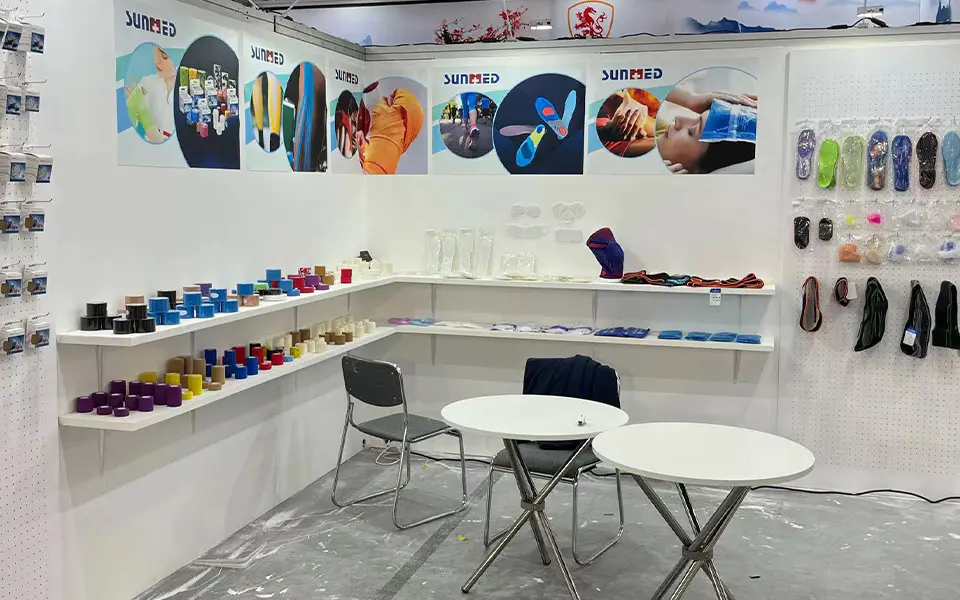
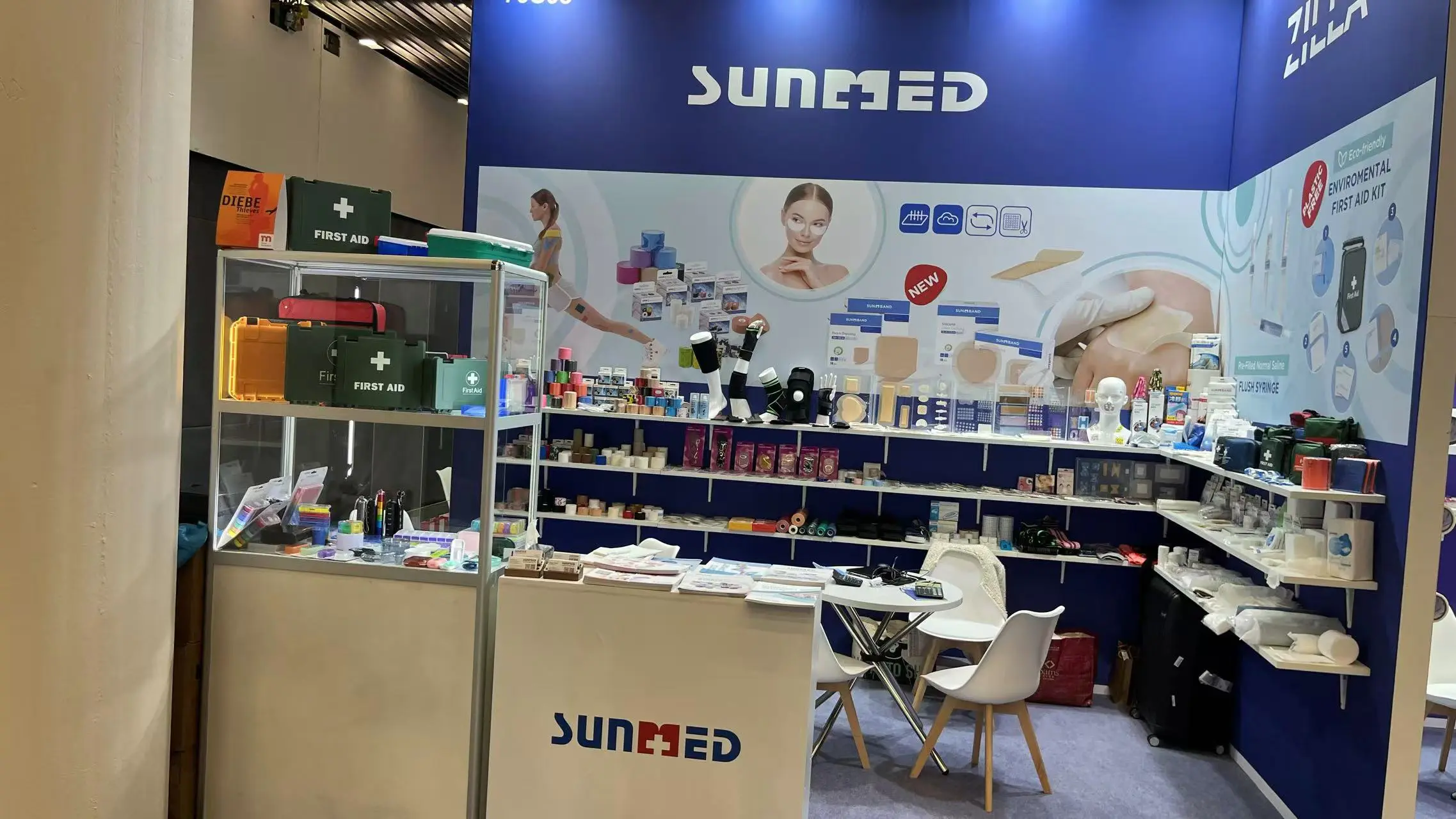
The Eye Cover is supported by the manufacturing and export experience of Suzhou Sunmed Co., Ltd., a professional manufacturer and exporter of first aid, medical, and healthcare products in China. With approximately 30 years of experience in the medical device and medical consumables industry, the company has developed a broad understanding of product design, material selection, quality control, regulatory expectations, packaging, and international customer needs.
The company operates multiple production bases in Jiangsu, Zhejiang, and Anhui Province. This multi-base manufacturing structure supports product availability, production flexibility, and supply chain resilience. For wholesale customers and OEM buyers, consistent supply is often as important as product design. A supplier with multiple production resources can respond more effectively to changing order volumes, seasonal demand, tender requirements, and customized packaging needs.
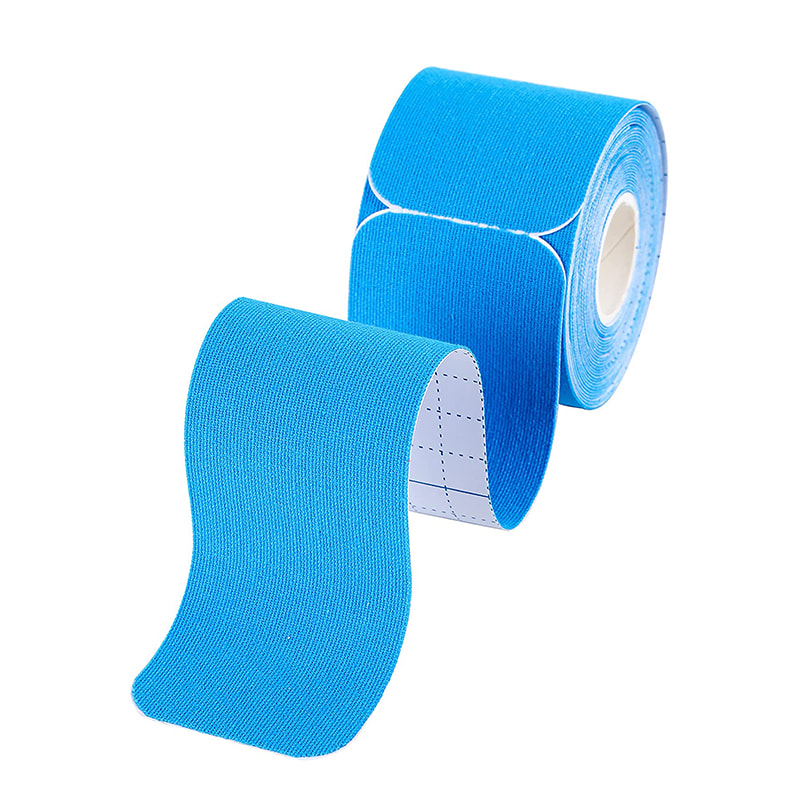
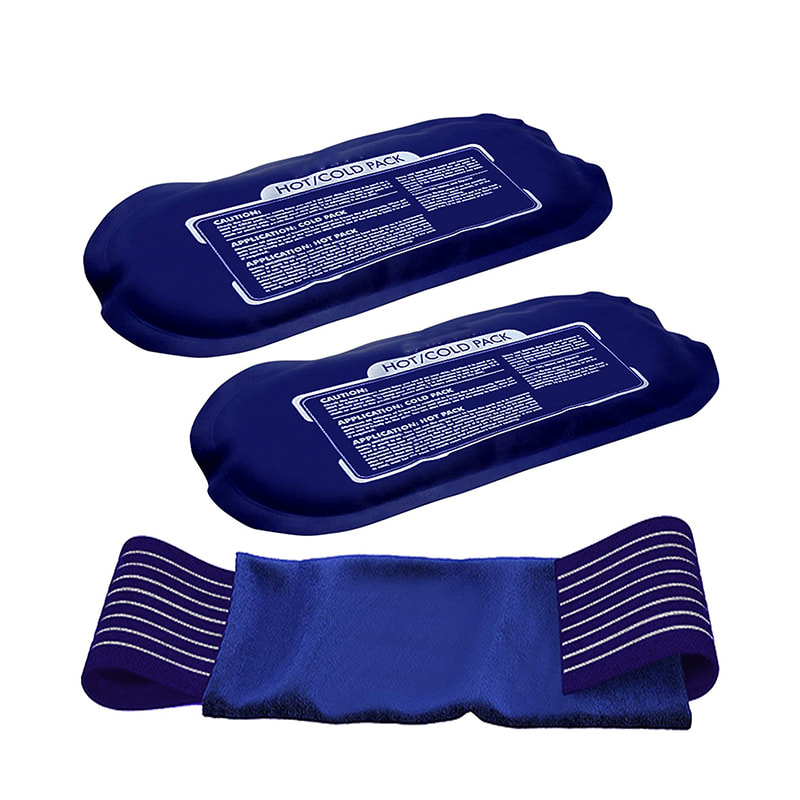
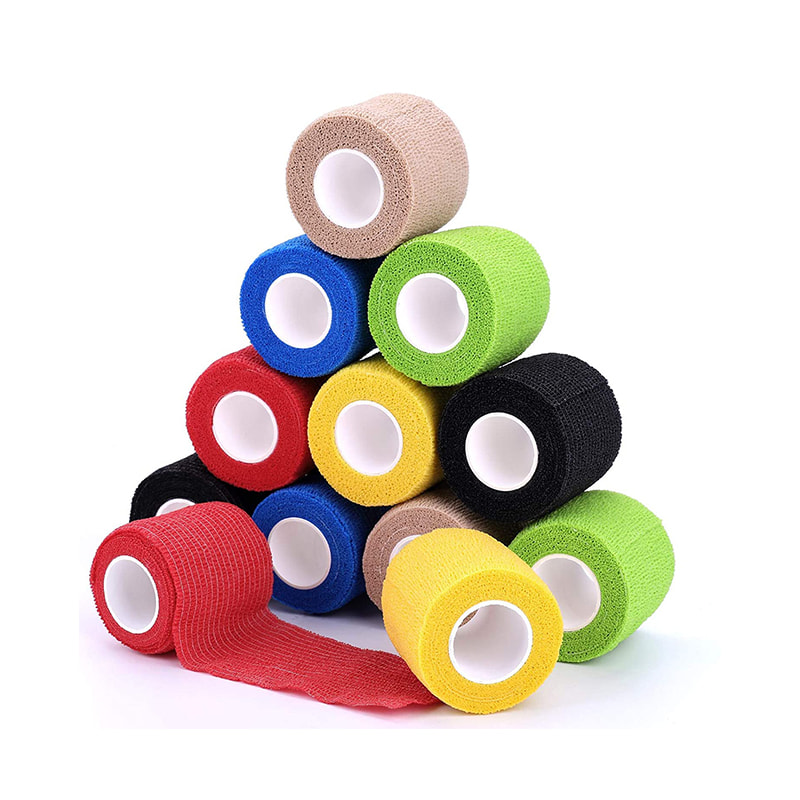
The company’s product range includes first aid products, wound dressings, medical gauze, bandages, medical tape, medical cotton, non-woven products, sports bandages, kinesiology tape, cohesive bandages, elastic adhesive bandages, pill boxes, hot and cold packs, disposable syringes, catheters, surgical consumables, and related medical supplies. This broad manufacturing background is relevant to the Eye Cover because it reflects expertise in soft medical consumables, dressing-related products, and practical first aid solutions.
For a product such as an eye cover, manufacturing excellence is not only about producing the visible item. It also involves sourcing suitable materials, maintaining hygienic handling practices, controlling dimensions, checking elastic performance, ensuring packaging integrity, and verifying that finished goods meet customer requirements. A mature medical consumables manufacturer understands that small defects can affect user confidence and product performance.
Quality Control and Compliance Capabilities
Quality control is a key strength behind the product. Suzhou Sunmed has a professional quality control team comprising hundreds of personnel who follow inspection procedures designed to ensure that products meet ISO13485:2016 standards. ISO 13485 is an internationally recognized quality management standard for medical devices, and it places emphasis on consistent processes, documentation, risk management, traceability, and continual improvement.
Many of the company’s products are CE certified, and its Suzhou factories comply with FDA requirements. For international buyers, this compliance background provides confidence that the supplier is familiar with regulatory expectations in major markets. While each product and destination market may have specific documentation requirements, working with an experienced manufacturer can make procurement and product registration processes smoother.
For the Eye Cover, quality inspection may focus on appearance, cleanliness, elastic headband attachment, dimensions, packaging condition, labeling consistency, and batch control. These practical checks help ensure that the product arrives ready for distribution and use. In first aid products, reliability is essential because the item may sit in a kit for some time before being needed. Packaging and product integrity therefore matter from production through storage and final use.
Advanced quality control also supports OEM customization. Customers may request private labels, different packaging formats, kit inclusion, language-specific labeling, or tender-oriented documentation. A manufacturer with established quality systems can handle these requirements more reliably than a supplier without structured processes.
Advanced Manufacturing Processes
The production of a medical dressing accessory such as the Eye Cover requires coordinated processes. Material selection must match the product’s intended use. Cutting, forming, headband attachment, inspection, and packing must be controlled to create consistent finished goods. Although the product is simple in appearance, efficient manufacturing depends on repeatable procedures and trained personnel.
Production begins with material planning and supplier control. Suitable materials must be selected according to customer specifications, intended performance, packaging requirements, and applicable standards. The elastic headband must provide adequate retention while maintaining comfort. The cover component must be suitable for clean dressing protection and practical wear. Incoming materials are inspected to reduce the risk of defects entering production.
During production, process control ensures that each unit is made to defined specifications. Cutting accuracy, assembly consistency, and band attachment strength influence the final product’s usability. If the headband is too loose, the cover may shift; if too tight, comfort may be reduced. A controlled process helps balance these requirements.
Final inspection is an essential stage. Finished products are checked for visible defects, inconsistent assembly, damaged materials, incorrect packaging, or labeling problems. Batch records support traceability. Packaging is then completed according to customer or market requirements, whether for bulk supply, individual first aid kits, institutional use, or retail distribution.
Because the company manufactures a wide range of related medical consumables, it can integrate the Eye Cover into broader product solutions. For example, distributors may source eye covers together with gauze, medical tape, adhesive bandages, triangular bandages, elastic wraps, cotton products, and first aid kit components. This one-stop procurement capability is a competitive advantage for customers seeking efficiency.
OEM and Wholesale Advantages
The Eye Cover is suitable for OEM and wholesale medical supply programs. Many distributors, hospital supply companies, retail brands, and first aid kit assemblers need reliable products that can be supplied under customized requirements. Suzhou Sunmed’s long export experience and broad production base allow it to support these customers with practical communication, product matching, and order execution.
OEM buyers often evaluate suppliers based on more than unit price. They need quality consistency, documentation support, packaging flexibility, export experience, and communication efficiency. A low-cost product that arrives late, fails inspection, or has inconsistent packaging can create larger costs downstream. The Eye Cover benefits from the company’s broader manufacturing management and international business experience.
Wholesale customers also value product line completeness. Since the company supplies first aid, wound care, gauze, medical tape, bandages, sports support products, hot and cold therapy products, PPE products, surgical consumables, and medical instruments, buyers can consolidate procurement. This can reduce supplier management time, simplify shipping coordination, and support stronger business relationships.
The company exports to more than 60 countries, including markets in Europe, Southeast Asia, Africa, and Oceania. This international exposure means the company understands varied customer expectations, documentation preferences, packaging formats, and market requirements. For a simple product like the Eye Cover, this experience still matters because first aid products are often sold as part of regulated or semi-regulated healthcare supply systems.
Competitive Comparison
The Eye Cover competes with several alternatives, including adhesive tape and gauze combinations, traditional eye patches, improvised cloth covers, rigid eye shields, and full head bandages. Each alternative has a place, but the SMD-211101 Eye Cover offers a balanced combination of security, cleanliness, comfort, and ease of use.
| Solution |
Typical Limitation |
Eye Cover Advantage |
| Adhesive tape with gauze |
May irritate facial skin, difficult to reposition, adhesion can weaken |
Elastic headband reduces reliance on facial adhesive and allows easier adjustment |
| Loose gauze held by hand |
Requires constant attention and may shift easily |
Hands-free retention helps keep the dressing in place |
| Improvised cloth patch |
May not be clean, standardized, or suitable for first aid use |
Purpose-designed for covering and securing eye dressings |
| Full head bandage |
May be bulky, warm, time-consuming, and excessive for simple coverage |
Compact design provides targeted eye dressing protection |
| Rigid eye shield |
May be more specialized and not always needed for dressing retention |
Simple solution for securing a dressing and supporting cleanliness |
This comparison shows that the Eye Cover fills an important middle ground. It is more organized than improvised methods, less complicated than extensive wrapping, and more comfortable than excessive tape fixation in many circumstances. For first aid kit design, this balance is valuable because kit components must be effective, intuitive, and space-efficient.
Role in Complete First Aid Solutions
The Eye Cover becomes even more valuable when integrated into a complete first aid system. A well-equipped first aid kit may include sterile gauze pads, adhesive bandages, conforming bandages, medical tape, cotton products, antiseptic wipes, triangular bandages, gloves, cold packs, and emergency instructions. The eye cover serves a specialized role within this broader collection by addressing eye dressing retention.
For first aid kit manufacturers, adding an eye cover can differentiate the kit from basic low-cost assortments. Many basic kits include only general bandages and adhesive plasters, leaving responders without dedicated supplies for eye dressing management. Including an eye cover demonstrates attention to more complete emergency preparedness.
For healthcare distributors, the product can be sold as a standalone item or bundled with eye pads, gauze, and first aid dressing materials. This creates practical value for hospitals, schools, workplaces, and sports organizations that want to replenish specific supplies. The product’s simplicity also makes it suitable for multiple sales channels.
For public health and institutional buyers, standardization is important. If every kit contains the same dedicated eye cover, staff can follow consistent procedures. Standard products reduce uncertainty during care and support more efficient inventory control. The SMD-211101 Eye Cover is well suited to such standardized supply programs.
Packaging, Storage, and Distribution Considerations
Medical consumables must be packaged and distributed in a way that preserves usability. The Eye Cover’s compact form helps reduce storage burden and shipping volume. For distributors and kit assemblers, this is important because first aid supplies are often purchased in large quantities and stored in warehouses before final packing or sale.
Good packaging supports product identification, cleanliness, and inventory control. Labels may include product code, description, quantity, batch information, and customer-specific branding where applicable. For OEM customers, packaging can be adapted to align with brand identity, retail display requirements, tender specifications, or multilingual market needs.
Storage conditions should generally protect medical consumables from moisture, direct sunlight, excessive heat, contamination, and physical damage. Although the Eye Cover is simple, maintaining packaging integrity helps ensure it is ready when needed. Distributors should rotate stock according to their internal quality procedures and any applicable product labeling requirements.
International Market Suitability
The Eye Cover has broad market suitability because the need to secure eye dressings is universal. First aid practices vary between countries, but the practical requirement for clean, stable dressing coverage is common. Hospitals, clinics, schools, workplaces, sports organizations, and home healthcare users all benefit from simple dressing retention solutions.
The company’s export history to Europe, Southeast Asia, Africa, and Oceania demonstrates its ability to serve diverse markets. European customers often emphasize quality documentation and regulatory readiness. Southeast Asian markets may require flexible packaging and competitive supply. African markets may prioritize durability, affordability, and dependable shipping. Oceania markets often require clear labeling and compliance awareness. A supplier experienced in all these regions is better prepared to support customer-specific requirements.
Because the Eye Cover is part of a broader medical consumables range, importers can build complete product programs around one supplier. This is especially useful for customers expanding from basic first aid into wound care, sports support, medical tape, gauze, or related healthcare categories.
User Guidance and Precautions
The Eye Cover should be used as a dressing support product. Before use, the eye area should be managed according to appropriate first aid or medical instructions. If a dressing is required, it should be placed carefully over the eye or surrounding area as directed. The Eye Cover can then be positioned over the dressing, and the elastic headband can be placed around the head to secure it comfortably.
The headband should not be excessively tight. The product should hold the dressing in place without causing discomfort, pressure, headache, or restricted circulation. If the user experiences increasing pain, pressure, vision changes, swelling, bleeding, dizziness, or any worsening symptoms, the cover should be removed if necessary and medical care should be sought immediately.
The product should not be used as a substitute for urgent medical treatment. Eye injuries can be serious even when they appear minor. Chemical exposure, penetrating injuries, embedded foreign objects, burns, severe trauma, or sudden loss of vision require immediate professional care. In such cases, first aid should follow recognized emergency guidelines, and the Eye Cover may only be appropriate if it does not interfere with required emergency treatment.
Users should avoid pressing directly on an injured eye. If there is any suspicion of serious injury, pressure should not be applied. The Eye Cover’s role is to help retain a dressing, not to compress the eye. Proper training and professional advice should guide usage in emergency environments.
Why Choose This Eye Cover
The SMD-211101 Eye Cover stands out because it combines practical product design with reliable manufacturing support. Its elastic headband provides convenient retention, its cover helps keep the dressing clean, and its simple structure supports fast use in a wide range of settings. It is suitable for first aid kits, medical supply distribution, institutional healthcare, workplace safety, sports first aid, and home care.
Compared with competing options, it offers a strong balance of simplicity and performance. It is easier than complex wrapping, more secure than loose gauze, less adhesive-dependent than tape fixation, and more focused than general-purpose patches. This makes it a cost-effective and user-friendly solution for eye dressing protection.
The manufacturing background behind the product adds further value. With decades of experience, multiple production bases, ISO13485-oriented quality management, CE-certified product experience, FDA-compliant Suzhou factory operations, and exports to more than 60 countries, the company provides the industrial foundation needed for consistent supply. For buyers, this means the Eye Cover is not merely a small accessory; it is part of a professionally managed medical consumables system.

Q&A Section
What is the main purpose of the Eye Cover?
The main purpose is to secure eye dressings and help keep the dressing clean. It is used as a supportive first aid dressing accessory when an eye dressing needs stable coverage.
What is the product code?
The product code is SMD-211101.
Does the Eye Cover include an elastic headband?
Yes. The product is described as an eye cover with an elastic headband, which helps hold the cover in position around the head.
How is this product different from using ordinary tape?
Ordinary tape may irritate facial skin, lose adhesion, or be difficult to reposition around the eye. The elastic headband reduces reliance on adhesive fixation and allows easier adjustment.
Can it be used in first aid kits?
Yes. The product is well suited for first aid kits, workplace safety kits, sports first aid packs, school health rooms, clinics, and home healthcare supplies.
Is the Eye Cover a replacement for medical treatment?
No. It is a dressing support product. Serious eye injuries, chemical exposure, severe pain, bleeding, embedded objects, or vision changes require immediate professional medical care.
Why is cleanliness important for an eye dressing?
Cleanliness helps reduce exposure to dust, hands, surfaces, and other contaminants. A cover helps protect the dressing from unnecessary contact and disturbance.
What makes the product comfortable?
The elastic headband distributes retention around the head and reduces the need for adhesive on sensitive facial skin. Its compact design also avoids bulky wrapping.
Can the product be supplied for OEM or wholesale programs?
Yes. The manufacturer has extensive experience in OEM medical consumables, wholesale supply, customized packaging, and international export.
What manufacturing strengths support this product?
The product is supported by decades of medical consumables experience, multiple production bases, professional quality control teams, ISO13485:2016 quality management practices, CE certification experience, and FDA-compliant factory operations in Suzhou.
Conclusion
The SMD-211101 Eye Cover is a practical, focused, and valuable first aid dressing accessory designed to secure eye dressings and help keep them clean. Its elastic headband supports stable, hands-free retention while reducing dependence on adhesive tape around sensitive facial skin. The product is easy to use, compact to store, and suitable for a wide range of healthcare, emergency, institutional, sports, workplace, and home care applications.
Its competitive advantage lies in the balance between simplicity and reliability. It avoids the complexity of bulky bandaging, the discomfort of excessive tape, and the uncertainty of improvised covers. At the same time, it provides a dedicated solution for a specific first aid need. This makes it an excellent choice for distributors, first aid kit assemblers, healthcare institutions, and OEM buyers seeking a dependable eye dressing cover.
Behind the product is a manufacturer with strong capabilities in medical consumables, first aid products, wound care supplies, sports support items, and healthcare products. With broad export experience, multi-base production, structured quality control, and international compliance awareness, the company is positioned to supply consistent products for global markets. For buyers who value product reliability, supply stability, and professional manufacturing support, the Eye Cover offers both practical performance and commercial confidence.
References
International Organization for Standardization. ISO 13485:2016 Medical Devices: Quality Management Systems Requirements for Regulatory Purposes.
World Health Organization. Basic Emergency Care: Approach to the Acutely Ill and Injured.
American Red Cross. First Aid, CPR, and AED Participant Materials.
European Commission. Medical Devices Regulatory Guidance and Conformity Assessment Principles.
U.S. Food and Drug Administration. Quality System Regulation and Medical Device Manufacturing Guidance.

 English
 Español
 русский
 Français
 Deutsch
 italiano
 By Admin