Introduction
Crepe bandages remain an important part of first-aid, wound-care, rehabilitation, sports-support, and general healthcare product ranges. They are used to provide gentle compression, hold dressings in place, support splints, protect vulnerable joints, and help maintain a secure layer of padding around an injured or recovering body area. For professional healthcare providers, distributors, retailers, and institutional buyers, the quality of the bandage is determined not only by its appearance, but also by its elasticity, breathability, softness, dimensional stability, packaging, compliance, and consistency from one production batch to another.
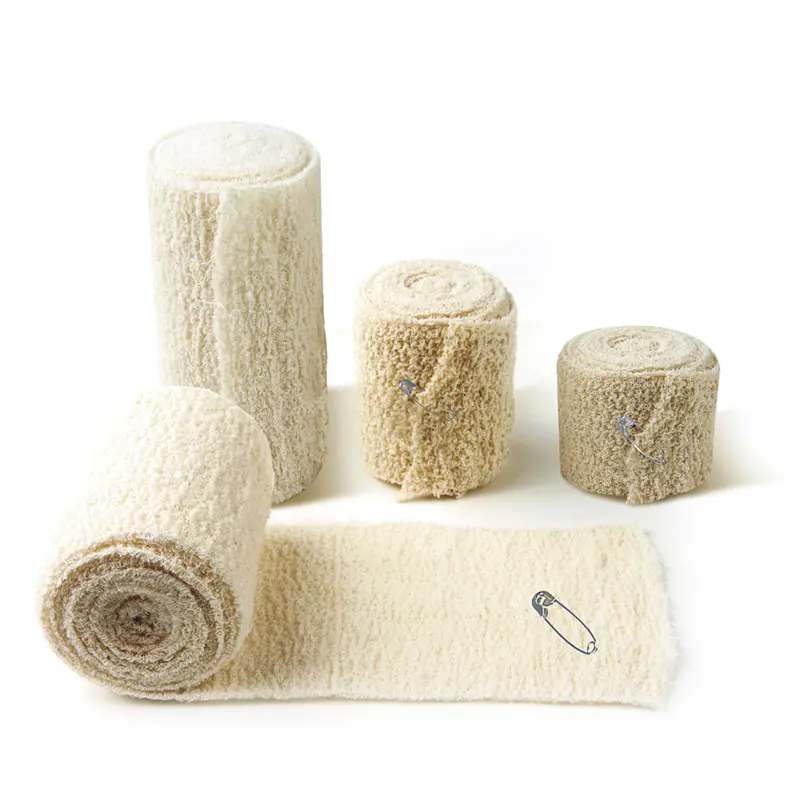
The B.P. Crepe Bandage Elastic Spandex Cotton Wool Bandage is designed to meet these practical requirements. Made from a cotton-and-wool material combination and produced to meet B.P. standards, it offers a balance of elasticity, permeability, comfort, and support. Its structure is intended to help the bandage maintain even pressure while reducing the tendency to slide during use. Available in several widths, the product can be selected for different body areas and application requirements.
This product is suitable for medical supply distributors, first-aid wholesalers, hospitals, clinics, pharmacies, sports retailers, rehabilitation centers, nursing facilities, and household healthcare channels. Its broad application range, multiple size options, latex-free adhesive-related advantages where applicable to configured versions, and OEM capability make it suitable for both standard distribution and private-label programs.
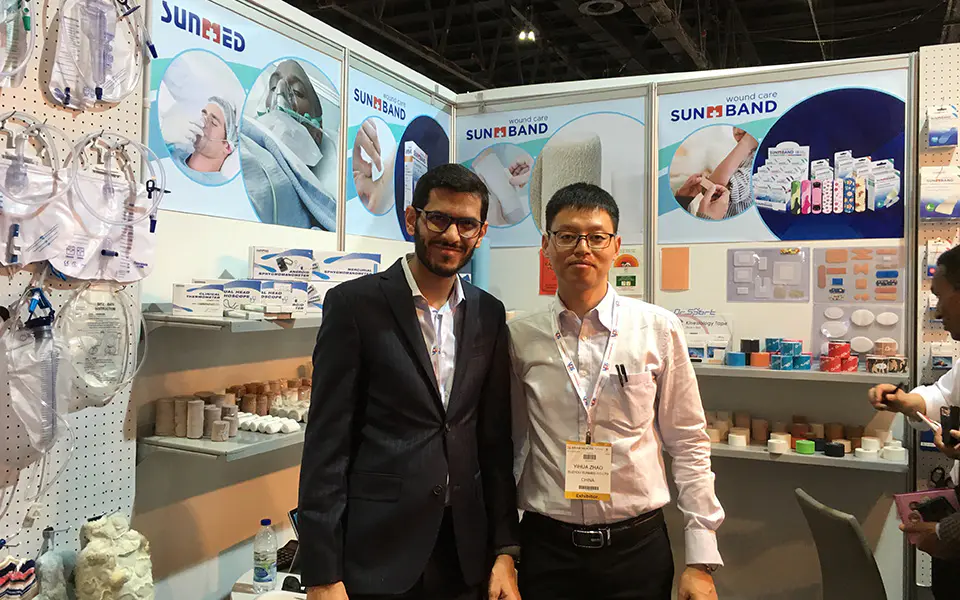
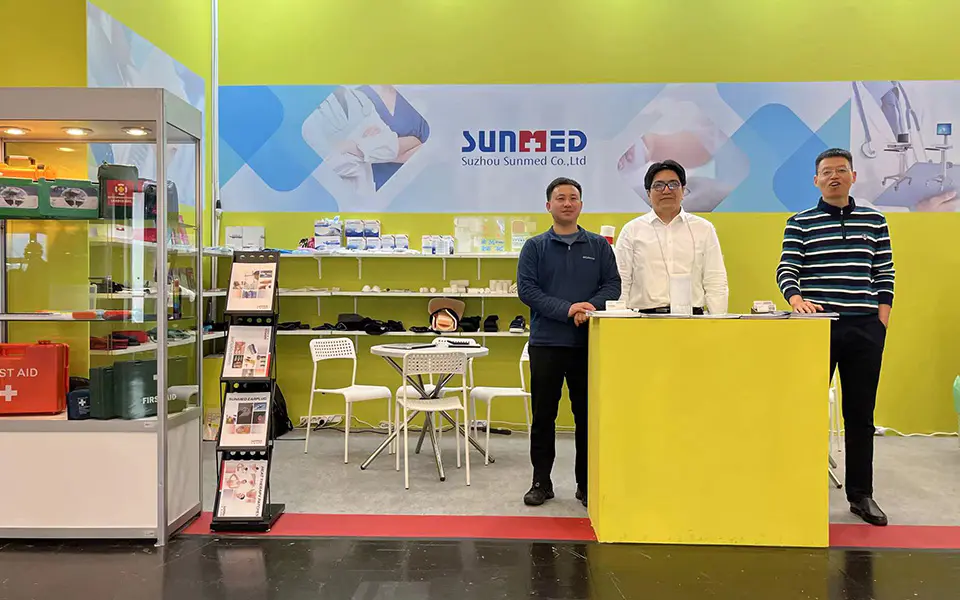
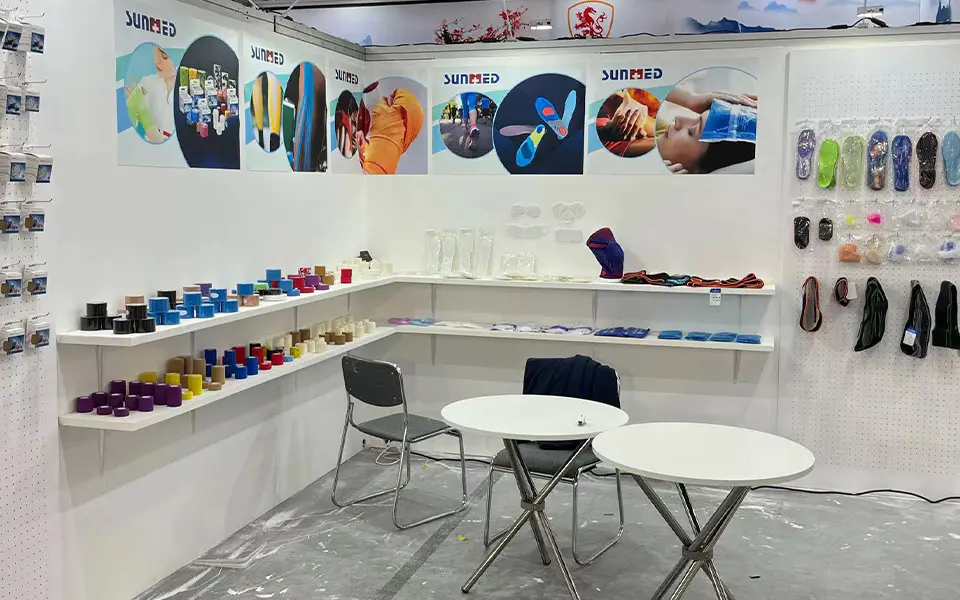
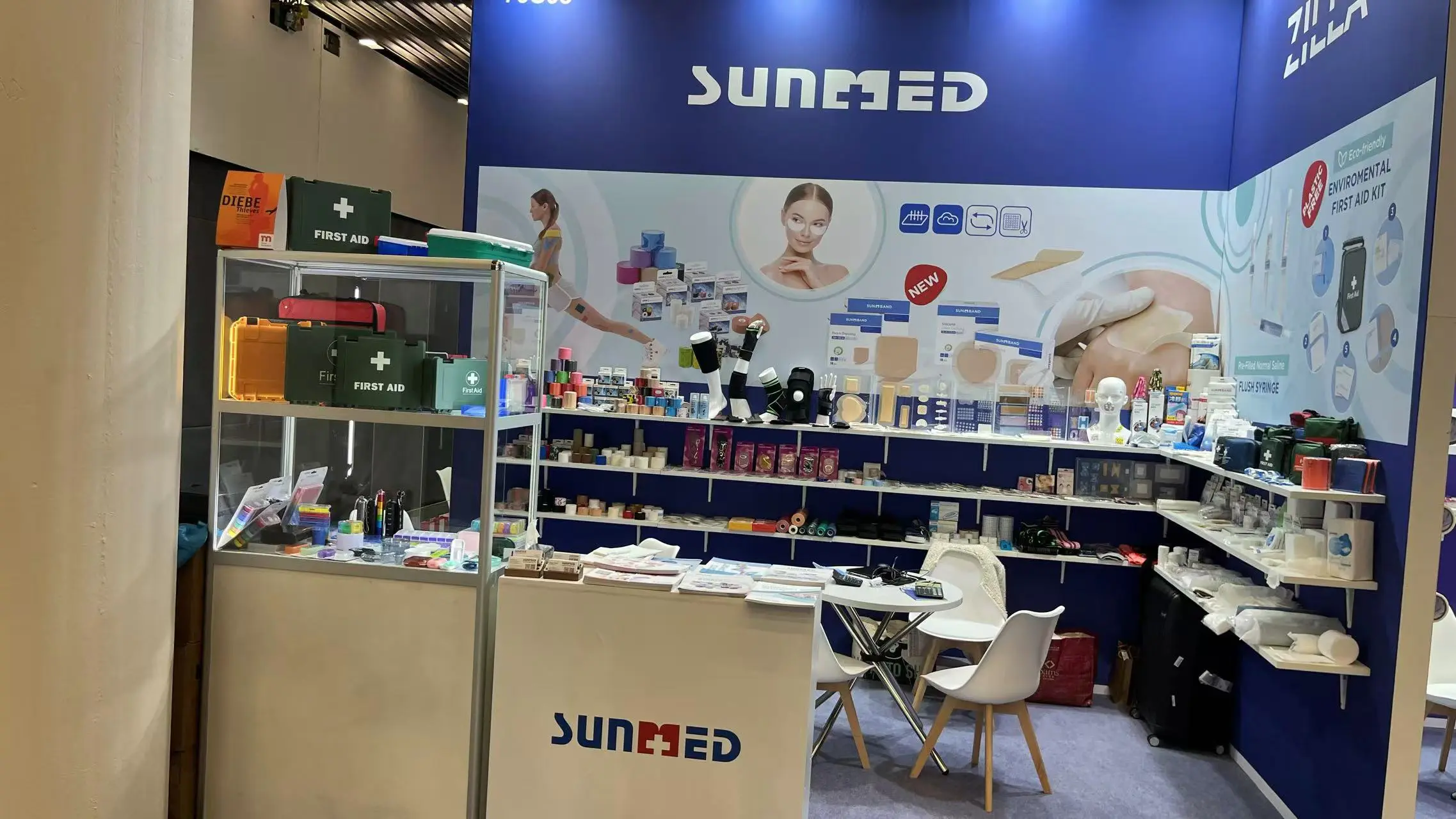
The product is manufactured and supplied by Suzhou Sunmed Co., Ltd., a Chinese medical and healthcare product manufacturer and exporter with approximately 30 years of industry experience. The company operates production bases in Jiangsu, Zhejiang, and Anhui Province and serves customers in more than 60 countries. Its experience across first aid, wound dressing, medical gauze, bandages, medical tape, cotton products, sports supports, family healthcare products, surgical consumables, and medical devices provides a broad manufacturing foundation for the production and distribution of crepe bandages.
B.P. Crepe Bandage Elastic Spandex Cotton Wool Bandage
Product Overview
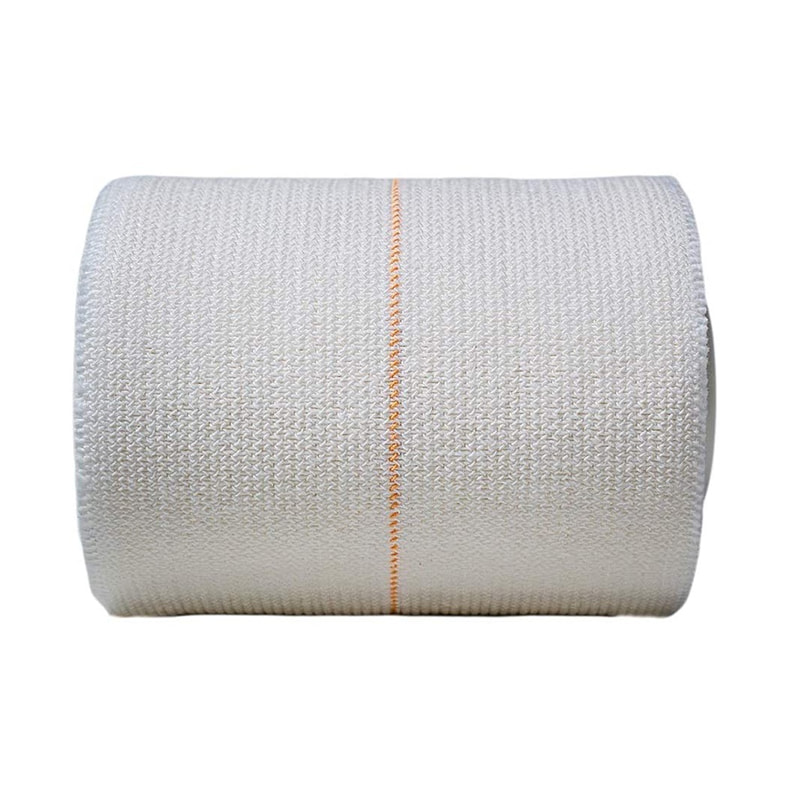
The B.P. Crepe Bandage Elastic Spandex Cotton Wool Bandage is a flexible support bandage intended for compression, fixation, and joint protection. Its primary material is cotton combined with wool, creating a soft textile surface that is comfortable against the skin when correctly applied. The bandage is available in beige, a neutral color that is suitable for clinical, first-aid, rehabilitation, and retail environments.
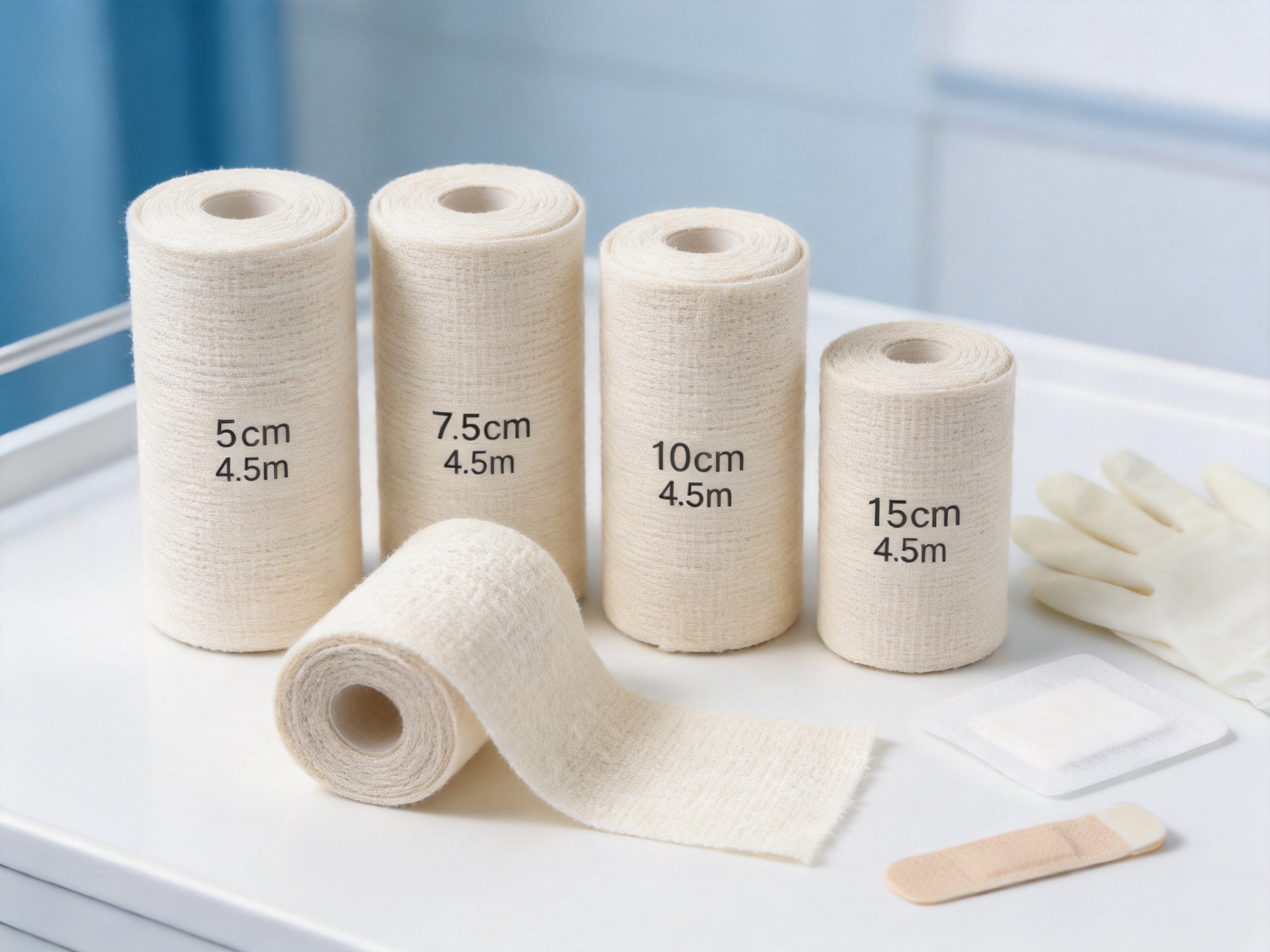
The product is offered in four principal sizes: 5 cm by 4.5 m, 7.5 cm by 4.5 m, 10 cm by 4.5 m, and 15 cm by 4.5 m. These widths allow buyers to create a product range for fingers, wrists, arms, elbows, ankles, knees, legs, and other areas requiring a broader or narrower support layer. The 4.5-meter length provides useful coverage for many routine applications, while the elastic construction helps the bandage conform to body contours.
The product description identifies the bandage as meeting B.P. standards. It is also listed with CE and ISO quality certifications and classified as a Class I medical device. These certifications and classifications support professional procurement, although buyers should always confirm the precise regulatory documentation, intended use, labeling, and market-specific requirements before placing the product on sale or using it in a regulated healthcare setting.
The product reference covers the series identified as SMD-240101 through SMD-240104. Individual references correspond to the available size variations. The expected shelf life is three years when the product is stored in appropriate conditions and kept in its original packaging. Proper warehousing should protect the bandages from excessive moisture, direct sunlight, contamination, extreme temperatures, and damage to the package.
Core Product Specifications
| Specification |
Product Information |
| Product type |
Elastic crepe bandage |
| Material |
Cotton and wool |
| Available color |
Beige |
| Available sizes |
5 cm x 4.5 m; 7.5 cm x 4.5 m; 10 cm x 4.5 m; 15 cm x 4.5 m |
| Weight specification |
75 g/m² |
| Standards and certification information |
B.P. standards; CE and ISO certification information supplied |
| Instrument classification |
Class I |
| Shelf life |
Three years |
| Primary functions |
Compression, fixation, splint support, and joint protection |
| OEM service |
Available according to project requirements |
Material Construction and Functional Performance
Cotton and Wool Composition
The cotton-and-wool construction is one of the product’s central advantages. Cotton is widely used in medical textiles because it provides a familiar, soft, and breathable surface. Wool contributes warmth, resilience, and a naturally cushioned textile feel. Together, these fibers can create a bandage that is comfortable for routine support while remaining sufficiently structured for controlled wrapping.
Material selection affects how a bandage feels during application, how it responds to movement, and how well it maintains contact with the body. A coarse or poorly finished textile may cause discomfort, while a material with insufficient structure may lose its shape or provide inconsistent support. The cotton-and-wool composition is intended to provide a more balanced performance than a basic, low-grade textile that focuses only on low purchase price.
The bandage is not designed to replace a sterile wound dressing or a specialized compression system unless the product labeling specifically states that purpose. It is primarily a support and fixation product. Where a wound is present, an appropriate dressing should be selected first, followed by the crepe bandage when additional support or retention is required. Application should be performed by a suitably trained person, particularly when compression is used around an injured limb.
Elasticity and Conformability
Good elasticity allows the bandage to follow the contours of the body rather than forming rigid, uncomfortable folds. This is important around joints, where the shape changes during flexion and extension. The product is designed to provide a degree of stretch that supports controlled wrapping and helps the bandage remain in contact with the underlying layer.
Elasticity also improves application efficiency. A bandage that stretches evenly can be wrapped with fewer interruptions and adjusted more easily around curved areas. Even stretch helps reduce the risk of isolated tight spots caused by sudden changes in tension. In professional environments, predictable elasticity can make application more consistent across different users and patients.
Compared with a non-elastic gauze roll, an elastic crepe bandage can offer improved conformity and support. Compared with a highly rigid wrap, it may provide greater flexibility and comfort for routine movement. The product therefore occupies a practical position between simple dressing retention and more specialized orthopedic or therapeutic support products.
Permeability and Comfort
Permeability is a valuable feature for bandages that remain in place for an extended period. A breathable textile structure can help reduce the feeling of heat and trapped moisture beneath the bandage. This can improve user comfort in first-aid, rehabilitation, sports-support, and general home-care applications.
Comfort is also influenced by the softness of the material, the smoothness of the surface, the accuracy of the wrap, and the presence of an appropriate underlying dressing or padding layer. The soft cotton-and-wool surface is intended to make the bandage more comfortable than rougher alternatives, especially when the product is applied without excessive tension and checked regularly.
Breathability does not mean that the bandage is waterproof or suitable for immersion. Users should follow the product instructions and keep the bandage clean and dry. If the bandage becomes wet, soiled, excessively loose, or uncomfortably tight, it should be inspected and replaced or reapplied as appropriate.
Uniform Depression and Reduced Sliding
The product characteristics include uniform depression and a reduced tendency to slide. In a crepe bandage, the textile pattern and surface construction influence how the roll grips itself and interacts with the underlying layer. A consistent pattern can help distribute contact more evenly and reduce movement during normal activity.
Reduced sliding is particularly valuable for joint protection and splint fixation. If a bandage shifts easily, it may expose part of the dressing, lose the intended level of support, or require repeated adjustment. A bandage that remains more stable can help healthcare workers, athletes, caregivers, and household users maintain the intended position for longer.
Bandage stability still depends on correct wrapping technique. The product should not be wrapped excessively tightly, and the end should be secured using the appropriate method or accessory. The area should be monitored for changes in color, temperature, sensation, swelling, or pain. Any application that causes concerning symptoms should be removed or assessed by a healthcare professional.
Applications Across Healthcare and Sports Support
First Aid and Wound Dressing Retention
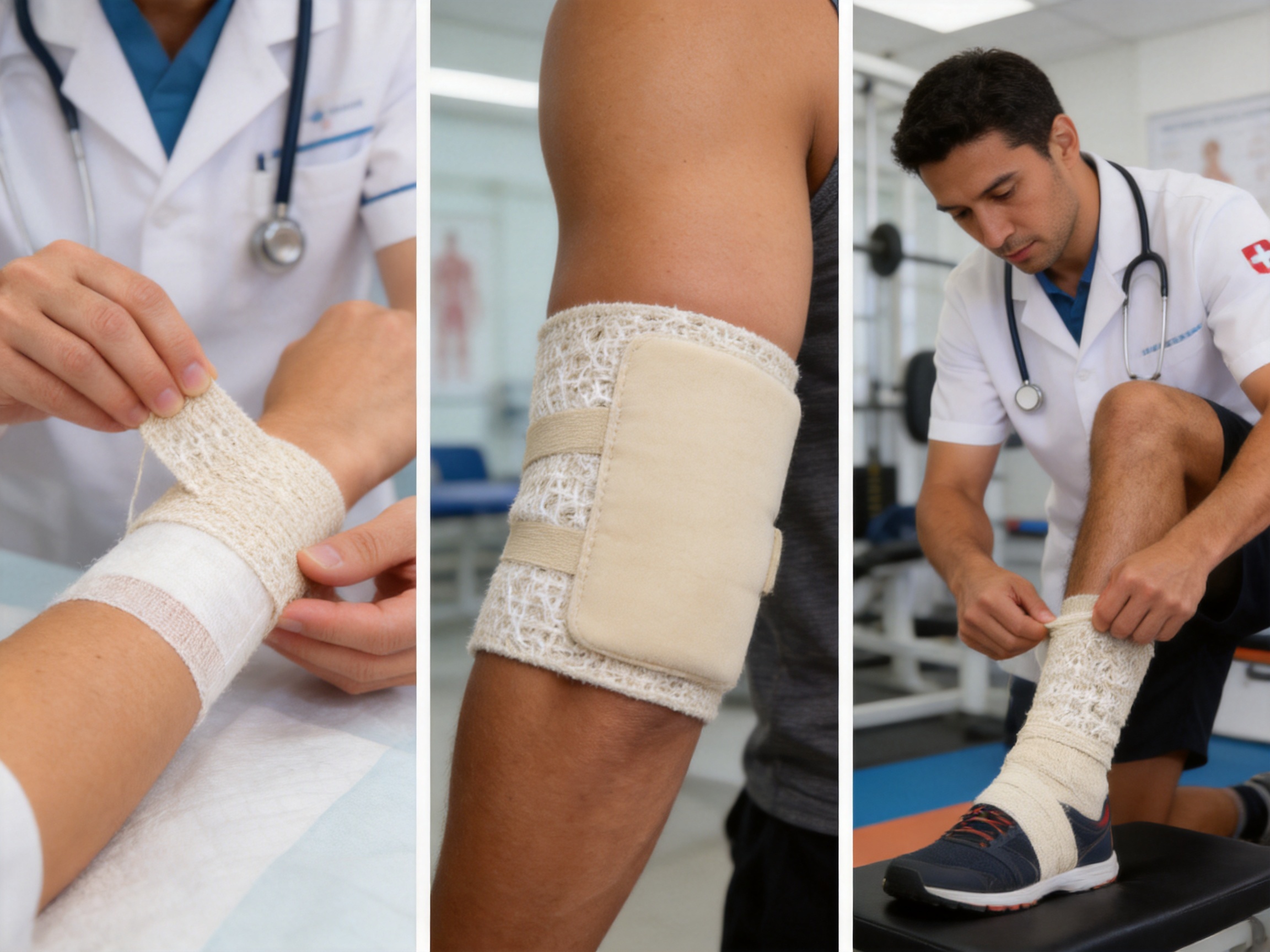
In first-aid settings, the bandage can be used to help hold gauze, non-woven pads, absorbent dressings, and other wound-care materials in position. It can provide a secondary layer over a dressing without requiring adhesive to be placed directly on the skin. This can be helpful for users who prefer a wrap-based fixation method or who need to change the dressing frequently.
The bandage itself should not automatically be considered a sterile wound-contact product. It is generally used over a suitable dressing, and the exact application should follow the labeling and professional instructions for the selected configuration. This distinction is important for procurement teams because first-aid bandages, dressing-retention bandages, and sterile wound dressings may have different regulatory and packaging requirements.
Joint Protection and Splint Fixation
The product can support splint fixation and fixed joint protection. Its elasticity allows it to be wrapped around a splint or support structure while maintaining a comfortable level of contact. The wider 10 cm and 15 cm options may be more suitable for larger limbs or for securing broader support materials, while the 5 cm and 7.5 cm sizes may be useful for smaller or more localized areas.
When used with a splint, the bandage should secure the structure without restricting circulation. Padding may be required between the splint and the skin. Medical professionals should determine the appropriate degree of support, especially in cases involving fractures, dislocations, severe sprains, or suspected vascular or nerve injury.
Sports and Rehabilitation
Sports retailers and rehabilitation centers often need support products that are easy to store, simple to apply, and available in multiple sizes. The B.P. Crepe Bandage addresses these requirements with a compact roll format, a neutral beige color, and a selection of widths. It can be included in sports first-aid kits, physiotherapy supplies, athletic training rooms, community sports facilities, and home rehabilitation packages.
For sports use, the bandage may be applied as part of a broader support strategy for minor strains, soft-tissue protection, or dressing retention. It is not a substitute for clinical diagnosis or a specialized brace where a more rigid or anatomically designed support is needed. Its advantage is versatility: it can be used as a general-purpose elastic wrap across a range of routine support tasks.
Home Healthcare and Care Facilities
Families, caregivers, nursing homes, and assisted-living facilities often require dependable products for everyday wound-care and support procedures. A bandage with consistent dimensions and predictable handling helps reduce confusion during use. Multiple width options also allow procurement managers to standardize a product family while still meeting different application needs.
The three-year shelf life can support orderly inventory planning. Buyers can purchase quantities for first-aid cabinets, nursing stations, emergency kits, and retail shelves without requiring immediate turnover, provided storage conditions are maintained. Clear labeling, batch control, and stock rotation remain important parts of responsible inventory management.
Advantages Over Basic Competing Bandages
Balanced Material Performance
Many low-cost bandages are designed primarily around minimum material cost. They may use a simpler textile construction, provide uneven stretch, feel rough against the skin, or lose their shape after repeated handling. The cotton-and-wool composition of this product is intended to offer a more balanced combination of softness, breathability, elasticity, and support.
This balance can be valuable for distributors who want to offer a dependable mid-range or professional product rather than a commodity item. A bandage that is comfortable and easy to apply may reduce complaints, returns, and user dissatisfaction. For healthcare buyers, more consistent handling can also support smoother nursing and first-aid workflows.
Multiple Widths for a Broader Product Portfolio
A competing product may be offered in only one standard width, forcing buyers to purchase several unrelated products for different applications. This range includes four widths, allowing a distributor to build a coherent product family. The same material concept, packaging approach, and supplier relationship can be used across different customer segments.
The 5 cm size may be suitable for smaller areas and focused support. The 7.5 cm width provides an intermediate option for wrists, forearms, ankles, and other moderate-size areas. The 10 cm width can be selected for larger joints and limbs, while the 15 cm version is intended for broad coverage. Actual suitability depends on the body area, clinical purpose, wrapping method, and instructions provided with the product.
Stable Support Without Excessive Rigidity
A non-elastic gauze bandage may be useful for dressing retention but may not provide the same conformability or support. A rigid wrap can offer stronger immobilization but may be less comfortable for ordinary movement. This crepe bandage is designed to provide an intermediate level of support: flexible enough to follow body contours while structured enough to help hold dressings, splints, or support layers in place.
This characteristic makes the product suitable for mixed-use distribution channels. A wholesaler can supply it to pharmacies, first-aid suppliers, sports shops, clinics, and institutional customers without restricting the product to one narrow application category.
Latex-Free Adhesive Advantage in Applicable Configurations
The product information highlights strong adhesion and latex-free glue as an advantage. This feature is especially relevant to product configurations that include an adhesive or self-adhering component. Buyers should confirm the precise construction of the selected model because a conventional crepe bandage and a cohesive or adhesive bandage may have different mechanisms of fixation.
Latex-free components can help manufacturers and distributors address the needs of users who are concerned about natural rubber latex exposure. Clear labeling remains essential. A latex-free claim should be supported by appropriate supplier documentation and quality-control records for the final product and its packaging.
OEM and Customization Potential
OEM capability is another advantage over suppliers that only offer an unchangeable standard product. Depending on order volume and technical feasibility, OEM projects may involve packaging design, carton information, private-label branding, size combinations, material configurations, printing, instructions, and product series development.
Customization enables distributors to create a product that is aligned with their own market positioning. A hospital group may require standardized packaging across a procurement system. A sports retailer may prefer packaging that emphasizes athletic support. A first-aid supplier may need a compact format for emergency kits. OEM cooperation can address these commercial differences while retaining the advantages of an established manufacturing process.
Manufacturing Process and Quality Control
Material Procurement and Incoming Inspection
Reliable bandage production begins with controlled raw materials. Cotton, wool, elastic components, packaging materials, labels, and any adhesive-related materials must be selected according to defined specifications. Incoming inspection may include checks for fiber composition, color, weight, dimensions, cleanliness, packaging quality, and conformity with purchasing requirements.
For a product specified at 75 g/m², material weight is an important control point. Variations in fabric weight can influence coverage, softness, elasticity, and the total weight of each roll. Consistent incoming material inspection helps reduce variation before the manufacturing process begins.
Textile Preparation and Blending
The cotton-and-wool material must be prepared to create a uniform textile structure. Depending on the production method, this can involve fiber preparation, blending, yarn formation, weaving or knitting, elastic integration, and finishing. Each stage can affect the final bandage’s ability to stretch, recover, breathe, and maintain its shape.
Uniform blending helps prevent sections of the roll from feeling noticeably different from one another. Consistent textile formation is also important for professional appearance and predictable application. Manufacturing controls should address defects such as uneven density, broken threads, contamination, discoloration, irregular edges, and excessive variation in stretch.
Elasticity and Dimensional Control
After the textile structure is formed, production teams need to verify width, length, stretch, recovery, and roll formation. The listed sizes are nominal product dimensions, and production tolerances should be defined within the manufacturer’s technical documentation. Dimensional checks help ensure that customers receive the ordered format and that packaging quantities remain accurate.
Elasticity testing may evaluate how far the bandage stretches under a specified load and how well it returns toward its original length. While the product is intended to be elastic, it should not be assumed that every application requires the same tension. The manufacturing objective is consistent performance, while the application objective is safe and appropriate support.
Finishing and Edge Quality
Finishing operations can improve the feel, appearance, and handling of the bandage. The edges should be sufficiently formed to reduce fraying during normal use. The surface should be inspected for loose fibers, holes, stains, foreign matter, or other defects that could compromise presentation or usability.
A clean and well-formed roll is especially important for healthcare customers. Poorly finished edges may create loose threads, make the bandage difficult to unwind, or reduce confidence in the product. Consistent finishing therefore contributes to both functional quality and brand-independent professional presentation.
Rolling, Cutting, and Packaging
Once the textile has passed the required inspections, it is cut or prepared into the specified lengths and rolled into individual units. Uniform rolling helps the user unwind the product smoothly and supports accurate packing. The bandages are then placed into bags or other approved packaging formats according to the selected size.
The supplied packing information lists 12 pieces per bag. Carton quantities vary by width: 720 pieces per carton for the 5 cm size, 480 pieces per carton for the 7.5 cm size, 360 pieces per carton for the 10 cm size, and 240 pieces per carton for the 15 cm size. These quantities reflect the different volume and weight of each roll and can assist buyers in planning warehouse capacity and shipping requirements.
Packaging inspection should verify product identification, size, quantity, lot or batch information, shelf-life information, and the integrity of the bag and carton. For OEM projects, packaging artwork and regulatory text should be reviewed and approved before mass production.
Final Quality Inspection
Final inspection is a critical stage in a medical consumables manufacturing system. Quality personnel may assess appearance, dimensions, material weight, elasticity, roll formation, packaging, labeling, and sampling-based functional requirements. Any nonconforming product should be identified, segregated, investigated, and handled according to the company’s quality procedures.
Suzhou Sunmed states that it maintains a professional quality-control team comprising hundreds of personnel and follows inspection procedures aligned with ISO 13485:2016 requirements. A structured quality system can help connect raw-material control, production monitoring, document management, traceability, corrective action, and final release decisions.
Company Manufacturing Strengths
Long-Term Medical Industry Experience
Supplier experience matters when purchasing a medical textile because the product must be managed as more than an ordinary fabric item. Manufacturing controls, regulatory documentation, packaging compliance, export preparation, customer communication, and after-sales support all influence the success of a procurement project.
Suzhou Sunmed has approximately 30 years of experience in the medical device and medical consumables industry. Its product portfolio includes medical gauze, bandages, medical tape, medical cotton, non-woven products, first-aid products, sports bandages, kinesiology tape, cohesive bandages, hot-and-cold therapy products, pill boxes, surgical consumables, syringes, catheters, and other healthcare items.
This broad experience can provide practical advantages for buyers seeking product families rather than a single item. A distributor may be able to coordinate crepe bandages with dressings, tapes, cotton products, first-aid kits, sports-support products, and other medical consumables through one established supplier relationship.
Multiple Production Bases
The company operates production bases in Jiangsu, Zhejiang, and Anhui Province. Multiple bases can support manufacturing capacity, product specialization, sourcing coordination, and supply planning. For customers with recurring orders or several product categories, a broader production network may provide additional flexibility compared with a single small workshop.
Production-base management must still be supported by consistent specifications and quality procedures. When products are manufactured across different locations, customers benefit from clear technical files, controlled processes, documented inspections, and reliable communication between the supplier’s commercial and quality teams.
Dedicated First-Aid and Sports-Support Development
The company established its first-aid factory in 2008 to respond to the needs of first-aid customers. It later established a factory for kinesiology tape, cohesive bandages, and elastic adhesive bandages in 2021. This development is relevant to the crepe bandage because it demonstrates experience in flexible medical textiles and sports-support products.
Knowledge gained from related products can support improvements in textile handling, adhesive selection where applicable, winding, packaging, private-label development, and application-oriented product design. It also gives buyers access to a supplier familiar with the different expectations of hospitals, pharmacies, first-aid distributors, supermarkets, and sports retailers.
International Export Experience
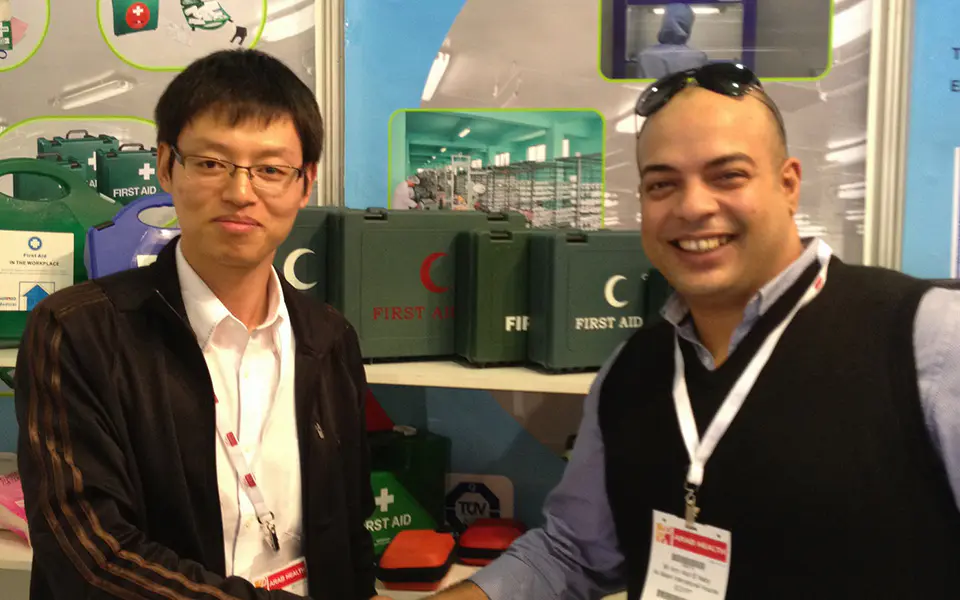
The company reports exports to more than 60 countries, including markets in Europe, Southeast Asia, Africa, and Oceania. International experience may help with export packaging, product documentation, shipping coordination, carton marking, and communication across different procurement environments.
Export experience does not remove the responsibility of the importer or distributor to verify local requirements. Medical device rules, labeling obligations, language requirements, registration procedures, customs documentation, and post-market responsibilities vary by jurisdiction. Buyers should work with the supplier to confirm that the specific product configuration meets the destination market’s requirements.
Quality-System Orientation
The company states that its quality-control procedures adhere to ISO 13485:2016 standards and that most of its products are CE certified. It also states that its Suzhou factories comply with FDA requirements. These claims should be supported by current certificates, declarations, technical files, audit documents, and product-specific records during the qualification process.
A quality-system orientation is valuable because it encourages repeatability. Instead of relying only on visual inspection at the end of production, a mature system addresses supplier qualification, process control, equipment maintenance, training, document control, risk management, complaint handling, and corrective and preventive action.
Packaging, Logistics, and Inventory Planning
Packaging is an important part of product performance. A well-packed crepe bandage is easier to identify, store, count, transport, and display. The supplied packing format is 12 pieces per bag, with carton quantities selected according to size. Carton dimensions are listed as 54 cm by 34 cm by 44 cm for the provided size options.
| Bandage Size |
Approximate Net Weight |
Approximate Gross Weight |
Inner Packing |
Carton Quantity |
Carton Size |
| 5 cm x 4.5 m |
12 kg |
13 kg |
12 pieces per bag |
720 pieces per carton |
54 x 34 x 44 cm |
| 7.5 cm x 4.5 m |
11.5 kg |
12.5 kg |
12 pieces per bag |
480 pieces per carton |
54 x 34 x 44 cm |
| 10 cm x 4.5 m |
12 kg |
13 kg |
12 pieces per bag |
360 pieces per carton |
54 x 34 x 44 cm |
| 15 cm x 4.5 m |
14.5 kg |
15.5 kg |
12 pieces per bag |
240 pieces per carton |
54 x 34 x 44 cm |
The weight figures supplied with the product information should be confirmed with the manufacturer for each purchase order, particularly when they are used for freight quotations, customs declarations, or container planning. Net weight and gross weight may vary according to packaging configuration, production tolerances, and final carton preparation.
Warehouse personnel should store cartons on clean, dry pallets or shelving and avoid placing them directly on damp floors. Cartons should not be crushed or exposed to excessive stacking pressure. Stock should be rotated according to the manufacturing date and expiry information, using a first-expiring, first-out approach where appropriate.
For retail customers, individual bags may be suitable for back-room storage or wholesale resale. For hospitals and institutional users, carton-level packaging can simplify central purchasing and distribution to departments. OEM customers may request additional barcodes, product labels, multilingual instructions, retail boxes, or customized inner packing.
OEM Cooperation and Product Customization
OEM cooperation can be especially useful for distributors that want to develop a consistent private-label healthcare range. The crepe bandage may be combined with other first-aid products in a branded kit, included in a sports-support collection, or sold as part of a wound-care assortment.
Potential OEM discussion points include product size, material specification, color, printed packaging, bag design, carton markings, labels, instructions for use, language requirements, barcode format, order quantity, inspection standard, and shipment schedule. The final options depend on production feasibility, regulatory requirements, and the customer’s target market.
Customization should be managed through documented approvals. Artwork should be checked for correct dimensions, product claims, storage information, warnings, intended-use wording, certification marks, and importer details. A controlled approval process reduces the risk of packaging errors and helps ensure that the supplied product corresponds to the approved sample.
For buyers comparing suppliers, OEM capability can be a stronger advantage than a small difference in unit price. A reliable private-label program can improve product recognition, create customer loyalty, simplify portfolio management, and support long-term cooperation. It can also allow distributors to differentiate a product that otherwise competes in a crowded medical consumables category.
Selection Guide for Buyers
Choosing the Correct Width
Width should be selected according to the body area, intended support, dressing size, and application technique. Narrower bandages are often easier to control on smaller areas, while wider bandages can cover larger surfaces with fewer turns. A buyer serving multiple customer groups may benefit from stocking all four widths.
Product selection should not be based on width alone. The required level of elasticity, material comfort, packaging, regulatory status, and intended use should also be considered. Procurement teams should request technical specifications and samples when evaluating a new supplier.
Confirming Regulatory Documentation
Before importing or distributing the product, buyers should request current documentation relevant to the destination market. This may include a declaration of conformity, certification information, product technical data, material statements, quality certificates, test reports, labeling samples, and evidence supporting any latex-free claim.
The term B.P. refers to British Pharmacopoeia-related standards or requirements identified in the product description. Buyers should clarify which specific standard or monograph applies, how conformity is demonstrated, and whether the relevant documentation covers the exact product size and material configuration being purchased.
Evaluating Samples
Samples should be reviewed for roll appearance, edge finishing, softness, stretch, recovery, ease of unwinding, dimensional accuracy, packaging integrity, and label content. If the product will be used in a clinical or sports-support program, representative users can evaluate application handling under controlled conditions.
Sample evaluation should be documented. Important observations include whether the bandage stretches evenly, whether it maintains contact during movement, whether it generates excessive pressure when applied according to instructions, and whether the packaging remains intact during transport and storage.
Reviewing Supply Capacity
For recurring procurement, buyers should evaluate production capacity, lead time, minimum order quantity, raw-material availability, inspection procedures, shipping experience, and communication response. A supplier with a broad product portfolio and multiple production bases may be able to coordinate larger or more varied orders, but capacity and scheduling should still be confirmed for each project.
Safe Handling and Application Considerations
The bandage should be applied by a trained person or according to suitable professional guidance. It should be wrapped smoothly, without excessive tension, and should not create folds or concentrated pressure points. The application should be checked regularly, particularly when used around a limb or joint.
Users should observe the area for unusual pain, numbness, tingling, discoloration, coldness, increased swelling, or other concerning changes. If such symptoms occur, the bandage should be loosened or removed and appropriate medical advice should be obtained. Individuals with circulation problems, diabetes, significant swelling, suspected fractures, or serious injuries should seek professional guidance before using compression support.
The product should be kept clean and dry. It should not be used as a substitute for a sterile dressing when direct wound contact is required unless the specific product labeling confirms sterility and wound-contact suitability. Used bandages should be handled according to local healthcare, hygiene, and waste-disposal procedures.
These considerations are especially important when the product is sold through retail channels. Packaging should provide clear instructions, intended-use information, precautions, and storage guidance. For institutional customers, staff training and standard operating procedures can further improve safe and consistent use.

Why This Product Is a Strong Commercial Choice
The B.P. Crepe Bandage combines several features that support both practical use and commercial distribution. Its cotton-and-wool material offers a soft and breathable feel. Its elastic structure supports conformity and controlled compression. Its surface construction is designed to reduce sliding. Its beige color is neutral and suitable for multiple markets. Its four width options allow a flexible product portfolio.
From a quality perspective, the product is identified as meeting B.P. standards and is supplied with CE and ISO certification information. Its Class I classification and three-year shelf life are relevant to procurement planning, although buyers should always verify current product-specific documentation.
From a manufacturing perspective, the supplier brings extensive experience in first aid, wound care, medical textiles, sports supports, family healthcare, surgical consumables, and medical devices. Its multiple production bases, international export experience, quality-control resources, and OEM capabilities make it suitable for distributors seeking a long-term supply partner rather than a one-time commodity purchase.
Compared with a basic low-cost wrap, the product offers a more complete value proposition. The advantage is not limited to the textile itself. It includes size variety, professional packaging options, quality-system support, documentation, export experience, customization, and access to related medical product categories.
Q&A
What is the B.P. Crepe Bandage used for?
It is intended for elastic support, controlled wrapping, dressing retention, splint fixation, and joint protection. It may be used in first aid, wound care, sports support, rehabilitation, clinical care, and home healthcare, subject to the product labeling and appropriate application guidance.
What materials are used in the bandage?
The listed material is cotton combined with wool. This composition is selected to provide softness, comfort, permeability, and a stable textile structure suitable for elastic support applications.
Which sizes are available?
The available sizes are 5 cm x 4.5 m, 7.5 cm x 4.5 m, 10 cm x 4.5 m, and 15 cm x 4.5 m. Buyers should confirm the exact dimensions and production tolerances with the supplier before ordering.
What is the weight specification?
The product information specifies a material weight of 75 g/m². The supplied logistics table also provides approximate net and gross weights for each carton configuration.
Does the bandage meet recognized standards?
The product description states that it meets B.P. standards and includes CE and ISO certification information. Buyers should request current, product-specific certificates and conformity documents for the intended destination market.
Is the product sterile?
Sterility is not stated in the supplied product information. The bandage should therefore not be assumed to be sterile or suitable for direct wound contact. It is generally used over an appropriate dressing unless the specific product documentation states otherwise.
Does the bandage contain latex?
The product advantages identify a latex-free glue for applicable adhesive configurations. Buyers should confirm whether the exact crepe bandage model includes adhesive components and request supporting documentation for any latex-free requirement.
How long is the shelf life?
The listed shelf life is three years. Storage conditions, production date, packaging integrity, and local regulatory labeling should be checked before distribution or use.
Can the product be customized?
OEM service is available. Customization may include packaging, labeling, product combinations, sizes, colors, printing, and other project details, subject to minimum order quantities, technical feasibility, regulatory requirements, and approval of final artwork and samples.
What packaging is available?
The supplied packing information lists 12 pieces per bag. Carton quantities are 720 pieces for the 5 cm size, 480 pieces for the 7.5 cm size, 360 pieces for the 10 cm size, and 240 pieces for the 15 cm size. Carton dimensions are listed as 54 x 34 x 44 cm.
Who may purchase this product?
Potential buyers include medical distributors, first-aid suppliers, hospitals, clinics, pharmacies, nursing facilities, rehabilitation centers, sports retailers, supermarkets, and private-label healthcare companies.
How should the bandage be applied?
It should be wrapped smoothly and evenly, without excessive tightness or folds. The application should be checked for comfort and circulation. Serious injuries and users with circulation-related conditions should be assessed by a healthcare professional.
Conclusion
The B.P. Crepe Bandage Elastic Spandex Cotton Wool Bandage is a versatile support product designed for first aid, dressing retention, joint protection, splint fixation, sports support, rehabilitation, and home healthcare. Its cotton-and-wool material, elasticity, permeability, softness, uniform surface construction, and reduced tendency to slide provide a practical combination of comfort and function.
The four available widths allow buyers to serve different application requirements while maintaining a consistent product family. B.P. standards, CE and ISO certification information, Class I classification, a three-year shelf life, and OEM capability add value for professional procurement and private-label distribution.
Its commercial strength is reinforced by the supplier’s long-standing experience in medical consumables, multiple production bases, extensive quality-control resources, international export history, and related expertise in first-aid and sports-support products. For buyers seeking a dependable elastic bandage with flexible packaging and customization options, this product offers a balanced alternative to basic commodity wraps.
As with all medical consumables, final selection should be based on product-specific documentation, destination-market requirements, sample evaluation, intended use, and appropriate application guidance. With these checks in place, the product can serve as a reliable addition to professional healthcare, retail, sports, and first-aid supply portfolios.
References
British Pharmacopoeia Commission. British Pharmacopoeia: Standards for Medicines and Pharmaceutical Substances.
International Organization for Standardization. ISO 13485:2016, Medical Devices—Quality Management Systems—Requirements for Regulatory Purposes.
International Organization for Standardization. ISO 15223-1, Medical Devices—Symbols to Be Used with Information to Be Supplied by the Manufacturer.
World Health Organization. Basic Technical Specifications for Health Care Products and Medical Consumables.
European Parliament and Council. Medical Device Regulatory Principles and Conformity Assessment Guidance.
Supplier product specification: B.P. Crepe Bandage Elastic Spandex Cotton Wool Bandage, product references SMD-240101 through SMD-240104.

 English
 Español
 русский
 Français
 Deutsch
 italiano
 By Admin