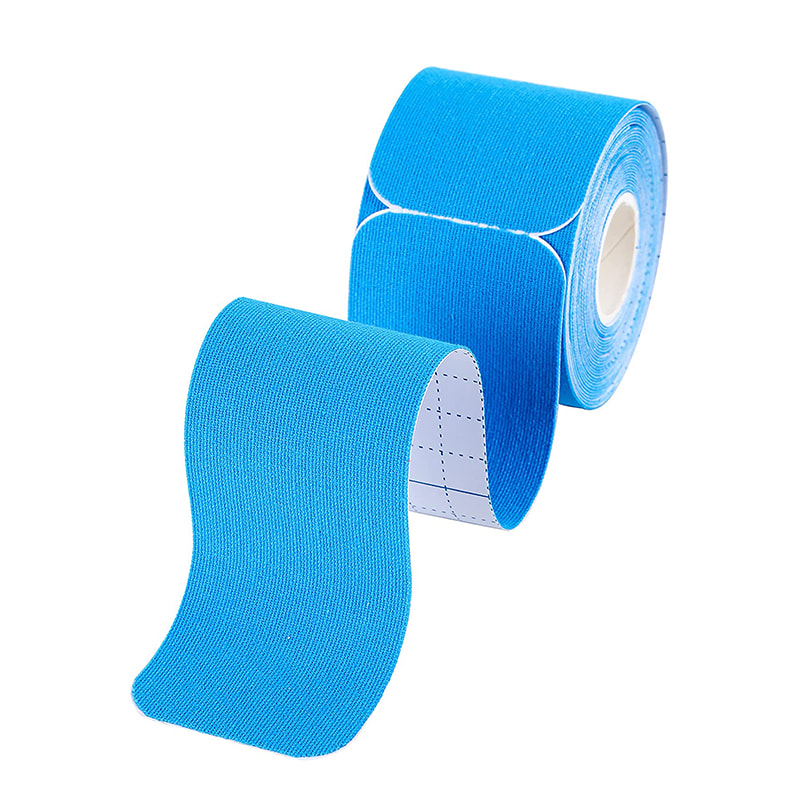
Kinesiology tape has emerged as a cornerstone of modern musculoskeletal care, bridging the gap between sports performance enhancement and clinical rehabilitation. From elite athletes prepping for competitions to patients recovering from joint injuries, this thin, elastic tape has transformed how we support muscles, ligaments, and joints without restricting movement. But not all kinesiology tapes are created equal—advanced manufacturing, material innovation, and customization capabilities set top-tier products apart from their competitors. In this article, we explore the science behind high-quality kinesiology tape, its key advantages, the manufacturing processes that ensure reliability, and how it addresses the diverse needs of global customers.
What Is Kinesiology Tape?
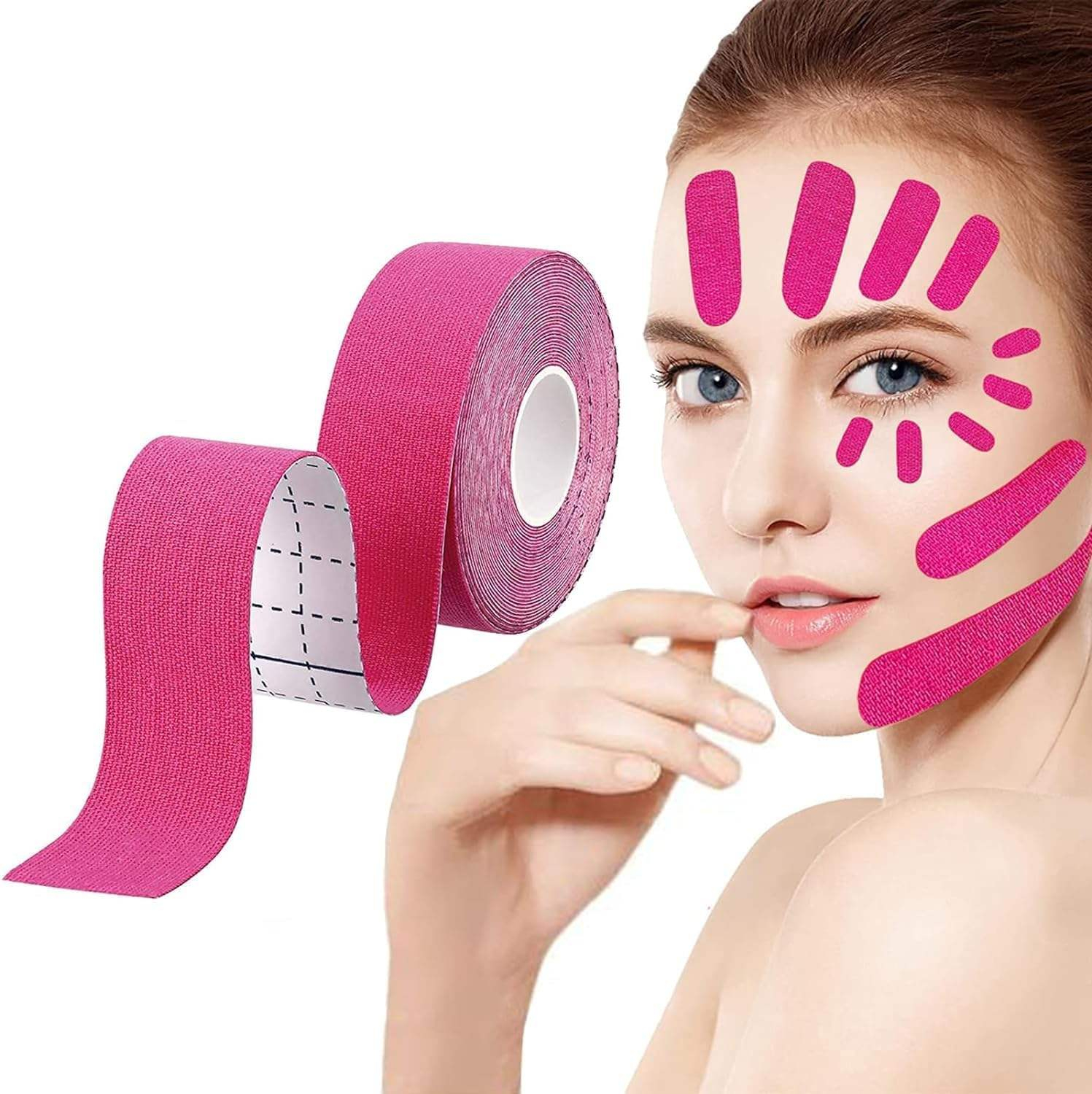
Kinesiology tape is a thin, stretchable adhesive tape designed to mimic the elasticity of human skin. Developed in the 1970s by Japanese chiropractor Dr. Kenzo Kase, it was initially used to support muscles and reduce pain without limiting mobility. Unlike traditional athletic tape (which restricts movement), kinesiology tape works by lifting the skin slightly, improving blood flow and lymphatic drainage, and providing targeted support to injured or overused areas. Today, it’s used across sports, healthcare, and personal care sectors for injury prevention, recovery, and performance optimization.
Modern kinesiology tape has evolved far beyond its original design. Today’s versions feature advanced materials, customizable properties, and compliance with global regulatory standards—making them suitable for both professional and consumer use.
Key Advantages of Premium Kinesiology Tape
Premium kinesiology tape stands out from generic alternatives due to its focus on user comfort, performance, and adaptability. Below are the core advantages that make it a top choice for athletes, clinicians, and retailers alike:
Material Innovation: Softness, Breathability, and Skin Safety
The foundation of any high-quality kinesiology tape lies in its materials. Generic tapes often use synthetic blends or latex-containing adhesives, which can cause irritation, allergic reactions, or discomfort during prolonged wear. Premium tapes, by contrast, prioritize skin-friendly materials:
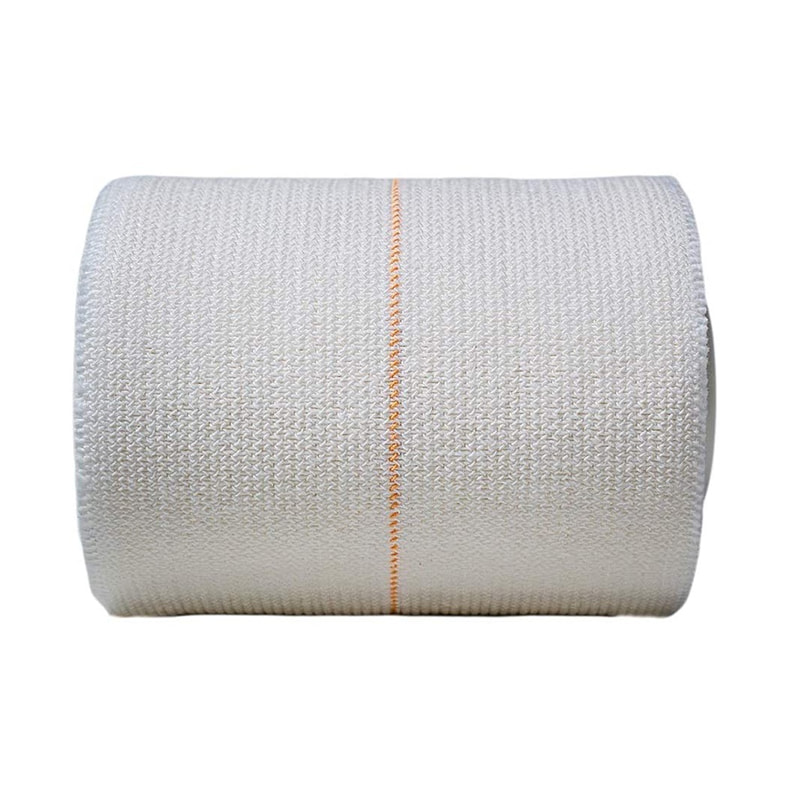
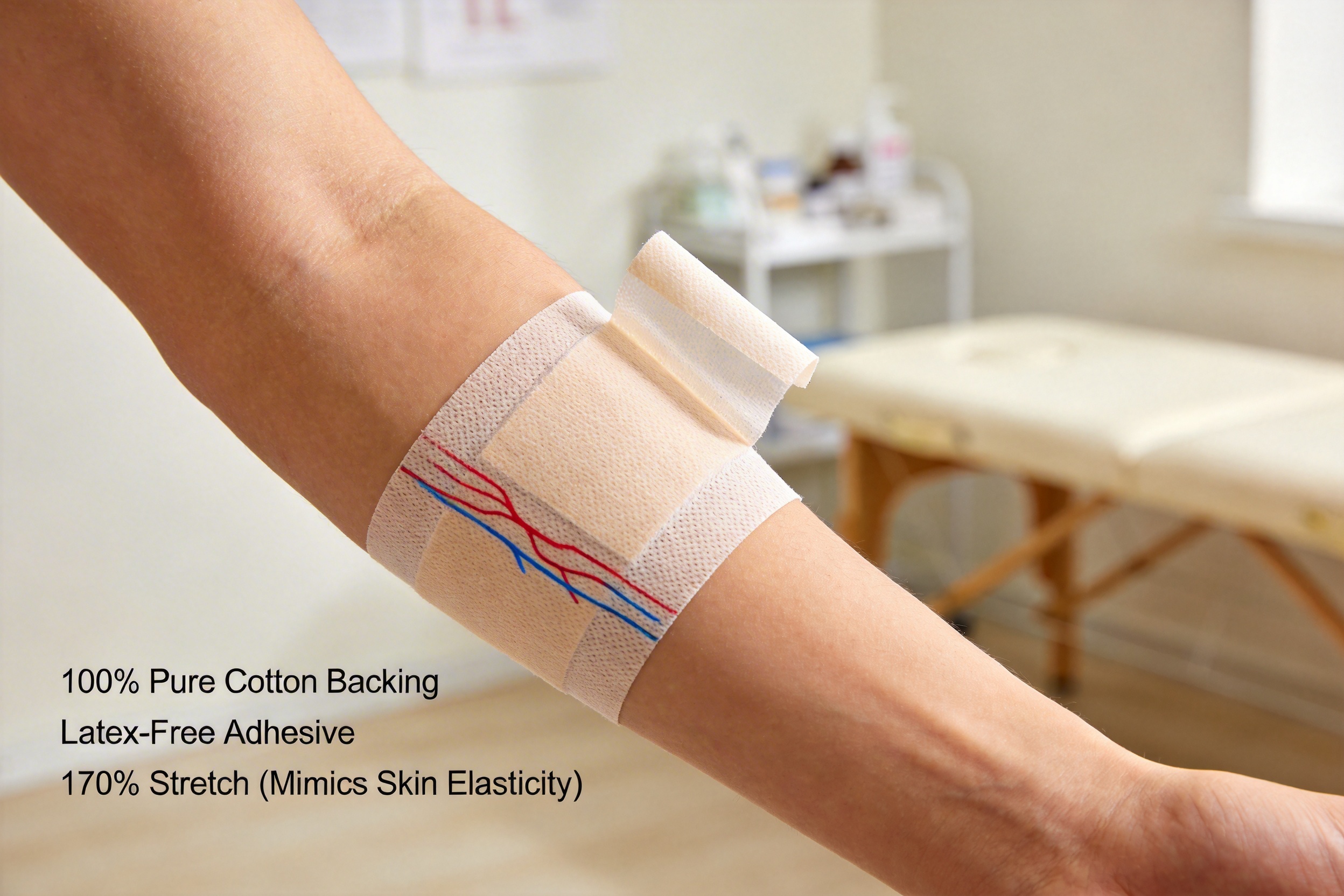
- 100% Pure Cotton Backing: Unlike synthetic tapes that trap heat and moisture, cotton backing ensures breathability and softness, making it ideal for extended use (up to 7 days). It also conforms to the skin’s shape without causing friction.
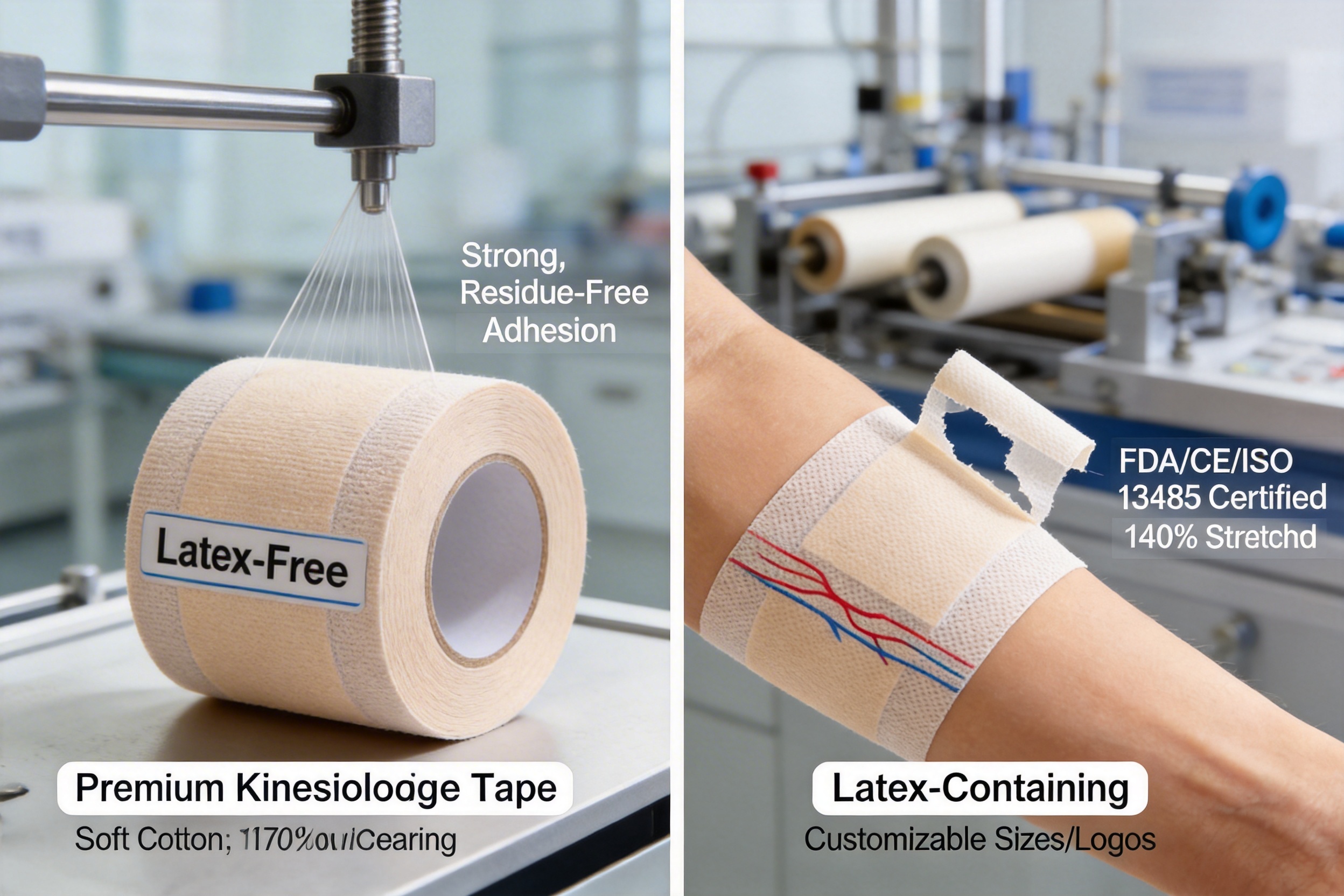
- Latex-Free Adhesive: Latex allergies affect up to 6% of the global population, so latex-free adhesive is a critical feature. Premium tapes use hypoallergenic, FDA-approved adhesives that minimize irritation and are safe for sensitive skin.
- Custom Material Options: For specialized needs (e.g., extreme water sports), some manufacturers offer synthetic alternatives (like nylon) that provide enhanced durability while retaining breathability.
Elasticity: Balancing Support and Mobility
One of the most important features of kinesiology tape is its elasticity. Premium tapes offer up to 170% stretch—mimicking the natural elasticity of human skin. This allows the tape to:
- Provide targeted support to muscles and joints without restricting movement (unlike traditional tape, which can limit range of motion).
- Withstand the forces of high-intensity activities (e.g., running, weightlifting) without tearing or losing adhesion.
- Maintain its shape and support over time, even after repeated stretching.
Generic tapes often have lower elasticity (140% or less), which can either restrict movement or fail to provide sufficient support during intense activity. This difference is particularly noticeable in athletes who rely on full range of motion for optimal performance.
Adhesion: Strong Hold Without Residue
A common complaint with generic kinesiology tape is poor adhesion (it falls off during activity) or sticky residue left on the skin. Premium tapes solve both issues with advanced adhesive technology:
- Adjustable Strong Adhesion: The adhesive is designed to stick firmly to the skin but peel off easily without leaving residue. This is achieved through a balance of tackiness and cohesive strength.
- Water Resistance: The adhesive remains effective even in humid or sweaty conditions (e.g., during a marathon or hot yoga class). This makes it suitable for outdoor activities and athletes who sweat heavily.
- No Skin Irritation: The adhesive is formulated to be gentle on the skin, reducing the risk of redness or irritation even after prolonged wear.
Customization: Tailored to Every Need
Generic kinesiology tape often comes in limited sizes, colors, and patterns—leaving businesses and consumers with few options. Premium tapes offer extensive customization capabilities, including:
- Size Customization: Widths (1 inch, 2 inches, 3 inches), lengths (5 yards, 10 yards, 15 yards), and thicknesses can be adjusted to fit specific applications (e.g., narrow tape for fingers, wide tape for knees).
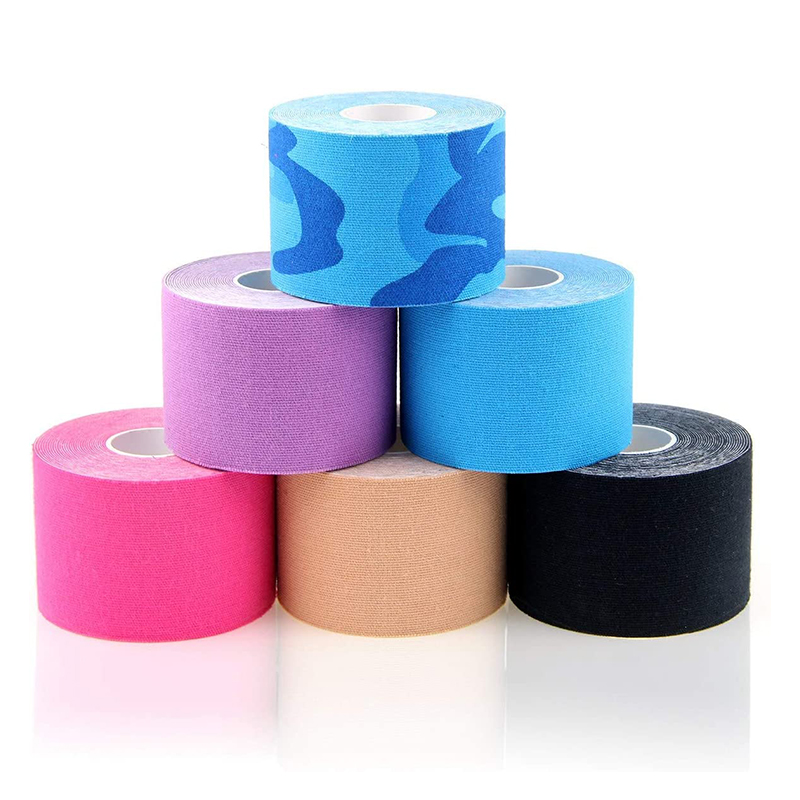
- Color and Pattern Design: Multiple solid colors, patterns (e.g., camouflage, stripes), and custom logo printing are available. This is ideal for sports brands looking to promote their logo or retailers wanting to differentiate their products.
- Packaging Customization: Retail packaging (e.g., boxes with hang tags), wholesale packaging (e.g., bulk rolls), and transport packaging (e.g., waterproof bags) can be tailored to enhance brand recognition and protect the product during shipping.
- OEM/ODM Services: Full private-label solutions from design to production are offered, allowing businesses to create a unique product that aligns with their brand identity.
Advanced Manufacturing Processes Behind Premium Kinesiology Tape
The quality of kinesiology tape depends heavily on the manufacturing processes used. Leading manufacturers invest in state-of-the-art technology and rigorous quality control to ensure consistency and reliability. Below are the key steps in the production of premium kinesiology tape:
1. Material Sourcing and Quality Control
Every raw material used in the tape undergoes strict testing before production. This includes:
- Cotton Backing: Sourced from certified organic or high-quality cotton suppliers, tested for softness, breathability, and absence of harmful chemicals.
- Adhesive: FDA-approved, latex-free, and tested for adhesion strength, skin safety, and water resistance.
- Backing Film: A protective layer that prevents the tape from sticking to itself before use, tested for durability and ease of removal.
All materials are stored in climate-controlled facilities to maintain their properties until production.
2. Precision Cutting and Lamination
Automated cutting machines are used to ensure consistent size and shape for every roll. The cotton backing is then laminated with the adhesive layer using precision rollers, ensuring an even distribution of adhesive (no clumps or gaps). This step is critical for maintaining the tape’s elasticity and adhesion.
3. Adhesive Application and Curing
The adhesive is applied to the cotton backing using a controlled spray or roller system. After application, the tape is cured in a temperature-controlled environment to ensure the adhesive bonds properly to the backing and achieves its full strength. This curing process typically takes 24-48 hours.
4. Customization and Packaging
For custom orders, logo printing is done using eco-friendly, water-based inks that are safe for skin contact. The tape is then cut into rolls of the desired size and packaged according to the customer’s specifications. Retail packaging may include printed boxes, hang tags, or instruction manuals; wholesale packaging uses bulk rolls or cartons for efficient shipping.
5. Final Quality Control
Before shipment, every batch of tape undergoes a series of tests, including:
- Adhesion strength test (using a tensile tester to measure how well the tape sticks to skin).
- Elasticity test (stretching the tape to 170% of its length and checking for recovery).
- Water resistance test (submerging the tape in water and checking for adhesion loss).
- Skin irritation test (conducted on volunteer subjects to ensure safety).
Only batches that pass all tests are approved for shipment.
Compliance and Certifications: A Mark of Quality
Premium kinesiology tape must comply with global regulatory standards to be sold in major markets. Leading manufacturers obtain the following certifications:
- FDA Compliance (U.S.): Ensures the tape meets safety and performance standards for medical devices.
- CE Marking (EU): Indicates compliance with European Union health, safety, and environmental protection standards.
- ISO 13485 (Global): A quality management system standard specifically for medical devices, ensuring consistent production and customer satisfaction.
These certifications are not just a formality—they require regular audits and adherence to strict guidelines. Generic tapes often lack these certifications, putting users at risk of inferior quality or non-compliance with local regulations.
Target Applications and Customer Segments
Premium kinesiology tape serves a diverse range of industries and customers, each with unique needs. Below are the key segments and how the tape addresses their requirements:
1. Medical and Healthcare
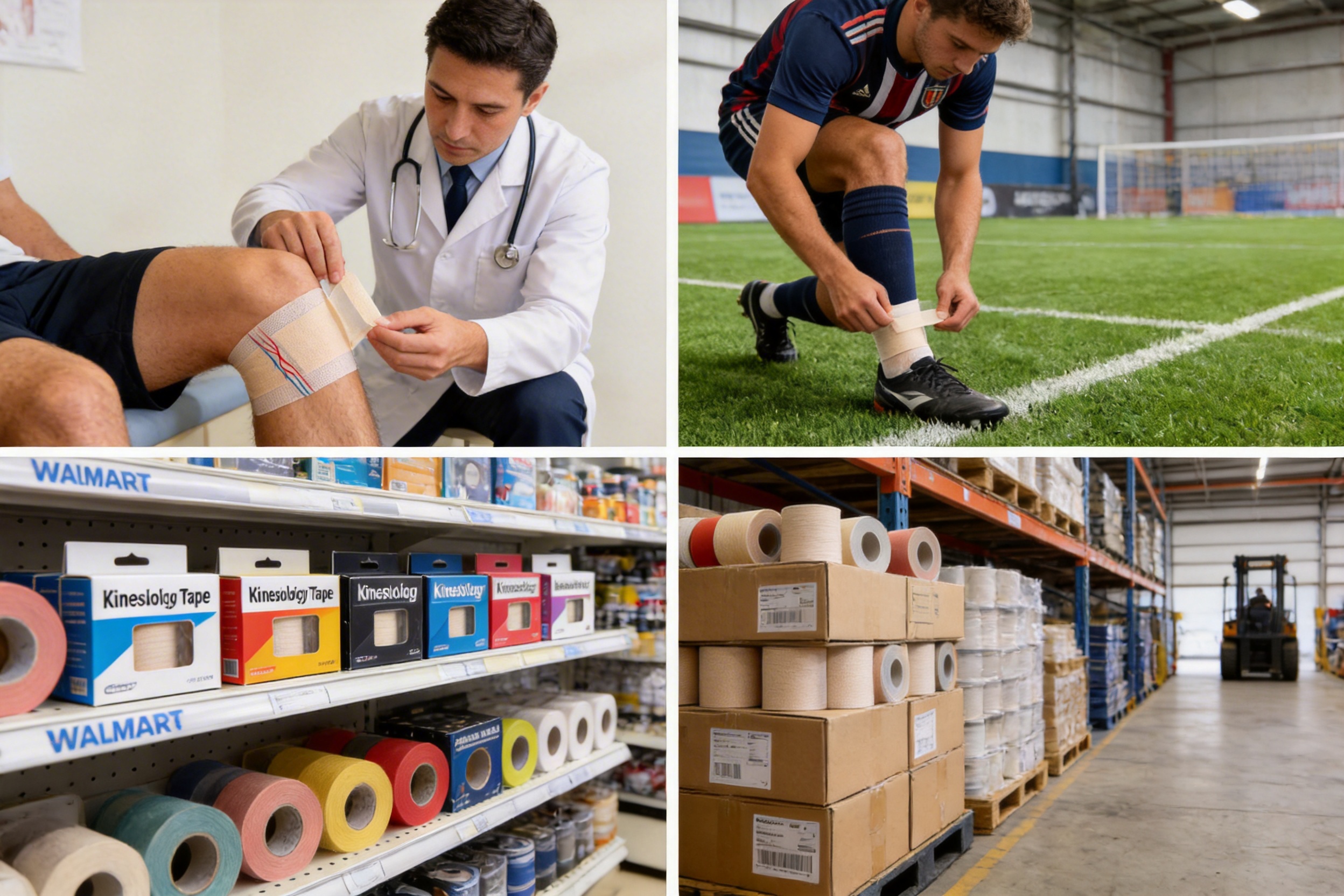
Rehabilitation centers, physical therapy clinics, and medical device brands rely on kinesiology tape for patient recovery. Key use cases include:
- Post-surgery recovery (e.g., knee replacement, shoulder surgery) to support muscles and reduce swelling.
- Treatment of chronic conditions (e.g., arthritis, back pain) to improve mobility and reduce discomfort.
- Support for orthopedic devices (e.g., braces, splints) to enhance their effectiveness.
Medical customers prioritize FDA compliance, latex-free materials, and custom sizes (e.g., narrow tape for small joints). Leading manufacturers work closely with clinicians to develop tapes that meet clinical standards.
2. Sports and Fitness
Athletes and fitness enthusiasts use kinesiology tape for injury prevention and performance enhancement. Key use cases include:
- Injury prevention (e.g., taping ankles to prevent sprains, taping knees to reduce strain).
- Performance optimization (e.g., taping shoulders to improve range of motion in swimmers).
- Recovery from minor injuries (e.g., muscle strains, tendonitis).
Sports customers prioritize water resistance, elasticity, and custom branding (e.g., team colors, logos). Leading manufacturers partner with sports brands to create tapes that align with their performance goals.
3. Retail and E-commerce
Retail chains (e.g., Walmart, Carrefour) and e-commerce platforms (e.g., Amazon, Alibaba) stock kinesiology tape for consumer use. Key requirements include:
- Affordable bulk pricing for large orders.
- Variety of sizes and colors to appeal to a wide audience.
- Attractive retail packaging that stands out on shelves.
Retail customers also value fast lead times and reliable supply chains to meet demand during peak seasons (e.g., summer sports).
4. Wholesalers and Distributors
Wholesalers and distributors (e.g., CVS, Walgreens) purchase kinesiology tape in bulk to supply local markets. Key requirements include:
- Flexible minimum order quantities (MOQs) to accommodate small and large orders.
- Custom packaging for regional markets (e.g., multilingual labels).
- Consistent quality to maintain customer trust.
Leading manufacturers offer dedicated account managers to support wholesalers and distributors with their specific needs.
Comparison of Kinesiology Tape Features
To illustrate the advantages of premium kinesiology tape, here’s a comparison with generic alternatives:
| Feature |
Premium Kinesiology Tape |
Generic Kinesiology Tape |
| Material |
100% pure cotton (latex-free) |
Synthetic blend (may contain latex) |
| Elasticity |
Up to 170% stretch |
140% or less |
| Adhesion |
Strong, water-resistant, residue-free |
Poor adhesion, may leave residue |
| Customization |
Full size, color, logo, packaging options |
Limited sizes, no branding |
| Certifications |
FDA, CE, ISO 13485 |
None or basic certifications |
| Lead Time |
7-10 days (bulk orders) |
20+ days |
How Premium Kinesiology Tape Stands Out From Competitors
While kinesiology tape is widely available, premium products offer distinct advantages that set them apart. Here are the key differentiators:
1. Unmatched Material Quality
Generic tapes often use cheap synthetic materials that cause irritation and reduce performance. Premium tapes use 100% pure cotton and latex-free adhesive, ensuring comfort and safety for all users. This is particularly important for medical and sports customers who rely on the tape for long-term use.
2. End-to-End Customization
Most competitors offer limited customization (e.g., only standard sizes). Premium manufacturers offer full OEM/ODM services, including logo printing, custom packaging, and size adjustments. This allows businesses to create a unique product that meets their specific needs and brand identity.
3. Rigorous Compliance and Certifications
Many small manufacturers lack FDA, CE, or ISO 13485 certifications, which are required to sell in major markets. Premium manufacturers invest in these certifications to ensure their products meet global standards and are safe for use.
4. Efficient Production and Short Lead Times
Leading manufacturers use automated production lines and lean manufacturing processes to reduce lead times. For bulk orders, premium tapes can be produced in 7-10 days—far faster than generic alternatives (20+ days). This is critical for businesses that need to meet tight deadlines.
5. Exceptional Customer Support
Premium manufacturers offer dedicated customer support teams to assist with custom orders, technical questions, and after-sales service. This includes account managers, design experts, and quality control specialists who work closely with customers to ensure their needs are met.
Case Studies: Real-World Success Stories
To demonstrate the impact of premium kinesiology tape, here are three case studies from different industries:
Case Study 1: Medical Device Brand Partners for Rehab Kits
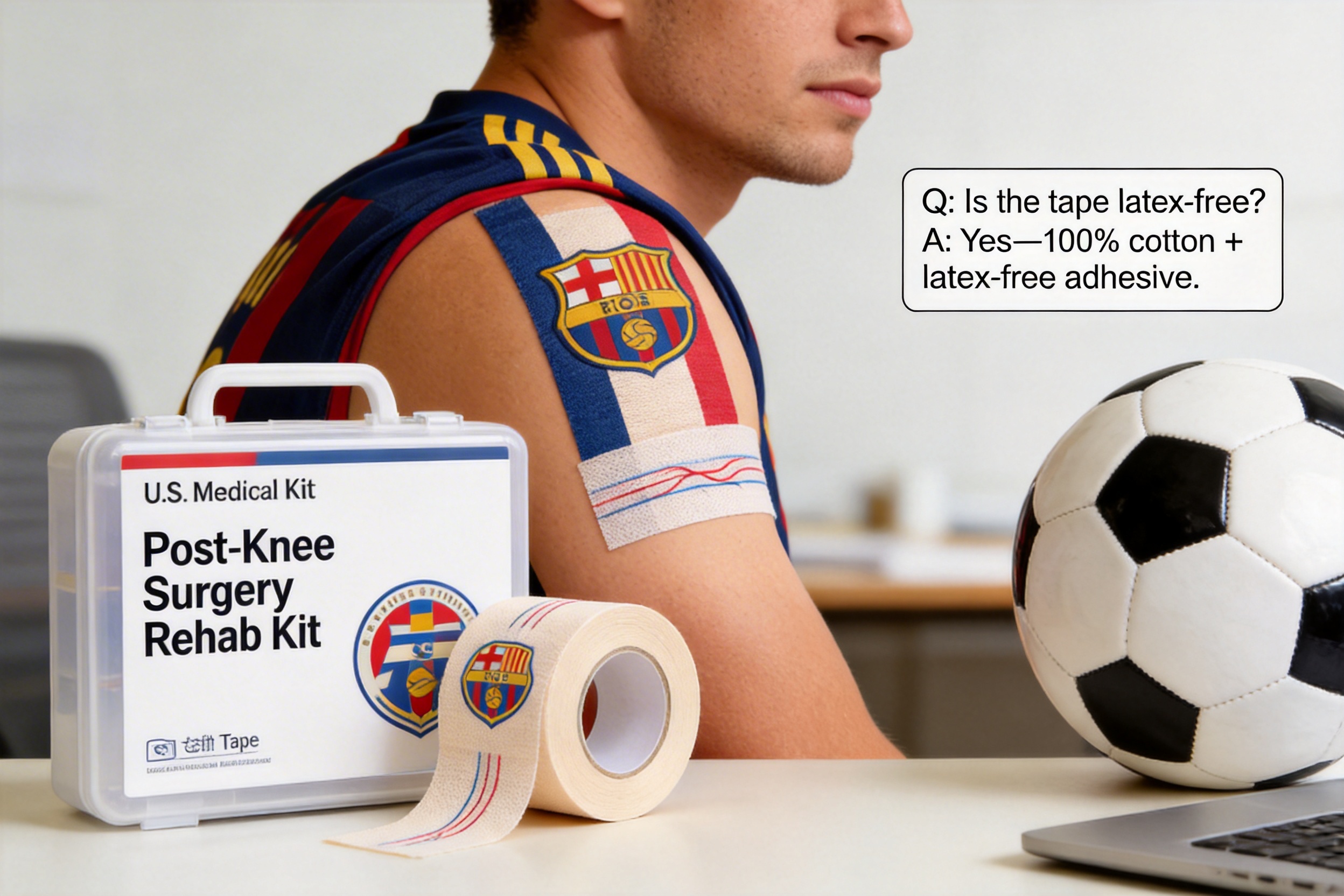
A U.S.-based medical device company specializing in post-knee surgery rehab kits needed a reliable kinesiology tape supplier. They required:
- FDA-compliant tape for medical use.
- Latex-free material to avoid allergic reactions.
- Custom size (2 inches wide x 10 yards long) to fit their kits.
The company partnered with a leading premium tape manufacturer. The result: Their rehab kits saw a 25% increase in customer satisfaction due to the tape’s comfort and effectiveness. The manufacturer also provided custom packaging (printed with the company’s logo and instructions) to enhance the kit’s appeal.
Case Study 2: Sports Brand Launches Custom Tape Line
A European sports brand wanted to launch a custom kinesiology tape line for soccer players. They required:
- Water-resistant tape to withstand rainy conditions.
- Custom logo printing (team colors and brand logo).
- Retail packaging (boxes with hang tags for store shelves).
The brand worked with a premium tape manufacturer to create the line. The tape was tested by professional soccer players and received positive feedback for its durability and support. The line sold out in 3 months across 5 European countries, exceeding the brand’s sales targets by 15%.
Case Study 3: Retail Chain Expands Personal Care Offerings
A global retail chain (Walmart) wanted to expand its personal care section with kinesiology tape. They required:
- Affordable bulk pricing for large orders.
- Variety of sizes (1 inch, 2 inches, 3 inches) to appeal to different users.
- Attractive retail packaging that stands out on shelves.
The chain partnered with a premium tape manufacturer. The tape was stocked in over 1,000 stores and became one of the top-selling personal care products in 6 months. The manufacturer also provided fast lead times to meet demand during peak sports seasons.
Q&A Section
Below are answers to common questions about premium kinesiology tape:
Q1: Is this kinesiology tape latex-free?
A: Yes, all premium kinesiology tapes are made with latex-free adhesive and 100% cotton backing, making them safe for users with latex allergies or sensitive skin.
Q2: Can I customize the tape with my brand logo?
A: Yes, leading manufacturers offer full logo printing on both the tape and packaging. This includes custom colors, patterns, and branding to align with your brand identity.
Q3: What certifications does the tape have?
A: Premium tapes are FDA-compliant (U.S.), CE-marked (EU), and ISO 13485-certified (global). These certifications ensure the tape meets strict safety and performance standards.
Q4: What is the minimum order quantity (MOQ) for custom orders?
A: The MOQ for custom orders is typically 1,000 rolls, while standard orders have an MOQ of 500 rolls. This allows small businesses to place orders without excessive costs.
Q5: How long does the tape stay on during physical activity?
A: Premium tape can stay on for up to 7 days, even in sweaty or humid conditions. It is water-resistant and designed to withstand high-intensity activities.
Q6: Does the tape leave residue on the skin?
A: No, the tape uses a residue-free adhesive that peels off easily without leaving sticky residue on the skin. This makes it comfortable to wear and easy to remove.
Q7: Can I get samples before placing a bulk order?
A: Yes, leading manufacturers offer free samples (up to 3 rolls) with shipping costs covered by the customer. This allows you to test the tape’s quality before making a purchase.
Q8: What materials are available for the tape?
A: The standard material is 100% pure cotton, but synthetic alternatives (e.g., nylon) are available for specialized needs (e.g., extreme water sports).
Q9: How long is the lead time for custom orders?
A: The lead time for custom orders is 7-10 days for production, plus shipping time. This is significantly faster than generic alternatives (20+ days).
Q10: Do you offer private label services?
A: Yes, leading manufacturers offer full private label services from design to production. This includes custom packaging, logo printing, and size adjustments to create a unique product for your brand.
References
1. Kase, K., Wilson, T., & Lum, K. (2018). Kinesiology Taping: A Clinical Approach. Elsevier Health Sciences.
2. American College of Sports Medicine (ACSM). (2020). Guidelines for the Use of Kinesiology Tape in Sports Medicine. ACSM Publications.
3. U.S. Food and Drug Administration (FDA). (2021). Medical Device Good Manufacturing Practices (GMP). FDA.gov.
4. International Organization for Standardization (ISO). (2016). ISO 13485:2016 Medical Devices—Quality Management Systems—Requirements for Regulatory Purposes.
5. European Commission. (2019). CE Marking for Medical Devices. European Union Official Journal.
6. World Allergy Organization (WAO). (2020). Latex Allergy: A Global Perspective. WAO Publications.
7. Journal of Orthopaedic & Sports Physical Therapy. (2019). The Effect of Kinesiology Tape on Muscle Performance and Recovery. JOSPT.com.
8. International Federation of Sports Medicine (FIMS). (2018). Best Practices for the Use of Kinesiology Tape in Sports. FIMS.org.
9. Harvard Health Publishing. (2021). Kinesiology Tape: Does It Work? Harvard.edu.
10. Journal of Athletic Training. (2020). The Impact of Kinesiology Tape on Joint Stability in Athletes. JAT.org.

 English
 Español
 русский
 Français
 Deutsch
 italiano
 By Admin