Modern wound care requires more than simple coverage. Clinicians, caregivers, distributors, and healthcare procurement teams increasingly look for dressings that can absorb exudate efficiently, help maintain a moist wound environment, protect the wound area from external contamination, and remain comfortable during use. Foam Dressing with PU Film is designed for this practical and clinical need. Made from a protective polyurethane film backing and absorbent polyurethane foam, it offers a balanced wound dressing solution for exuding wounds that require moisture management, cushioning, and reliable protection.
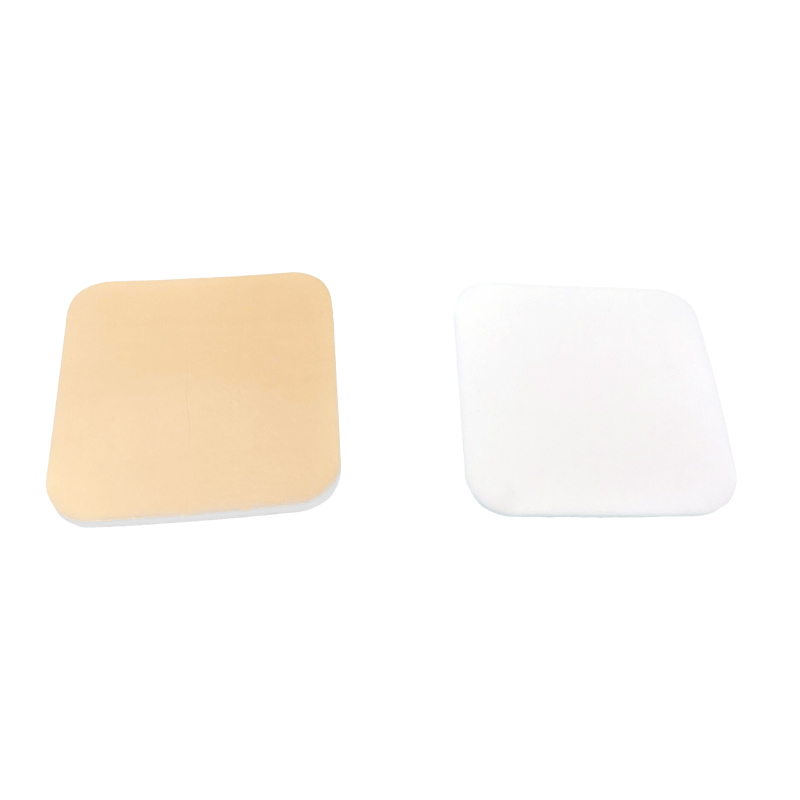
This product belongs to the adhesive wound dressing category and is developed for applications where high liquid absorption, breathability, water resistance, softness, and comfort are important. It is available in beige or pink, with round-corner square shapes or customized special shapes. Standard sizes include 7.5×7.5 cm, 10×10 cm, 10×20 cm, 15×15 cm, 20×20 cm, and 20×10 cm, while customized sizes and packaging options are also available to meet different market, hospital, and private-label requirements.
Unlike traditional gauze dressings that may require frequent replacement and can adhere to the wound bed if exudate dries, a PU foam dressing is engineered to absorb wound fluid while helping maintain a moist healing environment. The PU film layer adds an extra protective function by helping resist water and external contaminants while allowing air permeability. This combination of absorbent foam and protective film makes the dressing suitable for many professional and consumer wound care scenarios.
Foam Dressing(with PU film)
Product Overview
Foam Dressing with PU Film is constructed using two major materials: PU film and PU foam. The PU foam serves as the absorbent wound-contacting or exudate-management layer, while the PU film works as a protective backing. Together, these layers create a dressing that is soft, flexible, breathable, and capable of absorbing wound exudate from the wound surface. By supporting moisture balance, the dressing helps create a favorable environment for wound healing.
The dressing is designed to be gentle and comfortable on the skin. Its soft structure allows it to conform to different body contours, making it useful for areas that require flexibility. The round-corner design helps reduce edge lifting compared with sharp-corner dressings, especially during patient movement or contact with clothing. The rolling-cut process supports efficient and consistent production, enabling clean edges, reliable dimensions, and stable product quality.
Because wounds differ in size, shape, exudate level, and treatment requirements, product flexibility is important. Foam Dressing with PU Film can be supplied in standard square or rectangular sizes, and special shapes can be customized for specific applications. Packaging can be offered in pouch or box formats, making the product suitable for hospitals, first aid suppliers, retail healthcare channels, and OEM distribution.
Key Specifications
| Item |
Specification |
Practical Value |
| Product Name |
Foam Dressing with PU Film |
Absorbent wound dressing for exuding wounds |
| Main Materials |
PU film and PU foam |
Combines protection, softness, and absorption |
| Color Options |
Beige or pink |
Supports different market preferences |
| Shape Options |
Round-corner square or special customized shape |
Improves wear comfort and application flexibility |
| Cutting Method |
Rolling cut |
Supports consistent edge quality and efficient production |
| Sterilization |
EO sterilization |
Supports sterile wound care use when supplied as sterile product |
| Packing |
Pouch or box |
Suitable for hospital, first aid, retail, and OEM supply |
| Standard Sizes |
7.5×7.5 cm, 10×10 cm, 10×20 cm, 15×15 cm, 20×20 cm, 20×10 cm |
Covers common wound dressing needs |
| Customization |
Sizes and packaging available upon request |
Supports private-label and market-specific requirements |
| Main Features |
High absorption, breathable, water-proof, soft, comfortable |
Helps improve wound care convenience and user experience |
Material Design and Functional Structure
The performance of Foam Dressing with PU Film begins with its material structure. Polyurethane foam is widely used in wound care because it can absorb fluid into its porous matrix. This absorption helps manage exudate that could otherwise accumulate at the wound surface, macerate surrounding skin, or cause discomfort. A well-designed foam layer provides cushioning while reducing the need for bulky secondary absorbent materials in many applications.
The PU film backing contributes another important function. It acts as a protective barrier against external moisture while still allowing breathability. In practical terms, this means the dressing helps protect the wound area during daily activities while supporting air exchange. The film is also soft and flexible, helping the dressing conform to the skin surface without feeling overly rigid.
This combination gives the product a significant advantage over basic dressings that rely only on cotton gauze or non-woven pads. Traditional gauze may absorb fluid, but it often lacks a protective waterproof backing and may require additional fixation. Basic film dressings provide protection but may not offer enough absorption for exuding wounds. Foam Dressing with PU Film bridges these needs by combining absorbency and protection in one integrated dressing design.
High Liquid Absorption for Exudate Management
Exudate management is one of the main challenges in wound care. Too much wound fluid can damage surrounding skin, increase dressing change frequency, and reduce patient comfort. Too little moisture, on the other hand, may cause the wound surface to dry out. Foam Dressing with PU Film is designed to absorb exudate from the wound surface and help maintain a balanced moist environment.
The absorbent foam structure captures fluid and helps keep it away from the wound surface. This can reduce the sensation of wetness and help protect peri-wound skin from excessive moisture exposure. In real-world use, improved exudate handling may reduce the need for frequent dressing changes compared with simple gauze, depending on wound condition, exudate level, and clinical protocol.
For hospitals and healthcare distributors, absorption performance is not only a clinical consideration but also a cost-efficiency factor. A dressing that absorbs effectively and remains comfortable may reduce material waste and improve patient compliance. For home care and first aid users, a highly absorbent dressing can make wound management simpler and cleaner.
Breathability and Moist Healing Support
A moist wound environment is widely recognized as beneficial for many types of wound healing. Foam Dressing with PU Film is designed to absorb wound exudate while helping keep the wound area moist rather than excessively dry. The breathable quality of the dressing supports comfort and reduces the feeling of occlusion that can occur with less permeable materials.
Breathability is especially important when the dressing must remain in place for extended periods according to healthcare guidance. A dressing that traps too much heat or moisture may contribute to skin discomfort. The PU film backing is designed to balance protection with air permeability, helping create a more comfortable microenvironment around the wound site.
Compared with non-breathable plastic-like coverings, a breathable PU film dressing offers improved comfort. Compared with traditional gauze alone, it offers more structured moisture management. This balance makes the product a competitive solution for wound care providers who want a dressing that is protective but not excessively occlusive.
Water-Proof Protection for Daily Use
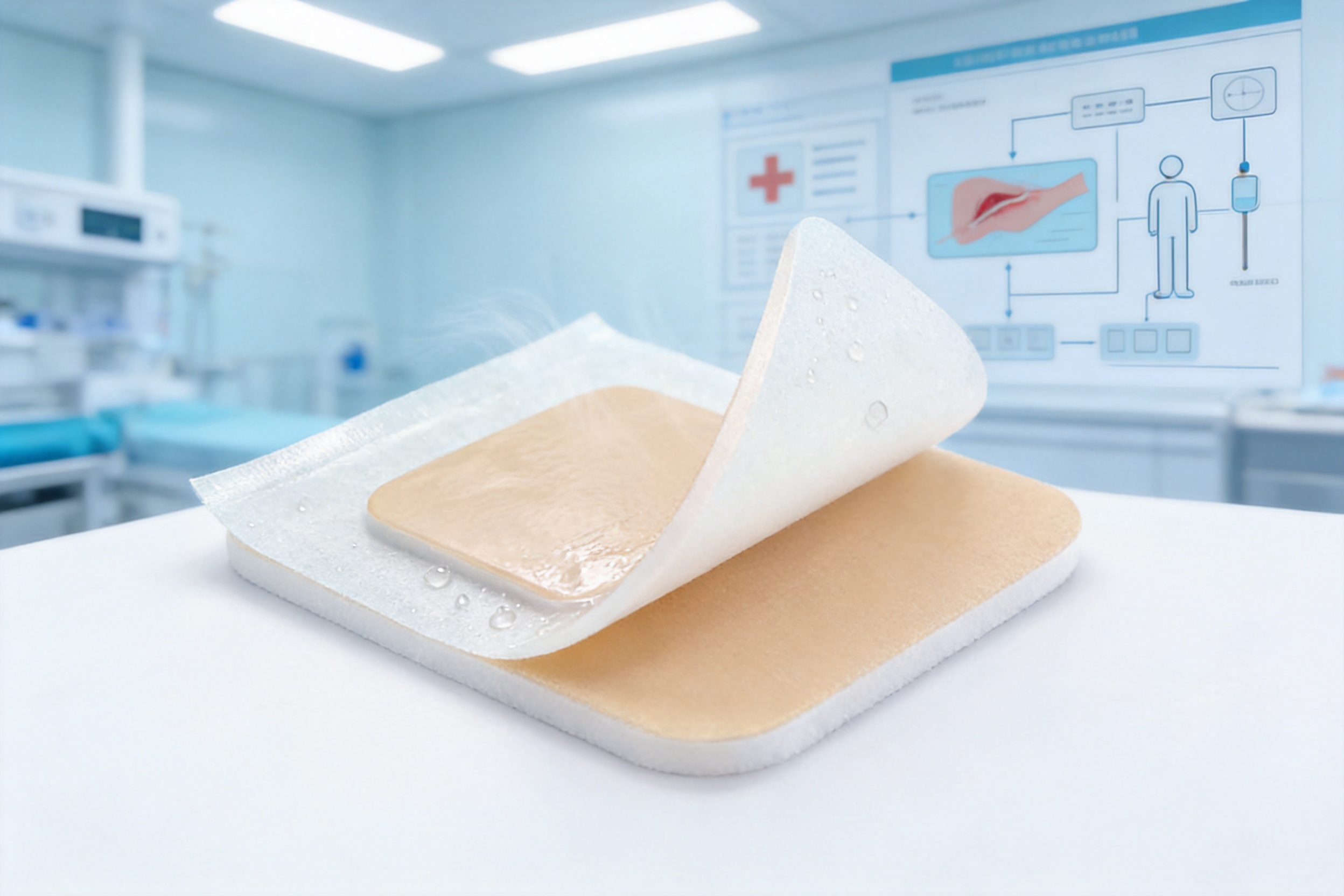
One of the most practical advantages of this dressing is its water-proof backing. The PU film helps protect the wound dressing from external moisture, which is useful during daily routines. While the dressing should always be used according to medical advice and product instructions, water-resistant protection can help reduce accidental wetting and contamination risks.
For patients, water-proof performance improves confidence. A dressing that remains protected against light external moisture is more convenient than a dressing that must be replaced immediately after minor contact with water. For healthcare facilities, this can support better patient satisfaction and more efficient wound care routines.
When compared with standard gauze pads secured with basic tape, Foam Dressing with PU Film offers a more integrated protective structure. Gauze often absorbs external moisture as easily as wound exudate, which may compromise cleanliness and comfort. The PU film backing provides a protective layer that helps keep external water away from the wound area while the foam handles internal wound exudate.
Softness, Comfort, and Patient-Friendly Wear
Comfort is not a secondary feature in wound care. If a dressing is uncomfortable, patients may touch it repeatedly, remove it too early, or fail to follow care instructions. Foam Dressing with PU Film is soft and flexible, making it suitable for users who require a comfortable dressing experience. Its PU foam layer offers cushioning, while the film backing remains lightweight and conformable.
The dressing can be produced with round corners, which is a small but meaningful design feature. Sharp corners can lift more easily when rubbed by clothing or during movement. Rounded corners help the dressing lie more smoothly on the skin and reduce the chance of premature edge peeling. This improves wearability, especially on body parts that move frequently.
Softness also matters for sensitive skin areas. Although adhesive performance and skin tolerance depend on the final product structure and user condition, the overall dressing design is intended to reduce unnecessary bulk and stiffness. This makes it suitable for many wound care environments where patient comfort is a priority.
Advantages Over Conventional Gauze and Basic Dressings
Foam Dressing with PU Film offers several advantages over conventional gauze dressings. Gauze is affordable and widely used, but it may not provide the same level of controlled absorption, cushioning, water-resistant protection, or moisture balance. Gauze can also dry out and adhere to the wound surface, depending on wound condition and dressing change interval. Foam dressings are designed to support a more advanced wound care approach by helping maintain a moist environment.
Compared with basic absorbent pads, this product provides a protective PU film backing. This reduces the need for multiple dressing layers in many situations. A traditional approach may require a wound contact layer, absorbent pad, external film, and fixation tape. An integrated foam dressing with film can simplify application and reduce dressing bulk.
Compared with hydrocolloid dressings, foam dressings may be preferred for wounds with moderate to higher exudate levels because the foam structure can handle liquid absorption effectively. Compared with thin transparent film dressings, foam dressings provide cushioning and absorption. This makes Foam Dressing with PU Film a versatile option within the broader wound care category.
Practical Application Areas
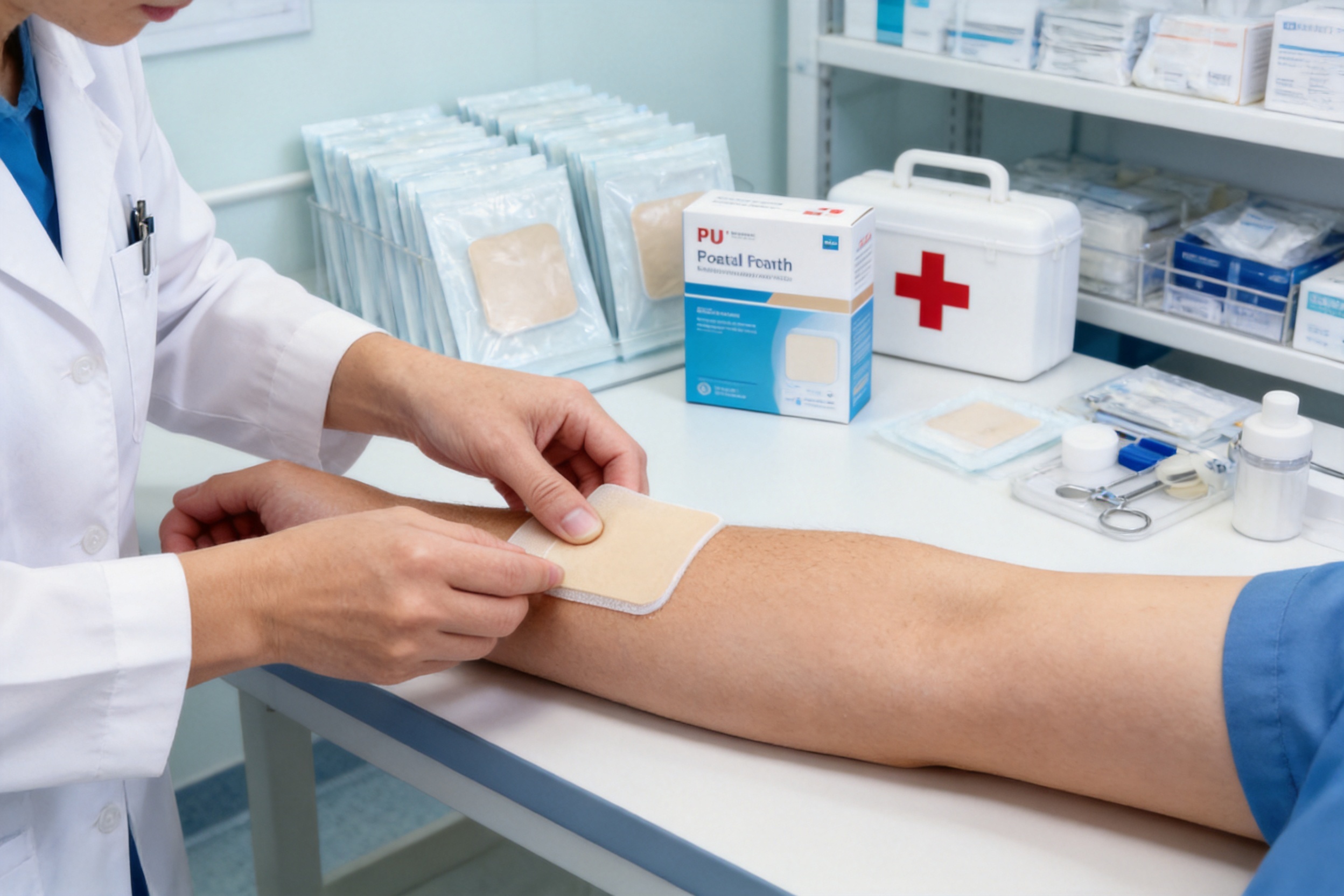
Foam Dressing with PU Film is suitable for wound care situations where exudate absorption, wound protection, and comfort are needed. It may be used in professional healthcare facilities, first aid supply systems, nursing care, outpatient wound care, and home care under appropriate guidance. The product is especially useful when the wound requires an absorbent dressing that can support a moist healing environment.
Hospitals may use foam dressings as part of wound management protocols for appropriate wound types. Nursing facilities may value the dressing for its comfort and absorption performance. First aid suppliers may include it in wound care kits where advanced absorbent dressings are required. Retail healthcare channels may offer it as a convenient wound care solution for customers seeking more than basic gauze.
The dressing should always be selected according to wound type, exudate level, patient condition, and medical instruction. It is not a substitute for professional diagnosis or treatment in severe wounds, infected wounds, deep wounds, burns, ulcers, or wounds requiring surgical management. Proper cleaning, assessment, and dressing change schedules remain essential parts of wound care.
Standard Sizes and Customization Options
Different wounds require different dressing dimensions. The product is available in multiple standard sizes, including 7.5×7.5 cm, 10×10 cm, 10×20 cm, 15×15 cm, 20×20 cm, and 20×10 cm. These sizes cover many common clinical and first aid needs, from smaller wound coverage to larger wound areas requiring broader absorbent protection.
Customization is a major advantage for distributors, importers, and OEM buyers. Customized sizes can help match local market preferences, hospital tender requirements, or private-label product lines. Special shapes can also be developed for body areas where standard square or rectangular formats are less suitable. Packaging customization supports retail branding, hospital supply systems, and regional regulatory or language requirements.
By offering both standard and customized specifications, the product is suitable for large-scale procurement and specialized market development. Buyers can choose pouch packing for sterile single-use presentation or box packing for organized distribution. The ability to customize helps the dressing compete strongly against suppliers that only offer fixed dimensions and limited packaging options.
Manufacturing Strength and Process Control
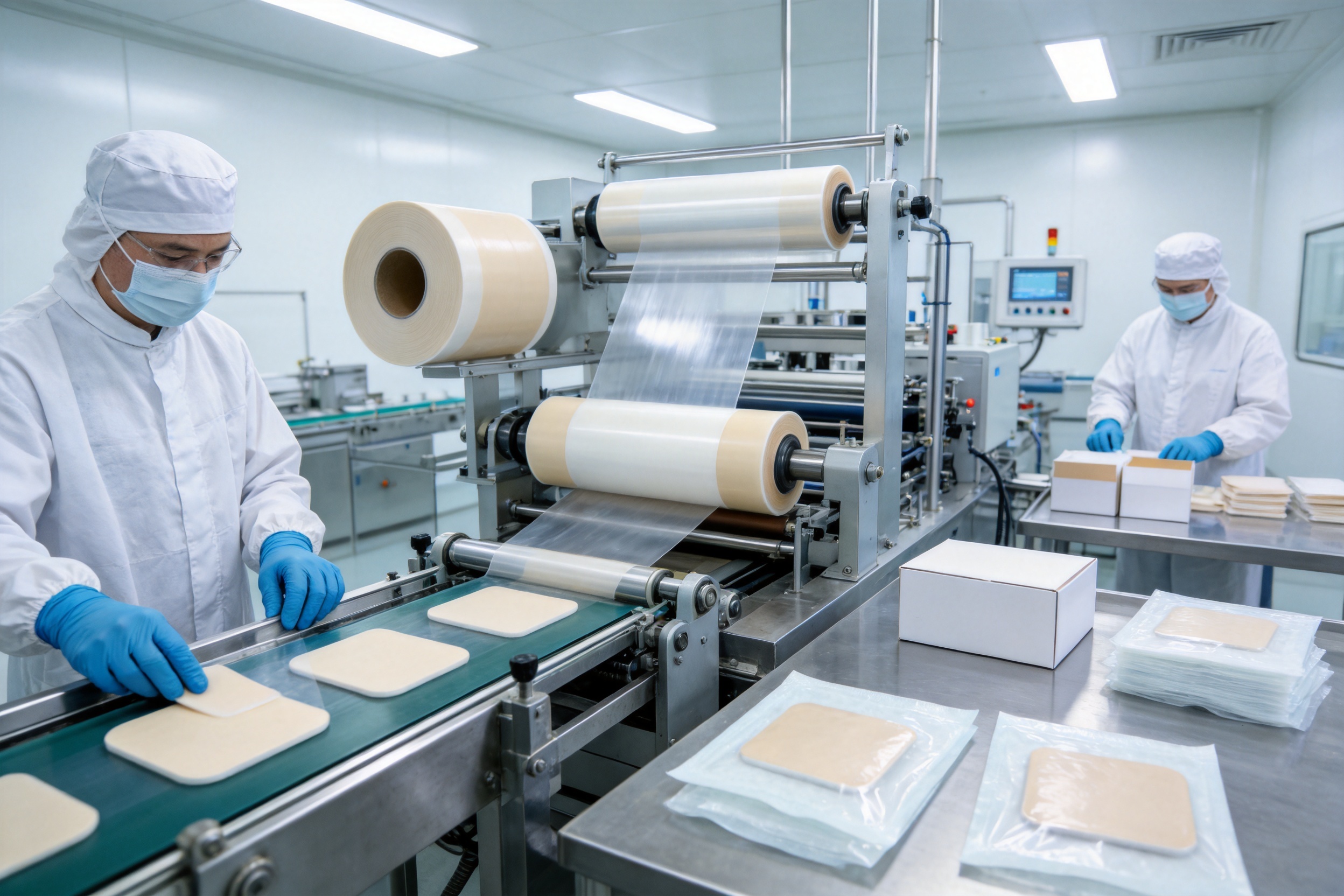
The performance of a foam dressing depends not only on materials but also on manufacturing quality. A professional manufacturing process controls the consistency of foam thickness, film lamination, cutting accuracy, packaging integrity, and sterilization conditions. Advanced production management helps ensure that every dressing meets expected standards for appearance, structure, and usability.
The company behind this product has long experience in first aid, wound dressing, medical gauze, bandages, medical tape, cotton products, non-woven products, sports bandages, family healthcare products, and medical consumables. With multiple production bases in Jiangsu, Zhejiang, and Anhui Province, the company has developed broad manufacturing capabilities across wound care and medical supply categories.
For Foam Dressing with PU Film, production begins with careful material selection. PU film and PU foam must meet requirements for softness, absorbency, breathability, and stability. The materials are then processed into dressing structures through controlled lamination and cutting steps. Rolling cutting supports efficient production and consistent shape formation. Round corners or special shapes can be achieved according to product design requirements.
Material Selection and Incoming Inspection
Quality starts before manufacturing begins. Incoming raw materials must be inspected for appearance, dimensions, cleanliness, and performance characteristics. PU foam must provide appropriate absorbency, softness, and structural integrity. PU film must provide protective performance, flexibility, and breathability. Materials that fail to meet specifications should not proceed to production.
For medical consumables, consistent raw materials are essential because small changes in foam density or film properties may affect absorption, comfort, and handling. A professional quality control team can verify incoming material batches and maintain traceability. This supports stable product performance across repeated orders, which is especially important for hospitals, importers, and OEM brands.
The company’s quality system is supported by experienced personnel who follow inspection procedures aligned with ISO13485:2016 requirements. This medical device quality management framework emphasizes process control, documentation, risk management, corrective action, and continuous improvement. For buyers, this provides confidence that production is managed according to recognized medical industry principles.
Lamination and Structural Formation
The lamination of PU film and PU foam is a key manufacturing step. The layers must bond properly while maintaining softness and breathability. Poor lamination can result in delamination, wrinkling, inconsistent thickness, or reduced comfort. A controlled lamination process helps create a stable dressing structure that performs reliably during application and wear.
During structural formation, the foam layer must remain uniform to support consistent absorption. The film layer must cover the dressing surface correctly to deliver water-proof protection. Production equipment and operator experience are both important in this step. Advanced manufacturing control helps reduce waste, maintain dimensional accuracy, and improve batch consistency.
Compared with low-cost dressings produced with minimal process control, a well-manufactured foam dressing offers more predictable performance. For healthcare buyers, predictability is crucial. Clinicians and caregivers need products that behave consistently from one pack to another, especially when treating patients with ongoing wound care needs.
Rolling Cutting and Edge Quality
The product uses rolling cutting, a process that supports high-volume production with accurate dimensions and clean edges. Edge quality is important because uneven or rough edges can affect comfort, appearance, and application. Clean cutting also supports better packaging efficiency and product presentation.
Round-corner cutting provides an additional usability advantage. Dressings with rounded corners are less likely to catch on clothing, bedding, or medical garments. This can help reduce accidental lifting and improve wear comfort. For mobile patients, children, elderly users, or athletes recovering from minor wounds, edge performance can make a noticeable difference.
Special shape cutting is also valuable for OEM customers. Certain markets may require anatomical shapes or product designs that fit specific wound locations. With flexible cutting capability, the product can be adapted to customer requirements rather than forcing buyers to accept only standard shapes.
Sterilization and Packaging
Foam Dressing with PU Film can be supplied with EO sterilization. Ethylene oxide sterilization is widely used for medical devices and wound care products that may be sensitive to high heat or moisture. Sterilization must be carefully controlled to ensure effectiveness while maintaining material performance.
Packaging is another essential part of product safety and usability. Pouch packaging provides individual protection and convenient use in clinical or first aid settings. Box packaging supports transportation, storage, retail presentation, and hospital inventory management. Proper sealing and packaging integrity help protect the product until use.
For international buyers, packaging customization is highly important. Requirements may include different languages, private-label design, barcodes, instructions, carton marks, and regulatory information. A manufacturer with OEM experience can help customers develop packaging that meets market positioning and distribution needs.
Quality Management and Compliance Strength
The company maintains a professional quality control team with extensive inspection experience. Quality control personnel follow rigorous inspection procedures to help ensure that products meet ISO13485:2016 standards. Many products are CE certified, and the Suzhou factories comply with FDA requirements. These strengths are highly relevant for medical consumables because buyers must evaluate not only price but also compliance capability and long-term reliability.
A strong quality management system includes inspection of raw materials, in-process monitoring, finished product checking, packaging verification, sterilization documentation, and batch traceability. It also includes management of customer feedback and continuous improvement. These processes reduce the risk of inconsistent quality and support stable cooperation with global customers.
For importers and distributors, working with an experienced medical consumables manufacturer can reduce sourcing risk. Product documentation, quality certifications, packaging support, and communication efficiency all affect successful market entry. A supplier with decades of experience and broad product knowledge can respond more effectively to technical questions, tender requirements, and private-label development needs.
Global Supply Experience and Market Adaptability
The manufacturer has exported products to more than 60 countries, including markets in Europe, Southeast Asia, Africa, and Oceania. This international background means the company understands diverse customer requirements, product standards, packaging expectations, and logistics needs. Markets served include hospitals, first aid suppliers, supermarkets, and retail sports shops.
For Foam Dressing with PU Film, global supply experience is a competitive advantage. Wound care products must often be adapted to local healthcare systems and distribution channels. A hospital tender may require professional packaging and documentation. A retail brand may need attractive box design and consumer-friendly instructions. A first aid supplier may require bulk ordering and stable delivery schedules. The ability to serve all these channels demonstrates manufacturing and export maturity.
In addition, the company’s broader product portfolio allows customers to source related wound care and medical consumable products from one supplier. These may include gauze, bandages, medical tape, cotton products, adhesive bandages, sports support products, hot and cold therapy items, surgical consumables, syringes, infusion products, and patient transfer products. For procurement teams, consolidated sourcing can improve communication efficiency and reduce supplier management complexity.
Why This Dressing Stands Out in Competitive Wound Care Markets
The wound dressing market includes many product types, from simple gauze to advanced hydrocolloids, alginates, films, and foams. Foam Dressing with PU Film stands out because it combines several practical features in one product: high absorption, breathability, water-proof protection, soft comfort, flexible sizing, EO sterilization, and customizable packaging. This makes it suitable for both professional and consumer-facing wound care channels.
Its advantage over conventional products lies in balanced functionality. It is more absorbent and protective than basic gauze. It offers more cushioning than simple film dressings. It is easier to integrate into a broad product line than highly specialized dressings that serve only narrow clinical indications. This balance helps distributors position the product as a practical advanced dressing for everyday wound care needs.
Manufacturing strength also differentiates the product. A dressing may look simple, but reliable production requires material control, lamination stability, cutting precision, sterilization management, packaging integrity, and quality documentation. The company’s long experience in medical consumables and quality management supports consistent supply, which is often more important than one-time low pricing.
OEM and Private-Label Opportunities
OEM and private-label supply are important for buyers who want to build their own wound care brand. Foam Dressing with PU Film is well suited for OEM development because it offers multiple customization points. Size, shape, packaging format, box design, labeling, and product assortment can be adjusted according to market needs.
For example, a hospital supplier may request sterile individually packed dressings in bulk cartons. A retail pharmacy brand may prefer small boxes with several pieces per box. A first aid kit company may require specific dressing dimensions to fit kit compartments. A regional distributor may need multilingual packaging. Flexible manufacturing and packaging support allow the product to be adapted to each business model.
OEM customers also benefit from the company’s broad experience in first aid and wound dressing products. Product development can be coordinated with related items such as adhesive bandages, gauze pads, medical tape, elastic bandages, cotton products, and non-woven products. This helps buyers create complete wound care solutions rather than isolated single-product offerings.
Recommended Handling and Use Considerations
Foam Dressing with PU Film should be used according to healthcare guidance, product labeling, and local clinical protocols. Before application, the wound area should be assessed and cleaned as appropriate. The dressing size should be selected to cover the wound adequately, with suitable overlap onto surrounding skin when required. The dressing should be changed according to exudate level, wound condition, and professional instructions.
If signs of infection, worsening pain, unusual odor, increasing redness, swelling, fever, or excessive bleeding occur, medical attention should be sought promptly. Users should not apply the dressing to wounds for which it is not indicated. Deep wounds, severe burns, heavily infected wounds, or wounds requiring surgical treatment should be managed by healthcare professionals.
Storage conditions should also be respected. Dressings should be kept in clean, dry conditions and protected from damage. Sterile pouches should not be used if the packaging is opened, damaged, or compromised. Proper storage and handling help preserve dressing quality until the moment of use.
Benefits for Different Buyers
For Hospitals and Clinics
Hospitals and clinics need wound care products that are reliable, comfortable, and efficient. Foam Dressing with PU Film provides absorption, protection, and moisture balance in a convenient format. Its availability in multiple sizes helps medical teams select the right dressing for different wound areas. EO sterilization and pouch packaging support professional use when supplied in sterile format.
For Distributors and Importers
Distributors need products that combine market demand with supply stability. This dressing offers broad application potential and customization options, making it suitable for different sales channels. The manufacturer’s export experience and quality management system help support long-term cooperation and repeat orders.
For Retail and Pharmacy Channels
Retail customers often seek wound care products that are easy to understand and convenient to use. Foam Dressing with PU Film can be presented as an absorbent, breathable, water-proof, and comfortable dressing option. Customized box packaging can improve shelf appeal and support brand positioning.
For First Aid Suppliers
First aid suppliers benefit from compact, practical, and versatile wound care products. Foam dressings can be included in advanced first aid kits, workplace medical stations, emergency response supplies, and sports support kits. Their absorption and protective backing make them a useful upgrade from basic gauze pads in selected applications.
Q&A Section
Q1: What is Foam Dressing with PU Film made of?
It is made of PU film and PU foam. The PU foam provides absorption and cushioning, while the PU film backing helps provide water-proof protection, breathability, and comfort.
Q2: What is the main purpose of this dressing?
The dressing is used to absorb exudate from the wound surface, help maintain a moist wound environment, protect the wound area, and support comfortable wound care management.
Q3: How is it different from traditional gauze?
Traditional gauze mainly absorbs fluid but may lack water-proof protection, cushioning, and controlled moisture management. Foam Dressing with PU Film combines absorbent foam with a protective film backing, making it more suitable for wounds that require both absorption and external protection.
Q4: Is the dressing breathable?
Yes. The product is designed to be breathable with high air permeability, helping improve comfort while supporting a suitable wound environment.
Q5: Is it water-proof?
Yes. The PU film backing provides water-proof protection against external moisture. However, it should still be used and handled according to product instructions and healthcare guidance.
Q6: What sizes are available?
Standard sizes include 7.5×7.5 cm, 10×10 cm, 10×20 cm, 15×15 cm, 20×20 cm, and 20×10 cm. Customized sizes are also available.
Q7: Can the shape be customized?
Yes. The product can be supplied in round-corner square shapes or special customized shapes according to customer requirements.
Q8: What packaging options are available?
The dressing can be packed in pouches or boxes. Customized packaging can also be developed for OEM, private-label, hospital, retail, or distribution needs.
Q9: Is sterilization available?
Yes. The product can be supplied with EO sterilization, depending on customer and market requirements.
Q10: Who can benefit from this product?
Hospitals, clinics, nursing facilities, first aid suppliers, distributors, pharmacies, and OEM brands can benefit from this absorbent, breathable, water-proof, and comfortable foam dressing.
Conclusion
Foam Dressing with PU Film is a practical and advanced wound care product designed for exudate absorption, moisture balance, protection, and comfort. Its structure combines absorbent PU foam with protective PU film, giving it advantages over conventional gauze, basic absorbent pads, and simple film dressings. With high liquid absorption, breathability, water-proof performance, softness, and flexible customization, it meets the needs of professional medical channels and consumer wound care markets.
The product’s value is strengthened by experienced manufacturing capabilities, controlled production processes, rolling-cut precision, EO sterilization options, pouch or box packaging, and a quality management approach aligned with ISO13485:2016 standards. The manufacturer’s decades of experience in medical consumables, broad product portfolio, global export record, CE-certified product experience, and FDA-compliant factory operations further support reliable supply and long-term cooperation.
For buyers seeking a wound dressing that combines performance, comfort, customization, and dependable manufacturing support, Foam Dressing with PU Film offers a strong solution. It is not merely a covering for wounds; it is a carefully designed dressing system that helps manage exudate, protect the wound area, and support a moist healing environment while meeting the practical needs of hospitals, distributors, first aid suppliers, and private-label brands.
References
1. Winter, G. D. “Formation of the Scab and the Rate of Epithelialization of Superficial Wounds in the Skin of the Young Domestic Pig.” Nature, 1962.
2. Thomas, S. Wound Management and Dressings. The Pharmaceutical Press, 1990.
3. European Wound Management Association. Position Documents on Moist Wound Healing and Exudate Management.
4. International Organization for Standardization. ISO 13485:2016 Medical Devices: Quality Management Systems Requirements for Regulatory Purposes.
5. Wound, Ostomy and Continence Nurses Society. Clinical Practice Guidance for Wound Management.
6. Bryant, R. A., and Nix, D. P. Acute and Chronic Wounds: Current Management Concepts. Elsevier.

 English
 Español
 русский
 Français
 Deutsch
 italiano
 By Admin