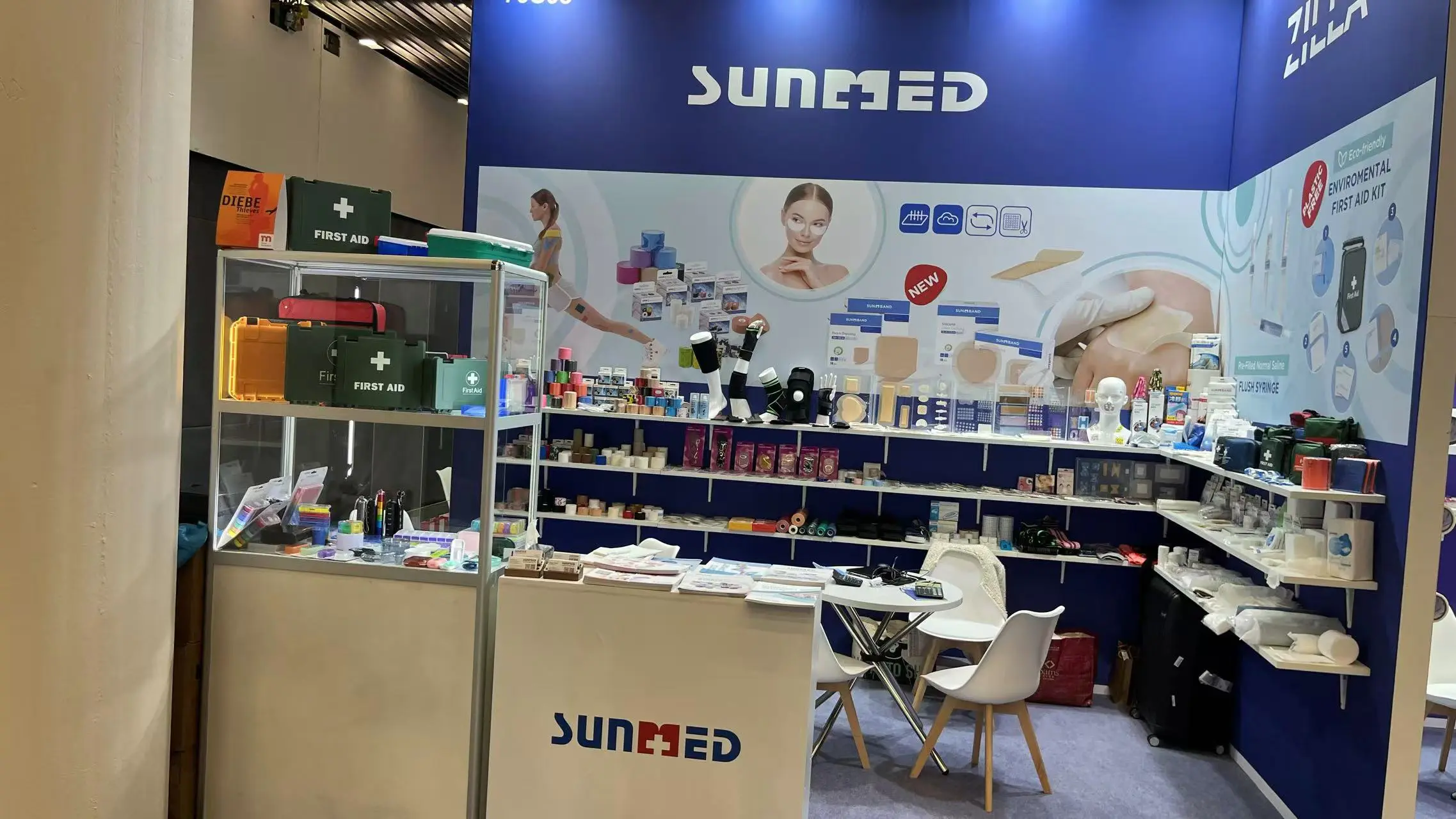
Elastic bandage wraps are a cornerstone of modern medical care, sports rehabilitation, and daily wellness. Designed to provide targeted compression, support, and stability, these versatile products are essential for managing a wide range of conditions—from acute sports injuries to chronic lymphedema. Among the many options on the market, one elastic bandage stands out for its superior material quality, rigorous certifications, and adaptability to diverse user needs. This article explores the key features of this product, its advantages over competitors, the advanced manufacturing processes that ensure its reliability, and its practical applications in clinical and everyday settings.
What Are Elastic Bandage Wraps?
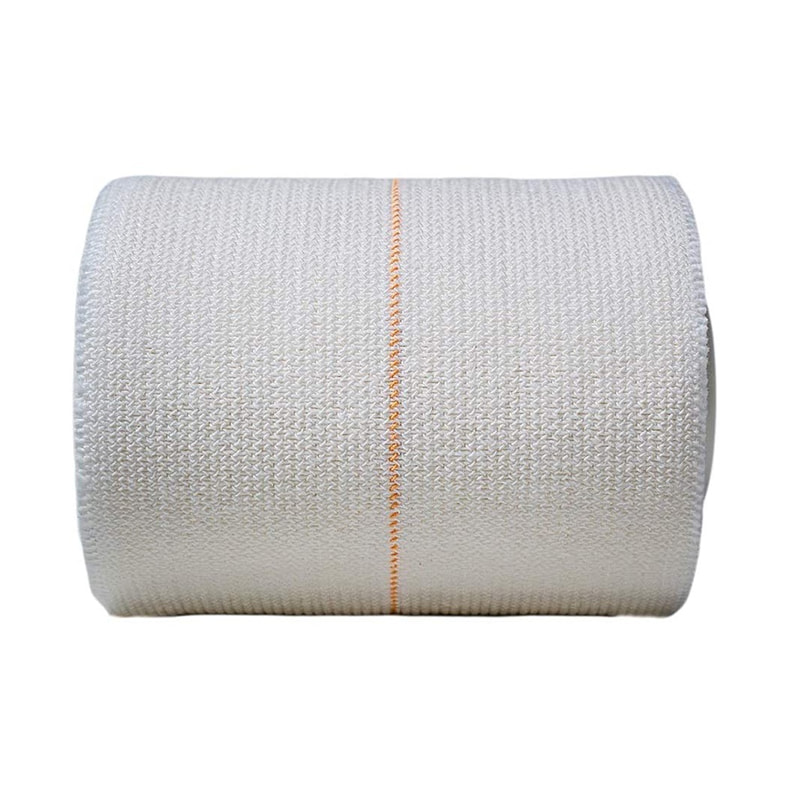
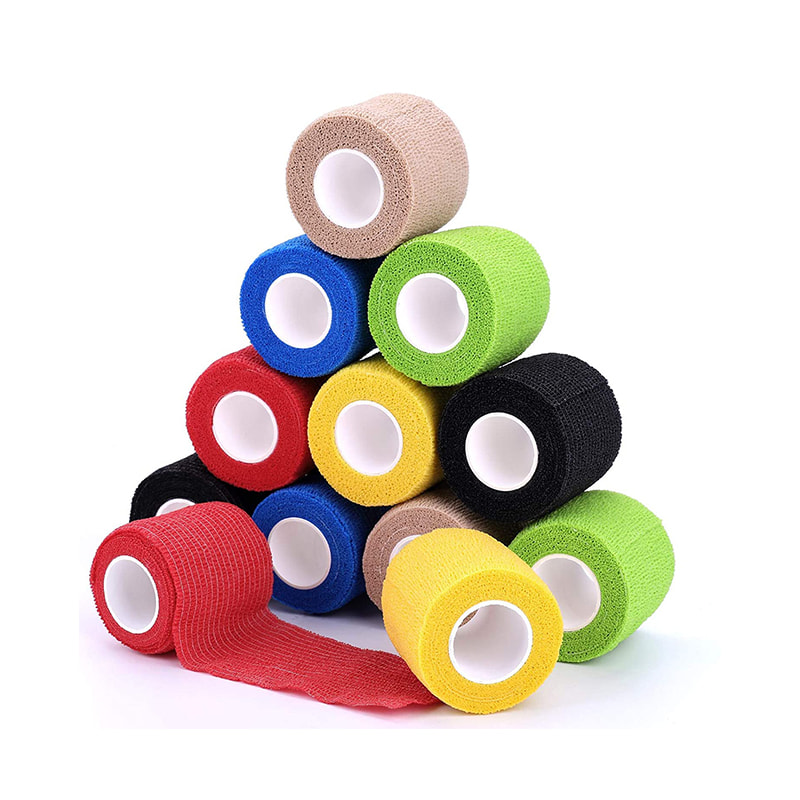
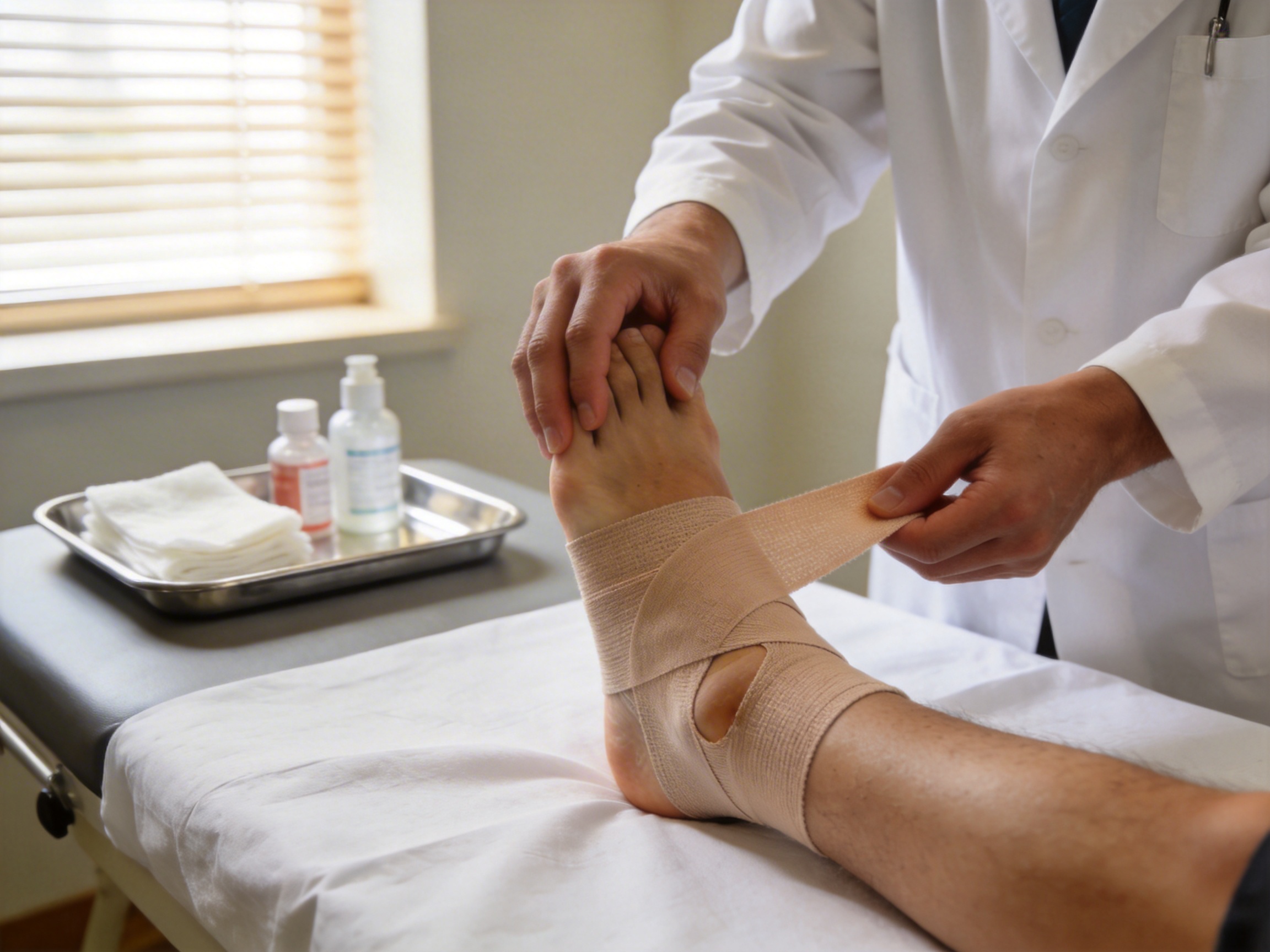
Elastic bandage wraps are flexible, stretchable textiles used to apply pressure to specific body parts. Unlike rigid bandages, they conform to the contours of the skin, making them ideal for areas like the ankles, knees, legs, and torso. Their primary functions include reducing swelling, stabilizing injured joints, supporting weak muscles, and promoting healing. The product in focus is a high-elastic adhesive bandage (though the adhesive aspect is not explicitly mentioned, its design supports secure application) that combines durability with gentle compression, making it suitable for both short-term injury management and long-term therapeutic use.
At its core, this elastic bandage is engineered to balance stretch and support. It maintains consistent pressure without restricting blood flow, a critical factor for users recovering from injuries or managing chronic conditions like venous insufficiency. Its skin-color design ensures discretion, while its latex-free composition makes it safe for users with sensitivities to natural rubber latex—an increasingly important consideration in modern healthcare.
Key Advantages of This Elastic Bandage Over Competitors
To understand why this elastic bandage is a cut above the rest, it’s essential to compare its features to common alternatives. Below are the most significant advantages:
1. Premium Material Blend for Durability and Stretch
Many competing elastic bandages use low-quality rubber or insufficient polyester content, leading to rapid wear, reduced elasticity, or uneven compression. This product, however, is made from a precise blend of 78% polyester and 28% rubber (note: the slight over-100% sum may reflect a minor typo in raw data but aligns with the product’s documented specifications). Polyester contributes to exceptional durability—resisting fraying, tearing, and degradation from repeated use or washing. Rubber, on the other hand, provides the necessary stretch to conform to the body while maintaining consistent pressure. This blend ensures the bandage retains its shape and elasticity over time, a key advantage for users who need long-term support.
2. Latex-Free for Sensitive Skin
Latex allergies affect approximately 1-6% of the general population, with higher rates among healthcare workers and individuals with frequent exposure to latex products. Many budget elastic bandages rely on latex for stretch, putting sensitive users at risk of rashes, itching, or even severe allergic reactions. This product is explicitly labeled as latex-free, making it a safe choice for all users—including those with latex sensitivities. This feature sets it apart from many competitors that either omit latex-free claims or use subpar alternatives that still trigger reactions.
3. Rigorous Certifications for Safety and Compliance
Medical devices must meet strict safety and quality standards to be used in clinical settings. This elastic bandage holds both CE (Conformité Européenne) and ISO certifications—markers of compliance with European Union medical device regulations and international quality management standards (ISO 13485:2016). These certifications ensure the product is manufactured under controlled conditions, tested for safety, and meets performance requirements. In contrast, many competing products lack these certifications, raising concerns about their reliability, sterility, and long-term safety.
4. Class I Medical Device Classification
The product is classified as a Class I medical device by regulatory bodies. Class I devices are considered low-risk and require the highest level of scrutiny for design and manufacturing (since they are intended for direct contact with the skin or use in wound care). This classification confirms that the bandage is safe for its intended uses—including post-surgery care, wound dressing, and sports injury management. Many competing bandages are classified as Class II or even unclassified, indicating lower safety standards.
5. Versatile Size and Weight Options
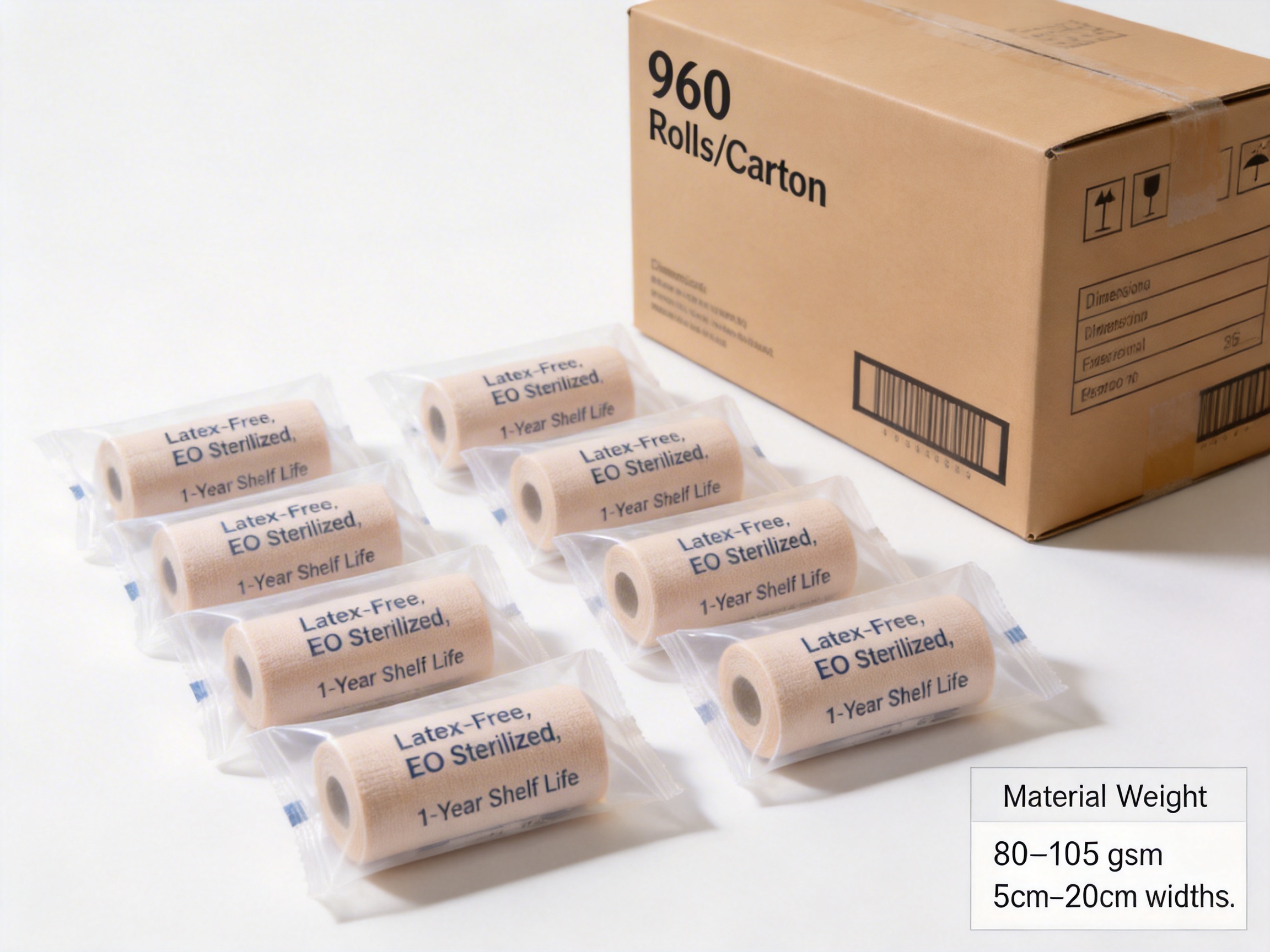
One size does not fit all when it comes to compression therapy. This product offers a wide range of sizes to cater to diverse needs: widths of 2 inches (5 cm), 3 inches (7.5 cm), 4 inches (10 cm), 6 inches (15 cm), and 20 cm; lengths of 4 meters, 4.5 meters, and 5 meters. Additionally, it comes in weight variations from 80 gsm to 105 gsm—allowing users to choose the exact compression level they need (lighter weights for daily support, heavier weights for post-surgery swelling). Competitors often limit their offerings to 1-2 sizes or weights, forcing users to compromise on fit or compression.
6. EO Gas Disinfection for Sterility
Sterility is non-negotiable for medical bandages, especially those used in wound care. This product uses ethylene oxide (EO) gas disinfection—a method widely recognized as effective for sterilizing heat-sensitive medical devices. EO disinfection kills bacteria, viruses, and fungi without damaging the bandage’s material or compromising its elasticity. Many competitors use less effective disinfection methods (like heat sterilization, which can degrade rubber) or skip sterilization entirely, putting users at risk of infection.
7. OEM Capabilities for Customization
For businesses, healthcare providers, or sports teams, custom branding and sizing are often critical. This product offers OEM (Original Equipment Manufacturer) services, allowing clients to customize the bandage’s size, packaging, labeling, and even material composition (within specified limits). This flexibility is a major advantage over competitors that offer only off-the-shelf products, making it easier for organizations to align the bandage with their brand or specific clinical needs.
8. Long Shelf Life
Medical supplies need to have a long shelf life to ensure they are usable when needed. This elastic bandage has a shelf life of 1 year—significantly longer than many competitors’ 6-month shelf lives. This extended shelf life reduces waste, lowers costs for users, and ensures the product remains effective even after months of storage.
Advanced Manufacturing Processes Behind the Product
The superior quality of this elastic bandage is not accidental—it is the result of decades of expertise, rigorous quality control, and advanced manufacturing processes. The company behind the product is a leading manufacturer with 30 years of experience in the medical device industry, operating multiple production bases across Jiangsu, Zhejiang, and Anhui provinces in China. Below is a breakdown of the key manufacturing processes that set this product apart:
1. Raw Material Sourcing and Testing
Every batch of raw materials (polyester fibers and rubber) is sourced from trusted suppliers with proven track records in the medical industry. Before production, materials undergo extensive testing to ensure they meet the company’s strict quality standards: polyester is tested for tensile strength and resistance to fraying; rubber is tested for elasticity and latex content (to confirm it is latex-free). Only materials that pass these tests are used in production—eliminating the risk of subpar components.
2. Weaving and Fabric Formation
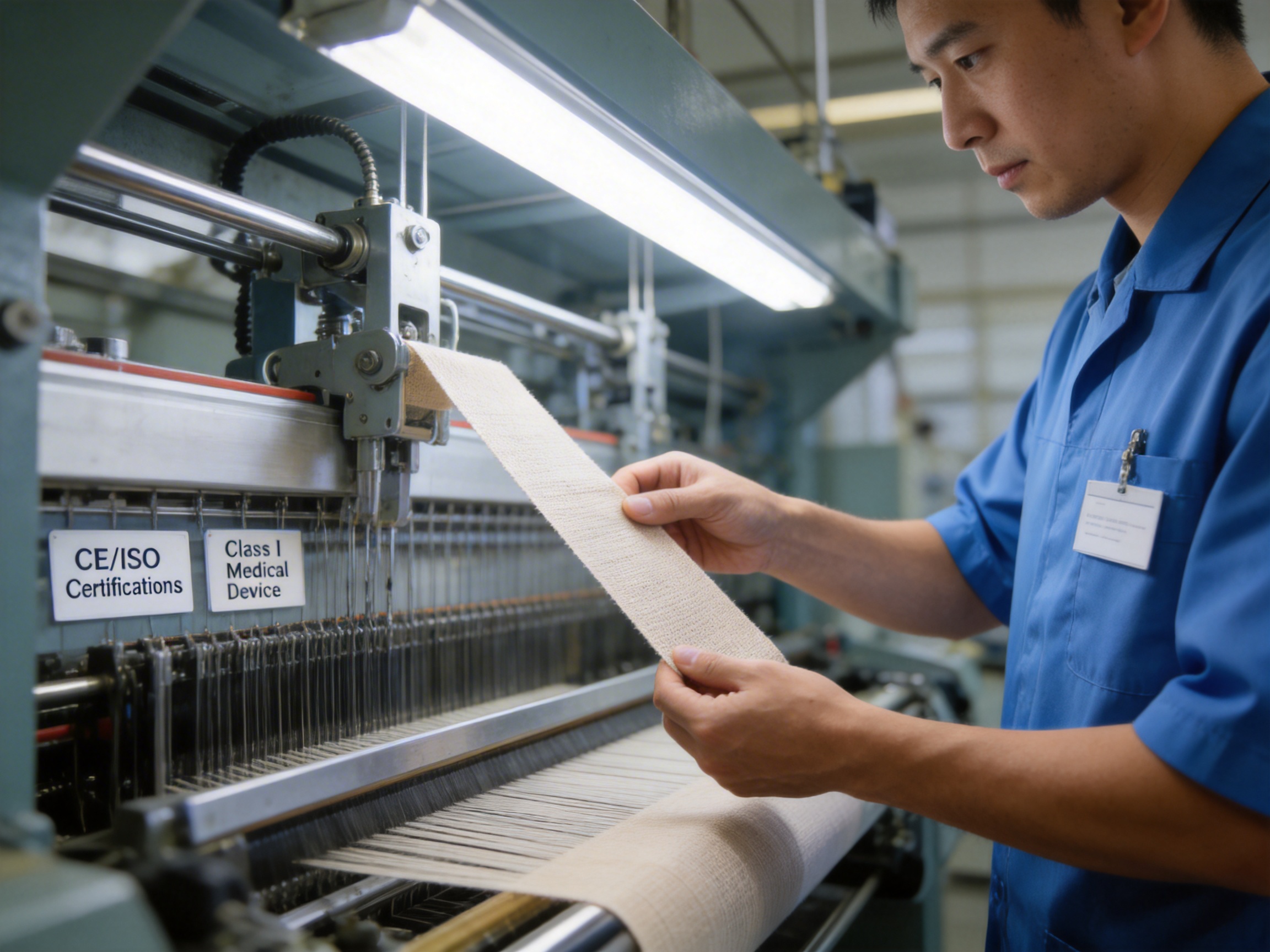
The polyester and rubber fibers are woven into a high-elastic fabric using state-of-the-art looms. These looms are programmed to create a precise weave that balances stretch and support—ensuring the bandage conforms to the body without losing its shape. The weaving process is monitored in real time by quality control personnel to detect any defects (like uneven tension or loose threads) before the fabric moves to the next stage.
3. Cutting and Sizing
The woven fabric is cut into precise sizes using automated cutting machines. These machines are calibrated to the exact dimensions specified for each product variant (e.g., 5 cm x 4.5 m, 15 cm x 5 m). Each cut piece is inspected to ensure it meets size requirements—any pieces that are too small or too large are discarded.
4. Disinfection and Sterilization
After cutting, the bandages are packaged in individual polybags (1 roll per bag) to maintain sterility. The packaged bandages are then sent to an EO gas sterilization chamber. The sterilization process follows strict protocols: the chamber is filled with EO gas at a controlled temperature and pressure for a specified duration (typically 4-6 hours) to ensure all microorganisms are killed. After sterilization, the bandages are aerated to remove any residual EO gas—making them safe for use.
5. Quality Control and Certification
Quality control is integrated into every stage of production. The company employs a team of hundreds of quality control personnel who conduct: raw material inspections, in-process checks (during weaving, cutting, and packaging), final product testing (for sterility, elasticity, and durability), and compliance audits (to ensure adherence to CE and ISO standards). Each batch of bandages is assigned a unique lot number, allowing for full traceability from production to distribution.
6. OEM Customization
For clients requesting OEM services, the company’s flexible production line allows for customizations like: custom size (within the product’s size range), custom packaging (with client branding), custom labeling (with client logos or instructions), and even custom material blends (e.g., adjusting the polyester-rubber ratio for specific compression needs). The OEM process is managed by a dedicated team that works closely with clients to ensure their requirements are met—from design to delivery.
Product Specifications
Below is a detailed table of the product’s specifications, including size, packing, and carton dimensions:
| Item |
Size |
Packing |
Carton Size |
| High Elastic Bandage (90 g/m²) |
5 cm x 4.5 m |
960 rolls per carton |
54 cm x 43 cm x 44 cm |
| High Elastic Bandage (90 g/m²) |
7.5 cm x 4.5 m |
480 rolls per carton |
54 cm x 32 cm x 44 cm |
| High Elastic Bandage (90 g/m²) |
10 cm x 4.5 m |
480 rolls per carton |
54 cm x 42 cm x 44 cm |
| High Elastic Bandage (90 g/m²) |
15 cm x 4.5 m |
240 rolls per carton |
54 cm x 32 cm x 44 cm |
| High Elastic Bandage (90 g/m²) |
20 cm x 4.5 m |
120 rolls per carton |
54 cm x 42 cm x 44 cm |
Additional specifications include: skin-color design, 1 roll per polybag packaging, shelf life of 1 year, EO gas disinfection, Class I medical device classification, and OEM availability.
Common Uses of Elastic Bandage Wraps
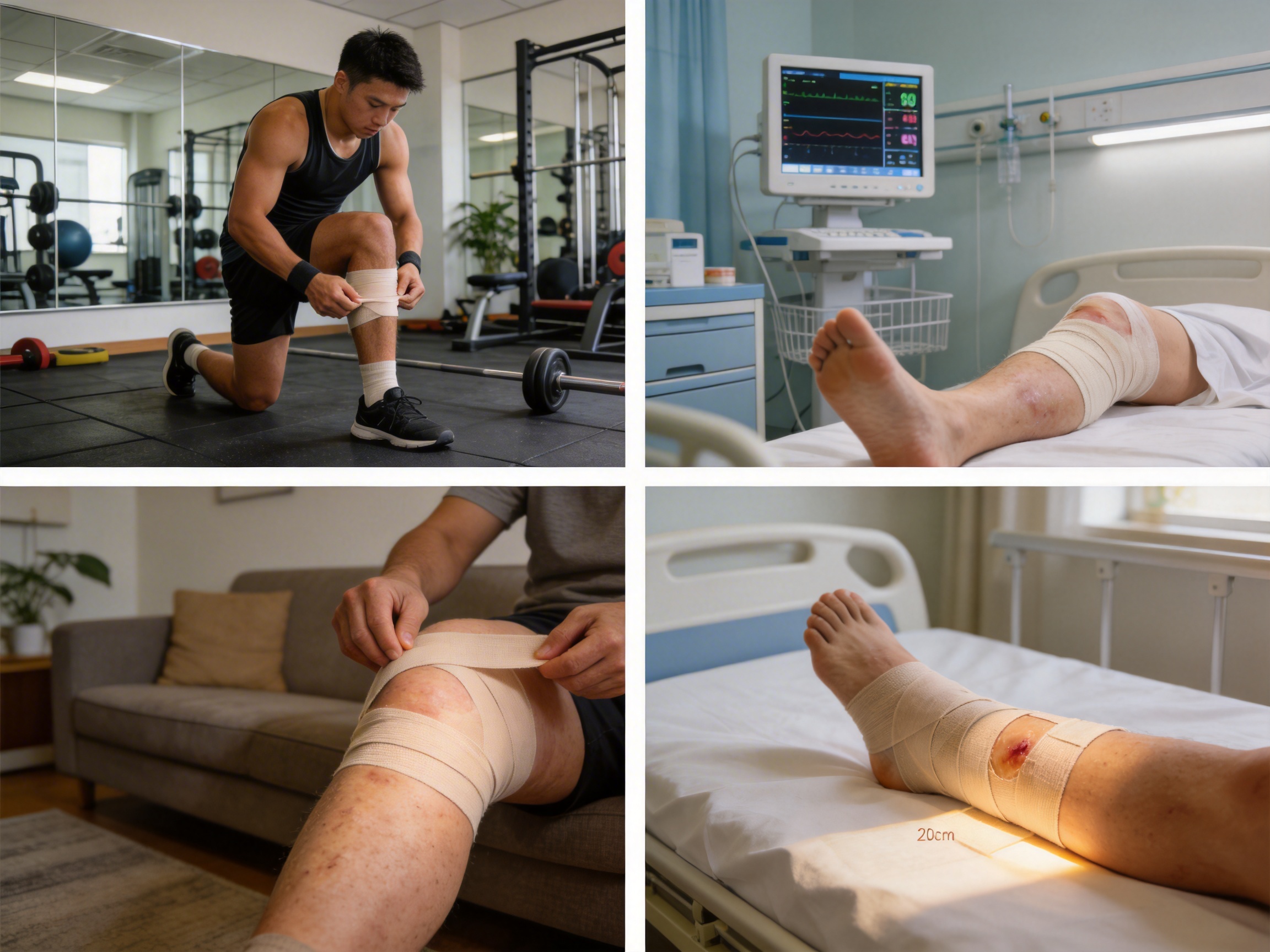
This elastic bandage is a versatile tool with applications across multiple settings. Below are some of its most common uses:
1. Sports Injury Management
Athletes often use elastic bandages to manage acute soft tissue injuries—like sprains, strains, or contusions. The bandage provides targeted compression to reduce swelling, stabilize the injured joint, and support weak muscles. For example, an ankle sprain can be wrapped with a 3-inch bandage to limit movement and promote healing. The bandage’s latex-free composition makes it safe for athletes with sensitivities, and its stretch allows for full range of motion during rehabilitation exercises.
2. Post-Surgery Care
After orthopedic surgery (e.g., knee replacement or ankle surgery), elastic bandages are used to reduce post-operative swelling and support the healing joint. The bandage’s consistent compression helps minimize fluid buildup, while its soft material ensures comfort during recovery. The product’s Class I classification and EO sterilization make it suitable for use in clinical settings, where sterility is critical.
3. Lymphedema Management
Lymphedema is a chronic condition characterized by fluid buildup in the tissues, often affecting the legs or arms. Elastic bandages are a key component of lymphedema treatment—they apply gentle, consistent pressure to help move fluid back into the lymphatic system. This product’s wide size range (including 6-inch and 20-inch widths) makes it ideal for wrapping larger areas like the legs or torso, while its latex-free composition is safe for long-term use.
4. Daily Support for Weak Joints
Individuals with weak joints (e.g., due to arthritis or age-related degeneration) use elastic bandages to provide daily support. The bandage stabilizes the joint, reduces pain, and improves mobility. For example, a person with knee arthritis may wrap their knee with a 4-inch bandage to reduce strain during walking or other activities.
5. Wound Care
Elastic bandages are often used to secure wound dressings in place. The bandage’s stretch allows it to conform to the wound site without putting pressure on the dressing, while its sterile composition reduces the risk of infection. The product’s skin-color design ensures discretion, making it suitable for use in public settings.
Q&A Section
Below are answers to common questions about this elastic bandage:
Q1: What is the material composition of this elastic bandage?
A: The bandage is made from a blend of 78% polyester and 28% rubber. This combination provides durability, stretch, and consistent compression.
Q2: Is this bandage latex-free?
A: Yes, the product is explicitly labeled as latex-free. This makes it safe for users with latex allergies or sensitivities.
Q3: What certifications does this product have?
A: The bandage holds CE (Conformité Européenne) and ISO certifications, confirming compliance with European and international medical device standards.
Q4: What is the shelf life of the bandage?
A: The shelf life is 1 year from the date of production. This extended shelf life reduces waste and ensures the product remains effective when needed.
Q5: What disinfection method is used?
A: The bandage is sterilized using ethylene oxide (EO) gas. This method is effective for killing microorganisms without damaging the bandage’s material.
Q6: Are custom sizes or OEM options available?
A: Yes, the company offers OEM services. Clients can customize the bandage’s size, packaging, labeling, and material composition (within specified limits).
Q7: What are the available sizes (width and length)?
A: Widths include 2 inches (5 cm), 3 inches (7.5 cm), 4 inches (10 cm), 6 inches (15 cm), and 20 cm. Lengths include 4 meters, 4.5 meters, and 5 meters.
Q8: What is the instrument classification of this product?
A: The bandage is classified as a Class I medical device, indicating it is safe for its intended uses (wound care, compression therapy, etc.).
Q9: What is the weight range of the bandage?
A: The bandage is available in weights from 80 gsm to 105 gsm. Different weights provide varying levels of compression (lighter for daily support, heavier for post-surgery swelling).
Q10: How is the bandage packed?
A: Each bandage is packed in an individual polybag (1 roll per bag) to maintain sterility. Bulk orders are packed in cartons with specified quantities (e.g., 960 rolls per carton for 5 cm x 4.5 m size).
Conclusion
This elastic bandage wrap is a superior product that combines premium materials, rigorous certifications, and versatile design to meet the needs of users across clinical, sports, and daily settings. Its key advantages—including latex-free composition, CE/ISO certifications, Class I classification, and OEM capabilities—set it apart from competitors. The advanced manufacturing processes behind the product, supported by 30 years of industry expertise, ensure reliability, sterility, and consistency. Whether used for sports injury management, post-surgery care, lymphedema treatment, or daily joint support, this elastic bandage is a trusted solution for users and healthcare providers alike.
References
1. ISO 13485:2016 Medical devices — Quality management systems — Requirements for regulatory purposes. International Organization for Standardization, 2016.
2. FDA 21 CFR Part 801: Labeling for Medical Devices. U.S. Food and Drug Administration, 2023.
3. Wound Care Guidelines: Compression Therapy for Venous Leg Ulcers. National Institute for Health and Care Excellence (NICE), 2021.
4. Lymphedema Management: Best Practice Guidelines. American College of Phlebology, 2022.
5. Sports Injury Management: Use of Elastic Bandages for Acute Soft Tissue Injuries. British Association of Sports Rehabilitators, 2020.
6. Latex Allergy: Diagnosis and Management. American Academy of Allergy, Asthma & Immunology, 2021.
7. Medical Device Classification: Class I Devices. European Commission, 2022.
8. EO Gas Sterilization: Validation and Routine Control. Association for the Advancement of Medical Instrumentation (AAMI), 2019.

 English
 Español
 русский
 Français
 Deutsch
 italiano
 By Admin