The arch of the human foot is one of its most mechanically sophisticated structures. Composed of 26 bones, 33 joints, and more than 100 muscles, tendons, and ligaments, it functions as a shock absorber, a rigid lever for propulsion, and a dynamic stabilizer during every step of the gait cycle. When that structure is compromised — by flat feet, high arches, overpronation, prolonged standing, or inadequate footwear — the consequences radiate well beyond the foot itself, contributing to knee pain, hip misalignment, lower back strain, and chronic fatigue.
Arch supports have long been the primary intervention for these issues, but not all arch supports are built the same. The material composition, hardness, and anatomical design determine whether a product genuinely corrects biomechanical problems or merely adds padding without functional benefit. Among the most clinically effective and commercially versatile options today are arch protection pads made from PU (polyurethane) and TPR (thermoplastic rubber) — materials that manufacturers like Suzhou Sunmed Arch Supports have refined into targeted, high-performance foot care solutions.
Understanding the Biomechanical Role of Arch Supports
Before evaluating materials, it helps to be precise about what arch supports are meant to accomplish. The foot has three arches: the medial longitudinal arch (the one most people visualize on the inner side of the foot), the lateral longitudinal arch on the outer edge, and the transverse arch running across the ball of the foot. Most arch support products focus on the medial longitudinal arch, since it bears the greatest share of body weight and is most prone to collapse.
When the medial arch drops — a condition commonly called flatfoot or pes planus — the foot overpronates during walking and running. The heel rolls inward, the ankle loses neutral alignment, and excess rotational stress is transferred up the leg. Conversely, a high-arched foot (pes cavus) under-pronates, concentrating impact forces on the heel and metatarsal heads rather than distributing them across the arch.
An effective arch support addresses either condition by providing a correctly shaped and appropriately rigid surface beneath the arch. It does not simply fill the space — it actively influences how the foot loads during each phase of the gait cycle. The stiffness, rebound characteristics, and anatomical contour of the support material are therefore functional variables, not merely comfort preferences.
Why Material Choice Matters: PU vs. TPR Arch Protection Pads
The two materials most widely used in professional-grade arch protection pads serve overlapping but distinct purposes, making them suitable for different user profiles and footwear environments.
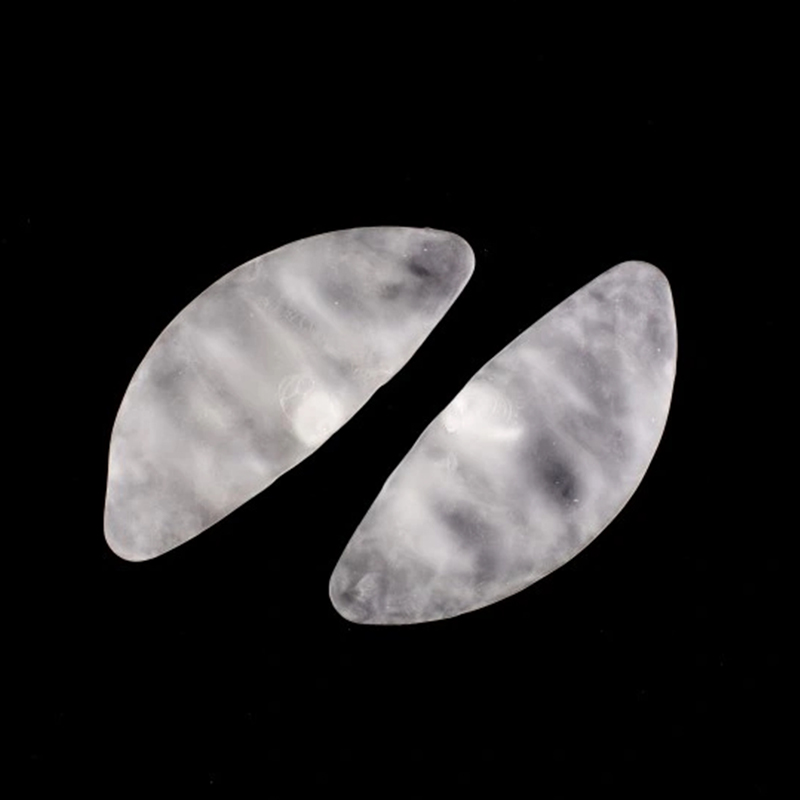
Polyurethane (PU) is a dense, viscoelastic foam or gel compound that offers excellent shock absorption and pressure distribution. PU arch pads compress under load and return to their original shape repeatedly without permanent deformation. Their softness makes them particularly effective for cushioning and for users whose primary complaint is fatigue or plantar pressure rather than severe structural misalignment. PU is also highly moldable during manufacturing, allowing precise anatomical contouring — a critical factor in correctly positioning arch contact points.
Thermoplastic Rubber (TPR) is a semi-rigid elastomeric material that combines the flexibility of rubber with the structural memory of plastics. TPR arch pads provide firmer, more consistent support and are better suited to users who require active correction of overpronation or structural stabilization. Because TPR retains its shape under sustained body weight without collapsing, it functions as a true mechanical support rather than a cushioning layer. It is also highly durable, maintaining its shape and stiffness over extended use.
Many of the most effective products from manufacturers like Suzhou Sunmed Arch Supports combine both materials in a single pad — a TPR base layer providing structural rigidity and arch lift, topped with a PU cushioning surface that manages pressure distribution and contact comfort. This layered construction captures the functional benefits of both materials without the limitations of either used alone.
A Side-by-Side Comparison
| Property |
PU Arch Pad |
TPR Arch Pad |
PU + TPR Combined |
| Primary function |
Cushioning & pressure relief |
Structural support & correction |
Both |
| Hardness |
Soft to medium |
Medium to firm |
Variable by layer |
| Shock absorption |
Excellent |
Moderate |
Excellent |
| Arch correction |
Moderate |
Strong |
Strong |
| Durability |
Good |
Very good |
Very good |
| Best footwear fit |
Dress shoes, casual, athletic |
Athletic, occupational |
Universal |
| Ideal user |
Fatigue, mild flat feet |
Overpronation, structural issues |
Mixed or complex needs |
This comparison illustrates a key principle: neither material is universally superior. The correct choice depends on the biomechanical problem being addressed, the type of footwear, and the activity level of the user.
Who Should Use Arch Protection Pads — and When
Arch supports are not exclusively for people with diagnosed foot conditions. Their preventive value is equally important, particularly for individuals in high-risk occupational or athletic contexts.
People with flat feet or low arches experience overpronation on every step. Without adequate arch support, this leads to cumulative soft-tissue stress in the plantar fascia and posterior tibialis tendon. A TPR-based arch pad with sufficient rigidity to hold the arch in a corrected position prevents this overloading before it progresses to plantar fasciitis or posterior tibial tendon dysfunction (PTTD).
Workers in standing occupations — nurses, teachers, factory line workers, retail staff — face prolonged static loading of the arch. Even a structurally normal foot will fatigue under eight or more hours of standing. PU or combined PU/TPR arch pads reduce forefoot and midfoot pressure, decrease end-of-shift pain scores, and lower the long-term risk of occupational foot disorders.
Runners and endurance athletes place their arch under repetitive impact stress that amplifies any underlying structural weakness. Arch supports in running applications need to be lightweight and precisely contoured so as not to alter shoe fit significantly. Semi-rigid TPR supports with a thin PU contact layer are commonly used in sports insoles for this reason.
People recovering from plantar fasciitis or arch injuries benefit from controlled arch support that reduces tension on the plantar fascia during the healing phase. Clinical rehabilitation protocols frequently include arch supports as a standard component alongside stretching, strengthening, and footwear modification.
Older adults experience gradual weakening of the intrinsic foot muscles and ligamentous laxity, both of which reduce the arch’s ability to self-support. Arch protection pads compensate for this loss of intrinsic strength, improving balance, reducing fall risk, and maintaining walking comfort.
What to Look for in a Quality Arch Protection Pad
Given the variety of products available, a structured evaluation framework helps buyers identify products that will deliver functional results rather than short-term comfort alone.
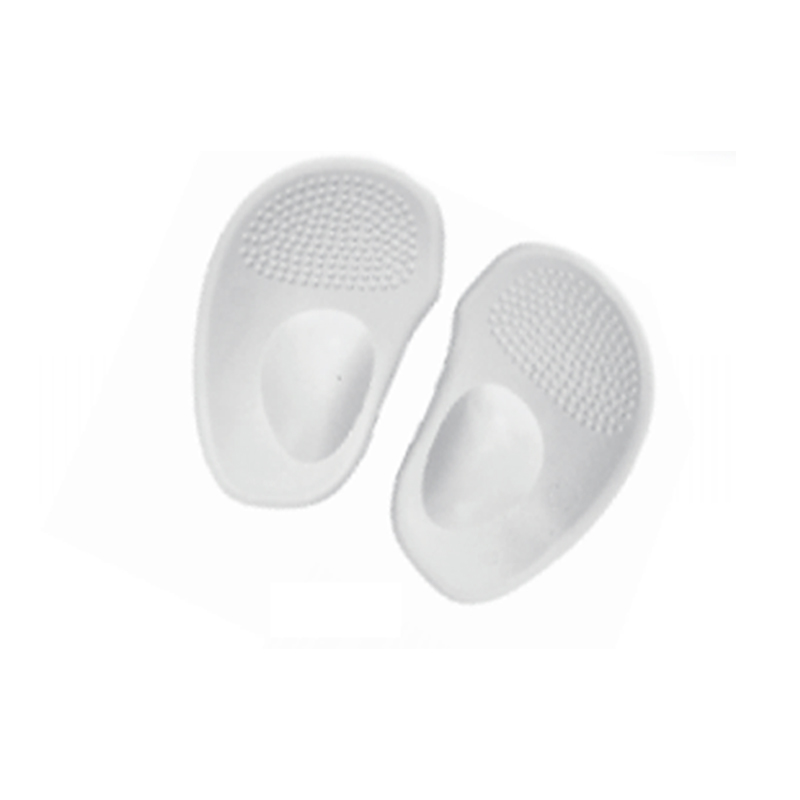
Anatomical accuracy of the arch contour. The pad should follow the natural curve of the medial arch precisely — not too flat (which provides no contact with the arch) and not too high (which creates pressure and discomfort). Suzhou Sunmed Arch Supports invest significantly in mold development to ensure that their arch pads engage the foot at the correct anatomical landmarks.
Material density and hardness specification. Quality manufacturers specify the Shore hardness of their TPR components and the density (kg/m³) of their PU foam layers. These specifications determine functional performance and allow professional buyers to compare products objectively. Vague descriptions like “soft” or “firm” without supporting data are a red flag.
Coverage area. Some arch pads are small localized supports designed to sit under the arch only, while others extend to provide heel cup support and metatarsal offloading simultaneously. For users with multiple pressure concerns, broader coverage is more effective. For users with isolated arch fatigue in a narrow shoe, a targeted pad is the better fit.
Adhesive backing quality. Arch pads that shift during use provide inconsistent support and can create new pressure points. A strong, repositionable adhesive that holds the pad in place through a full day’s wear — including moisture from perspiration — is a non-negotiable feature in any application involving active movement.
Top surface treatment. The skin contact surface should be smooth, non-irritating, and moisture-wicking. Suede-finish top covers or perforated surfaces help manage friction and perspiration, both of which become significant over extended wear periods.
The Role of Specialized Manufacturers: What Suzhou Sunmed Arch Supports Brings to the Market
The arch support category benefits enormously from manufacturers who specialize in foot care biomechanics rather than treating arch pads as commodity add-ons. Suzhou Sunmed Arch Supports exemplifies this approach — engineering PU and TPR formulations specifically for foot care applications, developing anatomically precise molds validated against foot measurement data, and offering product lines segmented by user type and application.
For B2B buyers — private label brands, distributors, orthopedic product companies — this level of specialization translates directly into product quality and consistency. Arch pads that perform reliably across high production volumes require tight control over raw material sourcing, compound mixing ratios, molding temperature profiles, and finished product dimensional tolerances. A manufacturer with deep category expertise manages all of these variables systematically rather than reactively.
The global demand for arch support products continues to grow, driven by aging populations, rising rates of metabolic conditions that affect foot health, and increased consumer awareness of the link between foot mechanics and whole-body musculoskeletal health. In this environment, the technical differentiation between a well-engineered PU/TPR arch pad and a generic foam insert becomes commercially significant — and clinically meaningful.
Making the Right Choice for Your Feet
Arch protection is not a one-size-fits-all matter. The best arch support for a 60-year-old diabetic patient is not the same as the best support for a 30-year-old distance runner, even if both have flat feet. Material selection — PU for cushioning and pressure relief, TPR for structural correction and durability, or a combination for complex needs — should be driven by a clear understanding of the biomechanical problem being addressed.
Products from specialists like Suzhou Sunmed Arch Supports represent the application of genuine materials science and anatomical engineering to a problem that affects millions of people daily. When chosen correctly and used consistently, PU and TPR arch protection pads are among the most cost-effective interventions available for long-term foot health — far more targeted than a generic insole and far more accessible than custom orthotics for the majority of users.

 English
 Español
 русский
 Français
 Deutsch
 italiano
 By Admin